Soundscapes of Focus: A Parent's Guide to ADHD & Sound Wellness

Key Insights
Explore how sound therapy, from white noise to music, may support focus and calm in children with ADHD. Soul Art Dubai offers holistic wellness.
Could a symphony of specific frequencies hold the key to unlocking greater focus and calm for children navigating the complexities of Attention-Deficit/Hyperactivity Disorder (ADHD)? It’s a question many parents ponder as they seek complementary, non-pharmacological approaches to support their child’s well-being. At Soul Art, we understand the profound impact ADHD can have on children and families, and we explore the innovative role sound wellness plays in creating a more harmonious internal environment.
This guide delves into the scientifically-backed potential of sound therapy – from specific noise types to structured music interventions – as a supportive wellness practice for children with ADHD. We will uncover the fascinating neuroscience behind these techniques, illuminate how they translate into tangible benefits in daily life, and share the unique approach pioneered by Larissa Steinbach at Soul Art Dubai. Prepare to discover a new dimension of support that may help your child thrive.
The Science Explained: How Sound Shapes Focus and Calm
ADHD is a neurodevelopmental condition characterized by persistent patterns of inattention, hyperactivity, and impulsivity, impacting cognitive and behavioral aspects of a child's life. These challenges often stem from the nervous system’s struggle to maintain a balanced state, frequently remaining hyper-alert and constantly scanning for stimuli. Sound wellness offers a promising avenue to help regulate this intricate system, promoting a state conducive to improved focus and emotional balance.
The Power of White and Brown Noise
Imagine a consistent, gentle hum that acts like an auditory blanket, helping to filter out distracting external noises. This is the essence of therapeutic noise. Research into specific noise frequencies, such as white noise and, more recently, brown noise, suggests they may offer unique benefits for individuals with ADHD.
White noise is characterized by an even balance across all audible frequencies, creating a broad, consistent sound. Examples include the gentle hiss of radio static, the steady hum of a vacuum cleaner, or the continuous sound of constant rainfall. A 2019 review highlighted that white noise could be therapeutic for children with ADHD, noting potential improvements in areas like speech recognition and enhancements in writing and reading speeds. These findings were further corroborated by a 2022 study involving 104 preschool children, half of whom had ADHD. The results indicated that white noise might improve attentional performance, leading to a reduction in mistakes and better focus on goals, alongside reduced hyperactive behavior. In a compelling older, small 2016 study, children with ADHD even performed better in cognitive tasks when listening to white noise compared to when they were taking stimulant medication, suggesting white noise can facilitate signal transmission in the brain through a phenomenon called stochastic resonance.
Brown noise, in contrast, is characterized by deeper, low-frequency sounds, devoid of high-frequency components. These rich, resonant sounds can be effective in masking other distracting noises, creating a sense of auditory envelopment. While scientific evidence specifically supporting brown noise for managing ADHD symptoms is still relatively new and largely anecdotal, some preliminary studies offer interesting insights. A 2021 study indicated that beta-range frequencies, generally between 12.5 and 30 Hz, can positively affect brain stimulation and cognitive function in people with ADHD. Given that brown noise is rich in low-frequency sounds, it may contribute to improving cognitive function in a similar way. However, it's worth noting that a 2018 study reported a potential link between ADHD, depression, and anxiety, and for some individuals, brown noise might stimulate the brain into a state of arousal, potentially leading to feelings of anxiety or agitation. This highlights the importance of personalized approaches in sound wellness. When comparing the two, white noise currently has more scientific backing for its benefits in attentional performance due to its balanced frequency distribution.
The Rhythmic Resonance of Music Therapy
Music is more than just entertainment; it’s a universal language with profound effects on the brain. Its playful, spontaneous, affective, motivational, temporal, and rhythmic dimensions make it an invaluable tool for exploring and supporting cognitive functions in children with ADHD. A 2015 study by Carrer investigated how music and simple sounds influence time processing in children with ADHD, hypothesizing that they might perform differently in time estimation tasks. The study's results, particularly from Task 2 (time estimation with simple sounds), corroborated findings that the ADHD group achieved a lower performance in time estimation tasks compared to the control group. This underscores how structured auditory stimuli, including music, can be leveraged to address specific cognitive challenges.
More recent neurophysiological evidence, such as that presented by Lee et al. (2024), reveals that music therapy can enhance activity in specific brain regions, stimulating both cortical and subcortical areas. This stimulation is associated with improved cognitive functions, increased attention, and enhanced emotional stability. Intriguingly, Zhu (2022) found that these improvements were particularly effective for individuals with ADHD, suggesting a unique impact of music on ADHD-specific neurocognitive profiles. Beyond cognition, music therapy has been shown to positively influence emotional regulation and stress responses. A 2023 Randomized Controlled Trial (RCT) by Park et al. explored music therapy for children with comorbid ADHD and depression. The music therapy group, which engaged in bi-weekly active and passive sessions, showed significant physiological improvements, including increased serotonin levels (indicating improved mood), and decreased cortisol levels, blood pressure, and heart rate (reflecting reduced stress and physiological arousal). Psychologically, participants experienced significant reductions in depression and daily stress, reinforcing music therapy's potential as a valuable complementary approach for ADHD. Furthermore, a study by Aydinli et al. (2018) found that both soothing music and white noise enhanced upright balance performance in children with ADHD, suggesting that auditory stimulation can also benefit motor tasks and physical coordination.
The Safe and Sound Protocol (SSP)
The Safe and Sound Protocol (SSP) is an innovative, gentle sound therapy rooted in the Polyvagal Theory, developed by Dr. Stephen Porges. This theory explains how our vagus nerve influences whether we feel calm, anxious, or disconnected. For children with ADHD, whose nervous systems often struggle to return to a balanced "rest-and-digest" state, remaining in a hyper-alert mode, SSP offers a path to nervous system regulation.
By delivering filtered sound frequencies through headphones, SSP aims to re-tune the auditory system, helping the nervous system feel safer and more connected. This process may enhance focus, improve learning capabilities, and foster greater emotional balance. Emerging evidence highlights that sensory dysregulation – difficulties processing noise, touch, or visual input – is common in ADHD, making sensory-focused approaches like SSP particularly valuable. The Insight Clinic, for instance, integrates SSP into comprehensive programs for ADHD and sensory processing, noting that clients often learn to direct their energy more effectively. A compelling real-world example describes a 10-year-old boy with ADHD who, after several SSP sessions, showed subtle improvements in classroom attention, experienced fewer meltdowns, and reported that his "brain feels quieter." This aligns with broader neurocognitive therapy findings, where parents observed improvements in ADHD symptoms, school interactions, and even increased teacher and peer acceptance following listening therapies. SSP is often explored by those seeking complementary approaches to existing treatments, desiring long-term emotional regulation, and valuing evidence-informed, neuroscience-based care to help children thrive.
How It Works in Practice: A Journey to Calm
Translating these scientific principles into a tangible experience for a child with ADHD involves creating an environment of gentle immersion and sensory support. At Soul Art, we understand that for a child accustomed to a bustling, sometimes overwhelming internal world, the introduction to sound wellness must be both thoughtful and engaging. It’s not simply about playing sounds; it’s about crafting an intentional auditory experience.
Imagine your child in a serene, softly lit space, nestled comfortably with high-quality headphones. The soundscapes they experience are carefully selected and precisely delivered, designed to work with their unique nervous system. For some, this might involve the subtle, consistent frequencies of white or pink noise, creating a stable auditory backdrop that helps to mask distracting ambient sounds. This provides a mental "buffer," allowing the child's attention to settle on internal tasks or present activities rather than external disruptions. The brain, instead of constantly processing new stimuli, can find a more predictable pattern to anchor itself.
For others, the experience might incorporate specially composed music or elements of the Safe and Sound Protocol. These are not just pleasant tunes but carefully structured sonic pathways that stimulate the auditory nerve in a way that helps to gently tone the vagus nerve. The deep, low-frequency vibrations, or the specific melodic patterns, are designed to shift the child’s physiological state from hyper-alertness towards a more regulated "rest-and-digest" mode. Clients often report a feeling of deep grounding, a sense of their scattered thoughts beginning to coalesce, or a peaceful quietude descending upon their often-busy minds.
This isn’t a passive listening experience, but rather an active engagement with the self. The sounds act as a guide, subtly encouraging the brain to develop new neural pathways for self-regulation and focus. Parents frequently observe reduced fidgeting, improved emotional regulation during transitions, and an enhanced capacity for sustained concentration on schoolwork or creative play. The sound environment becomes a gentle coach, helping the child's brain learn how to direct its energy where it matters most, fostering a sense of inner calm that extends far beyond the session itself.
The Soul Art Approach: Nurturing Neurodiversity with Sound
At Soul Art, founded by the visionary Larissa Steinbach, our philosophy centers on providing bespoke, holistic sound wellness experiences that honor each child’s unique journey. We recognize that every child with ADHD presents with a distinct neurocognitive profile and set of needs, which informs our deeply personalized approach. Larissa Steinbach and her team are dedicated to creating a nurturing sanctuary where children can explore sound as a pathway to greater self-regulation and inner peace.
What makes the Soul Art method unique is its thoughtful integration of diverse sound modalities, meticulously tailored for children with ADHD. We don't subscribe to a one-size-fits-all model. Instead, we carefully assess individual responses and preferences, drawing from a rich tapestry of techniques. This may include the precise application of filtered white or brown noise soundscapes, designed to optimize cognitive function and minimize auditory distractions. We also incorporate elements inspired by music therapy and the principles of the Safe and Sound Protocol, utilizing specific frequency ranges and tonal compositions known to support nervous system regulation and emotional balance.
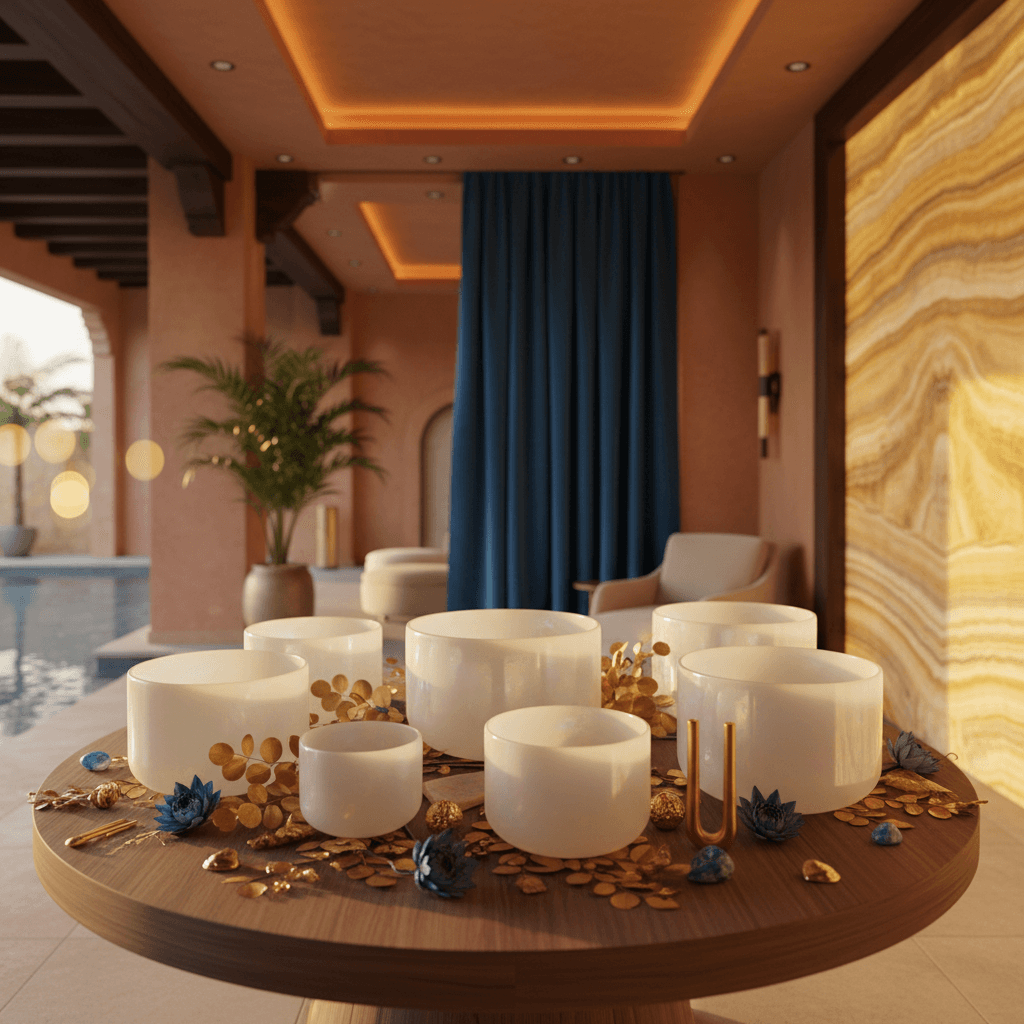
Our sessions often feature a blend of specialized sound instruments chosen for their resonant properties and therapeutic frequencies. Crystal singing bowls, with their pure, sustained tones, can create deeply calming and harmonizing vibrations. Gongs, when played with intention, can induce profound states of relaxation and release. Tuning forks, applied gently, can stimulate specific energy pathways within the body, promoting a sense of grounding and clarity. We combine these ancient tools with modern sonic technologies to craft immersive sound journeys that gently guide a child's brain into optimal states for learning, focus, and emotional processing.
Larissa Steinbach’s expertise lies in her ability to intuitively and scientifically orchestrate these elements, creating a safe, supportive space where children can feel understood and empowered. Our focus is on empowering children to better manage their sensory input, enhance their ability to concentrate, and develop robust emotional coping mechanisms, all within an environment of quiet luxury and compassionate care.
Your Next Steps: Integrating Sound into Your Child's Life
Embarking on a journey of sound wellness for your child with ADHD is a proactive step towards fostering their holistic well-being. While professional guidance is invaluable, there are several practical ways you can begin to explore the potential benefits of sound at home. Remember, these are complementary practices designed to support, not replace, professional medical advice.
Here are a few actionable steps to consider:
- Consult Your Healthcare Provider: Always discuss any new wellness approach with your child's pediatrician or ADHD specialist. Sound wellness is a supportive modality, and it’s important to integrate it thoughtfully with any existing medical or therapeutic plans.
- Experiment with Home Soundscapes: Begin by introducing controlled white or pink noise at low volumes during homework, reading, or bedtime. Many apps and devices offer these sounds. Observe how your child responds; some may find it soothing, while others prefer silence.
- Create a "Quiet Zone": Designate a specific area in your home as a low-stimulus environment where your child can retreat. This space can be enhanced with calming sounds when needed, allowing them to self-regulate and find a sense of peace amidst daily demands.
- Observe and Journal: Pay close attention to your child’s behavior, mood, and concentration levels when they are exposed to different types of sound. Keeping a simple journal can help you identify patterns and what works best for them.
- Explore Professional Guidance: If you notice positive changes, or if you're seeking a more structured and personalized approach, consider scheduling a consultation with a qualified sound wellness practitioner. At Soul Art Dubai, Larissa Steinbach and her team can offer tailored programs that delve deeper into the specific needs of your child.
In Summary: A New Path to Poise and Presence
For parents seeking innovative ways to support their children with ADHD, sound wellness offers a compelling and scientifically-backed complementary approach. From the consistent embrace of white noise to the profound rhythmic dimensions of music therapy and the nervous system regulation offered by protocols like SSP, sound has the potential to gently guide children towards greater focus, reduced hyperactivity, and enhanced emotional balance. These practices don't define a child's potential; instead, they provide a new kind of structure, fostering calm and an improved ability to direct energy where it matters most.
At Soul Art, Larissa Steinbach is at the forefront of this transformative field, offering personalized sound journeys designed to nurture neurodiversity and unlock each child's inherent capacity for poise and presence. We invite you to explore the profound possibilities of sound, creating a harmonious foundation for your child’s growth and well-being.
Bookings Coming Soon
Soul Art is still in preparation. Session details and booking will be published here after launch.
Coming Soon
Wellness Disclaimer: This article is for educational and informational purposes only. It does not constitute medical advice, diagnosis, or treatment. Soul Art Dubai provides non-medical wellness experiences focused on relaxation, stress management, and general wellbeing. Sound wellness is a complementary practice and should not replace professional medical care.
Related Articles
Cluster Headaches: Unveiling Pain and the Promise of Frequencies in Wellness

Epilepsy & Sound: Safety, Serenity, and Emerging Wellness Paths
Mastering Focus: Analytical Listening & Brain Engagement at Soul Art