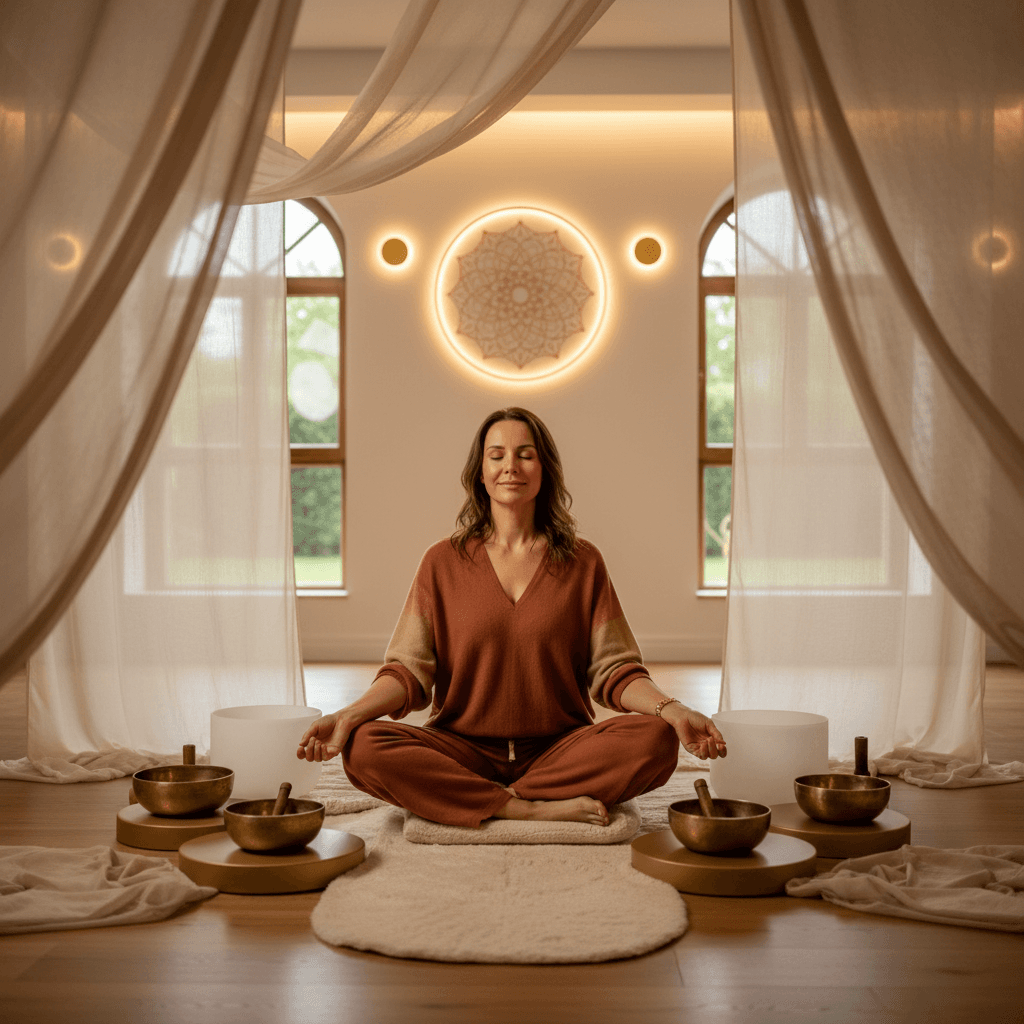
Sound for Coding Minds: Enhancing Developer Focus & Creativity

Key Insights
Discover how sound wellness can boost focus, reduce stress, and ignite creativity for software developers. Explore the science and Soul Art's unique approach.
Compelling Introduction
Did you know that approximately 80% of software developers listen to music while coding? This isn't merely a preference; it's often a strategic choice, a subtle alchemy of sound aiming to unlock deeper levels of concentration and creativity. For the intricate and often demanding world of software development, where focus is a currency and problem-solving a daily ritual, the auditory environment plays an unexpectedly powerful role.
At Soul Art, founded by the visionary Larissa Steinbach, we delve beyond casual listening, exploring the profound potential of intentional sound wellness to transform the coding experience. This article will unravel the scientific foundations explaining why sound profoundly impacts cognitive function, mood, and productivity for developers. We will then illuminate how these principles are applied in practice, culminating in Soul Art's unique approach to crafting bespoke auditory journeys for coding minds.
Ultimately, understanding and harnessing the power of sound can shift the coding landscape from one of potential distraction and stress to an immersive realm of enhanced flow, heightened ingenuity, and sustainable well-being. It’s an invitation to treat your mind as meticulously as you treat your code.
The Science Explained
The human brain is remarkably susceptible to auditory input, a phenomenon particularly salient for those engaged in complex cognitive tasks like software development. Sound, when intentionally curated, can act as a powerful neuromodulator, influencing everything from mood and stress levels to focus and creative problem-solving. This isn't magic; it's neuroscience.
Brainwave Synchronization and Cognitive Enhancement
Our brains operate through electrical impulses, generating distinct brainwave frequencies associated with different states of consciousness. Alpha waves, for instance, are linked to a relaxed yet alert state, ideal for focused attention and learning. Theta waves are associated with deep relaxation and creativity. Some research suggests that consistent rhythmic sounds, particularly in the instrumental realm, can encourage brainwave synchronization, helping the mind transition into these optimal states.
A study by the University of Birmingham revealed that background music can notably enhance performance on cognitive tasks. For developers, this translates directly to improved focus and problem-solving capabilities. When your brain waves align with the rhythm of the sound, a feedback loop can form, assisting in the reduction of anxiety and bolstering concentration for extended periods.
Mood Modulation and Stress Reduction
The demanding nature of coding often leads to elevated stress and mental fatigue. This is where sound wellness offers significant benefits. Listening to certain types of music or soundscapes has been associated with a positive impact on mood, effectively lowering stress levels and inducing a sense of calm. This reduction in pressure and anxiety can be crucial for tackling complex programming challenges.
The release of neurochemicals like dopamine, often triggered by enjoyable auditory experiences, may contribute to feelings of motivation and pleasure, making the coding experience more engaging and efficient. Music, therefore, is not just a distraction; it is a sophisticated tool for emotional regulation, creating a mental space conducive to productivity.
The "Flow State" and Focused Immersion
The elusive "flow state" – that deeply absorbed, highly productive mental space where time seems to disappear – is the holy grail for many developers. Research indicates that specific types of music, especially those with consistent rhythms or repetitive patterns, can facilitate entry into this coveted state. By providing a stable, non-intrusive auditory backdrop, sound can help synchronize the mind's focus with the intricacies of coding.
This isn't about simply drowning out noise; it’s about creating an optimal internal environment. Many developers report that the right soundtrack can prevent the mind from wandering, effectively carving out a dedicated mental space for the task at hand. This "clean backdrop" allows the prefrontal cortex, vital for executive functions, to operate with reduced interference.
The Distraction Dilemma: When Sound Serves and When It Subverts
While the benefits are clear, not all sound is created equal in the context of coding. Studies, including those cited by Dr. Teresa Lesiuk, suggest that it is often not music itself that poses a problem, but rather specific characteristics like lyrics, excessive volume, speed, or genre. Pop music, designed with catchy lyrics and hooks, can actively pull attention away from tasks.
Conversely, instrumental compositions, movie and game soundtracks, or even music in an unfamiliar language, are often composed to complement rather than compete with mental activity. They provide a motivating and atmospheric layer that can stimulate productivity and inspire creativity without hijacking the listener's focus. This careful selection is paramount to leveraging sound as an asset rather than a liability.
How It Works in Practice
Translating the science of sound into practical benefits for coders involves a nuanced understanding of auditory environments and their direct impact on cognitive processes. It's about consciously shaping your soundscape to optimize for the unique demands of software development. This means moving beyond passive listening to active, intentional sound engagement.
Consider the dynamic interplay between your internal state and the external auditory input. When you are deep in the logic of an algorithm or debugging a complex system, your brain requires an environment that fosters sustained concentration. An ideal practical approach involves selecting sounds that resonate with the desired mental state: calm for analytical tasks, stimulating for creative problem-solving, or grounding for intense focus.
Many movie and game soundtracks, for example, are expertly crafted to accompany intense mental activities without demanding primary attention. Their compositions are designed to enhance immersion and emotion within a scene or game, providing a rich, atmospheric layer that can similarly envelop a coder in their work. Video game music, in particular, often combines motivating elements with a sense of atmospheric presence, perfectly suited to stimulating productivity and inspiring creative solutions.
Another intriguing strategy involves listening to music in a language you don't understand. This simple trick bypasses the cognitive load associated with processing lyrics, allowing the musicality to provide its benefits without linguistic interference. Your brain "tunes out" the words, preventing disruption to your internal monologue and maintaining an uninterrupted flow of thought. This underscores the principle that what you don’t consciously understand, can’t overtly distract you.
The core idea is to create a "place for your head," a sonic sanctuary that prevents your mind from wandering and anchors your attention to the task at hand. Just as a library ethos demands silence for deep reading, the coding mind benefits from a deliberate auditory backdrop that minimizes internal and external distractions. For some, this might be instrumental ambient tracks; for others, the rhythmic complexity of certain classical pieces. The key is finding what creates that clean, focused space for your mind.
The Soul Art Approach
At Soul Art, Larissa Steinbach and her team understand that cultivating optimal mental states for high-performance professions like software development requires a bespoke and deeply intentional approach to sound. We move beyond generic playlists, offering a refined sound wellness experience designed to meticulously address the specific needs of coding minds. This isn't just about background noise; it's about crafting a precise frequency environment.
Larissa Steinbach's philosophy centers on the profound understanding that sound is vibration, and these vibrations have direct physiological and psychological impacts. The Soul Art method integrates ancient wisdom with contemporary scientific insights, utilizing a carefully selected array of instruments and techniques. These may include the resonant tones of Himalayan singing bowls, the deep reverberations of gongs, the delicate chimes, or the precise frequencies of tuning forks. Each session is a meticulously curated auditory journey.
What makes the Soul Art method unique is its focus on intentional frequency curation. We aim to create soundscapes that are not merely pleasing but are specifically designed to elicit particular brainwave states—such as alpha or theta—conducive to deep focus, enhanced creativity, and profound relaxation. For developers, this translates into sessions that can help to:
- Reduce Cognitive Overload: By gently guiding the nervous system into a state of calm, Soul Art sessions may support the brain in processing information more efficiently and reducing mental clutter.
- Enhance Sustained Focus: The consistent, immersive nature of sound bath experiences can train the mind to maintain attention for longer periods, mimicking the deep concentration required for coding.
- Ignite Creative Problem-Solving: By fostering a relaxed yet alert state, sound wellness can open pathways for novel ideas and intuitive solutions, essential for overcoming coding challenges.
- Mitigate Stress and Burnout: Regular engagement with sound wellness practices offers a powerful tool for stress management, helping to lower cortisol levels and restore mental equilibrium after intense coding sprints.
Larissa Steinbach's expertise ensures that each Soul Art experience is a journey towards mental clarity and renewed energy, providing developers with a unique complementary approach to optimize their cognitive performance and overall well-being. It is about tuning your inner instrument to harmonize with your professional demands.
Your Next Steps
Harnessing the power of sound for your coding endeavors doesn't require a complete overhaul of your routine; even small, intentional adjustments can yield significant benefits. Begin by experimenting with various sound environments to discover what truly resonates with your unique cognitive style. Remember, the goal is not just sound, but smart sound.
Here are a few actionable steps you can implement today to cultivate a more productive and serene coding experience:
- Curate Your Coding Playlists: Move beyond popular music with distracting lyrics. Explore instrumental genres such as ambient, lo-fi, classical, jazz, or electronic drone. Pay particular attention to movie and video game soundtracks, which are expertly designed to enhance focus without distraction.
- Experiment with Binaural Beats or Isochronic Tones: These specialized audio tracks, designed to synchronize brainwave activity, may support states of enhanced focus, relaxation, or creativity. They offer a direct scientific pathway to influencing your cognitive state.
- Schedule "Sound Breaks": Integrate short periods of mindful listening—even 5-10 minutes—between coding sprints. This could involve listening to nature sounds, guided meditations, or a short sound bath, allowing your mind to reset and preventing mental fatigue.
- Create a Dedicated Auditory Environment: Invest in quality noise-canceling headphones to minimize external distractions. This creates a personal "anechoic chamber" where you have full control over your auditory input, fostering a consistent and optimal workspace.
- Explore Professional Sound Wellness: For deeper, transformative benefits, consider experiencing a sound wellness session. Larissa Steinbach at Soul Art offers expertly guided experiences designed to restore nervous system balance, enhance mental clarity, and provide profound relaxation, specifically tailored to support demanding professions.
In Summary
The intricate world of software development thrives on focus, creativity, and resilience—qualities profoundly influenced by our auditory environment. As research consistently demonstrates, intentional sound engagement can act as a powerful catalyst, enhancing concentration, reducing stress, and fostering the coveted "flow state" that drives innovation. It's a scientifically-backed wellness practice with tangible benefits for coding minds.
At Soul Art, Larissa Steinbach elevates this understanding into a sophisticated practice, offering expertly curated sound wellness experiences that go beyond mere background music. By harmonizing specific frequencies and vibrations, Soul Art provides a complementary approach to support mental clarity, emotional balance, and sustained productivity for developers. Embrace the power of sound; elevate your code and your well-being.
Bookings Coming Soon
Soul Art is still in preparation. Session details and booking will be published here after launch.
Coming Soon
Related Articles
Chefs: Mastering Kitchen Pressure Through Sound Wellness
Sound for Death Workers: Managing Stress for Funeral Directors

Sound Wellness: Respite for Retail's Customer-Facing Heroes