Sound Wellness: Respite for Retail's Customer-Facing Heroes
Key Insights
Explore how sound wellness supports retail workers battling burnout and stress from customer interactions, enhancing well-being at Soul Art Dubai.
The Unseen Burden: Sound Wellness for Retail's Frontline
Imagine dedicating your workday to serving others, only to face a landscape of increasing stress and emotional toll. For millions in customer-facing roles, particularly in retail, this isn't an imagining – it's daily reality. Recent research from Perceptyx reveals a startling truth: 61% of retail workers have encountered unruly customers recently, making them the industry hit hardest by difficult interactions. This constant pressure leads to a staggering 81% feeling burned out, often without adequate support from management.
This article delves into the profound impact of the retail environment on its most vital asset – its people. We'll explore how the very element often manipulated to influence shopper behavior, sound, can also be a powerful tool for employee well-being. From the subtle psychological effects of ambient noise to the profound restorative potential of therapeutic sound, we'll uncover how sound wellness, as championed by Larissa Steinbach at Soul Art, can offer a crucial lifeline to these indispensable frontline heroes. Discover how a deeper understanding of sound can transform stress into resilience, fostering a calmer, more balanced workforce in Dubai's bustling retail sector.
The Science Explained: Unpacking the Impact of Sound on the Frontline
The retail environment, designed to stimulate consumption, often inadvertently becomes a crucible of stress for its employees. Understanding this dynamic requires a look at both external stressors and internal physiological responses, revealing where sound wellness can make a profound difference.
The Amplified Strain on Retail Workers
The Perceptyx study, "The Forgotten Frontline: Closing the Gap in Engagement and Support," highlights the severe challenges faced by those in customer-facing roles. Beyond the 61% encountering unruly customers, more than a third of retail workers have been required to stay in situations where they felt physically unsafe. This acute stress is compounded by the fact that 40% report their managers rarely or never check in on their emotional health.
Compounding these challenges, the research also points to a disturbing trend: over half of workers facing unruly customers also experienced discrimination or bias, a rate 2.7 times higher than other employees. This suggests that a significant portion of aggressive customer behavior is motivated by prejudice. Moreover, insights from the University of Chicago illuminate that customer-side discrimination disproportionately affects women in service roles, creating additional barriers and impacting productivity. These findings paint a clear picture of a workforce under immense, multifaceted strain, where burnout is not just common, but often unavoidable without intervention.
The Double-Edged Sword: Sound's Influence in Retail
Retail spaces are meticulously designed to influence consumer behavior, and sound plays a critical, often subconscious, role in this strategy. Research consistently shows that different types of music can significantly affect shopping pace, dwell time, and purchasing decisions. For instance, slower music tends to encourage a more leisurely pace, potentially increasing time spent in-store and likelihood of purchase, while faster tempos can energize customers for quicker decisions.
The psychological impact of sound extends beyond mere background ambiance. Studies cited by Resonics and Fisher Audio Visual explain that music can evoke specific emotional responses, making a brand more appealing. Classical music in a luxury boutique, for example, conveys elegance and can increase the perceived value of products, potentially encouraging greater spending. Conversely, loud or chaotic soundscapes can be overstimulating, leading to irritation or a desire to leave quickly. This inherent power of sound, which retailers leverage for commercial gain, also dictates the sensory environment in which employees must operate.
Decoding Psychoacoustics: How Sound Shapes Our Physiology
The science behind how sound impacts our well-being is rooted in psychoacoustics—the study of how humans perceive different sounds. Our auditory system is intricately linked to our limbic system, the brain's emotional center, meaning sound can trigger powerful emotional and physiological responses almost instantaneously. When exposed to persistent stress, such as aggressive customer interactions or a noisy retail environment, our bodies activate the sympathetic nervous system, initiating a "fight-or-flight" response. This can lead to increased heart rate, elevated cortisol levels, and heightened muscle tension, contributing directly to the observed burnout and chronic stress among retail workers.
Conversely, specific sound frequencies and harmonic patterns can activate the parasympathetic nervous system, promoting a state of "rest-and-digest." Therapeutic sound, characterized by sustained tones, gentle vibrations, and harmonious frequencies, can guide the brain into relaxed states, such as alpha and theta brainwave patterns. These states are associated with deep relaxation, reduced anxiety, and enhanced mental clarity. By introducing these calming sonic environments, sound wellness aims to counteract the physiological effects of stress, offering a powerful avenue for nervous system regulation and emotional restoration.
How It Works in Practice: Restoring Balance Through Sound
Moving from scientific principles to tangible experience, sound wellness offers a unique pathway for retail workers to recalibrate their nervous systems and reclaim their inner peace. It's a journey from the cacophony of the shop floor to a sanctuary of resonant calm.
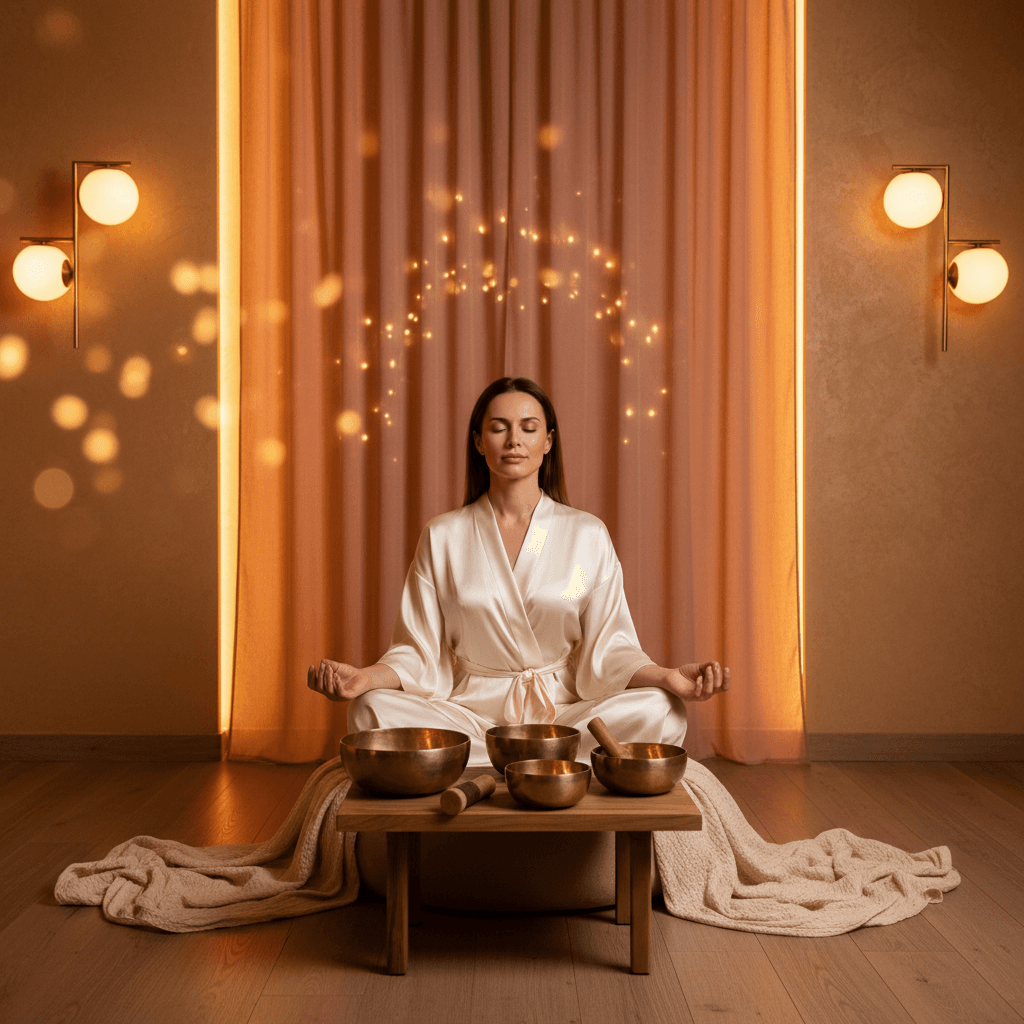
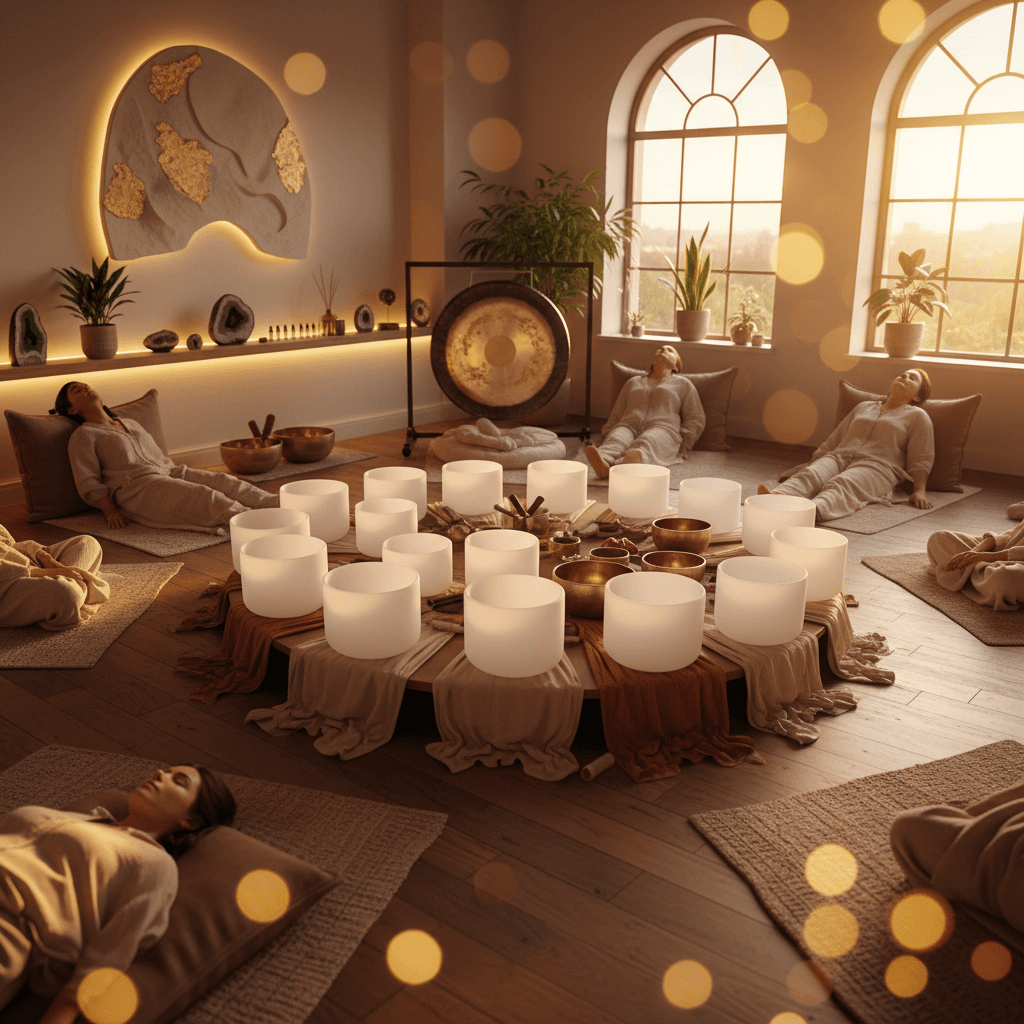
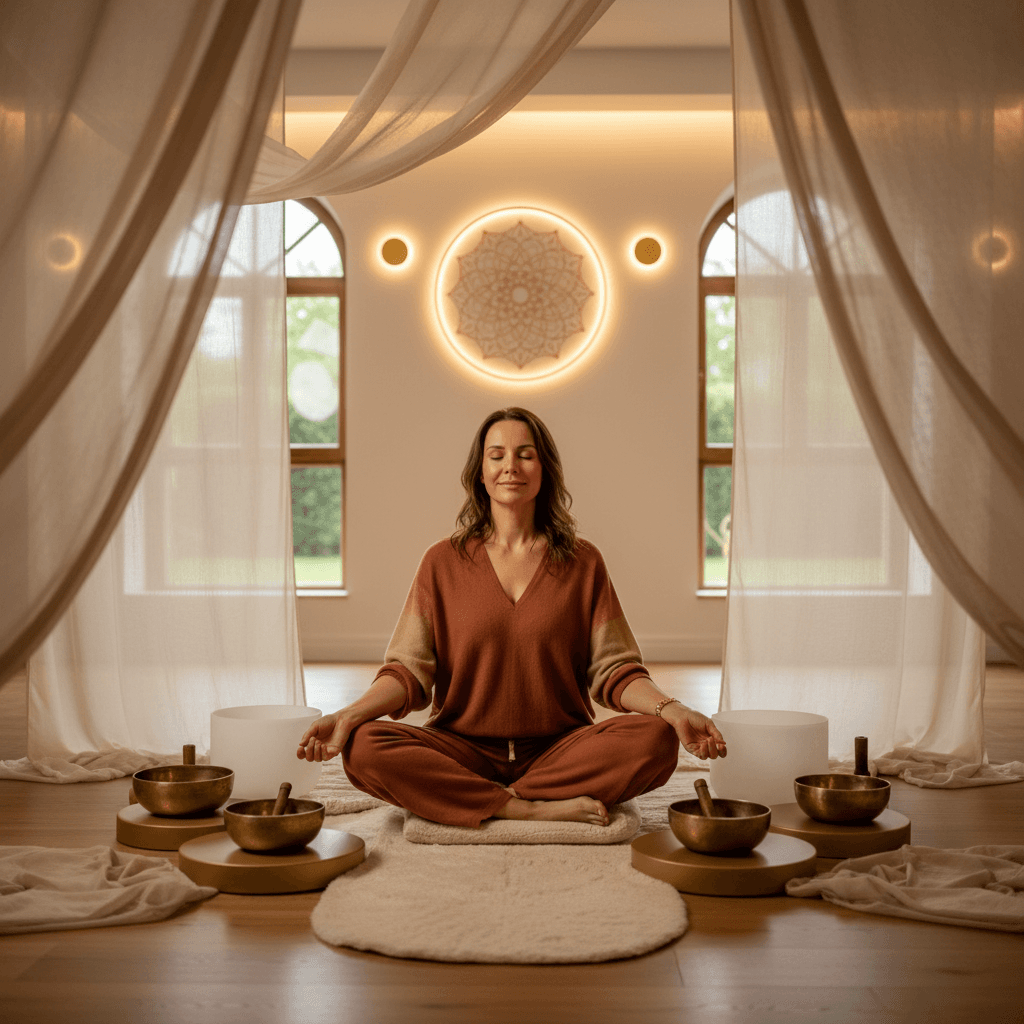
In a typical sound wellness session, participants are invited to lie down comfortably, perhaps on a mat or cushion, in a peaceful setting away from the retail hubbub. The experience often begins with guided breathwork, gently bringing attention inward and signaling to the body that it's safe to relax. Then, the practitioner introduces a symphony of carefully selected sounds. These are not merely catchy tunes but instruments specifically chosen for their vibrational qualities and ability to generate harmonic overtones.
As the sounds unfold—the deep, resonant hum of gongs, the shimmering purity of crystal bowls, or the grounding vibrations of Himalayan singing bowls—clients often report an immediate shift in their internal state. The sounds are designed to wash over the body, not just the ears. Many describe feeling the vibrations permeate their physical being, gently loosening tension and easing muscular tightness that often accumulates from prolonged standing or stress. Mentally, the mind, often racing with anxieties from the workday, begins to quiet. The brain naturally syncs with the slower, more coherent frequencies, fostering a sense of profound calm and mental clarity. This allows for emotional release, where pent-up frustrations and anxieties may gently surface and dissipate, replaced by a lighter, more expansive feeling.
Regular engagement with sound wellness practices can build a stronger foundation of emotional resilience. Just as exercise strengthens muscles, consistent exposure to therapeutic sound can train the nervous system to be less reactive to daily stressors. This may support retail workers in navigating challenging customer interactions with greater equanimity and maintaining a more positive outlook throughout their demanding shifts. When employees are more grounded and less stressed, preliminary studies indicate they are better equipped to provide proactive customer service and handle situational challenges, potentially enhancing overall customer satisfaction, as Söderlund's research on proactive service suggests.
"The retail environment's inherent auditory landscape, often designed for persuasion, paradoxically becomes a source of profound stress for its employees. Sound wellness reclaims this powerful medium, transforming it into a conduit for profound restoration and resilience."
The Soul Art Approach: Larissa Steinbach's Vision for Well-being
At Soul Art, Dubai's premier sound wellness studio, Larissa Steinbach has meticulously crafted an approach that transcends traditional relaxation techniques. Her method is rooted in a deep understanding of psychoacoustics and a profound empathy for the unique challenges faced by modern professionals, especially those in high-stress, customer-facing roles. Larissa's vision is to provide a sanctuary where the science of sound meets the art of healing, offering a powerful antidote to chronic stress and burnout.
What makes the Soul Art method truly unique is its holistic integration of ancient wisdom with contemporary scientific understanding. Larissa Steinbach combines years of expertise in sound healing with a clear focus on the physiological and psychological needs of her clients. She doesn't just play instruments; she curates an intentional sonic journey designed to guide the nervous system into states of deep coherence and restoration. This precision allows for a tailored experience that addresses the specific stressors of retail work, from the emotional toll of unruly customers to the physical fatigue of long hours.
The core of Soul Art's practice involves a carefully selected array of sacred instruments, each chosen for its distinct vibrational qualities and harmonic richness. Participants will experience the deep, grounding resonance of Himalayan singing bowls, whose metallic tones and intricate overtones are believed to induce meditative states and balance energy centers. The ethereal, crystalline purity of crystal singing bowls creates a luminous soundscape, promoting profound mental clarity and emotional release. Majestic gongs generate powerful, immersive sound waves that encourage a total body-mind reset, often described as a 'sonic massage' that clears energetic blockages and fosters deep relaxation. Additionally, delicate chimes and other percussive instruments add layers of texture and nuance, completing a rich tapestry of therapeutic sound. Through Larissa Steinbach's masterful guidance, these instruments become conduits for deep healing, helping retail workers to release accumulated stress, recalibrate their nervous systems, and return to their demanding roles with renewed energy and emotional fortitude.
Your Next Steps: Cultivating Calm in a Demanding World
Understanding the profound impact of sound on your well-being is the first step toward cultivating greater resilience, especially if you're navigating the demanding world of retail. While professional sound wellness sessions offer deep restoration, there are practical steps you can implement daily to support your nervous system and manage stress.
Here are 3-5 actionable steps to integrate sound mindfulness into your routine:
- Mindful Moment Sound Breaks: During your breaks, instead of scrolling, seek out a quiet space and listen to a short (5-10 minute) guided meditation or a calming ambient soundscape (e.g., nature sounds, binaural beats). This simple act can help reset your nervous system before returning to the floor.
- Curate Your Commute: Transform your journey to and from work. Replace stimulating music or news with instrumental, classical, or meditative music. This helps to either prepare your mind for a demanding day or decompress from the day's events, creating a mental buffer.
- Harness Your Breath with Sound: Practice simple breathing exercises, paying close attention to the sound of your own breath. Deep, diaphragmatic breathing creates an internal rhythm that signals safety to your nervous system. Try counting your inhales and exhales, letting the gentle sound of your breath be your anchor.
- Establish a Sonic Sanctuary at Home: Dedicate a specific area in your home, no matter how small, to be free from electronic noise. Consider incorporating a small, personal singing bowl or chimes to use for a few minutes each evening to signify the transition from work-mode to rest-mode.
- Advocate for Wellness: If you're in a management role, consider the sound environment within your store from an employee's perspective. Could strategically chosen background music or designated quiet zones support your team's well-being? Some research suggests that proactive management of situational sounds can influence customer satisfaction, highlighting the interconnectedness of employee and customer experience.
Embracing sound as a tool for personal wellness is a proactive step towards mitigating burnout and fostering a healthier work-life balance. For deeper, more transformative experiences and bespoke corporate wellness programs designed specifically for retail teams, explore the offerings at Soul Art. Your well-being is an investment that yields immense returns.
In Summary: A Symphony of Support for Retail Workers
Retail workers, the backbone of our economy, face an unprecedented level of stress, burnout, and challenging customer interactions, as highlighted by recent research. The powerful influence of sound, already strategically used to shape consumer behavior, holds immense, untapped potential for employee well-being. By understanding how stressful auditory environments activate the nervous system, we can consciously leverage therapeutic sound to induce deep relaxation and foster resilience.
Soul Art, under the compassionate guidance of Larissa Steinbach, offers a unique and scientifically informed approach to sound wellness. Through a carefully curated blend of ancient instruments and modern understanding, Soul Art provides a vital pathway for retail professionals to release tension, restore emotional balance, and build a stronger foundation for sustained well-being. Embrace the transformative power of sound to support your vital customer-facing roles and discover a new frequency of calm and strength.
Bookings Coming Soon
Soul Art is still in preparation. Session details and booking will be published here after launch.
Coming Soon
Wellness Disclaimer: This article is for educational and informational purposes only. It does not constitute medical advice, diagnosis, or treatment. Soul Art Dubai provides non-medical wellness experiences focused on relaxation, stress management, and general wellbeing. Sound wellness is a complementary practice and should not replace professional medical care.
Related Articles
Chefs: Mastering Kitchen Pressure Through Sound Wellness
Sound for Death Workers: Managing Stress for Funeral Directors
Accountants: Sound for Tax Season Stress & Burnout Relief