Serotonin, Sound & Soul Art: Unlocking Harmonic Well-being
Key Insights
Explore how harmonic frequencies influence serotonin pathways in the brain. Discover scientifically-backed sound wellness at Soul Art, Dubai, with Larissa Steinbach.
Have you ever noticed how a particular piece of music can instantly shift your mood, soothe your worries, or even ignite a feeling of pure joy? This profound connection between sound and our internal state is far more than mere emotion; it delves into the intricate chemical symphony within our brains. Recent advancements in neurobiology are illuminating the fascinating ways harmonic frequencies interact with vital neurotransmitter systems, especially those involving serotonin.
At Soul Art, Dubai's premier sound wellness studio, we harness this scientific understanding to craft experiences that resonate deeply, fostering a profound sense of peace and wellbeing. This article will explore the cutting-edge research linking harmonic frequencies to our brain's serotonin pathways. We will uncover how these unique soundscapes may offer a powerful, complementary path to emotional balance and inner harmony.
Join us as we journey into the heart of neuro-acoustics, revealing why a session at Soul Art is not just an escape, but a scientifically-informed engagement with your body's innate capacity for wellness. Understanding these mechanisms empowers us to approach self-care with greater intention and efficacy.
The Science Explained: Serotonin Pathways and Sound's Influence
The human brain is a marvel of biological engineering, constantly processing external stimuli and translating them into internal experiences. Among its most powerful tools for regulating mood, behavior, and overall wellbeing is the complex neurotransmitter system, with serotonin playing a starring role. Through meticulous studies, scientists have gathered empirical evidence showing that the human brain reacts to music and harmonic frequencies in various profound ways.
These reactions are not just subjective; they are relayed to different parts of the human body through a process called transduction. This can create a positive or negative chemical response, directly impacting our physiological and psychological states. Understanding this intricate interplay between sound and neurochemistry is fundamental to appreciating the transformative potential of sound wellness practices.
The Intricate Dance of Serotonin Pathways
Serotonin (5-HT) is a crucial monoamine neurotransmitter originating in the raphe nuclei of the brainstem, with diffuse projections reaching numerous structures throughout the central nervous system. This widespread distribution allows serotonin to influence a vast array of bodily functions, including mood, social behavior, appetite, digestion, sleep, memory, and motor skills. Given its broad impact, an imbalance in serotonin levels has been associated with various challenges to mental and emotional wellbeing.
Recent research has illuminated a greater complexity within the serotonin system than previously understood. A pivotal study from Stanford University, led by biologist Liqun Luo, revealed that our brain's serotonin system is actually composed of multiple parallel subsystems. These subsystems can function differently, and at times, in opposing ways, which helps to clarify past divergent research findings. This insight suggests that by targeting specific pathways, we may be able to address particular aspects of wellbeing without unintended side effects.
The influence of music on these serotonin pathways has garnered significant scientific attention. Auditory stimulation, especially through melodic music, has been shown to increase activity in key brain regions. Specifically, it may increase serotonin (5-HT) activity in the caudate-putamen (CPu), also known as the dorsal striatum. This region is critically linked to pleasure, reward mechanisms, and motor control, suggesting a direct neurological response to musical input.
Furthermore, studies utilizing classical music, such as Mozart’s sonata, have been associated with an increase in serotonin metabolites concentration in the CPu of adult rats (Moraes et al., 2018). This suggests that certain musical exposures may actively modulate serotonin levels within the brain. The quality of music also appears to be a factor; researchers measured an increase in serotonin platelets in response to pleasant music, while unpleasant music correlated with a decrease, indicating a modulated release of serotonin based on the music's emotional valence (Evers and Suhr, 2000).
The Power of Harmonic Frequencies on Neural Pathways
Our brains are comprised of a phenomenal mass of neural pathways, connecting each neuron, which profoundly affect our bodies. The more consistently we use each neural pathway, the more entrenched and efficient it becomes in processing information. Similarly, the more we listen to certain music, the emotional effect it has on us becomes deeply ingrained within these neural pathways. Music is indeed one of the most powerful elicitors of subjective emotion.
Harmonic frequencies, which are integer multiples of a fundamental frequency, create a rich, resonant sound quality that our brains process distinctly. Research into ultrasonic vocalizations (USVs) in animals, for example, has shown a link between serotonin manipulation and harmonic vocalizations. One study found that increased serotonin levels cause male mice to be more responsive to female signals, notably affecting harmonic vocalizations (Hood and Hurley, 2024). This suggests a focused effect of serotonin on the generation and perception of harmonic sounds.
The impact of harmonic frequencies extends beyond mere emotional response; it touches upon the very structure and function of the brain. A substantial body of clinical data has been amassed showing the positive effects of music on structural and emotional processors in various brain disorders. This includes developmental and acquired brain disorders such as autism, strokes, and even neurodegenerative diseases (Clark, Downey & Warren, 2014). Such findings underscore music's potential as a complementary tool in supporting brain health and function.
The specific dynamics of serotonin release are also influenced by frequency. Studies have shown that high-frequency stimulation (e.g., 10-20 Hz) can induce extrasynaptic release of 5-HT, affecting receptors and neurons not typically targeted by purely synaptic release induced by low-frequency stimulation (e.g., 1 Hz) (Trueta and De-Miguel, 2012). This suggests that different sound frequencies, by modulating serotonin release dynamics, may elicit distinct effects on brain networks. Ultraslow serotonin oscillations in the hippocampus have also been shown to influence brain activity patterns, indicating a complex interplay between frequency and serotonin function.
Moreover, the interaction between specific serotonin receptors and music has been investigated. Lysergic acid diethylamide (LSD), a psychedelic drug acting as a 5-HT2A receptor agonist, has been shown to increase cortical excitation via increased 5-HT2A receptor signaling. When participants listened to music under the influence of LSD, brain activity assessed by BOLD signals revealed that 5-HT2A receptor signaling is implicated in neural responses to music in regions related to higher-level musical processing (F. S. Barrett et al., 2018). This further supports the idea that serotonin pathways are crucial for music-induced emotionality, meaningfulness, and a sense of connectedness.
"The more we listen to certain music, the emotional effect it has on us becomes entrenched within these neural pathways, creating a powerful, lasting imprint on our wellbeing."
How It Works in Practice
Connecting the scientific insights to tangible, felt experiences is at the core of sound wellness. When you immerse yourself in a sound bath, the carefully curated harmonic frequencies act as gentle invitations for your brain and body to shift into a state of deep relaxation. This isn't just about passive listening; it's an active engagement with resonant vibrations that may subtly influence your internal chemistry.
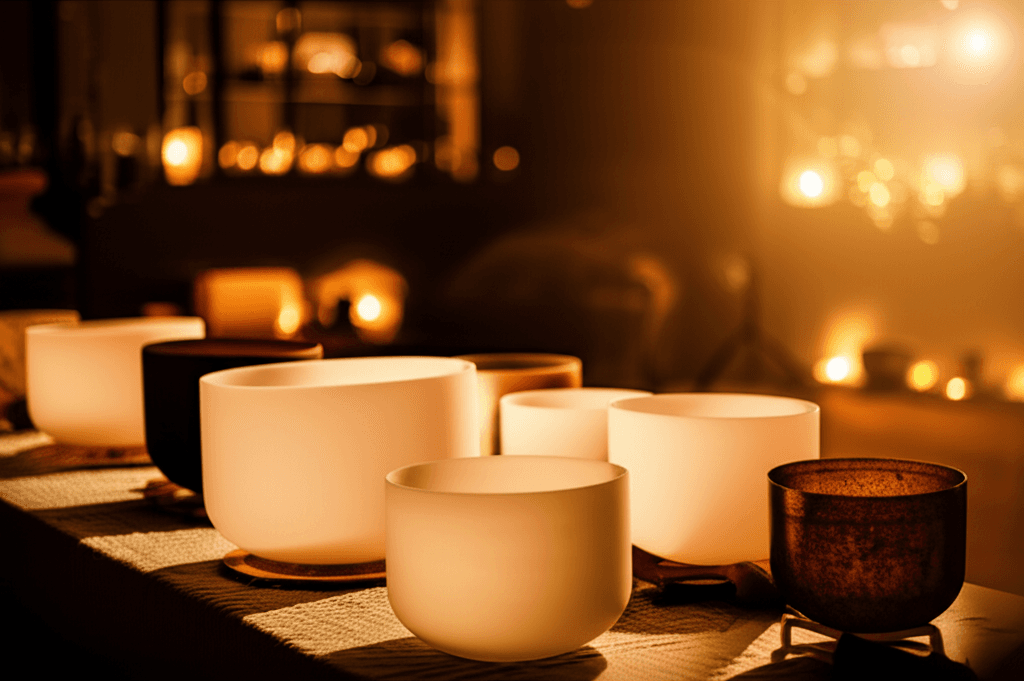
Imagine lying comfortably as the studio fills with the rich, complex overtones of Himalayan singing bowls and the deep, undulating waves of gongs. These instruments produce a spectrum of harmonic frequencies that are designed to be both auditory and somatic; you hear the sound, and you feel the vibration resonating through your body. This sensory immersion creates a unique environment for the brain. The brain's activity patterns, specifically brainwaves, have been observed to entrain with external rhythmic stimuli. In a sound wellness session, the aim is often to guide brainwave states towards alpha (relaxed awareness) and theta (deep relaxation, meditative) frequencies.
As your brain activity potentially shifts, preliminary studies suggest this experience may support the modulation of neurochemical release, including serotonin. The calming effect often reported during and after a session is not merely psychological; it may be linked to these physiological changes. This complementary approach to wellbeing focuses on creating conditions conducive to the body's natural restorative processes.
Clients often describe a profound sense of tranquility, a release of tension, and an enhanced feeling of mental clarity after a session. The gentle, consistent presence of harmonic frequencies may help to quiet the sympathetic nervous system (our "fight or flight" response) and activate the parasympathetic nervous system (our "rest and digest" state). This shift, in turn, has been associated with a more balanced emotional state, reduced perceived stress, and an improved sense of overall wellbeing.
The meticulous layering of different instruments and their specific frequencies aims to create a deeply immersive soundscape. This soundscape provides a rich auditory stimulus that may engage those neural pathways implicated in serotonin modulation and emotional processing. It's a holistic wellness practice that addresses both the mind and body through the powerful medium of sound.
The Soul Art Approach
At Soul Art, Larissa Steinbach’s vision for sound wellness in Dubai is built upon a foundation of scientific understanding and deeply intuitive practice. We believe that true wellbeing emerges from a harmonious balance within, and our meticulously crafted sessions are designed to facilitate this intricate balance. Larissa Steinbach has cultivated a unique method that transcends mere relaxation, offering a sophisticated exploration into the self through sound.
What makes the Soul Art method unique is its intentional fusion of ancient wisdom with modern neuro-acoustic insights. Every session is designed with an understanding of how specific harmonic frequencies and their combinations may interact with the brain's neural pathways and neurochemical systems. We aim to create an environment where the body's natural healing and balancing mechanisms can be optimally engaged.
Our studio is a sanctuary dedicated to the art of sound. Larissa Steinbach carefully selects and plays a diverse array of instruments, each chosen for its unique vibrational quality and harmonic richness. These include authentic Himalayan singing bowls, majestic gongs, crystalline chimes, and precise tuning forks. Each instrument contributes a distinct layer to the soundscape, creating a symphony of frequencies that resonate deeply with the human form.
The precise application of these instruments in a Soul Art session is guided by Larissa's extensive knowledge and sensitive intuition. The intention is to generate specific harmonic frequencies that encourage the brain to enter states conducive to relaxation and internal balance. This approach is rooted in the understanding that sustained exposure to these resonant sounds may support the brain in modulating crucial neurotransmitters like serotonin. By promoting states of deep relaxation, Soul Art sessions offer a powerful self-care practice for navigating the complexities of modern life.
Our commitment at Soul Art is to provide an unparalleled sound wellness experience that is both profoundly relaxing and subtly transformative. It's an invitation to rediscover your inner calm and support your nervous system's optimal function, guided by the expertise of Larissa Steinbach and the scientifically informed principles of harmonic sound.
Your Next Steps
Embracing the potential of harmonic frequencies for your wellbeing doesn't always require a formal session right away, though it is a powerful catalyst. You can begin integrating sound into your daily self-care practice with simple, actionable steps. Consistency is key, as regular engagement with calming sounds may help entrench those positive neural pathways we discussed.
Here are a few practical pieces of advice you can implement today:
- Mindful Listening: Dedicate time each day to listen to calming, harmonic music without distraction. Choose instrumental pieces, classical music, or nature sounds that feature rich overtones. Focus on the nuances of the sound, letting it wash over you and noting any shifts in your internal state.
- Explore Binaural Beats or Isochronic Tones: These audio technologies use specific frequencies to encourage brainwave entrainment, potentially guiding your brain into alpha or theta states associated with relaxation. Many apps and online resources offer guided sessions for different intentions.
- Simple Vocal Toning: Humming or gently chanting can create resonant vibrations within your own body. This simple act of self-produced sound can be surprisingly soothing and is an accessible way to engage with internal harmonics.
- Create a Serene Sound Environment: Consider incorporating chimes, water features, or soft, ambient music into your living or working space. A consistent backdrop of pleasant sounds may contribute to a more relaxed and balanced atmosphere throughout your day.
- Consider a Professional Sound Wellness Session: If you're intrigued by the deeper potential of harmonic frequencies, exploring a session at a reputable studio like Soul Art in Dubai can provide a profoundly immersive experience. Under the guidance of an expert like Larissa Steinbach, you can truly unlock the benefits of targeted sound for your wellbeing.
By actively engaging with sound, you're not just listening; you're actively participating in a wellness practice that may support your emotional regulation and foster deep relaxation.
In Summary
The intricate connection between harmonic frequencies and our brain's serotonin pathways offers a compelling frontier in holistic wellness. Scientific research increasingly supports the idea that carefully curated sounds can influence neurochemical responses, potentially modulating serotonin activity and fostering emotional balance. The human brain's capacity to react to music by creating positive chemical responses and entrenching beneficial neural pathways highlights the profound impact of auditory stimuli.
At Soul Art, Dubai, founder Larissa Steinbach leverages these insights to create unique, immersive sound wellness experiences. Through the skilled use of instruments like Himalayan singing bowls and gongs, Soul Art sessions aim to guide participants into states of deep relaxation, supporting the nervous system and promoting overall wellbeing. This complementary approach offers a powerful pathway to soothe the mind, balance emotions, and cultivate inner harmony.
Bookings Coming Soon
Soul Art is still in preparation. Session details and booking will be published here after launch.
Coming Soon
Wellness Disclaimer: This article is for educational and informational purposes only. It does not constitute medical advice, diagnosis, or treatment. Soul Art Dubai provides non-medical wellness experiences focused on relaxation, stress management, and general wellbeing. Sound wellness is a complementary practice and should not replace professional medical care.
Related Articles
Cluster Headaches: Unveiling Pain and the Promise of Frequencies in Wellness
Epilepsy & Sound: Safety, Serenity, and Emerging Wellness Paths
Mastering Focus: Analytical Listening & Brain Engagement at Soul Art