Harmonizing the Senses: Sound Frequencies for Sensory Processing

Key Insights
Explore the science behind therapeutic sound frequencies and their potential to support sensory regulation for enhanced wellbeing. Discover Soul Art's unique approach with Larissa Steinbach.
Have you ever wondered why certain sounds can instantly soothe you, while others send a shiver down your spine? Our brains are constantly interpreting a complex symphony of sensory information, a process that underpins our very experience of the world. Yet, for a significant portion of the population, this sensory interpretation can be a source of profound challenge, leading to what is known as Sensory Processing Disorder (SPD).
This comprehensive article delves into the intricate neuroscience of how we perceive and react to sensory input, shining a light on the mechanisms behind SPD. We will explore the emerging scientific understanding of how therapeutic sound frequencies, applied with precision and intention, may offer a complementary pathway to support sensory regulation and foster a more harmonious internal state. Join us as we uncover the potential for sound to re-tune our nervous systems, guiding us towards enhanced wellbeing and a greater sense of calm.
The Science Explained: Unpacking Sensory Processing and Therapeutic Sound
Our interaction with the world is fundamentally shaped by how our brains receive, organize, and respond to sensory information. When this intricate system faces challenges, everyday experiences can become overwhelming, leading to a condition that warrants a deeper scientific exploration.
Understanding Sensory Processing Disorder (SPD)
Sensory Processing Disorder (SPD) refers to a condition where the brain has difficulty interpreting and responding to sensory input. This means individuals with SPD may either be over-responsive (hypersensitive), under-responsive (hyposensitive), or have difficulty modulating sensory input, impacting their daily functioning. Research from studies in New Haven, CT, suggests that SPD symptoms are present in as many as one in six children aged 7 to 11 years (Ben-Sasson et al., 2009).
The physiological basis of SPD is rooted in distinct neurophysiological responses to sensory stimuli compared to neurotypical individuals. Studies by Brett-Green et al. (2010), Davies & Gavin (2007), Davies et al. (2009, 2010), and Gavin et al. (2011) indicate that children with SPD demonstrate different brain activity patterns. These findings highlight that SPD is not merely a behavioral issue, but rather has tangible neurological underpinnings. Despite accumulating evidence, the scientific study of sensory processing impairments remains extremely challenging, with much work still needed to develop more reliable diagnostic measures and effective interventions (sensoryhealth.org; PMC, 2022).
The Mechanism of Sound and Vibration in the Brain
Therapeutic sound operates on fundamental principles of physics and biology, engaging multiple pathways within the human body and brain. Our bodies are incredibly sensitive to vibrational input, detected by specialized mechanoreceptors. Pacinian corpuscles, for instance, are nerve endings in the skin capable of detecting vibrations up to 1,000 Hz.
Groundbreaking research from Harvard Medical School reveals that high-frequency mechanical vibrations picked up by these skin mechanoreceptors are not exclusively processed in the somatosensory cortex, traditionally viewed as the primary area for bodily sensations. Instead, these signals are significantly routed from the body to the inferior colliculus in the midbrain, a region primarily associated with sound perception (Zia, HMS Research). This fascinating discovery suggests a profound convergence of sound and vibration processing in the brain. Neurons in this midbrain region actually respond more strongly to sound and mechanical vibrations when combined, compared to either stimulus alone, resulting in an enhanced sensory experience.
Vibroacoustic therapy (VAT), a specific form of therapeutic sound intervention, leverages low-frequency sine wave vibrations, typically ranging between 30 and 120 Hz. This method has garnered significant research attention for its ability to elicit distinct physiological responses. For example, studies indicate that 40 Hz stimulation can activate gamma brain waves, which are intimately linked with cognitive processing, memory consolidation, and neural synchronization (aanmc.org). Specific frequencies can also enhance neuroplasticity, the brain's ability to reorganize itself by forming new neural connections, and stimulate alpha-motor neurons, which are crucial for motor function.
The ability of sound and vibration to modulate brain rhythms is a key area of interest. Non-invasive neurostimulation techniques, including rhythmic auditory and visual stimuli, can target neural circuits involved in sensory processing, attention, and memory (Nature Biotechnology). For example, exposure to 40 Hz light and sound has been shown to reduce hallmarks of Alzheimer’s pathology in animal models and early human trials, by potentially enhancing glymphatic clearance, reducing neuroinflammation, and improving synaptic function through "gamma entrainment using sensory stimulation" (GENUS) (aanmc.org). While the exact mechanisms are complex and still being fully elucidated, the evidence suggests that rhythmic input can modify neuronal firing patterns, supporting brain health and function.
Limitations and Future Research
It is important to acknowledge that the knowledge base regarding sensory processing impairments and the effectiveness of interventions remains in its early stages (sensoryhealth.org). While some studies, such as the Hall and Case-Smith (2007) paper on therapeutic listening, have shown promising results, the broader body of evidence for many SPD therapies, including sensory integration therapy (SIT), requires further rigorous investigation. Reviews of other therapies like auditory integration training (AIT), massage, and music therapy have concluded that more research is needed to confirm positive outcomes and provide specifics on duration, frequency, and intensity (medrxiv.org).
"Scientists and practitioners alike must promote research that leads to better diagnoses and effective interventions, improving the lives of children and their families." - From Empirical Evidence Related to Therapies for Sensory Processing Impairments
Future studies should maintain high standards of randomized clinical trials and vary intervention protocols to gain a clearer understanding of efficacy. Despite these ongoing challenges, the field offers tremendous promise, with new research employing stronger empirical standards actively being implemented to elucidate underlying mechanisms and evaluate intervention effectiveness. This scientific rigor is essential to truly move the field forward and provide validated solutions.
How It Works in Practice: Bridging Science with Experience
Understanding the scientific underpinnings of therapeutic sound allows us to appreciate its practical application in supporting sensory regulation. While research continues to evolve, the experiential benefits reported by many individuals and observed in preliminary studies offer compelling insights into how sound can be a powerful complementary tool.
Connecting theory to real-world application, therapeutic sound interventions aim to provide structured and modulated auditory input to help regulate the nervous system. The idea is that carefully chosen frequencies and rhythms can offer an organizing experience for a nervous system that might otherwise be dysregulated by everyday sensory information. This gentle guidance can help individuals become more comfortable with a wider range of sensory stimuli.
One notable example is the study by Hall and Case-Smith (2007), which investigated the effects of a sensory diet combined with a therapeutic listening intervention program for children with SPD and visual-motor delays. Directed by an occupational therapist and implemented by parents, the program showed significant improvements. Scores on various scales, including those related to sensory processing behaviors and visual-motor integration, improved more during the therapeutic listening phase. This suggests that sound-based interventions, particularly when integrated into a broader sensory approach, may effectively support individuals in navigating their sensory world.
Occupational therapists have long recognized the potential of music and sound as preparatory activities for therapeutic engagement. As noted by Ayres (1979) and Frick & Hacker (2001), sensory input delivered through the auditory and vestibular systems can be deeply calming and organizing. This belief forms the basis for integrating specific sound frequencies to help individuals achieve a more regulated state, making them more receptive to other therapeutic activities or simply to everyday life.
In practice, clients experiencing therapeutic sound often describe a profound sense of relaxation and inner calm. They may lie comfortably while a practitioner uses specialized instruments to create specific soundscapes and vibrations. The experience is designed to be immersive, allowing the body to absorb the frequencies through both auditory perception and direct vibrational contact. This dual input, leveraging the convergence of sound and vibration processing in the brain, can be particularly effective.
The gentle vibrations, felt through the body, may help to 're-tune' areas of the nervous system that are either over- or under-stimulated. Many people report a reduction in anxiety, improved focus, and a general feeling of being more grounded after sessions. For those with sensory sensitivities, the controlled and intentional nature of therapeutic sound provides a stark contrast to the often unpredictable and overwhelming sensory environment of daily life. It offers a safe space for the nervous system to practice regulation. These experiences highlight how sound wellness is a complementary approach that may support individuals in managing stress, enhancing relaxation, and fostering overall wellbeing.
The Soul Art Approach: Harmonizing Inner Worlds
At Soul Art, Dubai's premier sound wellness studio, we embrace a holistic and scientifically informed approach to sensory regulation and wellbeing. Our founder, Larissa Steinbach, is deeply committed to bridging ancient wisdom with contemporary scientific understanding, creating experiences that are both profound and deeply rooted in physiological principles.
Larissa Steinbach's philosophy at Soul Art centers on recognizing the unique sensory profile of each individual. We understand that personal responses to sound are diverse, which is why our sessions are thoughtfully designed to cater to specific needs and sensitivities. This personalized approach ensures that the therapeutic sound frequencies offered are not just pleasant, but truly supportive for nervous system regulation and sensory harmony.
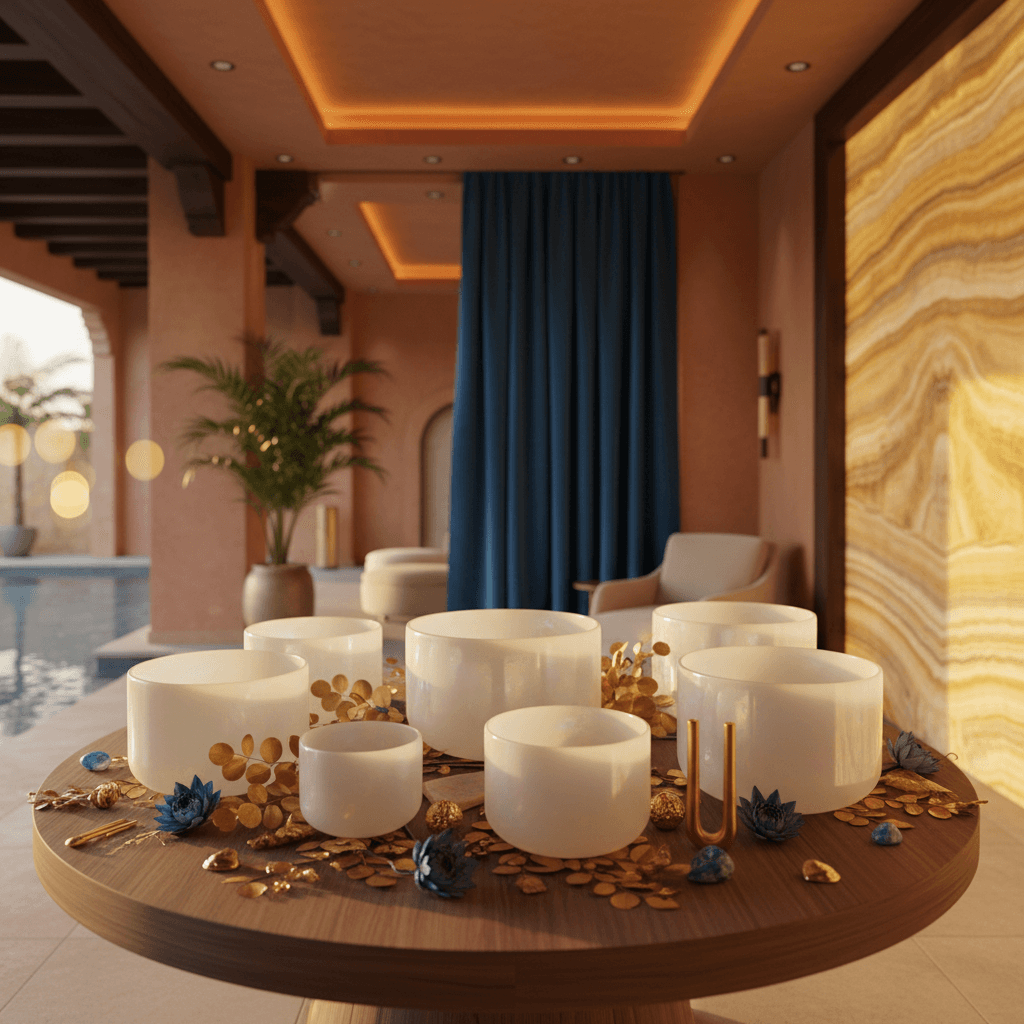
What makes the Soul Art method unique is its meticulous curation of instruments and the intentional application of sound. We utilize a range of high-quality vibrational tools, including Himalayan singing bowls, crystal singing bowls, gongs, and other resonant instruments. Each instrument is chosen for its specific frequency spectrum and capacity to generate pure, sustained tones and vibrations. These precise frequencies are carefully layered to create a rich, immersive soundscape that encourages deep relaxation and systemic regulation.
Our sound wellness sessions are more than just a listening experience; they are a multi-sensory journey designed to create a "sensory sanctuary." The gentle, pervasive vibrations penetrate the body, engaging the mechanoreceptors we discussed earlier, promoting a profound sense of physical and mental release. This direct vibrational input complements the auditory experience, enhancing the overall potential for neural re-patterning and nervous system balance.
Larissa Steinbach and her team focus on delivering frequencies that may support the activation of beneficial brainwave states, such as alpha and theta, which are associated with deep relaxation, meditation, and creative flow. By guiding the brain into these states, Soul Art aims to provide a powerful tool for stress management, emotional balance, and enhanced sensory integration. Each session is an invitation to explore a state of inner equilibrium, helping to alleviate the challenges associated with sensory dysregulation.
Your Next Steps: Embracing Sensory Harmony
Integrating therapeutic sound into your wellness routine can be a transformative step towards greater sensory harmony and overall wellbeing. Here are a few actionable steps you can implement today to begin your journey:
- Mindful Listening Practice: Take five minutes each day to simply listen to your environment. Notice the subtle sounds, their textures, and how they make you feel. This practice can heighten your sensory awareness and appreciation.
- Curate Your Sound Environment: Pay attention to the sounds you expose yourself to daily. Consider using calming music, nature sounds, or ambient frequencies to create a more supportive and less overwhelming auditory space at home or work.
- Explore High-Quality Auditory Resources: Look for guided meditations or sound baths available online from reputable wellness practitioners. These can provide a gentle introduction to therapeutic frequencies in the comfort of your own space.
- Prioritize Regular Relaxation: Incorporate daily relaxation techniques, whether it's deep breathing, gentle stretching, or short periods of quiet contemplation. Consistent self-care is foundational to sensory regulation.
- Consider a Professional Sound Wellness Session: If you are seeking a deeper, more tailored experience, exploring a session at a dedicated sound wellness studio like Soul Art can be profoundly beneficial. Our expert practitioners can guide you through an immersive journey designed to support your unique sensory needs.
Soul Art is still in preparation. Session details and booking will be published here after launch. At Soul Art, we invite you to experience the profound benefits of therapeutic sound frequencies. Let Larissa Steinbach and our team guide you towards a more balanced and harmonious sensory life.
In Summary: Re-tuning Towards Wellbeing
Sensory Processing Disorder presents significant challenges for individuals navigating a complex sensory world, with scientific research continually striving to understand its nuances and effective interventions. While the scientific journey for SPD therapies is ongoing, preliminary studies and anecdotal evidence suggest that therapeutic sound frequencies hold remarkable potential as a complementary wellness practice. These frequencies engage our innate biological mechanisms, influencing brainwave states and promoting nervous system regulation.
At Soul Art, Larissa Steinbach and her dedicated team are pioneers in this field, offering expertly crafted sound wellness experiences designed to support sensory integration and foster profound relaxation. Through a blend of scientific understanding and ancient vibrational wisdom, Soul Art provides a sanctuary where individuals can re-tune their inner worlds, moving towards greater balance and wellbeing. We invite you to explore the transformative power of sound and discover how it can harmonize your senses.
Bookings Coming Soon
Soul Art is still in preparation. Session details and booking will be published here after launch.
Coming Soon
Wellness Disclaimer: This article is for educational and informational purposes only. It does not constitute medical advice, diagnosis, or treatment. Soul Art Dubai provides non-medical wellness experiences focused on relaxation, stress management, and general wellbeing. Sound wellness is a complementary practice and should not replace professional medical care.
Related Articles

Cluster Headaches: Unveiling Pain and the Promise of Frequencies in Wellness

Epilepsy & Sound: Safety, Serenity, and Emerging Wellness Paths
Mastering Focus: Analytical Listening & Brain Engagement at Soul Art