The Uncharted Frequencies: Bridging Research Gaps in Sound Wellness
Key Insights
Explore the fascinating world of sound wellness and the crucial research gaps that, when addressed, will elevate our understanding of holistic wellbeing. Discover Soul Art's vision.
Unlocking Deeper Harmony: Bridging Research Gaps in Sound Wellness
Have you ever wondered about the profound yet often subtle power of sound to reshape your internal landscape? From ancient chanting traditions to the resonant vibrations of modern sound baths, humans have intuitively sought solace and transformation through audible frequencies. Yet, as our understanding evolves, a crucial question emerges: what scientific frontiers in sound wellness still await exploration?
This article delves into the fascinating concept of "research gaps" within the realm of sound wellness, highlighting what still needs meticulous study. We will uncover why identifying these gaps is not a sign of weakness, but a powerful catalyst for innovation, driving us towards a more profound, evidence-informed understanding of holistic wellbeing. For Larissa Steinbach and Soul Art, this journey of discovery is fundamental to offering the most refined and impactful experiences.
Understanding these gaps is paramount for anyone seeking to integrate sound into their personal wellness journey or for practitioners aiming to advance their craft. It grounds our appreciation for sound in both empirical potential and mindful practice, empowering us to navigate this evolving field with informed curiosity.
The Science Explained: Illuminating the Unexplored
In the vast landscape of scientific inquiry, a "research gap" represents an unexplored or inadequately addressed space in existing knowledge. It is a clear, unanswered question or problem that existing studies have yet to thoroughly investigate, often indicating where meaningful new science can begin. Identifying these gaps is a foundational step, guiding researchers toward relevant, innovative, and impactful studies.
These gaps can arise from various factors, including missing data in specific populations, underutilized methods, inconsistent results across studies, or emerging areas that lack comprehensive investigation. Critically, acknowledging what we don't yet fully understand is as important as celebrating what we do. It fosters a culture of continuous learning and refinement, ensuring that wellness practices, including sound wellness, evolve on a solid foundation.
"Ultimately, working on a well-defined research gap not only enhances the academic rigor of your study but also maximizes its impact. Whether you are crafting a thesis, writing a grant proposal, or designing a clinical study, begin your journey by identifying where knowledge ends because that’s where meaningful science begins."
Unpacking Key Research Gaps in Sound Wellness
The field of sound wellness, while growing in popularity and anecdotal acclaim, is rich with areas ripe for deeper scientific exploration. By applying established categories of research gaps, we can pinpoint specific avenues for future study that promise to elevate our understanding and enhance the efficacy of sound practices.
Knowledge Gaps
A knowledge gap represents a broad lack of understanding or information about a topic. In sound wellness, this often pertains to the precise neurobiological and physiological mechanisms activated by specific frequencies and sound modalities. For instance, while many people report profound relaxation from a sound bath, the exact pathways through which gong vibrations influence the vagus nerve, or how crystal bowls entrain specific brainwave states (like alpha or theta waves), are still undergoing detailed investigation.
Preliminary studies indicate that sound may induce changes in heart rate variability, skin conductance, and even gene expression related to stress. However, comprehensive, large-scale studies are still needed to map these intricate interactions consistently across diverse individuals. Understanding the "how" at a granular level will allow for more targeted and personalized sound wellness interventions.
Methodological Gaps
Methodological gaps arise when existing studies rely on outdated, inappropriate, or overly narrow research methods. In sound wellness research, a significant challenge lies in developing standardized protocols for study design. How do we objectively measure the "dose" of a sound experience – is it frequency, intensity, duration, or a combination? Moreover, the subjective nature of sound perception makes blinding participants challenging, which is a cornerstone of robust clinical trials.
Future research needs innovative methodological advancements, potentially integrating advanced neuroimaging techniques (fMRI, EEG) with biometric data (heart rate, cortisol levels) and standardized qualitative reporting. The development of validated survey instruments specifically tailored to assess the multifaceted impacts of sound on mood, cognition, and physical sensation is also crucial. These advancements could provide a richer, more objective understanding of sound's effects.
Contextual and Population Gaps
Contextual gaps occur when research overlooks specific geographic, cultural, or situational contexts, while population gaps highlight the underrepresentation of certain groups. Sound wellness research, for example, often lacks data on its effectiveness across diverse cultures or specific demographics. Does the perceived benefit of a sound bath vary significantly between an individual in a bustling metropolis like Dubai and someone in a more secluded environment?
Furthermore, specific populations, such as individuals with chronic stress, sleep disturbances, or those recovering from trauma, may respond differently to sound. We need inclusive research that captures these varied perspectives and experiences, ensuring the relevance and applicability of sound wellness to a broader, more equitable range of people. Understanding these nuanced interactions can help tailor sound practices to specific community needs.
Longitudinal Gaps
The gap in longitudinal studies identifies the quality of evidence generated from cross-sectional observations, which capture a snapshot in time. Most existing studies on sound wellness tend to be short-term, observing immediate or short-duration effects. While these are valuable, they do not fully illuminate the long-term benefits or potential for sustained change through regular practice.
There is a significant need for research that tracks participants over extended periods – months, or even years – to understand the cumulative effects of sound wellness. This includes investigating the durability of stress reduction, improvements in sleep quality, or the development of enhanced emotional regulation over time. Longitudinal studies are essential for building robust evidence and substantiating the enduring impact of sound practices.
Evidence Gaps
An evidence gap refers to the lack of strong, credible, and high-quality research findings to support claims within a field. While anecdotal evidence and preliminary studies in sound wellness are abundant and compelling, there is an ongoing need for more rigorous, large-scale controlled trials, systematic reviews, and meta-analyses. These are crucial for consolidating reliable findings and distinguishing robust effects from transient ones.
For instance, claims about the impact of specific frequencies on cellular regeneration might exist, but often without rigorous, independently replicated studies to back them up. Addressing an evidence gap requires a commitment to high-quality research, ensuring that the benefits attributed to sound wellness are supported by a strong and consistent body of empirical data. This enhances the credibility and broader acceptance of the practice.
Practical Gaps
Practical gaps highlight a mismatch between academic findings and their application in real-world settings. Even when research demonstrates efficacy, there is often a lack of understanding of how to best implement sound wellness practices in diverse, everyday scenarios. How can sound wellness be effectively integrated into corporate wellness programs, educational settings, or palliative care?
Research addressing practical gaps focuses on understanding barriers to implementation, identifying optimal delivery methods, and developing accessible, actionable strategies that practitioners and individuals can readily adopt. This involves translating complex scientific findings into practical guidelines and accessible tools for daily life, bridging the gap between theory and beneficial application.
How It Works in Practice: The Embodied Experience
While the scientific community diligently works to fill these research gaps, the lived experience of sound wellness for countless individuals offers compelling preliminary insights. The journey from external vibration to internal harmony is often immediate and profound, even as its exact mechanisms are still being fully elucidated. Clients often describe entering a state of deep relaxation that transcends ordinary rest, feeling both grounded and expansive.
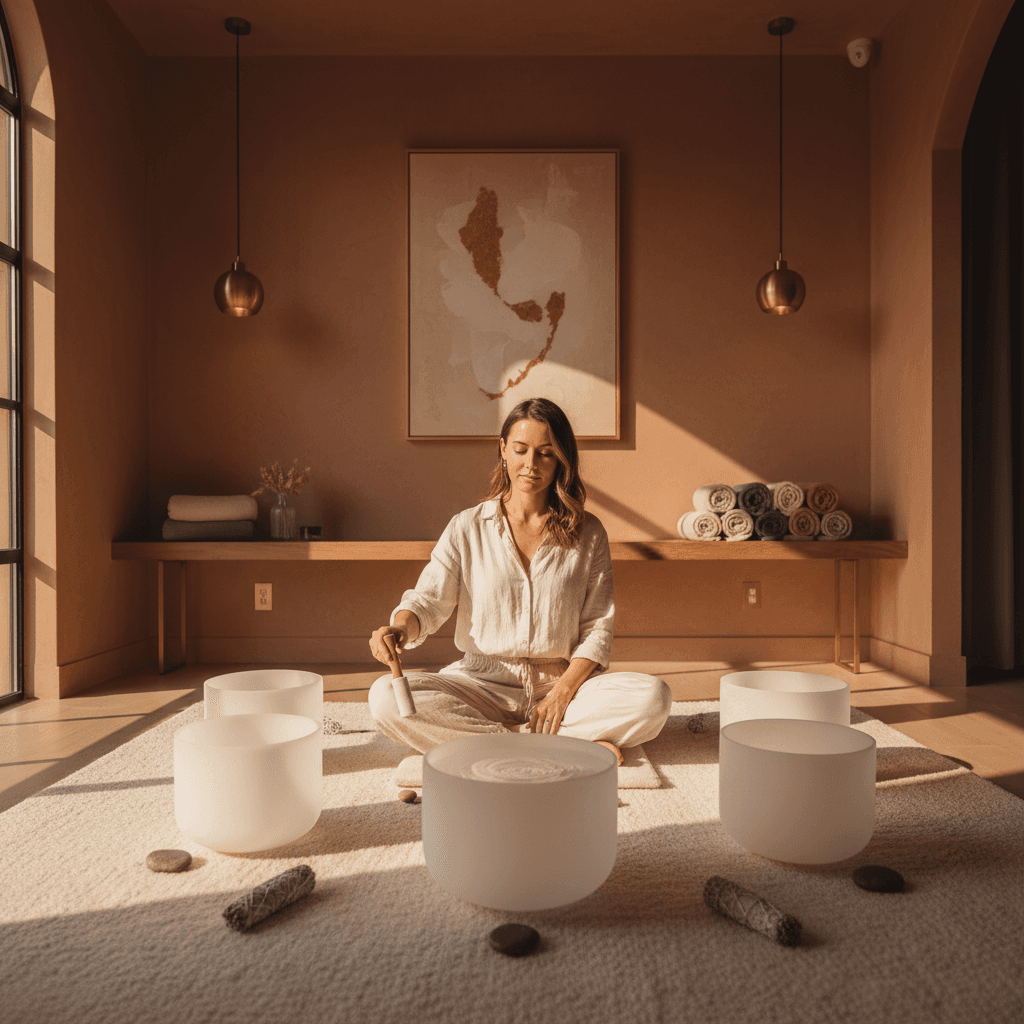
During a sound journey, the resonant frequencies from instruments like crystal singing bowls and gongs create an enveloping sonic field. These gentle vibrations are believed by many people to interact with the body's energetic systems, encouraging a shift from a stressed, sympathetic nervous system state to a more relaxed, parasympathetic response. Anecdotal evidence suggests that this shift supports the body's natural healing processes and fosters a profound sense of peace.
Many people report a significant reduction in mental chatter, a release of stored tension, and an enhanced sense of clarity and emotional balance. This experience is often attributed to the brain's ability to synchronize with the external sound frequencies, a phenomenon known as brainwave entrainment. While preliminary studies indicate these changes in brainwave activity, ongoing research aims to provide more definitive and comprehensive data on their long-term effects. The sensory richness of sound, from its deep resonant tones to its shimmering overtones, invites a unique meditative state that allows individuals to gently release stress.
The Soul Art Approach: Navigating with Intent
At Soul Art, Larissa Steinbach and her team operate with a deep respect for both the ancient wisdom traditions of sound and the evolving landscape of modern science. Their approach to sound wellness is rooted in delivering tangible experiences of calm and restoration, while remaining keenly aware of the ongoing scientific inquiry into its deeper mechanisms. Soul Art understands that a practice doesn't need all its "hows" fully categorized by science to be profoundly beneficial as a complementary wellbeing tool.
What makes the Soul Art method unique is its blend of intuitive artistry and informed practice. Larissa Steinbach curates bespoke sound journeys, meticulously selecting instruments – from large planetary gongs to fine-tuned crystal singing bowls and resonant chimes – to create a precise sonic architecture. Each session is designed to facilitate a journey inward, supporting the nervous system's natural ability to self-regulate and restore balance.
Soul Art actively contributes to addressing what might be termed a "practical knowledge gap" by continually refining its delivery of sound wellness experiences. They translate the foundational understanding of sound's effects into accessible, impactful sessions tailored for a diverse clientele in Dubai. By focusing on the individual’s felt experience and cultivating a serene, luxurious environment, Soul Art embodies a commitment to holistic wellbeing that acknowledges the current boundaries of research while celebrating the immense potential of sound.
Your Next Steps: Embracing the Sonic Journey
As we await the continued evolution of sound wellness research, you don't need to delay experiencing its potential benefits. Embracing the journey of sound is a powerful step towards enhanced self-care and holistic wellbeing. Here are some practical steps you can take today:
- Explore Reputable Practitioners: Seek out sound wellness studios and practitioners who prioritize client experience, maintain high standards of practice, and foster a nurturing environment. Ask about their approach and what you can expect from a session.
- Mindful Observation: Pay close attention to your body's and mind's responses before, during, and after a sound session. Notice any shifts in your mood, energy levels, or physical sensations. Your personal experience is a valuable part of this evolving field.
- Stay Curious and Informed: Follow reputable wellness journals and research updates regarding sound and vibration. While avoiding definitive medical claims, understanding emerging preliminary studies can deepen your appreciation for the practice.
- Integrate Sound into Daily Life: Incorporate calming music, nature sounds, or even binaural beats (using headphones) into your daily routine for relaxation, focus, or better sleep. Even short periods of intentional listening can be beneficial.
- Consider a Soul Art Session: Experience firsthand the meticulously crafted sound journeys offered by Larissa Steinbach and her team. Discover how these resonant frequencies may support your nervous system and guide you towards profound relaxation and inner harmony.
Bookings Coming Soon
Soul Art is still in preparation. Session details and booking will be published here after launch.
Coming Soon
In Summary: The Future Resonates
The exploration of research gaps in sound wellness is not merely an academic exercise; it's a vital pathway to refining and validating practices that offer profound benefits for human wellbeing. By acknowledging what still needs study—from precise neurobiological mechanisms to long-term population effects—we collectively elevate the field. This commitment to scientific inquiry enriches our understanding of how sound acts as a powerful tool for relaxation and stress management.
Larissa Steinbach and Soul Art stand at the forefront of this journey, blending ancient wisdom with an informed perspective on evolving science. They offer meticulously crafted sound experiences designed to foster deep calm and nervous system regulation. Embrace the opportunity to explore this transformative wellness practice, allowing the resonant frequencies to guide you towards a state of harmonious wellbeing.
Related Articles

40 Hz Sensory Stimulation and Alzheimer's Research
Unlocking Wellness: The Science of Sound Healing Research Design

Unlocking Wellness: Biomarkers for Effective Sound Therapy