Harmonic Pathways: Sound Wellness for Enhanced Recovery & Restoration
Key Insights
Explore how scientifically-backed sound wellness practices, championed by Larissa Steinbach at Soul Art Dubai, support holistic recovery.
Harmonic Pathways: Sound Wellness for Enhanced Recovery & Restoration
Imagine a world where sound, often overlooked beyond entertainment, holds the profound capacity to guide your body and mind towards a state of profound recovery. From the gentle lapping of waves to the focused hum of a singing bowl, specific auditory experiences are gaining significant attention for their potential role in supporting human wellbeing. At Soul Art Dubai, founded by the visionary Larissa Steinbach, we explore these intricate connections, offering a sanctuary where carefully curated sound journeys facilitate deep relaxation and encourage the body's natural restorative processes.
This article delves into the scientifically-grounded benefits of sound for recovery, moving beyond anecdotal experiences to uncover the neurological and physiological mechanisms at play. We will explore how sound can act as a powerful catalyst for reducing stress, improving focus, and even aiding in the recovery of motor functions. Understanding these principles not only opens doors to innovative wellness practices but also empowers individuals to actively engage with sound as a sophisticated tool for holistic self-care and enhanced quality of life. Prepare to discover the harmonious science behind sound's transformative potential.
The Science Explained: Unlocking Sound's Restorative Potential
The human body is a symphony of vibrations, constantly interacting with its external environment. Sound, in its myriad forms, profoundly impacts our physiological and psychological states, initiating a cascade of responses that can either induce stress or promote recovery. At the heart of understanding sound's restorative power lie two prominent psychological theories: Stress Reduction Theory (SRT) and Attention Recovery Theory (ART). These frameworks provide a robust foundation for why natural sounds and specific sonic frequencies resonate so deeply within us.
Stress Reduction Theory (SRT) and Attention Recovery Theory (ART)
Stress Reduction Theory (SRT), proposed by Ulrich et al. (1991), posits that exposure to natural environments, including their characteristic sounds, can rapidly reduce physiological and psychological stress. This manifests as a decrease in negative emotions and a quicker recovery from stress-induced arousal. Conversely, Attention Recovery Theory (ART), developed by Kaplan and Kaplan (1989; Kaplan, 1995), suggests that natural environments, rich in soft fascinations and free from demanding stimuli, allow directed attention to rest, thus restoring cognitive resources and reducing mental fatigue.
Exposure to natural soundscapes, such as forest sounds, has been shown to promote quicker recovery of skin conductance level (SCL) after psychological stress when compared to urban noise (Alvarsson et al., 2010). Furthermore, such natural auditory experiences have been associated with increased motivation (Jahncke et al., 2011). These studies collectively provide strong evidence for the restorative effects of natural sound exposure on both emotional and physiological reactions, underpinning its significance in promoting public health.
Physiological and Neurological Responses to Sound
The impact of sound extends deeply into our physiology. Research indicates that specific auditory interventions may support the reduction of the body's stress response. For instance, listening to healing beat music has been associated with significant decreases in systolic blood pressure in individuals under stress, often observed within minutes of exposure (PMC8411010). This calming effect suggests a rebalancing of the autonomic nervous system, shifting from a sympathetic "fight or flight" response towards a parasympathetic "rest and digest" state.
Beyond cardiovascular responses, various sound interventions have been observed to influence overall physiological and emotional recovery. Studies comparing pleasant or even sad music to white noise have found that music can improve physiological recovery measures such as heart rate, respiration rate, and blood flow after stressful experiences (Sokhadze, 2007). This aligns with the "undoing hypothesis," which proposes that positive emotions, often evoked by music, can help individuals recover from negative emotional states.
The brain itself exhibits remarkable plasticity in response to sound. Evidence suggests that areas traditionally associated with language processing, such as the Broca area, are also involved in the processing of musical syntax (Maess et al.). This neurological overlap highlights the complex and pervasive influence of sound on cognitive functions.
The Role of Specific Frequencies: 432 Hertz and Beyond
The specific frequencies of sound can have distinct effects on the body and mind. One frequency that has garnered particular interest is 432 hertz (Hz), an alternative tuning for the musical note A4. While the audible differences between 432 Hz and the standard 440 Hz are subtle, preliminary studies suggest that the neurological distinctions may be more widespread.
In a double-blind study by Calammassi (2020) and his team, significant improvements in sleep scores were observed in patients with spinal cord injuries after listening to 432 Hz-based music. This research indicates a potential for 432 Hz frequencies to support improved sleep quality and, by extension, aid in post-surgery and injury recovery, potentially serving as a complementary approach to manage discomfort. The idea is that these frequencies may help to regulate the body's internal rhythms, promoting deeper states of relaxation conducive to recovery.
The concept of organs vibrating at specific frequencies, a principle foundational to ultrasound technology, also underpins certain exploratory diagnostic applications in holistic research (Scholarly Review, 2016). While still largely within the realm of speculative research for diagnosis, it highlights the intricate vibrational nature of biological systems and the potential for sound to interact with these subtle energies.
Sound and Motor Rehabilitation: Rhythmic Auditory Stimulation (RAS)
The application of sound extends beyond general relaxation into more specialized areas, such as motor rehabilitation. Rhythmic Auditory Stimulation (RAS) is a technique that leverages auditory rhythms to prime the motor system, providing anticipatory time cues for movement planning and preparation. This has been particularly beneficial in helping to regulate walking timing and pace.
Seminal research from the 1990s demonstrated the efficacy of RAS in individuals with Parkinson's Disease (Thaut et al., 1996; McIntosh et al., 1997), stroke (Thaut et al., 1993, 1997; Prassas et al., 1997), traumatic brain injury (Hurt et al., 1998), and cerebral palsy (Thaut et al., 1998). These findings have been widely replicated, establishing a robust body of evidence for RAS as a valuable tool for gait disorders.
More recently, randomized controlled trials have provided further evidence for rhythmically cued training in the recovery of upper limb function, especially in stroke patients. For instance, a study by Tian et al. (2020) showed that stroke patients receiving metronome-guided training during gross motor function tasks exhibited greater improvement in upper limb function compared to control groups receiving only conventional therapy. This underscores the profound connection between auditory rhythm and motor system activation, offering a unique avenue for supporting physical recovery.
"The resonance of a carefully chosen tone can be a gentle invitation for the nervous system to recalibrate, much like a master conductor tuning an orchestra back to harmony."
In summary, the scientific literature increasingly supports the integrative impact of sound interventions on psycho-emotional and physiological outcomes. By engaging with the fundamental principles of SRT and ART, harnessing specific frequencies, and utilizing rhythmic cues, sound wellness practices may offer a powerful complementary approach to enhance recovery from various forms of stress and physical challenges.
How It Works in Practice: The Sensory Journey of Sound Wellness
Bridging the gap between scientific understanding and personal experience, sound wellness practices offer a tangible pathway to harness these restorative principles. A session at a studio like Soul Art Dubai is not merely about listening; it is about immersing oneself in a carefully constructed auditory environment designed to facilitate specific physiological and psychological shifts.
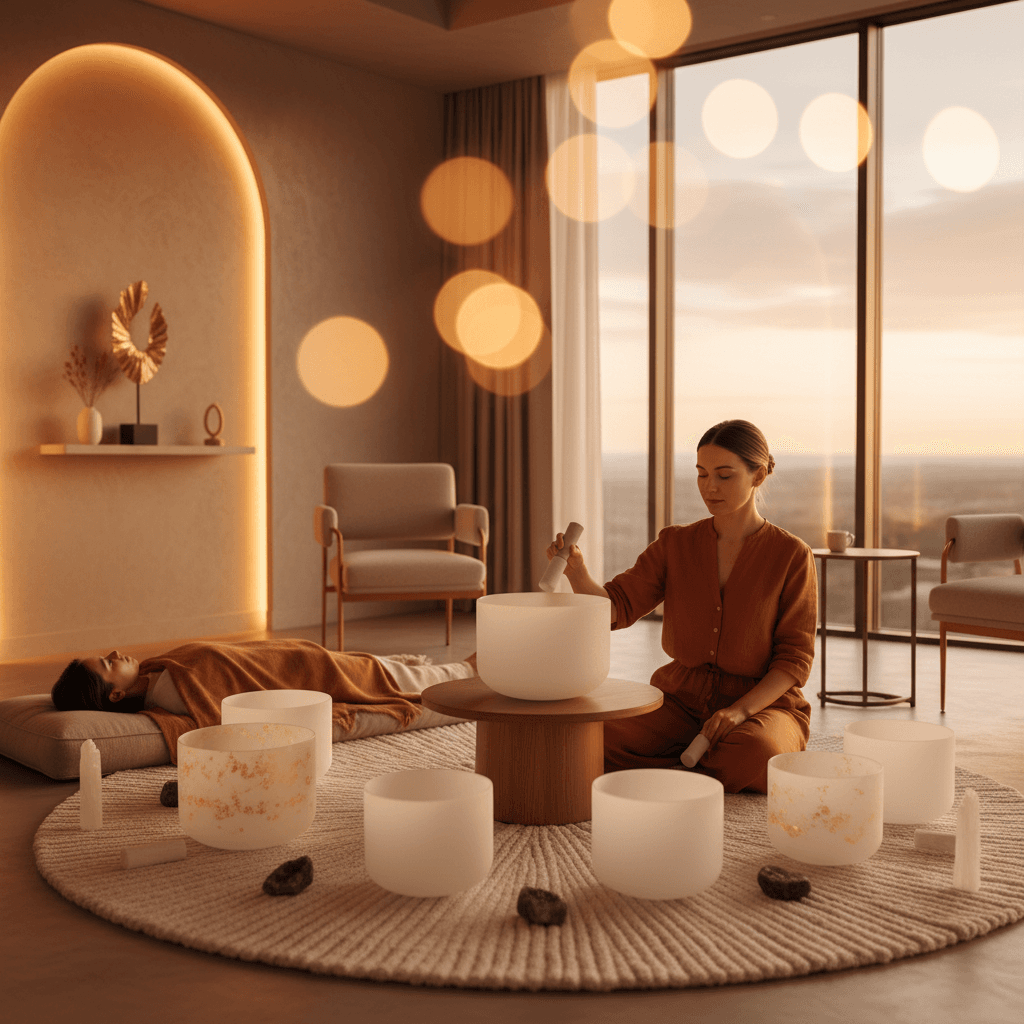
When clients engage in a sound wellness session, they are invited to recline comfortably, often enveloped in a peaceful, dimly lit space. The journey typically begins with guiding the client into a state of present awareness, allowing them to gently release external distractions. This initial phase helps to activate the parasympathetic nervous system, preparing the body and mind for deeper relaxation.
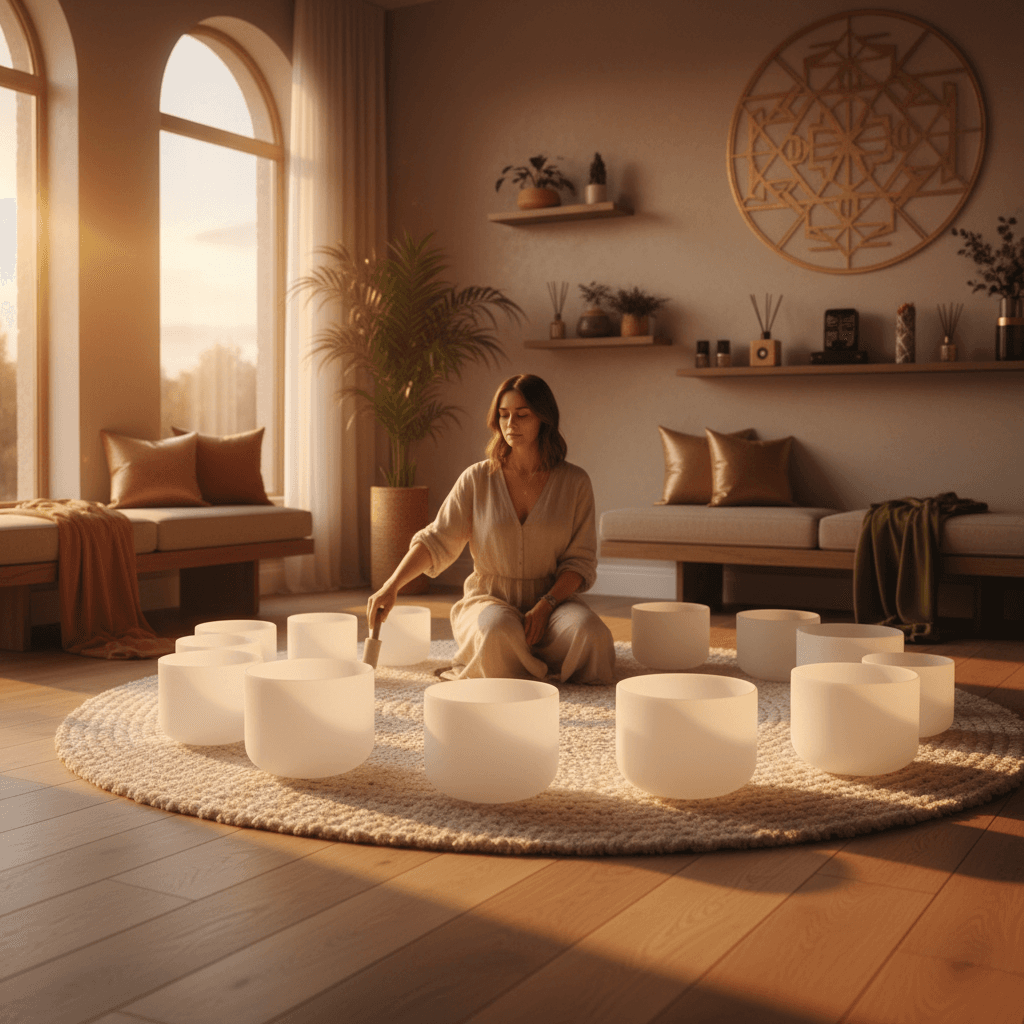
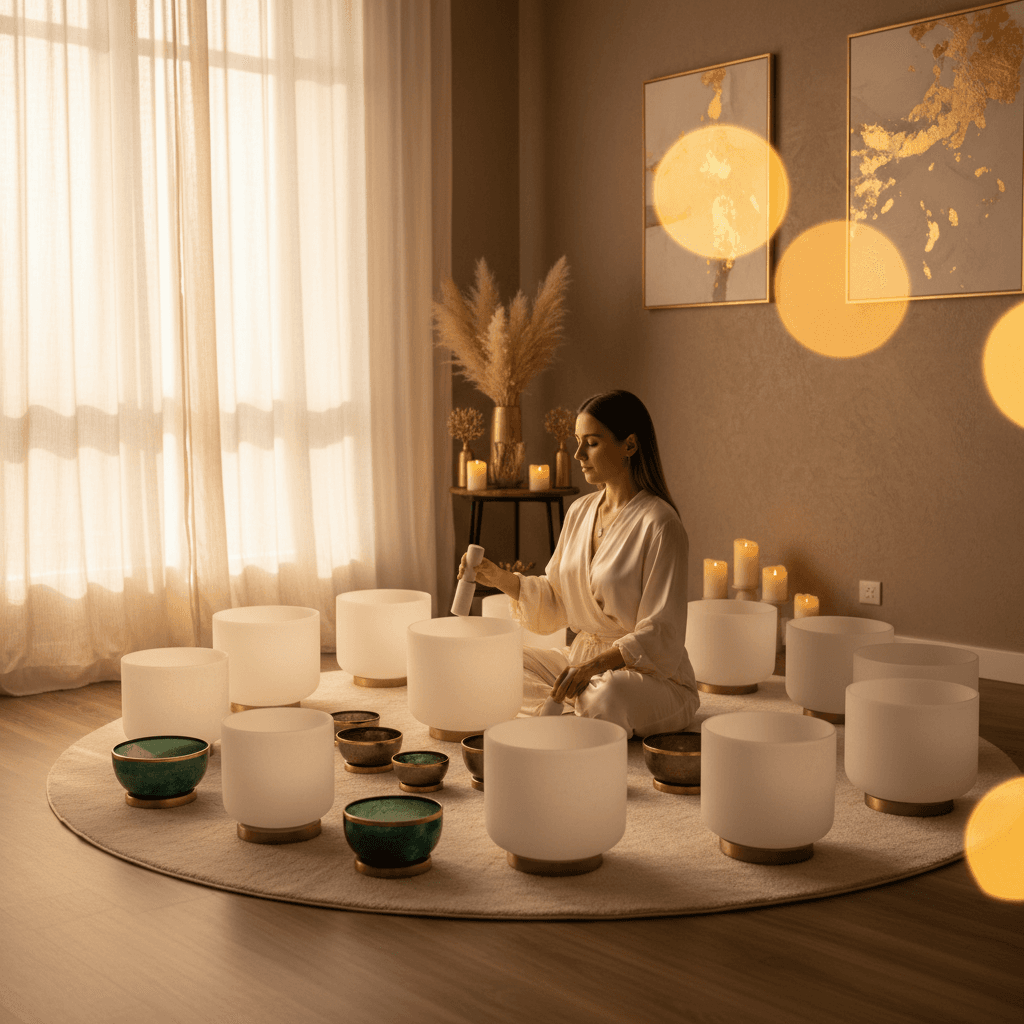
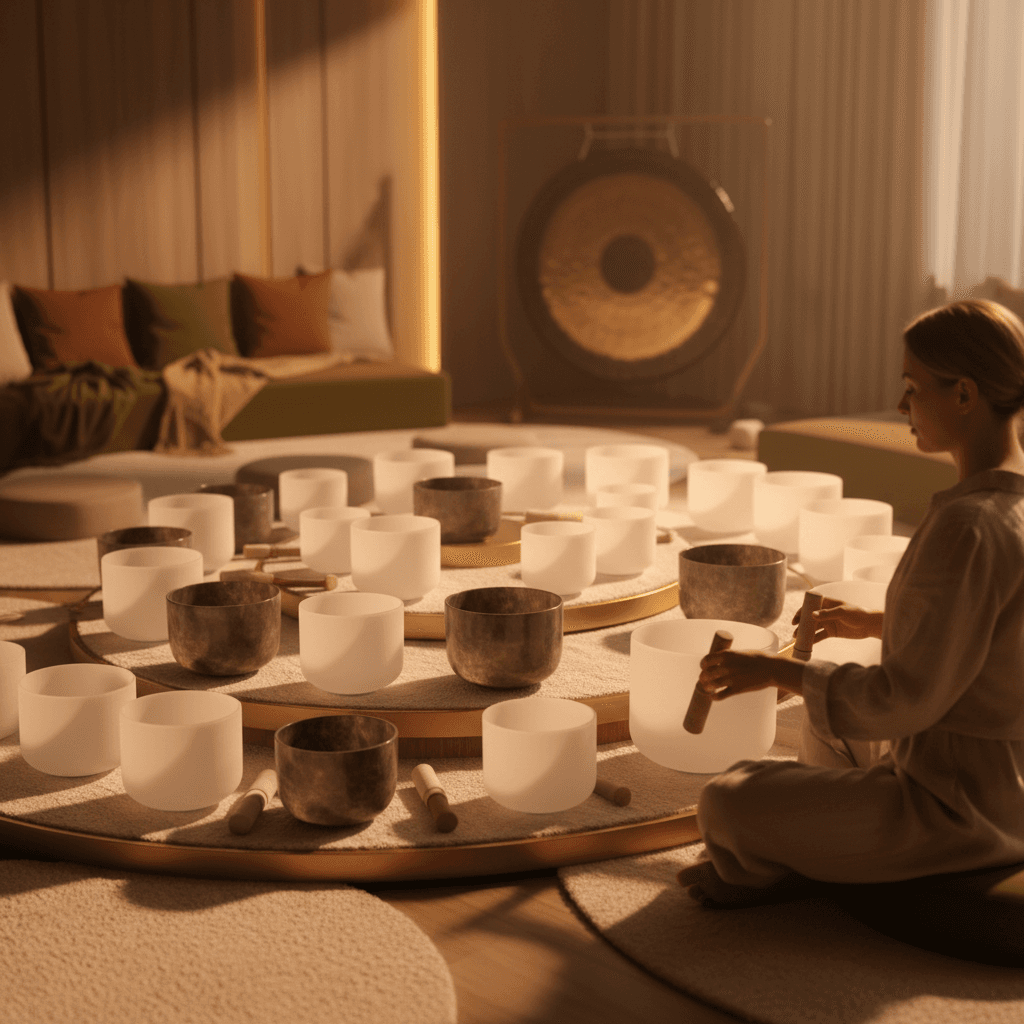
The core of the experience involves the precise application of various instruments and vocalizations. Clients might hear the resonant hum of Tibetan singing bowls, the deep vibrations of gongs, the delicate tinkling of chimes, or the calming vocal tones of the practitioner. Each sound is chosen for its specific frequency, timbre, and capacity to elicit a desired response. For example, the sustained tones of a gong can create a deeply immersive vibrational field that many people report as profoundly relaxing, almost akin to a gentle internal massage.
The brain naturally synchronizes with external rhythms, a phenomenon known as entrainment. In a sound session, the slower, rhythmic beats and sustained tones may guide brainwave activity from a more alert beta state towards alpha (relaxed) and theta (deep relaxation, meditative) states. This shift in brainwave patterns is often associated with reduced anxiety, enhanced creativity, and improved emotional regulation. As the brain settles into these deeper states, the body often follows, experiencing a decrease in muscle tension, a slowing of heart rate, and more regulated breathing.
Clients often report a rich tapestry of sensory details during a session. Some describe feeling waves of vibration moving through their bodies, releasing points of tension. Others speak of vivid imagery, a sense of lightness, or profound emotional release. The experience is highly personal, yet the overarching outcome is a feeling of deep calm, mental clarity, and a renewed sense of balance. The gentle interplay of harmonic frequencies creates an environment where the nervous system can reset, allowing the body's innate capacity for self-repair to flourish.
The practice aims to connect the theoretical benefits of stress reduction and attention recovery directly to the client's lived experience. By creating an auditory landscape free from the demands of urban noise, and instead filled with harmonious, intention-driven sounds, the sessions provide a powerful antidote to daily stressors. The careful selection of instruments and techniques works synergistically to quiet the mind, soothe the body, and foster an optimal state for holistic wellbeing and energetic recalibration.
The Soul Art Approach: Larissa Steinbach's Vision for Sound Wellness
At Soul Art Dubai, Larissa Steinbach has meticulously crafted a unique approach to sound wellness, elevating it beyond a simple relaxation technique to a sophisticated practice of mindful self-restoration. Her vision is rooted in a deep understanding of both ancient wisdom traditions and contemporary scientific research, creating an environment where every sound journey is an intentional step towards enhanced wellbeing.
Larissa's method is distinguished by its emphasis on personalized experiences. She understands that while the core principles of sound's impact are universal, each individual's journey towards recovery is unique. Therefore, sessions at Soul Art are often tailored, taking into account the client's current emotional state, specific areas of tension, and desired outcomes. This bespoke approach ensures that the soundscape created resonates most effectively with their individual needs.
The Soul Art studio itself is an embodiment of "quiet luxury" – a serene, aesthetically refined space designed to minimize external distractions and maximize internal focus. This environment is crucial for allowing the mind to fully surrender to the auditory experience. Larissa carefully selects a diverse array of high-quality instruments, each chosen for its specific vibrational properties and tonal qualities. These often include:
- Crystal Singing Bowls: Known for their pure, sustained tones and powerful vibrational frequencies, which many believe interact directly with the body's energy centers.
- Himalayan (Tibetan) Singing Bowls: Offer rich, complex overtones and deep, grounding vibrations, often used for relaxation and energetic cleansing.
- Gongs: Produce immersive, multi-layered sounds that create a profound full-body vibrational experience, often leading to deep meditative states.
- Chimes and Percussion: Used to introduce subtle textures and rhythmic elements, aiding in brainwave entrainment and mental clarity.
- Larissa's Intuitive Vocals and Toning: A unique aspect of Soul Art, Larissa often incorporates her voice, using specific vocalizations and toning techniques that many people report to be deeply soothing and resonant, further enhancing the therapeutic sound field.
Larissa Steinbach's expertise lies not only in her skillful play of instruments but also in her intuitive guidance, creating a safe and supportive space for clients to explore their inner landscapes. She often incorporates breathwork and gentle mindfulness prompts, guiding participants to deepen their connection with the sounds and their own internal responses. This integrative approach helps to anchor the benefits of the sound journey, making the experience not just momentary relaxation, but a foundational practice for ongoing self-care.
The Soul Art method champions the idea that sound wellness is a powerful complementary approach to managing stress, supporting physical recovery, and fostering emotional balance. It is a sophisticated practice designed to harmonize the body's natural rhythms, allowing for profound states of rest and rejuvenation. Larissa's commitment to creating these transformative experiences makes Soul Art Dubai a premier destination for those seeking a luxurious and scientifically informed path to holistic wellbeing.
Your Next Steps: Integrating Sound into Your Recovery Journey
The journey towards enhanced wellbeing is often a series of intentional steps, and incorporating sound into your daily life can be a surprisingly effective one. Recognizing the potential of sound to support your recovery and relaxation doesn't require complex scientific understanding; it simply asks for an open mind and a willingness to explore.
Here are some practical steps you can take today to begin integrating the power of sound into your personal recovery practices:
- Mindful Listening in Nature: Actively seek out natural soundscapes. Take a walk in a park, sit by the ocean, or simply open a window to listen to the birds. Focus on the nuances of these sounds, allowing the natural rhythms to gently guide your nervous system into a more relaxed state. Remember that some research suggests natural sounds may promote quicker stress recovery.
- Explore Curated Soundscapes: Utilize readily available apps or online platforms that offer specialized sound recordings. Look for tracks that feature binaural beats, specific frequencies like 432 Hz, or ambient nature sounds designed for relaxation, meditation, or sleep support. Many people report these help with falling asleep or reducing anxiety.
- Create Your Own Sonic Sanctuary: Designate a specific time each day for a "sound break." This could be as simple as putting on calming instrumental music, a sound bath recording, or even just sitting in silence, focusing on the subtle sounds around you. This ritual can serve as a mental reset button, helping to manage daily stressors.
- Integrate Rhythmic Movement: If you're looking to support physical recovery or coordination, consider activities that incorporate rhythm. Walking to a steady beat, dancing, or even tapping your fingers rhythmically can help prime your motor system, a concept echoed in Rhythmic Auditory Stimulation (RAS) research for gait improvement.
- Experience Professional Sound Wellness: For a truly immersive and guided experience, consider booking a session at a dedicated sound wellness studio like Soul Art Dubai. Under the expert guidance of practitioners like Larissa Steinbach, you can explore the full potential of carefully curated sound journeys designed to optimize relaxation, stress reduction, and overall wellbeing.
Embracing sound as a complementary tool for your recovery journey is an investment in your holistic health. These practices are not meant to replace medical advice or treatment but to enhance your capacity for self-care and resilience, offering a gentle yet profound pathway to personal restoration.
In Summary: The Symphony of Self-Recovery
Sound, in its essence, is vibration, and our bodies are intricately attuned to its frequencies. From the soothing cadences of nature to the carefully crafted harmonies of a sound bath, the scientific evidence increasingly highlights sound's remarkable capacity to influence our physiological and psychological states. We've explored how practices rooted in Stress Reduction Theory and Attention Recovery Theory can significantly aid in emotional and physical recuperation, lowering blood pressure, enhancing sleep, and even supporting motor function recovery through rhythmic cues.
At Soul Art Dubai, Larissa Steinbach embodies this understanding, offering a luxurious and scientifically informed approach to sound wellness. Her personalized sessions, utilizing a diverse array of instruments and her intuitive guidance, create a profound space for deep relaxation and self-restoration. These experiences are designed to harmonize your nervous system, reduce stress, and empower your body's innate ability to recover. Embrace the transformative power of sound and allow its gentle vibrations to guide you towards a more balanced, serene, and revitalized self. Discover your harmonic pathway to wellbeing at Soul Art.
Bookings Coming Soon
Soul Art is still in preparation. Session details and booking will be published here after launch.
Coming Soon
Wellness Disclaimer: This article is for educational and informational purposes only. It does not constitute medical advice, diagnosis, or treatment. Soul Art Dubai provides non-medical wellness experiences focused on relaxation, stress management, and general wellbeing. Sound wellness is a complementary practice and should not replace professional medical care.
Related Articles
40 Hz Sensory Stimulation and Alzheimer's Research
Unlocking Wellness: The Science of Sound Healing Research Design
Unlocking Wellness: Biomarkers for Effective Sound Therapy