Polyvagal-Informed Sound Healing: Cultivating Safety & Connection
Key Insights
Explore how Polyvagal Theory guides sound healing at Soul Art, enhancing nervous system regulation, safety, and deep connection for holistic well-being.
Have you ever wondered why certain environments immediately evoke a sense of calm and belonging, while others trigger unease, even without conscious thought? This profound, often unspoken response lies deep within our nervous system, constantly scanning for cues of safety or threat. Understanding this intricate internal compass is fundamental to cultivating genuine well-being.
At Soul Art, Dubai's premier sound wellness studio, we delve into this very science, offering transformative experiences informed by Polyvagal Theory. This groundbreaking framework, developed by Dr. Stephen Porges, provides a scientific lens through which we can understand our body's ancient wisdom and its innate drive for safety and connection.
This article will explore how Polyvagal-informed sound healing, championed by our founder Larissa Steinbach, offers a gentle yet powerful pathway to nervous system regulation. We will uncover the scientific mechanisms at play and reveal how this specialized approach may support profound shifts towards inner peace, resilience, and authentic engagement with the world. Join us on a journey to discover how sound can be a profound portal to safety.
The Science Explained
Our internal world is profoundly shaped by the autonomic nervous system (ANS), which operates beneath our conscious awareness, constantly adjusting our physiological state in response to our environment. Polyvagal Theory provides a nuanced map of this system, highlighting a hierarchy of three distinct neural pathways that dictate our responses to perceived safety or danger. Understanding these states is crucial for recognizing and shifting our embodied experiences.
Understanding the Autonomic Nervous System States
The ANS is not simply a "fight or flight" switch; it's a sophisticated system with varying strategies for survival and connection. Dr. Porges identified three primary states, each with unique physiological and behavioral expressions. Recognizing these states helps us understand our reactions to stress and our capacity for social engagement.
The Ventral Vagal Complex (VVC), the newest and most sophisticated pathway, represents our state of safety, connection, and social engagement. When active, it promotes feelings of calm, allows for curiosity, compassion, and facilitates healthy relationships. This is where we thrive, feeling grounded and present.
When threat is perceived as manageable, our system may shift into a Sympathetic state, activating fight or flight responses. This is characterized by increased heart rate, rapid breathing, and heightened vigilance, preparing us to defend ourselves or escape danger. While adaptive in acute situations, prolonged sympathetic activation can lead to chronic stress.
In situations of overwhelming threat, when fight or flight is not an option, the oldest pathway, the Dorsal Vagal Complex, may engage. This response, often described as "freeze" or "collapse," leads to immobilization, dissociation, and a sense of disconnection. It's an ancient survival mechanism that aims to conserve energy and minimize pain.
Neuroception: Our Unconscious Alarm System
A core concept within Polyvagal Theory is neuroception, our nervous system's unconscious process of evaluating risk in the environment. This happens without the need for conscious thought, constantly scanning for cues of safety or threat. Our neuroception then dictates our physiological state, impacting our social behaviors and emotional experiences.
For example, a gentle voice and a friendly face are cues of safety that activate our VVC. Conversely, harsh tones or sudden movements might trigger a sympathetic or dorsal vagal response, even if no immediate danger is present. This continuous, unconscious processing profoundly influences our daily interactions and overall well-being.
The Vagus Nerve: Our Internal Compass
The vagus nerve is a critical component of the ANS, serving as a bidirectional highway connecting the brain to many vital organs. It plays a pivotal role in regulating heart rate, digestion, respiration, and importantly, our emotional state and social engagement capacities. Scientific studies often examine vagal tone, typically using heart rate variability (HRV) as an index, to assess vagal activity and its correlation with emotional regulation.
The ventral branch of the vagus nerve, specifically the VVC, is key to our capacity for social connection and self-regulation. When the VVC is active, it helps us feel regulated, allowing for emotional flexibility and deeper processing. This pathway supports us in experiencing feelings without immediately linking them to overwhelming thoughts or behaviors, as noted by Porges and Dana (2018).
The Safe and Sound Protocol (SSP) and its Foundations
The Safe and Sound Protocol (SSP), developed by Dr. Stephen Porges, is a practical and evidence-based application of Polyvagal Theory designed to help regulate the autonomic nervous system. It's a non-invasive acoustic vagal nerve stimulation intervention, utilizing specially filtered music to deliver cues of safety to the body. The SSP music highlights specific frequencies that stimulate the vagus nerve, promoting a neurophysiological state of safety.
Preliminary research provides compelling evidence for the SSP's potential benefits. A forthcoming study by Rebecca Nelson (2025), "SAFE AND SOUND: A POLYVAGAL INTERVENTION FOR TRAUMA AND THERAPEUTIC ENGAGEMENT," found that polyvagal-informed interventions like the SSP may support the reduction of trauma symptoms, improvement of autonomic regulation, and enhancement of treatment retention. By helping clients achieve a regulated physiological state, the SSP may serve as a valuable adjunct to counseling, mitigating dropout risk and promoting sustainable therapeutic change.
Further studies have also shown positive outcomes. Participants who engaged with the SSP demonstrated a significant decrease in anxiety, depression, and autonomic reactivity, as measured by the Hospital Anxiety and Depression Scale (HADS). This suggests that addressing nervous system dysregulation through interventions like the SSP can be an effective approach rather than solely targeting individual symptoms. The SSP helps the listener think, feel, and connect better with others by supporting the body in achieving a neurophysiological state of safety.
How It Works in Practice
The beauty of Polyvagal-informed sound healing lies in its "bottom-up" approach, gently inviting the nervous system into a state of safety before engaging cognitive processes. Instead of trying to "think" our way out of dysregulation, we allow sound to create a physiological shift, preparing the body for deeper connection and healing. Sound, with its unique ability to bypass the rational mind, can directly influence our neuroception, sending powerful cues of safety or threat.
Creating a Sanctuary of Sound
At Soul Art, the environment itself is carefully curated to be a sanctuary, a testament to Larissa Steinbach's dedication to holistic well-being. From the moment you enter, every detail—from soft lighting to calming aromas—is designed to signal safety to your nervous system. This intentional space allows your body to begin unwinding even before the first sound is introduced, enhancing the effectiveness of the sound journey.
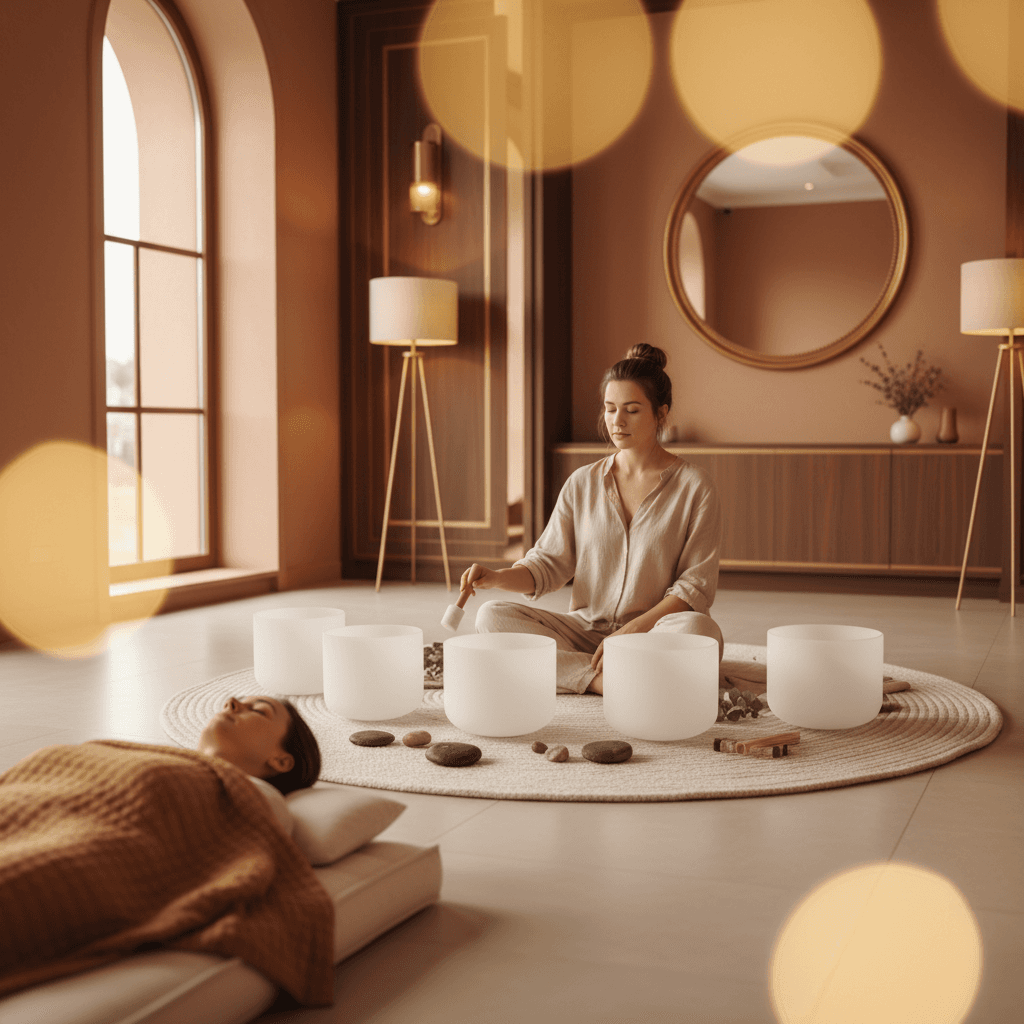
During a Polyvagal-informed sound session, clients are invited to relax in a comfortable position, often lying down, allowing the body to be fully supported. The practitioner, through their attuned presence and prosodic voice, also serves as a co-regulatory anchor, offering nonverbal cues of safety that further engage the client's VVC. This embodied transmission of safety is a cornerstone of Polyvagal-guided interventions.
The Transformative Power of Frequency
The sound practitioner then introduces carefully selected instruments, often including crystal singing bowls, gongs, chimes, and the human voice. These sounds are not merely pleasant; they are delivered with intention and awareness of their vibrational impact on the nervous system. The gentle, sustained tones and resonant frequencies help to slow brainwave activity, calm the heart rate, and encourage deeper, more rhythmic breathing. This process facilitates a natural shift towards a ventral vagal state.
The experience is deeply sensory. You may feel gentle vibrations resonating through your body, hear the subtle shifts in tone and harmony, and notice a profound sense of stillness descending upon you. Many people report feeling deeply relaxed, while others experience a release of tension, emotional shifts, or a heightened sense of clarity. The filtering of specific frequencies, much like in the SSP, aims to enhance the auditory input that cues safety, directly stimulating the vagus nerve and promoting a sense of well-being.
Benefits Beyond Relaxation
While deep relaxation is a common and cherished outcome, the benefits of Polyvagal-informed sound healing extend further. By gently guiding the nervous system towards a state of safety, these sessions may support:
- Improved Emotional Regulation: A more regulated nervous system allows for greater flexibility in responding to stress, rather than being reactive.
- Enhanced Social Engagement: Feeling safe in one's body naturally fosters a greater capacity for connection and empathy with others.
- Greater Tolerance to Sensory Input: For individuals who experience sensory overwhelm, these practices may support processing sensory stimuli without becoming dysregulated. A 2014 study by Dr. Stephen W. Porges, for example, found that Polyvagal Theory could be successfully applied to reduce auditory hypersensitivities.
- Support for Trauma Recovery: This approach offers a gentle and effective way to address the physiological effects of trauma, helping individuals feel safer and more grounded in their bodies, thereby supporting trauma recovery.
This "state-shifting" before engaging cognitive or narrative processes allows the nervous system to exit defense, making space for connection, emotional flexibility, and deeper processing. It's an invitation for the body to remember its innate capacity for safety and self-healing.
The Soul Art Approach
At Soul Art, Larissa Steinbach’s vision goes beyond mere relaxation; it's about empowering individuals to reclaim their inherent capacity for safety, connection, and joy. Our approach is deeply rooted in the principles of Polyvagal Theory, creating an environment and experience that speaks directly to the nervous system, fostering a profound sense of trust and regulation. Larissa's expertise ensures that every session is not just an auditory experience, but a complete journey into physiological calm.
Larissa Steinbach's Philosophy
Larissa Steinbach, the founder of Soul Art, is dedicated to creating a sanctuary where nervous system regulation is paramount. She understands that true healing and well-being begin when the body feels safe enough to rest, digest, and connect. Her philosophy is centered on the idea that by intentionally cultivating states of safety, we can unlock our body’s natural capacity for self-regulation and resilience. This approach is empathetic, understanding, and grounded in a deep respect for the individual's unique journey.
Larissa's expertise lies in translating complex neuroscientific principles into practical, accessible, and profoundly impactful wellness practices. She meticulously curates each element of the Soul Art experience to ensure it aligns with Polyvagal-informed strategies, from the acoustic qualities of the space to her presence and vocalizations.
What Makes the Soul Art Method Unique
The Soul Art method integrates the core tenets of Polyvagal Theory to offer a unique and highly personalized sound wellness experience. We don't just play sounds; we create a coherent, co-regulatory field designed to invite your nervous system into a state of ventral vagal activation. This focus on co-regulation is a distinctive aspect, where the practitioner's attuned nervous system becomes a powerful regulatory tool for the client.
A central insight of Polyvagal-informed therapy is that the therapist’s own nervous system becomes a powerful regulatory tool. Through prosodic voice, expressive face, and attuned pacing, the therapist offers nonverbal cues of safety, actively engaging the client’s VVC and inviting physiological calm. Here, safety is not merely a topic of conversation; it is embodied and transmitted.
Specific Instruments and Techniques
Larissa utilizes a carefully selected array of instruments, each chosen for its unique vibrational qualities and capacity to induce deep states of relaxation and safety. These include:
- Crystal Singing Bowls: Their pure, resonant tones produce sustained frequencies that can entrain brainwaves, guiding them into alpha and theta states, conducive to deep relaxation. The vibrations physically resonate with the body, providing gentle sensory input that cues safety.
- Gongs: The rich, complex overtones of gongs create an immersive soundscape that can facilitate profound shifts in consciousness and release energetic blockages. Their expansive sound helps to quiet the mind and encourages the body to surrender into a regulated state.
- Chimes and Other Percussion: These instruments add delicate, nuanced layers of sound that can further deepen the meditative experience, offering subtle auditory cues that signal peace and harmony.
- The Human Voice: Larissa's own prosodic vocalizations are a powerful tool, mirroring the soothing qualities of maternal vocalizations that research has shown can calm infants. This carefully modulated voice offers direct cues of safety to the listening nervous system.
The application of these instruments is guided by the understanding that "regulation precedes learning. Safety enables creativity. Healing begins not with cognition — but with connection." At Soul Art, we prioritize creating these regulatory conditions, shifting your physiological state to allow space for connection, emotional flexibility, and a deeper sense of well-being. This innovative approach makes Soul Art a pioneer in applied Polyvagal-informed wellness in Dubai.
Your Next Steps
Embracing the principles of Polyvagal Theory in your daily life can significantly enhance your sense of safety and connection, even outside of dedicated sound healing sessions. Integrating small, intentional practices can foster a more regulated nervous system over time, building your resilience and capacity for joy. Remember, even minor shifts can create a ripple effect throughout your well-being.
Here are a few actionable steps you can take today to support your nervous system:
- Practice Mindful Breathing: Focus on slow, deep exhalations. Lengthening your exhale activates the ventral vagal pathway, signaling safety to your body. Try inhaling for a count of four, holding for four, and exhaling for six.
- Seek Social Connection: Engage in meaningful interactions with trusted individuals. The ventral vagal complex thrives on reciprocal social engagement, so prioritize genuine connection and co-regulation.
- Engage with Calming Sounds: Listen to music that soothes you, or spend time in nature, tuning into gentle sounds like rustling leaves or flowing water. These auditory inputs can send powerful cues of safety.
- Incorporate Gentle Movement: Practices like slow walking, stretching, or gentle yoga can help release stored tension and bring your body back into a more regulated state. Pay attention to how your body feels.
- Prioritize Rest and Play: Adequate sleep and engaging in activities purely for pleasure are vital for nervous system restoration. Allow yourself moments of unadulterated joy and relaxation.
If you're ready to explore how Polyvagal-informed sound healing can profoundly support your journey toward inner peace and resilience, Larissa Steinbach and the team at Soul Art are here to guide you. We invite you to experience the transformative power of sound in a sanctuary crafted for your well-being.
In Summary
Polyvagal-informed sound healing offers a scientifically grounded pathway to cultivating safety and connection within ourselves. By understanding how our nervous system processes cues of safety and threat, we can intentionally engage practices that promote regulation and well-being. Dr. Stephen Porges's Polyvagal Theory provides the foundational insight, explaining how sound, like the specially filtered music of the Safe and Sound Protocol, can directly influence our vagus nerve, fostering a state of calm and social engagement.
At Soul Art, Larissa Steinbach masterfully integrates these principles, using a unique blend of instruments and attuned presence to create a transformative experience. This gentle, yet powerful approach may support individuals in reducing stress, enhancing emotional regulation, and fostering deeper connections. We invite you to discover how embracing the science of safety through sound can unlock a profound sense of peace and resilience in your life.
Bookings Coming Soon
Soul Art is still in preparation. Session details and booking will be published here after launch.
Coming Soon
Wellness Disclaimer: This article is for educational and informational purposes only. It does not constitute medical advice, diagnosis, or treatment. Soul Art Dubai provides non-medical wellness experiences focused on relaxation, stress management, and general wellbeing. Sound wellness is a complementary practice and should not replace professional medical care.
Related Articles

Cluster Headaches: Unveiling Pain and the Promise of Frequencies in Wellness

Epilepsy & Sound: Safety, Serenity, and Emerging Wellness Paths
Mastering Focus: Analytical Listening & Brain Engagement at Soul Art