Enhance Your Vision: How Sound Unlocks Deeper Awareness for Photographers

Key Insights
Discover how sound wellness can profoundly enhance visual awareness and creative flow for photographers. Soul Art Dubai's Larissa Steinbach reveals the science.
Have you ever looked at a still photograph and felt a sound – the rumble of a distant train, the gentle rustle of leaves, or the silent roar of a waterfall? This phenomenon isn't just poetic license; it’s a profound testament to the intricate symphony between our senses. For photographers, whose craft is entirely dedicated to visual capture, understanding this multisensory connection can be a game-changer.
At Soul Art, Dubai’s premier sound wellness studio, founder Larissa Steinbach champions a holistic approach to enhancing perception and creativity. This article delves into the fascinating science behind how sound influences our visual awareness, offering photographers a unique lens through which to sharpen their artistic vision and cultivate deeper presence. We will explore the neural pathways that intertwine sight and sound, reveal how sound can heighten visual focus, and provide practical ways to integrate these insights into your photographic practice and overall well-being.
The Symphony of Senses: Unpacking Audiovisual Integration
Our brain is a master orchestrator, constantly weaving together information from all our senses to create a coherent reality. While photography is inherently a visual medium, scientific research consistently reveals a powerful, often subconscious, interplay between what we see and what we hear. This cross-modal connection can profoundly impact our attention, perception, and even memory.
Sounds That Sharpen Sight
Imagine searching for a specific detail in a busy scene. A sudden, synchronized sound can act as an immediate spotlight, drawing your attention precisely to that visual event. Research published in Scientific Reports highlights that sounds can significantly boost the awareness of visual events, even when there's no direct overlap in their spatial location. This suggests that sound's "attention-grabbing saliency" acts as an independent signal, enhancing our ability to notice visual stimuli that might otherwise go unnoticed.
One study demonstrated this by showing that abrupt visual probes – like a brief contrast increment on a grating – were noticed earlier when accompanied by a 500 Hz, 60 dB tone. This indicates that simultaneous auditory input makes our visual system more receptive and responsive. For photographers, this insight is invaluable; it means that consciously or subconsciously incorporating sound into your observational process may help you perceive fleeting moments or subtle visual cues with greater clarity and speed. Synchronous sound, as a salient event, directly induces visual attention, making visual details stand out more prominently.
The Auditory Cortex Sees
The connection runs even deeper: our brains are primed to "hear" photographs. Pioneering research has shown that the mere sight of a photograph can activate the associative auditory cortex within milliseconds – as quickly as 110ms. This neural response occurs even without an actual auditory stimulus being present.
Think of silent movies: audiences effortlessly "heard" the neigh of a horse or the creak of a door, purely from the visual cues. This phenomenon, often referred to as "phantom auditory phenomena," illustrates how our visual experiences automatically trigger auditory representations in the brain. The study by Proverbio, D’Aniello, Adorni, et al. provides compelling evidence that regions engaged in complex sound perception and audiovisual integration are activated by visual imagery alone. For a photographer, this implies that the visual narratives they create are not silent; they inherently carry an imagined soundscape that can evoke strong emotional and cognitive responses in the viewer.
Photography's Double-Edged Sensory Sword
While the interplay between sight and sound is rich, the act of taking photographs introduces another fascinating dynamic, particularly concerning memory. A series of studies published by the Association for Psychological Science revealed that actively photographing experiences tends to boost visual memory but can simultaneously impair auditory memory.
Participants who took photos of objects in an exhibit showed better visual recognition of those objects, and even unphotographed items, compared to those without a camera. However, they remembered less auditory information. This suggests that the presence of a camera, and the intention to photograph, funnels our attention, prioritizing visual aspects over auditory ones. This isn't necessarily an "outsourcing" of memory, but rather a redirection of focus. For photographers, this finding underscores the importance of intentional sensory engagement. While focusing on the visual is paramount, being aware of this potential auditory blind spot can encourage a more balanced, multisensory approach to observation, ensuring a richer, more holistic capture of the moment.
How It Works in Practice
Translating this fascinating science into practical benefits for photographers involves cultivating a deeper, more mindful engagement with both the visual and auditory worlds around them. It's about consciously activating the natural cross-modal pathways in the brain to enhance creative output and personal well-being.
For a photographer, this means moving beyond merely looking and beginning to listen to your surroundings in a new way. When approaching a scene, instead of instantly framing, take a moment to absorb the ambient sounds. The distant hum of the city, the whisper of the wind, the rhythm of footsteps – these auditory cues may subtly guide your eye to details or perspectives you might otherwise overlook. Synchronous auditory and visual input is key to this enhanced perception, meaning being present to both concurrently deepens the experience.
"The most impactful photographs often don't just show us something; they invite us to feel something. And much of that feeling is intrinsically linked to the sounds we unconsciously associate with the image."
Consider how listening can influence composition. The sound of a bird's song might lead your gaze to the specific branch it perches on, revealing a delicate interplay of light and shadow. The sustained low rumble of a passing truck could draw your attention to the texture of the asphalt, inspiring a dramatic close-up. By allowing sound to inform your visual search, you may unlock novel interpretations and more compelling narratives within your frame.
Furthermore, understanding phantom auditory phenomena allows photographers to intentionally craft images that resonate audibly with their viewers. When composing, ask yourself: what sounds would accompany this scene? A stark, silent landscape might evoke the sound of wind whistling, while a bustling market scene implies a cacophony of voices and movement. This conscious consideration of the "sound" of your photograph can imbue your work with an extra layer of depth and emotional impact, creating a truly immersive experience for the audience. This holistic awareness can lead to a more profound flow state during shooting, where creativity feels effortless and intuition guides the lens.
The Soul Art Approach
At Soul Art, Larissa Steinbach believes that true creative vision stems from a harmonized nervous system and a deeply connected self. Her approach to sound wellness is designed to refine sensory perception, elevate consciousness, and foster a state of heightened awareness that is profoundly beneficial for visual artists like photographers. It's not just about relaxation; it's about recalibrating your entire sensory system.
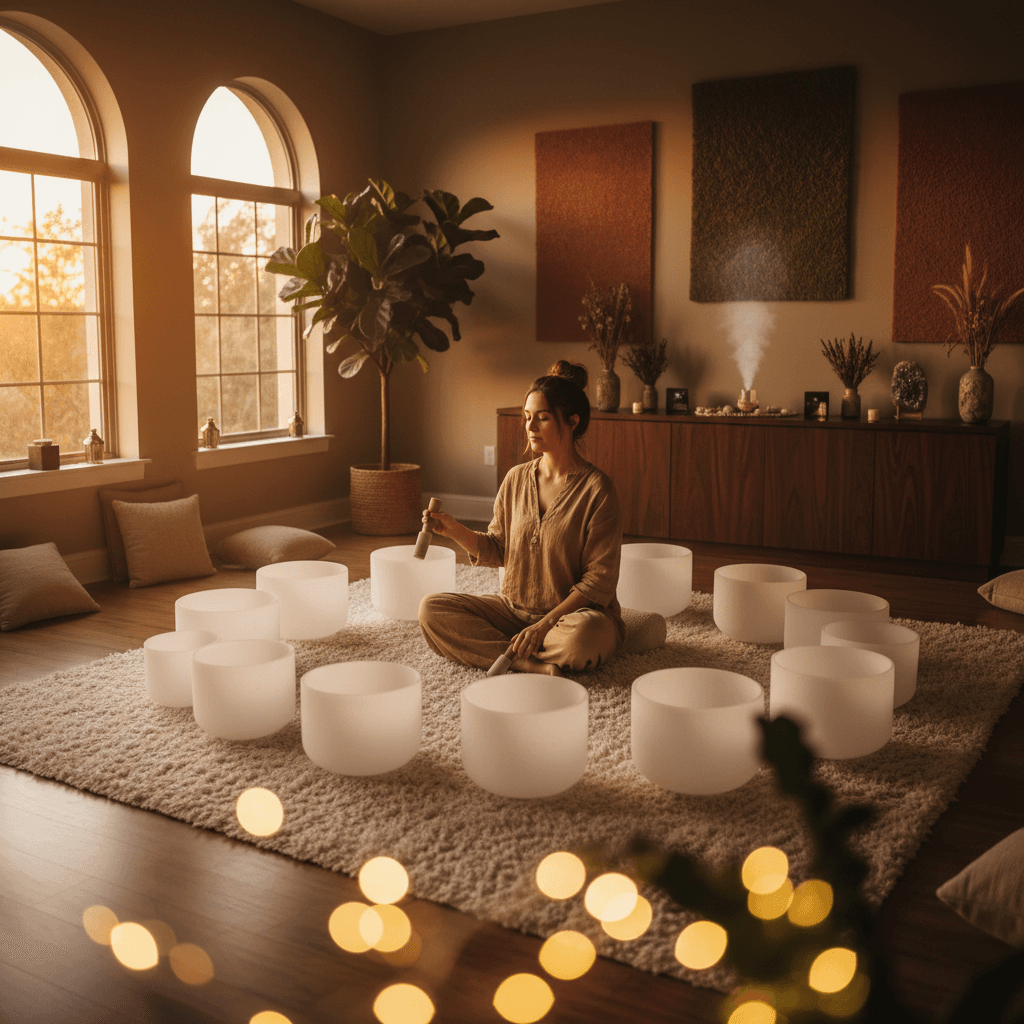
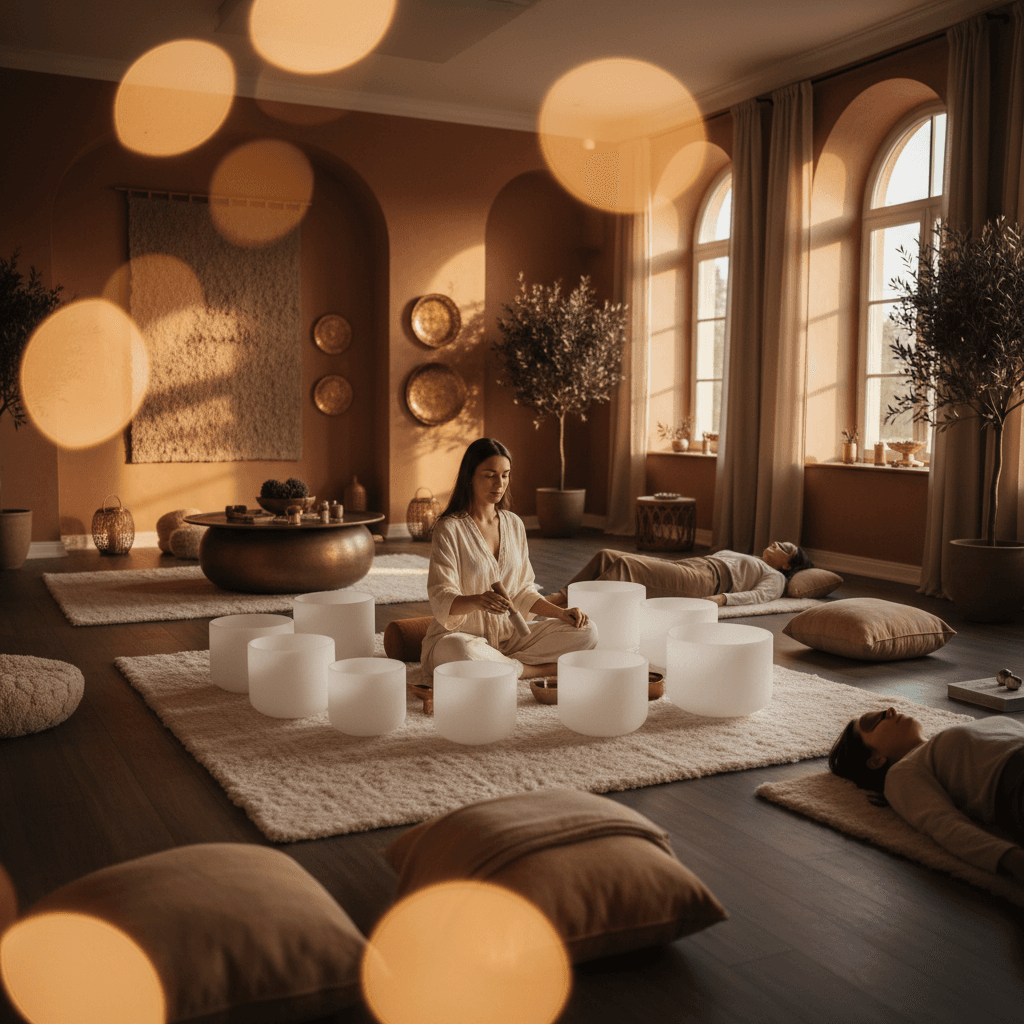
The Soul Art method integrates ancient wisdom with contemporary scientific understanding, offering unique sound journeys that specifically target states of deep relaxation and expanded perception. Larissa curates each experience, using a blend of instruments such as Himalayan singing bowls, crystal bowls, and gongs, known for their powerful resonant frequencies. These sounds are not merely background noise; they are carefully chosen vibrations that interact with the body's energy centers and the brain's neural networks.
For photographers, participating in Soul Art sessions can translate into several direct benefits. The deep relaxation achieved may support a reduction in mental clutter, allowing for a clearer, more focused visual field. The specific frequencies and vibrations used are thought to enhance neural connectivity, potentially sharpening visual acuity and improving the ability to perceive subtle nuances in light, color, and texture. Many people report an increased sense of intuition and a heightened ability to connect with their subject matter after regular sound wellness practices.
Larissa Steinbach’s unique methodology helps photographers cultivate a more profound connection to their inner landscape, which in turn reflects in their external observations. By calming the mind and opening sensory channels, photographers can move beyond habitual ways of seeing, discovering new angles, perspectives, and emotional depths in their work. It's a holistic wellness practice that complements the artistic journey, fostering sustained creativity and mitigating the stresses often associated with intensive creative pursuits.
Your Next Steps
Ready to harness the power of sound to transform your visual awareness and creative practice? Here are some actionable steps you can integrate into your daily life and photographic routine:
- Practice Mindful Listening Walks: Dedicate time during your photographic excursions, or even your daily commute, to consciously listen to your environment. Close your eyes for a moment before opening them to frame a shot, letting the sounds guide your visual attention to unexpected details.
- Embrace Intentional Silence: Just as sound can draw attention, silence can open space for new perceptions. Spend time in quiet reflection, allowing your visual field to unfold without auditory distraction. Notice what details emerge when the auditory processing demands are reduced.
- Engage in "Phantom Hearing" Exercises: When reviewing your photographs, actively imagine the sounds associated with each image. What would you hear if you were there? How do those imagined sounds change your perception of the visual elements? This can deepen your post-processing insights.
- Integrate Sound Wellness into Your Routine: Consider exploring sound baths or sound meditation. These complementary approaches are powerful tools for stress management and can profoundly enhance sensory integration, leading to a more focused and intuitive creative process.
- Explore Soul Art's Offerings: If you're seeking a guided experience, Soul Art Dubai, under the expert guidance of Larissa Steinbach, provides bespoke sound wellness sessions tailored to fostering deeper awareness and creative flow. These sessions are a unique way to refine your perceptual abilities.
Bookings Coming Soon
Soul Art is still in preparation. Session details and booking will be published here after launch.
Coming Soon
In Summary
The relationship between sound and sight is far more intricate and influential than often acknowledged, especially for the discerning eye of a photographer. Scientific insights confirm that sound can significantly heighten visual awareness and that our brains naturally "hear" what they see, creating a rich, multisensory tapestry of perception. While the act of photography can prioritize visual memory, conscious engagement with the auditory realm can unlock deeper creative insights and a more profound connection to the world around us.
By embracing sound wellness practices and the holistic methods championed by Larissa Steinbach at Soul Art, photographers can cultivate a refined sensory awareness. This complementary approach supports not only enhanced visual perception but also overall well-being, fostering a calmer mind and a more intuitive creative flow. Unlock a new dimension of your craft and experience the profound synergy between sound and vision.