Parkinson's & Sound Therapy: Exploring New Pathways in 2026
Key Insights
Discover how emerging research in 2026, including brain network discoveries, is shaping the future of Parkinson's wellness. Learn about complementary sound therapy approaches at Soul Art Dubai with Larissa Steinbach.
Parkinson's Disease and Sound Therapy: Emerging Research 2026
Imagine a future where complementary wellness practices, like sound therapy, seamlessly integrate with conventional medical care to enhance quality of life for those navigating complex neurological conditions. This vision is rapidly becoming a tangible reality, especially as we delve into the groundbreaking research emerging in 2026 concerning Parkinson's Disease (PD). With a deeper understanding of the brain's intricate networks, the potential for holistic support grows significantly.
Parkinson's Disease, a progressive neurodegenerative disorder, traditionally impacts motor functions, but its complexity extends far beyond, affecting cognitive and autonomic systems. The scientific community is currently witnessing a paradigm shift in how PD is understood and approached, with new discoveries opening doors for innovative support strategies. This article explores these exciting developments and considers how sound therapy, particularly as practiced at Soul Art in Dubai by Larissa Steinbach, may offer a profound, complementary pathway to enhanced well-being.
"The symphony of the human body and mind responds to harmony. As science unravels the intricacies of neurological conditions, we find that ancient practices, rooted in frequency and vibration, offer invaluable complementary support."
Introduction: A New Harmony for Neurological Well-being
The landscape of Parkinson's Disease research is undergoing a remarkable transformation in 2026, moving beyond symptomatic treatments towards a more profound understanding of the disease's underlying mechanisms. This evolving scientific insight is creating exciting opportunities for holistic wellness approaches, including the burgeoning field of sound therapy. While conventional medical trials continue to seek definitive cures and advanced therapies, there is a growing recognition of the importance of integrated support for overall quality of life.
At Soul Art, Dubai's premier sound wellness studio, we believe in the power of conscious sound to foster deep relaxation, balance the nervous system, and promote a sense of inner peace. This complementary practice, guided by the expertise of Larissa Steinbach, offers a unique avenue for individuals seeking to enhance their well-being alongside their medical journeys. As research illuminates the brain's intricate responses to external stimuli, the potential role of carefully curated soundscapes in supporting neurological health becomes increasingly compelling. This article will explore the cutting-edge scientific discoveries shaping our understanding of PD in 2026 and discuss how the nuanced application of sound therapy may offer valuable, non-invasive support for individuals.
The Science Explained: Unraveling Parkinson's and the Power of Frequency
The year 2026 marks a pivotal moment in Parkinson's Disease research, with breakthroughs offering fresh perspectives on its origins and potential management. A central development is the identification of the Somato-Cognitive Action Network (SCAN), a newly recognized brain network that researchers at Washington University in St. Louis propose as a key to understanding PD. This discovery, published in Nature (Ren, J., et al., 2026), posits that Parkinson’s disease is fundamentally a SCAN disorder, meaning its diverse symptoms stem from dysregulation within this integrated network.
The Somato-Cognitive Action Network (SCAN)
The SCAN is a complex neural circuitry that integrates information from the body (somato), thought processes (cognitive), and actions (motor control). It encompasses brain regions previously overlooked in PD research, including areas that control involuntary functions such as heart rate, digestion, and blood pressure. This expanded understanding explains why individuals with Parkinson's experience a wide array of non-motor symptoms alongside the more commonly recognized tremors and gait issues.
Modulating the activity within the SCAN may hold the key to not only treating symptoms more effectively but potentially slowing or reversing disease progression. Dr. Nico U. Dosenbach, co-author of the Nature study, emphasizes that targeting the SCAN in a personalized, precise manner could revolutionize treatment strategies. This novel perspective highlights the interconnectedness of brain function and the potential for a broader range of interventions to influence neurological health.
Emerging Therapeutic Pathways and Sound's Connection
The scientific pipeline for Parkinson's Disease is robust, with numerous trials expected to yield significant results by or in 2026. These include studies evaluating new symptomatic therapies and potential disease-modifying strategies. For example:
-
Drug Therapies:
- An extension study (NCT04379050) of M15-741 is assessing its long-term safety and tolerability, with results anticipated around April 2026. This trial measures outcomes like quality of life and cognitive impairment, reflecting a holistic view of patient well-being.
- The phase 2 ACTIVATE study (NCT05819359) is investigating BIA 28-6156 for patients with a specific genetic variant (GBA1), focusing on motor and non-motor outcomes and expected to conclude midway through 2026.
- AbbVie's TEMPO-4 Open-Label Study of Tavapadon and Cerevance's Phase 3 trial for CVN424 (NCT06553027) are also advancing, indicating a strong drive to develop diverse pharmacological interventions. These trials underscore the evolving, multi-faceted approach to PD management.
-
Neurostimulation and Acoustic Energy:
- Crucially, emerging research is exploring non-invasive ways to modulate brain activity, including the SCAN. Dr. Dosenbach is planning clinical trials to test low-intensity focused ultrasound (LIFU), a technique that uses acoustic energy to change brain activity. This directly connects to the principles of sound wellness, albeit at a different intensity and application.
- Studies on existing treatments like deep brain stimulation (DBS), magnetic stimulation, and the drug levodopa have shown that they effectively reduce connectivity within the SCAN, allowing brain traffic to flow more normally. The consistent impact of these diverse interventions on the SCAN circuitry is remarkably identical, suggesting a common pathway for symptom improvement.
- Neurostimulation, while not a cure, offers significant improvements in quality of life for many, dramatically reducing tremors and stiffness. This demonstrates the profound impact of precisely applied external stimuli on neural networks.
Rhythmic Auditory Stimulation (RAS): A Direct Link to Sound Therapy
Within this context, Personalized Rhythmic Auditory Stimulation (pRAS) stands out as an emerging rehabilitative approach directly utilizing sound. pRAS leverages the principle of auditory entrainment, where the brain's natural tendency to synchronize with external rhythms can improve motor control, specifically step and gait patterns. This non-pharmacological strategy has shown promise in enhancing motor function and coordination, which are often significantly impacted by PD.
The convergence of these scientific insights—the discovery of the SCAN, the exploration of acoustic energy for brain modulation, and the demonstrated benefits of rhythmic auditory stimulation—underscores the profound potential for sound-based wellness practices. While Soul Art's offerings are designed for relaxation and overall well-being, the underlying scientific principles hint at how carefully designed auditory experiences may complement other care strategies, supporting the intricate brain networks now identified as central to Parkinson's.
How It Works in Practice: The Sensory Journey of Sound Wellness
Connecting the intricate science of brain networks and acoustic modulation to a tangible, real-world experience requires bridging the gap between theory and sensation. Sound wellness, as offered at Soul Art, is a deeply immersive and non-invasive practice that leverages the power of frequency and vibration to influence the body's physiological and psychological states. It's a journey into sensory engagement, aiming to soothe and rebalance.
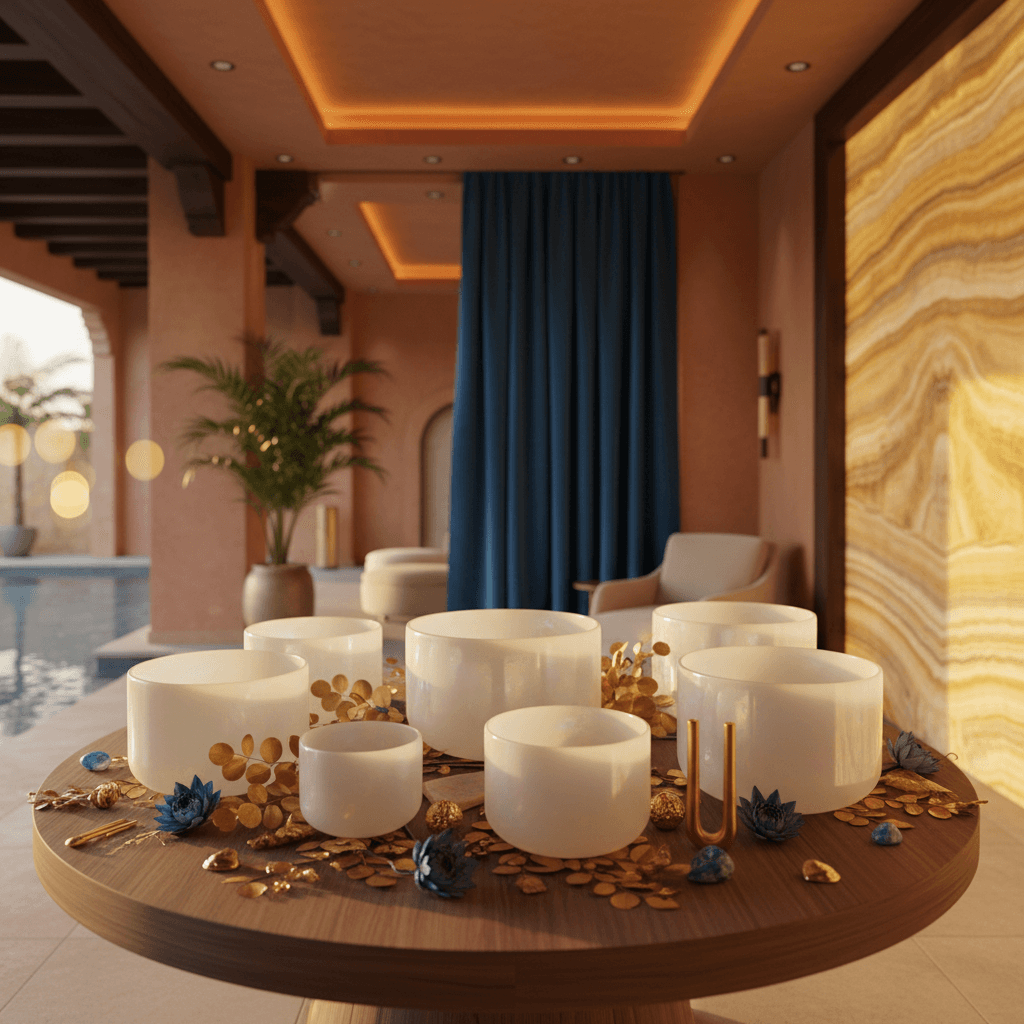
When clients engage in a sound wellness session, they are enveloped in a carefully constructed soundscape. This typically involves the resonant tones of instruments like crystal singing bowls, Himalayan singing bowls, gongs, and chimes. These instruments produce complex harmonic frequencies and palpable vibrations that interact with the body on multiple levels. The experience is designed to be deeply relaxing, encouraging the mind to quiet and the body to release tension.
The vibrations generated by these instruments are not merely heard; they are felt throughout the body. This haptic and auditory input is believed to encourage the brain into states associated with relaxation, such as alpha and theta brainwave frequencies. In these states, the nervous system shifts from a dominant "fight or flight" (sympathetic) response to a "rest and digest" (parasympathetic) mode. This shift is crucial for stress reduction and overall physiological balance.
For individuals exploring complementary support for conditions like Parkinson's, this deeply calming effect may be particularly beneficial. Reduced stress can positively impact sleep quality, mood, and potentially even help manage non-motor symptoms associated with the condition. The rhythmic elements inherent in some sound therapy practices also bear a conceptual resemblance to Rhythmic Auditory Stimulation (RAS), which uses timed auditory cues to improve gait and motor coordination. While sound wellness at Soul Art does not directly constitute medical RAS, the rhythmic pulses and sustained tones can gently guide the body's internal rhythms, fostering a sense of grounding and stability.
Clients often report a profound sense of peace and a gentle release of emotional and physical tension after a session. The experience is highly subjective, yet many people find it offers clarity, renewed energy, and an enhanced capacity for self-regulation. The absence of specific instruction or effort required from the client allows for a truly passive, restorative experience, where the body and mind are invited to simply receive and respond to the resonant frequencies. It is a unique form of self-care that bypasses cognitive effort, going directly to the core of sensory perception and nervous system regulation.
The Soul Art Approach: Larissa Steinbach's Vision for Vibrational Harmony
At Soul Art, Dubai's premier sound wellness studio, Larissa Steinbach has cultivated a unique and deeply intentional approach to vibrational healing. Her methodology is not merely about playing instruments; it's about crafting an immersive experience that aligns with the "quiet luxury" ethos of providing profound, yet understated, well-being. Larissa’s vision integrates ancient wisdom with a modern understanding of mind-body connection, creating a sanctuary where individuals can explore the transformative power of sound.
Larissa Steinbach's distinctive approach emphasizes personalization and intention. Each session, whether individual or group, is meticulously designed to resonate with the specific needs of the participants, fostering a sense of safety, relaxation, and gentle exploration. She understands that the energetic signature of sound can profoundly influence our internal states, and her sessions are curated to guide individuals towards deep restorative states.
What truly sets the Soul Art method apart is its holistic integration of various sound modalities. Larissa utilizes a diverse collection of instruments, each chosen for its unique vibrational qualities and therapeutic potential:
- Crystal Singing Bowls: These create pure, resonant tones and powerful vibrations, often associated with promoting harmony and balancing energy centers.
- Himalayan Singing Bowls: Hand-hammered and rich in complex overtones, these bowls produce deeply grounding and penetrating vibrations, known for their ability to release tension.
- Gongs: The vast, immersive sounds of gongs create a "sound bath" effect, facilitating altered states of consciousness and deep relaxation, allowing the mind to quiet naturally.
- Chimes and Other Percussion: Delicate chimes, rain sticks, and other instruments add layers of texture and subtle sound, enhancing the sensory journey and facilitating a gentle unwind.
Larissa's expertise lies in her intuitive ability to weave these sounds into a cohesive tapestry of frequencies and vibrations. She focuses on creating a non-invasive environment where the body's natural healing intelligence can be gently activated. The Soul Art method is specifically designed as a complementary approach to enhance overall well-being, reduce stress, and support nervous system regulation. It does not replace medical advice or treatment but offers a profound space for self-care and holistic balance.
Through carefully guided experiences, Larissa helps clients tap into a deeper sense of peace and somatic awareness. This focused attention on internal states and relaxation can be particularly supportive for individuals managing chronic conditions, offering a tool for stress management and an enhanced sense of self-agency in their wellness journey. Her commitment is to provide a sophisticated yet accessible path to profound vibrational harmony, rooted in respect for both ancient practices and contemporary understanding of wellness.
Your Next Steps: Embracing Vibrational Well-being Today
Understanding the evolving science behind neurological health and the potential benefits of sound wellness is the first step. The next is to integrate these insights into your daily life and explore pathways to enhanced well-being. Soul Art encourages a proactive approach to self-care, recognizing that even small, consistent practices can make a significant difference in fostering a balanced and resilient nervous system.
Here are a few actionable steps you can consider today to begin incorporating vibrational well-being into your routine:
- Mindful Listening: Dedicate a few minutes each day to listen to calming, instrumental music or nature sounds. Allow yourself to fully immerse in the auditory experience without distraction. This practice can help shift your brainwave patterns towards relaxation.
- Deep Diaphragmatic Breathing with Sound: Combine mindful breathing exercises with the awareness of subtle sounds around you or internally. Focus on the gentle rhythm of your breath and how it resonates within your body. This helps regulate the nervous system and fosters a sense of inner calm.
- Create a Tranquil Auditory Environment: Minimize exposure to harsh, jarring noises. Instead, cultivate an environment that supports peace and quiet, or intentionally introduce soft, harmonious sounds that you find soothing. This could be through gentle music, ambient soundscapes, or even the subtle hum of a fan.
- Explore Sound Therapy Resources: Begin to learn more about the principles of sound and vibration. Many reputable resources offer guided meditations with sound or introduce you to the basic concepts of resonant frequencies. This can deepen your appreciation for its potential benefits.
- Consider a Professional Sound Wellness Session: If you're intrigued by the potential of sound to support your well-being, exploring a session at a reputable studio like Soul Art in Dubai could be your next step. Experiencing professionally guided sound immersions allows for deeper relaxation and a more profound understanding of the practice.
Taking these steps can help you cultivate a greater connection to your body's natural rhythms and promote a sense of overall harmony. Sound wellness is a beautiful complementary approach to self-care, offering a gentle yet powerful tool for stress management and enhancing your quality of life.
Bookings Coming Soon
Soul Art is still in preparation. Session details and booking will be published here after launch.
Coming Soon
In Summary: Harmonizing Science and Self-Care
The year 2026 marks an exciting era in Parkinson's Disease research, particularly with the discovery of the Somato-Cognitive Action Network (SCAN), which redefines our understanding of this complex condition. This breakthrough, alongside advancements in neurostimulation and targeted drug therapies, underscores the evolving, multi-faceted approach to neurological health. As science uncovers new pathways for modulating brain activity, the role of complementary wellness practices like sound therapy gains increasing relevance.
Sound wellness offers a profound, non-invasive method for promoting deep relaxation, balancing the nervous system, and supporting overall well-being. It leverages the body's innate response to frequency and vibration, providing a sophisticated form of self-care. At Soul Art in Dubai, Larissa Steinbach expertly guides individuals through immersive sound experiences, offering a sanctuary for stress reduction and holistic harmony. While not a medical treatment, sound wellness stands as a powerful complementary tool, inviting individuals to harmonize their inner landscape with the evolving scientific understanding of health.
Related Articles
Cluster Headaches: Unveiling Pain and the Promise of Frequencies in Wellness
Epilepsy & Sound: Safety, Serenity, and Emerging Wellness Paths
Mastering Focus: Analytical Listening & Brain Engagement at Soul Art