Unlocking Connection: Oxytocin Release Through Group Sound Healing
Key Insights
Explore the science of how group sound healing, like at Soul Art Dubai, may stimulate oxytocin for deeper connection, calm, and well-being.
Imagine a state where stress melts away, replaced by a profound sense of peace and belonging. What if a unique blend of ancient wisdom and modern science could unlock this very feeling within you? This isn't just a hopeful vision; it's the promising potential of group sound healing, particularly through the lens of a powerful neuro-hormone: oxytocin.
Oxytocin, often dubbed the "love hormone," plays a pivotal role in human connection, stress reduction, and overall emotional well-being. At Soul Art, Dubai’s premier sound wellness studio, founded by Larissa Steinbach, we explore how intentionally crafted group sound experiences may facilitate the release of this remarkable compound. This article delves into the fascinating neurophysiological pathways through which collective sound engagement can nurture social bonds, alleviate anxiety, and foster a deeper sense of inner calm. Join us as we uncover the scientific symphony behind your next step towards holistic wellness.
The Science Explained
The human body is an intricate orchestra of systems, and our emotional state is profoundly influenced by a complex interplay of neuro-peptides and hormones. Among these, oxytocin stands out for its far-reaching effects on our social and emotional landscape. Understanding its mechanisms provides a powerful foundation for appreciating the benefits of practices like group sound healing.
The Neurobiology of Connection: What is Oxytocin?
Oxytocin is a neuropeptide produced in the hypothalamus and released by the posterior pituitary gland. It is widely recognized for its crucial functions in social bonding, affiliative behaviors, and fostering a sense of trust between individuals. Beyond its well-known roles in maternal bonding and romantic relationships, oxytocin also significantly regulates anxiety, supports stress recovery, and influences neural circuits involved in emotional regulation.
Research highlights oxytocin's capacity to reduce stress markers, contributing to a feeling of calmness and psychological resilience. Its influence extends to how we perceive social cues and form attachments, making it a key player in our ability to connect with others and recover from daily stressors. Essentially, oxytocin helps us feel safe, connected, and supported within our social environments.
Sound, Music, and Hormonal Harmony
The connection between sound exposure and oxytocin release is an emerging and exciting area of research. Studies suggest that exposure to sound, particularly music perceived as soothing or pleasant, has been associated with an increase in oxytocin levels. This indicates a plausible pathway through which specific sound frequencies and musical experiences might influence emotional well-being.
Communal musical activities, such as group singing or drumming, have shown particularly promising trends in influencing neurohormonal responses. These shared experiences can heighten empathy, reduce feelings of depression, and significantly improve mood. The collective engagement in sound, whether through vocalizations or instrumental play, seems to tap into our innate capacity for social connection.
"Communal music experiences are prime examples of human social engagement, offering a rich environment for fostering connection and influencing our neurochemistry."
This phenomenon is partly understood through how sensory information, like music, is processed in the brain. Sound stimuli eventually reach the amygdaloid body, a key brain region involved in processing emotions. From there, signals are output to the hypothalamus, which can trigger an oxytocin response. This neurological pathway suggests that pleasant auditory sensations can directly impact our emotional and social hormone levels.
The Intrigue of 528 Hz and the HPA Axis
While the evidence for frequency-specific modulation of oxytocin is still developing, early research has noted intriguing possibilities, particularly concerning the 528 Hz frequency. This specific frequency has garnered attention as a "healing" type of music, with preliminary studies examining 528 Hz indicating trends towards increased oxytocin alongside reductions in cortisol.
Cortisol is the body’s primary stress hormone, regulated by the hypothalamic-pituitary-adrenal (HPA) axis, which plays a central role in our response to stress. High cortisol levels are implicated in anxiety, mood dysregulation, and physiological wear-and-tear. If 528 Hz consistently supports HPA-axis recovery, as some studies suggest, it could offer a valuable pathway for stress reduction and emotional resilience. Oxytocin, in turn, is known to control the activation of the HPA axis, further reinforcing the idea that increased oxytocin through sound exposure could lead to decreased cortisol and a more balanced stress response. This suggests that listening to specific frequencies, when perceived as comfortable and pleasing, might help to reduce stress levels by influencing both oxytocin and cortisol.
The Power of Group Dynamics
The collective aspect of sound healing is crucial for enhancing oxytocin release and its associated benefits. Engaging in music with other people is a powerful way to stimulate interpersonal affiliation and social connection. Psychological experiments have repeatedly demonstrated that interpersonal temporal coordination—or "synchrony"—in behavior, a defining feature of musical interaction, strengthens social bonds between participants.
This synchrony can be observed in group singing, drumming, or even synchronized movement, leading to increased feelings of affiliation, trust, and real-world cooperation. When individuals engage in a shared sonic experience, such as a group sound bath, the collective resonance creates a unified field of energy and intention. This shared sensory experience, free from the stress of performance, can foster a profound sense of safety and belonging. It is within this communal context that the conditions for optimal oxytocin release and enhanced social bonding are significantly amplified.
How It Works in Practice
Bringing the science of oxytocin and sound into a tangible experience involves creating an environment where the nervous system can truly relax and open. Group sound healing sessions are meticulously designed to facilitate this deep level of physiological and emotional engagement. The practical application moves beyond mere listening, inviting participants into a state of active, yet effortless, receptivity.
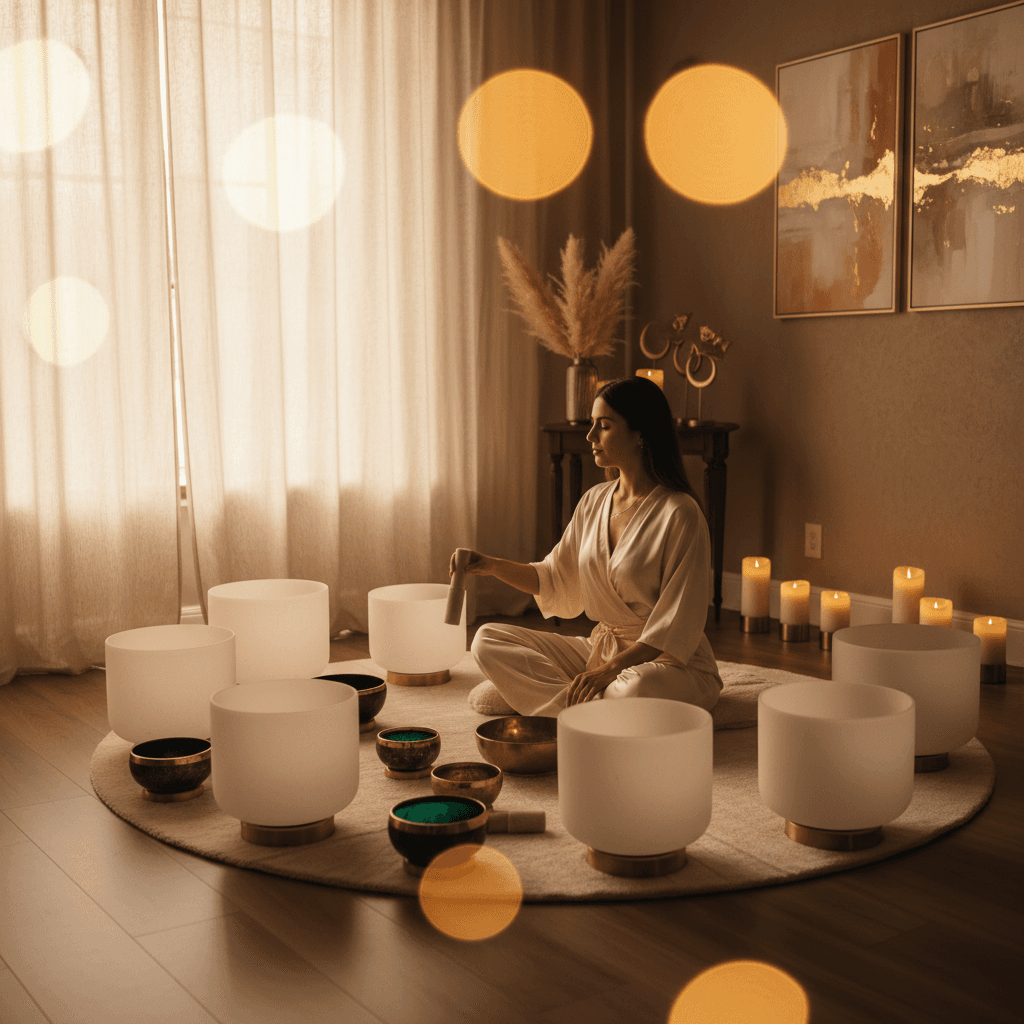
As participants recline comfortably, they are enveloped by an immersive soundscape. This sound tapestry is woven from the resonant frequencies of various instruments—gongs, crystal singing bowls, chimes, and other therapeutic tools. The vibrations are not just heard; they are felt throughout the body, creating a full-body sonic massage. This sensory experience helps to quiet the mind, release muscular tension, and shift brainwave states towards deeper relaxation, often into alpha or theta waves.
The power of the group setting in this context is significant. While each individual experiences their unique journey, there is a palpable sense of shared presence and collective calm. This non-verbal, synchronized experience cultivates a profound feeling of unity and belonging, which is a prime catalyst for oxytocin release. Many people report feeling a heightened sense of empathy and connectedness with others in the room, even strangers, after a session. This "social flow" state, where individuals are deeply engaged and harmonized with their environment and fellow participants, is a rich ground for cultivating inner peace and fostering external bonds.
The gentle yet powerful resonance encourages the body's natural healing responses. As the HPA axis recalibrates, cortisol levels may decrease, and the increased oxytocin contributes to a feeling of emotional regulation and stress recovery. Clients often describe leaving a session feeling lighter, more centred, and remarkably peaceful, with a lingering sense of warmth and openness towards the world around them. This feeling extends beyond the session, potentially enhancing their interactions and reducing daily anxiety.
The Soul Art Approach
At Soul Art, Larissa Steinbach and her team harness these powerful neurophysiological principles to curate transformative group sound wellness experiences. Our methodology is rooted in a deep understanding of sound as a vehicle for internal balance and external connection, creating a sanctuary where science meets spirit. We believe that true well-being blossoms when individuals feel safe, supported, and deeply connected.
Soul Art's unique approach focuses on creating an environment of "quiet luxury" – sophisticated, serene, and deeply intentional. We meticulously select instruments known for their therapeutic frequencies and rich overtones, such as specifically tuned crystal singing bowls and symphonic gongs. While we embrace a wide spectrum of frequencies, we are particularly intrigued by the potential benefits of those associated with calming and balancing effects, including the studied trends around 528 Hz. These instruments are played with precision and intuition, crafting bespoke sound journeys that guide participants into states of profound relaxation and introspection.
Larissa Steinbach personally oversees the development of our signature soundscapes, ensuring each session is an artful blend of scientific insight and intuitive flow. Our facilitators are trained to hold space with empathy and expertise, fostering an atmosphere where individuals feel comfortable to surrender and simply be. This safe and inclusive collective setting is fundamental to maximizing the conditions for natural oxytocin release, promoting not just personal calm but also a subtle yet powerful sense of communal harmony.
We emphasize breathwork and mindful presence as integral components of our sessions, preparing the body and mind to receive the full benefits of the sound. This holistic approach at Soul Art aims to restore the nervous system, encourage emotional release, and ultimately, strengthen the neural circuits that support social connection and resilience. It is a complementary approach designed to enhance one's overall well-being, fostering a state where individuals can tap into their innate capacity for self-healing and deep connection.
Your Next Steps
Embracing the potential of oxytocin release through sound healing is a beautiful journey toward enhanced well-being and deeper connection. While attending a session at Soul Art offers a professionally guided experience, there are several practical steps you can take to integrate these principles into your daily life. Remember, consistency in self-care practices is key to cultivating lasting shifts in your emotional landscape.
Here are some actionable steps you can implement:
- Seek Group Sound Experiences: Explore local sound baths or sound meditations in a group setting. The collective energy is a potent ingredient for fostering connection and may enhance oxytocin release.
- Mindful Listening: Dedicate time each day to listen to soothing, resonant music. Focus on the sensations in your body and the emotions that arise. Consider exploring specific frequencies, such as those associated with relaxation like 528 Hz, while maintaining a mindful, non-judgmental approach.
- Practice Conscious Breathing: Engage in deep, diaphragmatic breathing exercises. This simple practice can calm your nervous system, creating an internal environment more receptive to the benefits of sound and social connection.
- Engage in Communal Music Activities: Join a choir, a drumming circle, or simply sing along with friends. The act of making music together, regardless of skill level, can foster social bonds and uplift your mood.
- Prioritize Social Connection: Actively nurture your relationships. Spend quality time with loved ones, engage in meaningful conversations, and seek out communities that bring you joy and a sense of belonging.
Ready to deepen your self-care journey and discover the profound sense of connection that sound can offer? We invite you to experience the meticulously crafted group sound healing sessions at Soul Art.
Bookings Coming Soon
Soul Art is still in preparation. Session details and booking will be published here after launch.
Coming Soon
In Summary
Oxytocin, often called the "love hormone," is critical for social bonding, anxiety regulation, and stress recovery. Emerging scientific research suggests that engaging in sound exposure, particularly within a supportive group setting, may promote its natural release. Specific frequencies, like 528 Hz, are being explored for their potential to enhance oxytocin and reduce cortisol, supporting the body's stress resilience. The collective nature of group sound healing fosters empathy, connection, and a sense of belonging, creating an optimal environment for these beneficial neurochemical shifts. At Soul Art, Larissa Steinbach's vision brings these principles to life, offering a sophisticated wellness experience designed to nurture your well-being through intentional soundscapes and communal harmony.
Related Articles

Cluster Headaches: Unveiling Pain and the Promise of Frequencies in Wellness

Epilepsy & Sound: Safety, Serenity, and Emerging Wellness Paths
Mastering Focus: Analytical Listening & Brain Engagement at Soul Art