Harmonizing the Hustle: Sound Solutions for Open Office Concentration
Key Insights
Unlock deep focus amidst open office noise. Discover scientific insights and practical sound solutions with Soul Art Dubai's Larissa Steinbach for enhanced productivity and well-being.
Harmonizing the Hustle: Sound Solutions for Open Office Concentration
In the dynamic, collaborative landscape of today's open offices, a quiet paradox unfolds: while designed to foster connection, these environments often inadvertently sabotage our ability to concentrate. Imagine losing up to 66% of your productivity, simply due to the constant hum of conversations, ringing phones, and keyboard clicks. This isn't just an anecdotal observation; it's a scientifically documented reality that impacts countless professionals daily.
The relentless auditory interference in shared workspaces significantly increases stress levels and diminishes cognitive performance, making tasks requiring deep thinking exceptionally challenging. However, there’s a powerful, often overlooked solution: strategically managing our sound environment. By understanding the profound impact of sound on our brains, we can transform distracting noise into an ally for enhanced focus and overall well-being.
This article delves into the science behind sound and concentration, explores the tangible effects of open office noise, and presents practical, scientifically-grounded solutions. We will also reveal how Soul Art, under the visionary guidance of Larissa Steinbach, offers unique sound wellness experiences to help you reclaim your mental clarity and cultivate inner calm amidst the modern workday.
The Science Explained
Our brains are remarkably sophisticated organs, constantly processing a barrage of auditory signals, even when we are not actively listening. This perpetual decoding of sound, especially unwanted noise, can have significant physiological and psychological consequences, directly impacting our ability to focus and perform.
The Auditory Brain: A Constant Processor
From the moment we wake, our brains are engaged in a complex dance with sound, interpreting every chirp, whisper, and rumble. This constant processing of auditory information, even in the background, demands significant cognitive resources. When these signals are chaotic or intrusive, they force our prefrontal cortex – the area responsible for executive functions like decision-making and problem-solving – to work overtime.
This increased cognitive load often manifests as mental fatigue, making it harder to sustain attention on complex tasks. Studies show that excessive background noise can significantly increase stress levels, triggering the release of cortisol, and consequently reducing overall cognitive performance. The brain expends precious energy filtering out irrelevant stimuli, energy that should be directed towards productive thought.
The Open Office Paradox: Collaboration vs. Concentration
Open-plan offices were conceived with noble intentions: to break down silos, encourage spontaneous collaboration, and foster a sense of community. Yet, for many, they have become hotbeds of distraction, where the promise of teamwork often clashes with the fundamental human need for focused work. The constant cacophony of conversations, ringing phones, shuffling footsteps, and keyboard clatter creates an environment antithetical to deep concentration.
Research highlights the severe impact of this auditory overload. Employees in noisy open offices are reportedly 66% less productive compared to those with quieter workspaces, a statistic that underscores the profound cost of unchecked soundscapes. Surveys further reveal widespread struggles, with 60% of UK, 50% of Australian, and 47% of US office workers reporting difficulty concentrating due to noise. Chronic exposure to noise levels above 55 dB, common in open offices, has even been linked by the World Health Organization to increased stress responses, fatigue, and reduced productivity. This constant interruption fragments attention and can change employee behavior, making them more likely to avoid collaboration or retreat behind headphones.
The Inverse U-Curve of Sound and Focus
The relationship between background sound and cognitive performance is not linear; instead, it often follows an intriguing inverted U-shaped curve. This means that while excessively high or low sound pressure levels can be detrimental to attentional focus, moderate background sound can, under specific circumstances, actually enhance task performance. For instance, some research suggests that for auditory working memory tasks, moderate, consistent noise might provide a beneficial level of arousal, helping some individuals maintain attention.
However, pinpointing this "sweet spot" is crucial. Studies by Liu et al. (2021) confirmed that both the type of background sound (e.g., intelligible speech versus nature sounds) and its pressure level significantly affect accuracy and efficiency in concentration and verbal reasoning tasks. The consensus from multiple studies suggests that the ideal noise level for focused work hovers around 35–45 dB(A), akin to a quiet library. In stark contrast, most open offices routinely measure 55–65 dB(A), well beyond this optimal threshold. This higher decibel range pushes cognitive resources past their limit, diminishing accuracy and increasing mental workload.
The Cognitive Cost of Unwanted Noise
Unwanted noise exacts a measurable toll on our cognitive abilities. Beyond mere distraction, it actively chips away at our capacity for deep thinking and problem-solving. A 2021 study published in the British Journal of Psychology found that even moderate levels of background noise could reduce accuracy in complex tasks by over 30%. This illustrates that the brain struggles to filter out unnecessary stimuli, diverting energy from the primary task at hand.
In quiet environments, the brain no longer needs to expend energy managing its auditory surroundings. This redirection of cognitive resources towards the task at hand allows for greater efficiency. A 2022 study published in ResearchGate highlighted this by showing that participants in quiet settings completed accuracy-based tasks 21% faster than those subjected to typical office noise. This compelling evidence suggests that silence, or at least a carefully managed soundscape, becomes a valuable cognitive asset, enhancing both speed and precision.
"Focus is fragile. In a world that never stops talking, buzzing, and vibrating, silence has become a rare luxury. Yet, concentration, the ability to think deeply, create, and perform with precision, depends on it." — Alix, Skyted.io
White, Pink, and Instrumental: The Right Kind of Sound
Not all background sound is detrimental; in fact, certain types of sound can be strategically employed to improve concentration. Repetitive, low-variation music, such as ambient or instrumental tracks, has been shown to mask distracting environmental noises effectively. Unlike music with lyrics or complex rhythms, these consistent soundscapes provide an auditory blanket that can help maintain a steady cognitive state.
A fascinating area of research explores the use of white or pink noise, particularly for individuals with ADHD or elevated attention problems. A systematic review and meta-analysis reported in the BPS Research Digest found a small but consistent improvement in task performance for this group when white or pink noise was present. This aligns with the "optimal arousal theory," suggesting that certain individuals may benefit from additional stimulation to reach their ideal "focus zone." Conversely, for those without attention issues, the same noise might push them past their optimal arousal level, slightly hindering performance. The key, therefore, lies in personalizing one's auditory environment to achieve the right balance for enhanced focus.
How It Works in Practice
Translating the science of sound into practical, actionable strategies can significantly transform your workday experience. It’s not merely about enduring noise, but about actively cultivating an auditory environment that supports your cognitive well-being and productivity. This involves a blend of personal choices, technological aids, and a shift in how we perceive and utilize sound.
Cultivating Personal Acoustic Sanctuaries
In open office settings, where comprehensive soundproofing is often impractical, the first line of defense typically involves personal acoustic solutions. High-quality noise-cancelling headphones can create an immediate, albeit personal, bubble of quiet. These devices don't just block sound; they actively counteract ambient noise, offering a crucial respite for the brain. For many, this simple tool is invaluable for establishing a sense of acoustic privacy, allowing for deeper immersion in tasks that require sustained attention.
Beyond headphones, individuals can also arrange their personal workspace to minimize visual and auditory distractions. Facing a wall, for instance, or utilizing desk partitions, can create a psychological boundary that helps the brain mentally "block out" peripheral activity. These small adjustments empower individuals to carve out micro-environments that support their concentration needs within a larger, noisier space.
The Power of Conscious Soundscapes
Instead of being passive recipients of office chatter, we can become active curators of our sonic environments. This involves making deliberate choices about the sounds we introduce into our workspace. Ambient sound generators, nature sound apps, or carefully selected instrumental music playlists can serve as powerful tools. The gentle hum of white noise, the subtle wave sounds of the ocean, or the calming melodies of classical instrumental music can effectively mask disruptive background noise, creating a consistent and soothing auditory backdrop.
These chosen soundscapes function by providing a continuous, non-intrusive auditory signal that helps the brain to "tune out" intermittent and unpredictable distractions. The sensory experience is transformed from jarring disruptions to a smooth, consistent flow. This allows the mind to settle, reducing the cognitive effort required to filter out noise and redirecting that energy towards focused work.
Beyond Blocking: Activating Focus
The strategy extends beyond simply blocking out unwanted noise; it also encompasses actively introducing beneficial sounds that can guide the brain into desired states. Specific frequencies and rhythmic patterns, often utilized in sound wellness practices, have the potential to entrain brainwaves, supporting states of enhanced focus or deep relaxation. For example, certain binaural beats can encourage brainwaves associated with concentration, gently nudging the mind towards a more productive state.
Dedicated quiet spaces, such as office phone booths or soundproof pods, exemplify this principle by completely removing auditory burdens. By stepping into such an environment, the brain is instantly freed from the constant processing of external stimuli, allowing it to dedicate its full capacity to problem-solving and creative thought. These spaces provide a clear demonstration of how reducing cognitive load through auditory control can dramatically improve efficiency and accuracy.
The Role of Scheduled Quiet Time
Even in the most dynamic open office, implementing structured quiet time can yield significant benefits. Establishing "focus blocks" – dedicated periods where interruptions are minimized and deep work is encouraged – can profoundly impact productivity. Studies suggest that even just 25 distraction-free minutes can help reset mental clarity and lower stress levels.
This might involve using silent timers to structure work intervals, or advocating for office-wide policies that designate specific hours as "quiet zones." Many teams find success with scheduled blocks where communication is limited to non-verbal forms, allowing everyone the space for uninterrupted work. Such practices not only improve individual performance but also foster a culture that values and protects cognitive focus.
The Soul Art Approach
At Soul Art, Dubai's premier sound wellness studio, Larissa Steinbach has pioneered an approach that transcends simple noise management, delving into the profound therapeutic potential of sound. Her vision is to restore harmony and enhance mental clarity not by merely silencing the world, but by introducing resonant frequencies that realign the body and mind.
Larissa Steinbach's Vision for Auditory Wellness
Larissa Steinbach understands that modern life, especially the demands of an open office, can leave individuals feeling overwhelmed and disconnected from their inner calm. Her philosophy at Soul Art centres on the belief that carefully curated soundscapes can act as powerful catalysts for profound well-being and mental clarity. It's an approach that moves beyond basic stress reduction, aiming to harmonize the internal soundscape of the individual with their external environment, providing a much-needed antidote to the cacophony of daily life.
Larissa's method is built on the premise that when the nervous system is regulated and stress is mitigated, the natural capacity for focus and creativity flourishes. This holistic perspective acknowledges that concentration isn't just about blocking distractions; it's deeply connected to our overall state of physiological and psychological balance.
Curating Sonic Environments for Deep Focus
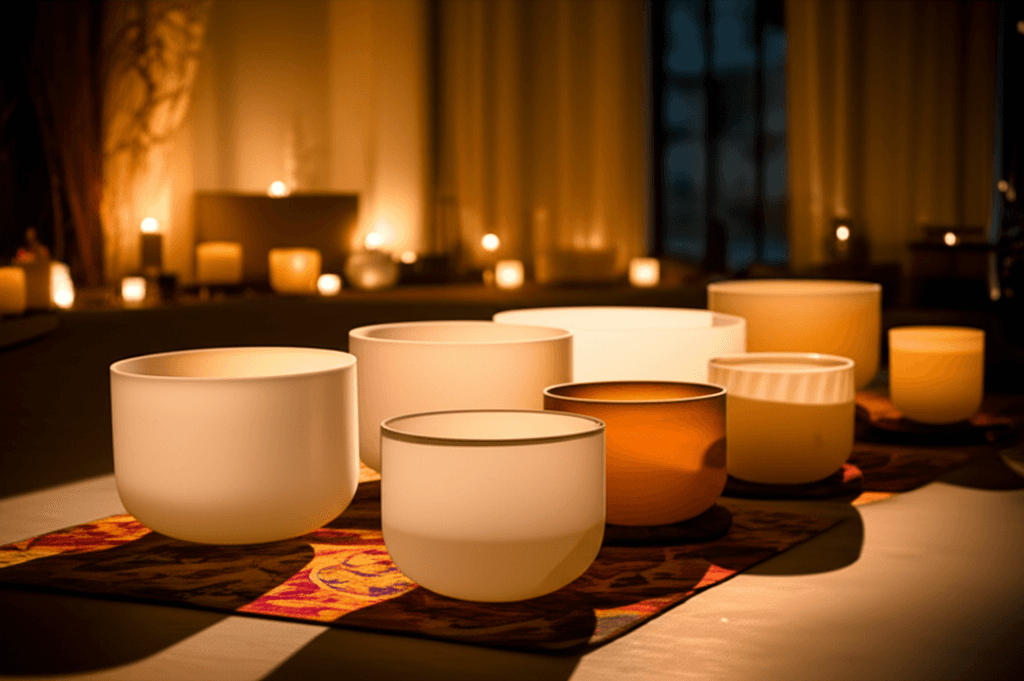
Soul Art sessions are meticulously designed to provide an immersive experience that acts as a powerful cognitive reset. Larissa Steinbach skillfully utilizes a range of sacred instruments, including resonant Himalayan singing bowls, powerful gongs, and precisely calibrated tuning forks. These instruments generate a rich tapestry of resonant frequencies that are chosen not just for their calming effect, but for their ability to gently guide the brain into specific states.
During a session, these carefully selected sounds create an enveloping field, naturally encouraging brainwave states associated with deep relaxation and enhanced concentration. The consistent, pure tones help the mind disengage from external chatter, allowing it to move from an overactive state to one of receptive calm. This process supports the nervous system in finding equilibrium, which is a prerequisite for sustained mental clarity and heightened focus, directly addressing the underlying challenges posed by noisy environments.
The Unique Soul Art Difference
What sets the Soul Art method apart is its sophisticated understanding of sound's capacity to do more than just mask noise. Larissa Steinbach’s approach focuses on a multi-layered experience that deeply nourishes the nervous system and fosters self-awareness. Unlike generic white noise apps, Soul Art offers a meticulously crafted sonic journey designed to elicit specific physiological and mental responses.
Each session is a bespoke experience, whether in a group setting or a personalized one, aimed at promoting holistic wellness. By focusing on nervous system regulation and deep stress reduction through intentional sound, Soul Art helps individuals access their innate capacity for concentration and inner peace. It is a complementary approach that integrates sound into a broader self-care practice, providing a unique path to restoring balance and cultivating a focused mind.
Your Next Steps
Reclaiming your focus in a noisy world is an achievable goal, and it begins with small, intentional changes. Here are some actionable steps you can implement today to enhance your concentration and overall well-being. By thoughtfully engaging with your auditory environment, you can foster a more productive and peaceful work life.
- Assess Your Auditory Landscape: Take a moment to truly listen to your work environment. Identify the specific sounds that consistently disrupt your concentration. Understanding your personal triggers is the first step toward finding effective solutions.
- Experiment with Beneficial Soundscapes: Explore different types of sound that may support your focus. Try ambient music, nature sounds, or even specific binaural beats designed for concentration. Many people report that low-variation instrumental tracks help mask distractions without causing new ones.
- Implement "Quiet Blocks" in Your Schedule: Designate specific times each day for focused, uninterrupted work. Use silent timers and communicate these "do not disturb" periods to colleagues if possible. Even short, concentrated intervals can significantly boost productivity.
- Leverage Acoustic Solutions: Invest in quality noise-cancelling headphones as a personal sanctuary. Explore simple acoustic panels or even consider arranging your desk to minimize direct exposure to common noise sources. Small physical adjustments can make a substantial difference.
- Explore Professional Sound Wellness: Consider how dedicated sound practices can complement your daily routine. Soul Art offers unique experiences designed by Larissa Steinbach to help regulate your nervous system, reduce stress, and cultivate a deeper sense of inner quietude, which are foundational for sustained concentration.
Ready to restore your nervous system and discover a renewed capacity for focus and calm?
Bookings Coming Soon
Soul Art is still in preparation. Session details and booking will be published here after launch.
Coming Soon
In Summary
The modern open office, while promoting collaboration, often presents significant challenges to sustained concentration, with scientific studies consistently pointing to reduced productivity and increased stress due to pervasive noise. Our brains are constantly processing auditory signals, and excessive background sound can overload our cognitive functions, making deep work exceptionally difficult. However, this challenge also presents an opportunity for strategic intervention.
By understanding the nuanced impact of different sound environments and embracing deliberate sound management techniques, individuals can significantly mitigate distractions. From utilizing personal acoustic tools to integrating beneficial soundscapes and scheduling dedicated quiet time, the path to reclaiming focus is within reach. Soul Art, under the expert guidance of Larissa Steinbach, offers a unique, holistic approach to sound wellness, providing experiences that not only address external noise but also cultivate an internal state of calm and enhanced mental clarity. Embrace the power of sound to transform your workday and elevate your well-being.
Related Articles
Sound Resilience for First-Time Managers: Thrive as a New Leader

Harmonizing Global Teams: Sound Healing for Time Zone Stress
Transforming Workplace Conflict: Sound for Team Harmony