Acoustic Alchemy: Designing Meeting Rooms for Calm & Clarity

Key Insights
Transform your workspace. Discover how strategic acoustic design in meeting rooms fosters focus, reduces stress, and boosts productivity.
Have you ever left a meeting feeling more exhausted than energized, struggling to recall key discussion points, or battling a subtle headache? The culprit might not be the agenda, but the very air you breathe – specifically, the sounds within it. In the bustling corporate landscape of Dubai, where efficiency and innovation are paramount, the overlooked power of meeting room acoustics silently sabotages productivity and well-being.
At Soul Art, founded by Larissa Steinbach, we understand that sound is not merely background noise; it is a fundamental pillar of human experience, capable of elevating or eroding our ability to focus, collaborate, and thrive. This article delves into the scientific principles of acoustic design, revealing how intentional sound environments in meeting rooms can transform tense discussions into tranquil collaborations, fostering lower stress levels and enhanced job satisfaction for every participant. We will explore practical strategies and the profound impact of crafting spaces where clarity reigns and calm becomes the default.
The Auditory Landscape of Productivity
The modern office, particularly the meeting room, is a complex soundscape. From the low hum of HVAC systems to the clatter of keyboards and, most critically, the rich tapestry of human conversation, these sounds shape our cognitive and emotional states in profound ways. Understanding the science behind these interactions is the first step toward designing spaces that nurture rather than deplete.
The Impact of Unwanted Noise
Excessive and uncontrolled noise in workspaces, especially open-plan offices, has been identified as a major contributor to distraction and reduced employee satisfaction. Studies suggest that distractions, often stemming from irrelevant speech and intelligible conversations, can cut productivity by up to 40%. This isn't just an annoyance; it's a significant business issue impacting an organization’s most valuable resource: its people.
The constant effort to filter out unwanted sounds, known as cognitive load, can lead to increased stress, fatigue, and even absenteeism. When meeting room acoustics fail, speech intelligibility suffers, forcing attendees to strain to hear, process, and retain information. This extra effort significantly diminishes comprehension and memory recall, making effective collaboration nearly impossible.
The Neuroscience of Calm
Our auditory system is intricately linked to our limbic system, the part of the brain responsible for emotion, motivation, and memory. Certain sound frequencies and characteristics can trigger stress responses, elevating cortisol levels and activating the "fight or flight" mechanism. Conversely, balanced and controlled sound environments can promote a sense of calm and safety, encouraging the brain to enter states conducive to focus and creative problem-solving.
A well-planned acoustic design is crucial for fostering a productive and comfortable workspace. By carefully addressing noise levels and creating a balanced auditory environment, organizations may improve employee well-being, performance, and overall workplace satisfaction. Preliminary studies indicate that a thoughtfully designed acoustic environment can significantly contribute to lower stress levels and enhanced job satisfaction.
"Sound is a powerful, invisible force that shapes our reality. In the corporate world, mastering meeting room acoustics isn't just about reducing noise; it's about curating a focused and harmonious experience that unlocks true potential."
Reverberation and Speech Clarity
Reverberation refers to the persistence of sound in a room after the original sound has ceased. In poorly designed meeting rooms, sound can bounce off hard, reflective surfaces, creating an echo that muddies conversations and makes speech difficult to understand. This issue is particularly pronounced in rooms with many reflective materials like glass, polished wood, and concrete.
The speech clarity factor, as noted in research, quantifies how early reflections of sound can be tuned to help a talker. When reflections arrive too late or are too strong, they interfere with direct sound, leading to poor intelligibility. Conversely, optimal reverberation times ensure that speech is clear and crisp, supporting seamless communication without unnecessary strain. The overall level of voice support in a room, sometimes referred to as 'room gain,' also plays a critical role in how well a speaker is perceived and understood by listeners.
Translating Theory into Tranquility
Applying these scientific principles to real-world office environments means moving beyond mere soundproofing. It involves a holistic approach to creating spaces that support both focused concentration and dynamic interaction, depending on the task at hand. The goal is to control what people hear, how clearly they hear it, and when, thereby fostering a conducive auditory environment.
Strategic Material Integration
A fundamental aspect of acoustic design involves integrating a balance of absorptive and reflective materials throughout the room. Absorptive materials, such as foam panels, fabric-covered surfaces, and carpets, convert acoustic energy into heat, reducing reverberation and dampening overall noise. Imagine stepping into a meeting room where the immediate impression is one of hushed sophistication, where voices carry clearly without echoing, and ambient sounds seem to melt away. This feeling is often achieved by strategic use of high-performance acoustic panels on walls and ceilings, sometimes subtly disguised as art or integrated into architectural features.
Conversely, some reflective materials like wood panels and specific glass elements can be strategically used to diffuse sound, scattering it in different directions to prevent concentrated echoes. For instance, innovative designs have utilized hyperboloid geometries on surfaces to diffuse both high and low frequency sounds while holes in each cell and the fabric material allow for sound absorption. This careful interplay ensures sound quality is maintained without making the space feel unnaturally "dead."
Biophilic Design and Aesthetic Acoustics
Incorporating nature-based materials and designs, such as live plants, moss walls, and wooden surfaces, not only enhances acoustics but also significantly improves employee well-being. These biophilic elements naturally absorb sound, contributing to a calming atmosphere that reduces stress. Visually, they add a touch of tranquility, making the space feel less sterile and more inviting. The soft rustle of leaves or the subtle texture of natural wood panels can subconsciously signal relaxation, preparing participants for more focused engagement.
The combination of aesthetic appeal and acoustic functionality is key. A beautiful wooden slat wall might also conceal sound-absorbing felt, demonstrating how form and function can elegantly converge to create an environment that is both visually pleasing and acoustically optimized.
Zoning and Sound Masking
Different areas within the same office or even a large meeting room can serve distinct functions, each requiring a tailored acoustic approach. "Quiet zones" for concentration or private virtual calls benefit from enhanced sound absorption and isolation. "Dynamic zones" for collaborative meetings require balanced acoustics that promote clear speech without excessive reverberation. Private call booths and acoustically controlled meeting areas are now common, providing dedicated spaces for focused work away from ambient office noise.
Beyond physical materials, sound masking systems offer a sophisticated solution to create a more balanced acoustic environment. These systems introduce a low-level, unobtrusive background sound (often a gentle "whoosh" similar to airflow) that helps to cover up unwanted speech and noise, making conversations less distracting. This creates a consistent, low-noise environment without making the space feel too quiet or isolating, which many people report can sometimes be unsettling. The objective is to subtly reduce the impact of sudden or intrusive noises, enabling participants to focus more easily.
Soul Art's Signature Soundscaping for Serenity
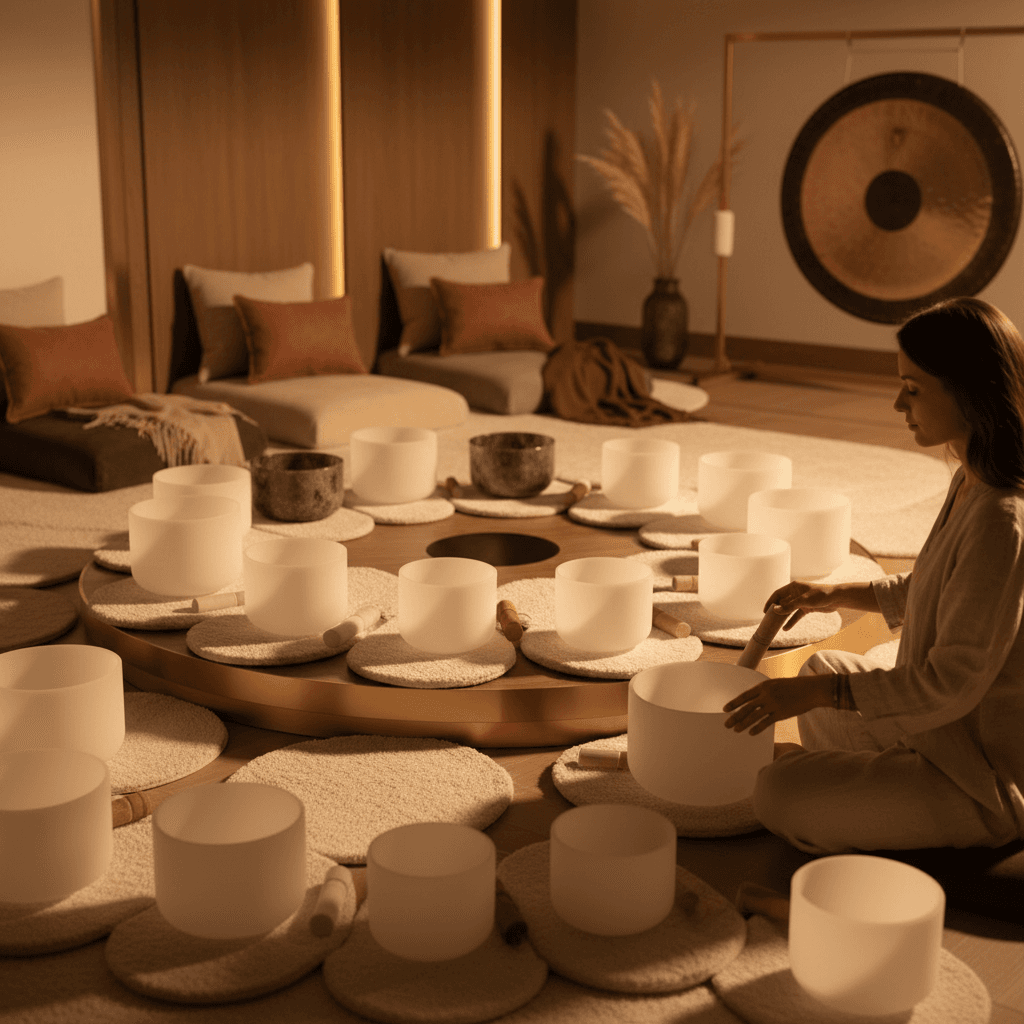
At Soul Art, Larissa Steinbach and her team are pioneers in understanding the profound impact of sound on human physiology and psychology. While our renowned studio offers immersive sound wellness experiences, our expertise extends to advising on creating optimal auditory environments in any space, including corporate meeting rooms. Our approach goes beyond mere noise reduction; it focuses on crafting a harmonious soundscape that actively supports cognitive function, emotional balance, and collaborative flow.
Larissa Steinbach applies a deep understanding of vibrational physics and acoustic principles to guide clients in selecting materials and design elements that not only absorb unwanted sound but also promote an overall sense of calm and well-being. We advocate for an integrated design strategy where the meeting room becomes a sanctuary of focus, where ideas can resonate clearly, and stress naturally dissipates. This perspective considers how the physical attributes of a room can either amplify or diminish the subtle energies that influence our interactions.
Our unique method involves assessing the existing sound dynamics of a space and recommending bespoke solutions that align with the specific needs of an organization. This may include advising on the strategic placement of acoustic panels, integrating biophilic elements for natural sound absorption, or even suggesting innovative room geometries. For instance, designs leveraging complex shapes for sound diffusion, similar to the "FabPod" research which used hyperboloid geometries, can not only sound-isolate but also improve the sound quality of the larger surrounding space. The expertise derived from working with resonant instruments like crystal singing bowls and gongs gives us an intuitive understanding of how sound interacts with physical space and human perception, translating into practical, calming acoustic design recommendations. Our philosophy is that just as a carefully chosen note can bring harmony to a melody, a strategically designed acoustic environment can bring harmony to a meeting.
Cultivating Calm: Actionable Steps for Your Workspace
Investing in effective sound control measures can lead to substantial benefits in workplace efficiency and employee comfort. Here are some practical steps you can implement today to begin transforming your meeting rooms into havens of calm and clarity:
- Assess Your Current Acoustics: Start by observing and listening. Are there noticeable echoes? Is speech muffled? What are the primary sources of distraction? A simple sound level meter application on your phone can provide preliminary data, or consider a professional acoustic assessment.
- Introduce Absorptive Materials: Begin with soft furnishings. Add thick carpets or rugs, heavy curtains, and fabric-covered chairs. For walls, explore decorative acoustic panels that double as art. Even small changes can significantly reduce reverberation and distractions.
- Strategically Zone Your Spaces: If redesigning, consider distinct zones. Implement private call booths or small quiet rooms within or adjacent to larger meeting areas. Use furniture arrangement and strategic partitions to create visual and acoustic separation for different activities.
- Integrate Biophilic Design: Bring nature indoors. Plants, moss walls, and wooden elements not only look good but also act as natural sound absorbers. These elements have been associated with lower stress levels and enhanced cognitive function.
- Explore Professional Guidance: For comprehensive solutions, consult with acoustic design specialists. Experts can conduct detailed analyses and recommend tailored solutions, including sound masking systems and architectural modifications, ensuring your meeting rooms are optimized for peak performance and well-being.
By taking these steps, you can cultivate meeting environments that foster focus, reduce stress, and elevate the overall experience for your teams. It’s an investment in the health and productivity of your workforce.
Harmonizing Work: A Concluding Note on Acoustic Wellness
The profound impact of meeting room acoustics on employee well-being, productivity, and job satisfaction can no longer be overlooked. Scientific research consistently highlights how unwanted noise and poor sound quality contribute to stress and diminished performance. By embracing strategic acoustic design—integrating a balance of absorptive and reflective materials, leveraging biophilic elements, and considering advanced solutions like sound masking—organizations can transform their workspaces. This holistic approach, championed by Larissa Steinbach and Soul Art, fosters environments where clarity thrives and calm prevails. It’s about creating spaces that do more than just facilitate meetings; they support the holistic wellness of every individual, ensuring every interaction is impactful and every team member feels supported.
Bookings Coming Soon
Soul Art is still in preparation. Session details and booking will be published here after launch.
Coming Soon
Related Articles
Sound Resilience for First-Time Managers: Thrive as a New Leader

Harmonizing Global Teams: Sound Healing for Time Zone Stress

Transforming Workplace Conflict: Sound for Team Harmony