Nurses & Sound: Reclaiming Wellness from Shift Work
Key Insights
Explore how sound wellness supports nurses battling shift work fatigue, stress, and circadian disruption. Discover Soul Art's approach.
Imagine a profession where your commitment to care often comes at the direct expense of your own well-being. For nurses, this isn't an abstract concept, but a daily reality. The relentless demands of shift work, especially irregular patterns and compressed recovery times, exert a profound toll on their physical and mental health.
Far beyond simple tiredness, these schedules can disrupt fundamental biological processes, leading to chronic fatigue, heightened stress, and a cascade of physiological issues. In this deep dive, we explore the rigorous science behind the challenges nurses face and introduce sound wellness as a sophisticated, complementary approach to restore balance.
At Soul Art, Larissa Steinbach and her team are dedicated to offering scientifically-grounded pathways to alleviate the unique stressors of shift work. We believe that understanding these impacts is the first step towards empowering our healthcare heroes to reclaim their vitality. Join us as we uncover how focused sound practices may support nurses in navigating their demanding careers with greater resilience and peace.
The Science Explained: Unpacking Shift Work's Physiological Toll
The human body thrives on rhythm. Our internal 24-hour clock, known as the circadian rhythm, orchestrates sleep-wake cycles, hormone release, and metabolic processes, aligning them with the natural light and dark of day and night. For nurses working shift patterns—be it late-early, rotating, or overnight—this fundamental biological harmony is profoundly disrupted.
A substantial body of research consistently highlights the pervasive negative effects of these schedules. Nurses are often forced to work against their body's innate inclination to be awake during the day and asleep at night. This constant misalignment is not just inconvenient; it can trigger a cascade of adverse health outcomes.
Circadian Rhythm Disruption: The Root Cause of Imbalance
Shift work directly interferes with the body's natural circadian rhythm. When nurses work overnight or in patterns that frequently shift, their internal clock struggles to adjust to these erratic schedules. This creates a disconnect between environmental cues (like sunlight) and physiological signals (like melatonin release), leading to what is often termed Shift Work Disorder (SWD).
SWD is characterized by significant problems falling and staying asleep, or sleeping when desired, as noted by researchers in the Journal of Clinical Sleep Medicine. This isn't merely about poor sleep quality; it's a fundamental conflict between external work demands and internal biological programming. The body is essentially "working against the universe's natural inclinations," as described by Eric Zhou, an assistant professor at Harvard Medical School.
The Cumulative Impact: Chronic Fatigue and Heightened Stress
The ongoing disruption to circadian rhythms results in a pervasive state of chronic fatigue. Studies, including one published in BMC Nursing, reveal that late-early shifts, in particular, severely disrupt sleep and recovery time. Nurses frequently report feeling "sleep deprived" despite working standard-length shifts, underscoring the disproportionate impact of compressed recovery periods.
This fatigue is intimately linked with heightened stress levels. Irregular shifts have been consistently shown to compromise well-being, leading to higher psychological distress. A multi-site study in Spain, for instance, reported that nurses working rotating shifts exhibited lower sleep efficiency and elevated psychological distress, including depersonalisation and anxiety. Such sustained stress contributes significantly to burnout, jeopardizing not only the nurse's health but also potentially compromising patient safety and the quality of care provided.
Beyond Sleep: Gastrointestinal and Metabolic Health
The repercussions of shift work extend far beyond sleep and mental well-being. Circadian disruption also profoundly impacts intestinal homeostasis and eating habits. Nurses on rotating shifts often face challenges such as disrupted eating patterns, limited access to nutritious meals, and insufficient caloric intake. This can have serious long-term consequences for their health.
Research highlights that shift and night workers frequently report more gastrointestinal symptoms, notably gastro-esophageal reflux (GER), compared to day workers. These disorders are believed to be intricately related to disturbed circadian cycles. Furthermore, the disruption in cortisol secretion patterns—with night shift nurses showing a lower increase in cortisol after waking—takes at least four days to adjust, exacerbating the physiological burden. Over time, this chronic stress and metabolic disruption are linked to higher risks for serious health problems, including metabolic syndrome, heart attack, and diabetes, as outlined by a 2022 research review.
The Brainwave Connection: Stress and Alertness
Our brains operate at different frequencies, or brainwave states, depending on our level of alertness and relaxation.
- Beta waves are associated with an alert, focused, and sometimes stressed state.
- Alpha waves indicate a relaxed yet aware state, often experienced during light meditation.
- Theta waves are linked to deep meditation, creativity, and light sleep.
- Delta waves characterize deep, restorative sleep.
Shift work, particularly its associated stress and sleep deprivation, can keep the brain predominantly in higher-frequency beta states. This makes it difficult for nurses to downshift into alpha or theta states, even during their limited rest periods, thereby hindering true relaxation and recovery. This constant mental activation contributes to persistent anxiety and the inability to achieve restorative sleep, creating a vicious cycle of fatigue and psychological distress.
How It Works in Practice: The Vibrational Pathway to Wellness
Given the profound physiological and psychological impacts of shift work on nurses, finding effective and accessible methods for stress reduction and recovery is paramount. Sound wellness offers a unique, non-invasive approach that works directly with the body's natural systems to restore balance. This practice leverages the power of specific frequencies and vibrations to guide the body and mind into states conducive to healing and deep relaxation.
The scientific understanding of sound's effects on the human body provides a robust foundation for its application in wellness. It's not merely about "listening" to pleasant sounds; it's about experiencing profound vibrational shifts that resonate on a cellular level. This is where the theoretical understanding of circadian rhythms, stress hormones, and brainwave states converges with tangible, felt experiences.
Nervous System Regulation: Shifting from Fight-or-Flight
One of the most immediate and profound effects of sound wellness is its ability to influence the autonomic nervous system. Under chronic stress, the sympathetic nervous system (responsible for "fight-or-flight") is often overactive. Sound practices, particularly those involving instruments like gongs and singing bowls, are adept at activating the parasympathetic nervous system, which governs the "rest-and-digest" state.
This shift is measurable. Studies have shown that after even short sessions of sound meditation, participants can exhibit significantly lower cortisol levels—the body's primary stress hormone—and reduced heart rates. By intentionally downshifting the nervous system, sound wellness may help counteract the physiological markers of chronic stress that shift work induces, offering a much-needed reprieve from constant vigilance.
Brainwave Entrainment: Guiding the Mind to Calm
Sound healing tools possess a unique capacity for brainwave entrainment. This is the process by which brainwave frequencies synchronize with the frequency of external rhythmic stimuli. For nurses whose minds are often stuck in high-stress Beta wave states due to demanding schedules and sleep deprivation, sound can act as a gentle guide.
Specific frequencies, often found in binaural beats or the rich harmonics of crystal and Himalayan singing bowls, may help shift brain activity from alert Beta into calmer Alpha or deep meditative Theta states. Many people report feeling a profound sense of peace or even euphoria after a session, as these lower frequency states are associated with deep relaxation, reduced anxiety, and enhanced creativity. This allows for mental quietude that is often elusive amidst the demands of a nurse's lifestyle.
Hormonal Balance and Mood Enhancement: A Chemical Reset
The calming effects of sound extend to our neurochemistry. Listening to harmonic sounds has been shown to increase the production of serotonin and dopamine, often referred to as the brain’s natural "feel-good" chemicals. This explains why sound therapy has been linked to improved mood and a reduction in symptoms of anxiety and depression, as highlighted by research in Frontiers in Human Neuroscience and Journal of Evidence-Based Integrative Medicine.
For nurses battling the psychological distress of depersonalisation, anxiety, and general emotional exhaustion—all commonly reported consequences of shift work—the potential for sound to foster a more positive internal landscape is invaluable. By supporting the natural regulation of stress hormones and mood-enhancing neurotransmitters, sound wellness offers a complementary pathway to emotional resilience.
Cellular and Vibrational Effects: Deeper Resonance
Beyond the measurable changes in brainwaves and hormones, there's a fascinating aspect of sound related to its vibrational nature. Cymatics, the study of visible sound vibrations on matter, demonstrates how sound can organize particles into intricate geometric shapes in water and other fluids. Considering that the human body is over 70% water, this suggests a profound, resonant influence of sound frequencies on our tissues and cells.
While the exact mechanisms are still being explored, this concept implies that sound vibrations may penetrate deeper than just the auditory system. This "cellular massage" could potentially support the body's natural healing processes and enhance overall vitality, offering a holistic benefit that complements nervous system regulation and mental calm.
"The subtle yet powerful frequencies of sound offer a direct path to internal stillness, an essential sanctuary for those who constantly give of themselves."
The Soul Art Approach: Larissa Steinbach's Bespoke Wellness for Nurses
At Soul Art, Dubai's premier sound wellness studio, we understand that the challenges faced by nurses are unique and require a specialized approach. Larissa Steinbach, our founder and lead practitioner, has meticulously crafted wellness experiences that blend profound scientific understanding with ancient wisdom. Our methodology is designed not merely to offer temporary relief, but to empower nurses with sustainable tools for deep recovery and resilience against the relentless demands of shift work.
Larissa Steinbach's vision for Soul Art is rooted in an empathetic understanding of the specific stressors impacting healthcare professionals. We recognize the insidious nature of chronic fatigue, the persistent hum of anxiety, and the profound disruption to basic physiological functions that nurses endure. Our approach moves beyond generic relaxation to target these specific needs with precision and care.
Tailored Sessions for Unique Challenges
The Soul Art method begins with a personalized consultation to understand each nurse's unique shift patterns, specific symptoms, and wellness goals. This allows us to tailor sessions that directly address their most pressing concerns, whether it's acute sleep deprivation, persistent gastrointestinal discomfort, or generalized anxiety. We acknowledge that a nurse working consecutive night shifts has different needs than one grappling with quick returns and compressed recovery times.
Our sessions are crafted to gently guide the body and mind back into alignment. For example, a nurse struggling with sleep may experience sound frequencies specifically chosen to encourage Delta or deep Theta brainwave states, facilitating profound rest. Conversely, someone experiencing high stress might benefit from Alpha wave-inducing sounds, promoting calm alertness and emotional regulation.
Instruments and Techniques: A Symphony of Healing
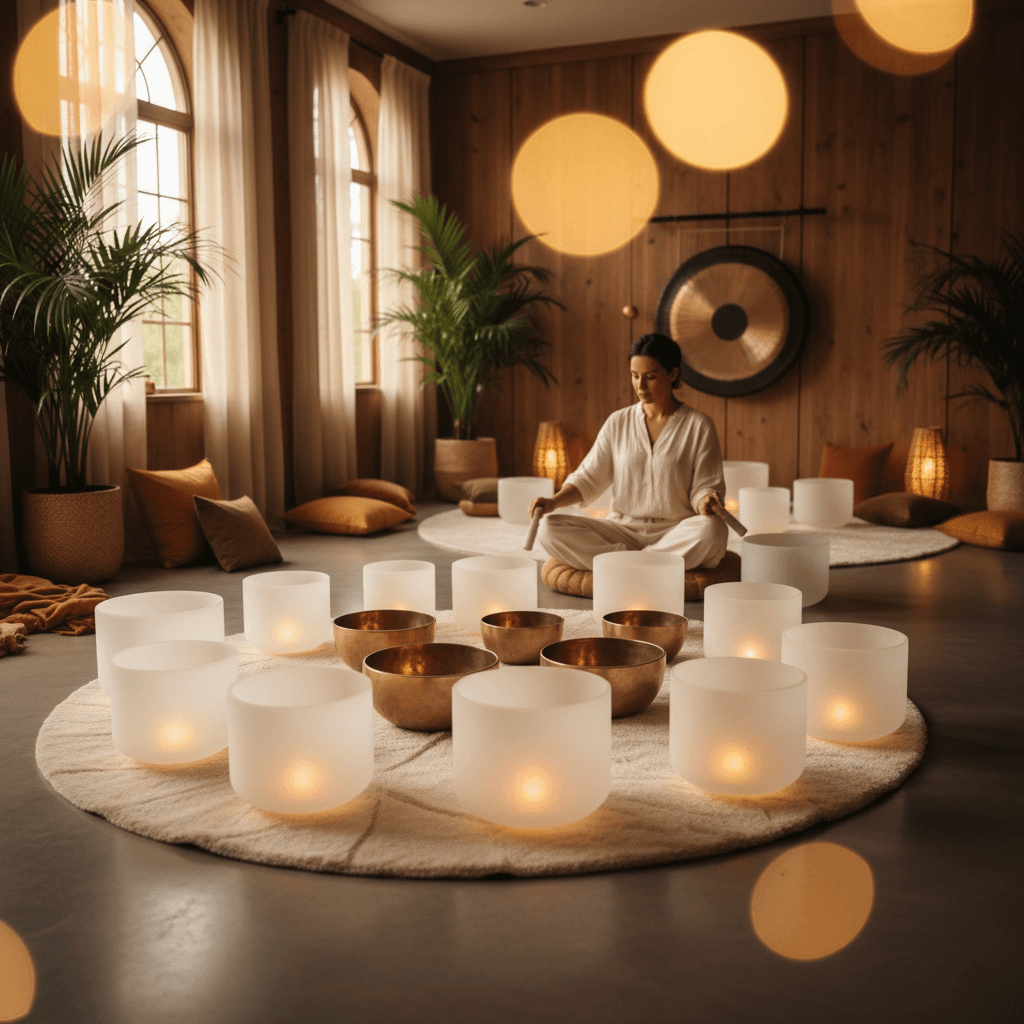
Soul Art utilizes a curated selection of world-class instruments, each chosen for its unique vibrational qualities and therapeutic potential. Our practices incorporate the resonant frequencies of large symphonic gongs, the rich, earthy tones of authentic Himalayan singing bowls, and the pure, ethereal sounds of crystal singing bowls. These instruments are played with intention, creating a deeply immersive soundscape that envelops the participant.
Beyond the instruments, our sessions integrate guided meditation and focused breathwork. Larissa Steinbach emphasizes the importance of conscious breathing as a bridge between the physical and energetic bodies. This combination amplifies the benefits of sound, allowing for deeper nervous system regulation and a more profound release of accumulated tension and stress. The precise application of these techniques supports the activation of the parasympathetic nervous system, helping nurses transition from a state of vigilance to one of profound calm.
Addressing Compressed Recovery and Circadian Support
A key focus of Soul Art's work for nurses is to address the critical issue of compressed recovery time—a challenge highlighted in studies on late-early shifts. Our sessions are designed to maximize the quality of rest and recovery, even when the quantity of available time is limited. By facilitating rapid shifts into restorative brainwave states and promoting deep physiological relaxation, Soul Art aims to enhance the body's natural recuperative abilities.
We offer complementary tools and strategies for light exposure management and routine establishment, aligning with recommendations from health organizations. Through our holistic approach, Larissa Steinbach and Soul Art provide a sanctuary where nurses can systematically decompress, re-establish their internal rhythms, and cultivate a deeper sense of well-being, directly counteracting the pervasive effects of shift work.
Your Next Steps: Integrating Sound Wellness into Your Life
For nurses navigating the complex demands of shift work, proactive self-care is not a luxury, but a necessity. Integrating sound wellness into your routine may offer a powerful complementary approach to manage stress, enhance recovery, and support your overall well-being. Here are practical steps you can take today:
- Prioritize Sleep Environment: Even with irregular hours, optimize your sleep space. Use blackout curtains, reduce blue light exposure before attempting to sleep (consider blue light-blocking glasses), and ensure your bedroom is quiet and cool. These small adjustments can significantly improve the quality of your compressed rest periods.
- Mindful Light Exposure: As highlighted by Harvard Health, timing your light exposure is crucial. If you work nights, reduce light exposure as much as possible after your shift if you intend to sleep immediately. Conversely, expose yourself to bright light when you need to be alert. This helps to gently guide your disrupted circadian rhythm.
- Establish a Pre-Sleep Ritual: Create a consistent wind-down routine, regardless of the time of day you're going to sleep. This could involve gentle stretching, a warm bath, or listening to calming music or guided meditations. This signals to your body and mind that it's time to transition into rest.
- Explore Sound Wellness: Consider incorporating sound baths or sound meditation into your self-care regimen. Even short, consistent exposure to resonant frequencies may support nervous system regulation, reduce cortisol levels, and encourage restorative brainwave states. This is a powerful, non-invasive way to decompress.
- Hydrate and Nourish Consciously: Pay attention to your nutritional intake, especially during shift changes. Aim for regular, nutrient-dense meals that support intestinal health, countering the disruptions often experienced by shift workers. Adequate hydration is also essential for overall bodily function and energy.
Embracing sound wellness at Soul Art, guided by Larissa Steinbach, provides a dedicated space for deep rest and rejuvenation. Our tailored sessions are designed to specifically address the unique stressors of your profession, offering a pathway to reclaim your vitality and inner calm. We invite you to experience the profound benefits firsthand.
Bookings Coming Soon
Soul Art is still in preparation. Session details and booking will be published here after launch.
Coming Soon
In Summary: A New Paradigm for Nurse Wellness
The profound and multifaceted impact of shift work on nurses—from disrupted circadian rhythms and chronic fatigue to heightened psychological distress and physiological imbalances—is a critical concern for both individual well-being and healthcare quality. Traditional coping mechanisms often fall short in addressing the systemic nature of these stressors. However, emerging research and ancient wisdom converge to offer a powerful, complementary solution: sound wellness.
At Soul Art, Larissa Steinbach has pioneered a sophisticated approach that leverages the scientific principles of nervous system regulation, brainwave entrainment, and hormonal balance through resonant frequencies. By providing a sanctuary for deep rest and tailored vibrational experiences, Soul Art aims to empower nurses to mitigate the pervasive effects of their demanding schedules. Reclaiming your energy and inner peace is not just a dream; it’s an accessible reality through the transformative power of sound.
Related Articles
Chefs: Mastering Kitchen Pressure Through Sound Wellness
Sound for Death Workers: Managing Stress for Funeral Directors

Sound Wellness: Respite for Retail's Customer-Facing Heroes