Norepinephrine Regulation: Mastering Alertness for Mindful Living with Soul Art
Key Insights
Explore how norepinephrine influences alertness, attention, and stress. Discover Soul Art's unique approach to regulating this vital neurotransmitter for enhanced focus and wellbeing with Larissa Steinbach.
Have you ever wondered what truly governs your ability to focus intently, manage daily stressors, or even transition smoothly from wakefulness to sleep? Our capacity for optimal alertness isn't merely about feeling "awake"; it's a finely tuned neurological dance orchestrated by a powerful chemical messenger known as norepinephrine. This vital substance influences everything from our attention span to our body's fundamental stress responses, profoundly shaping our daily experience.
At Soul Art, Dubai's premier sound wellness studio, we delve into the sophisticated science behind such neurological functions to offer experiences that genuinely enhance your wellbeing. This article explores the fascinating role of norepinephrine, its impact on your mental and physical state, and how understanding its regulation can unlock a more balanced and focused existence. Join us as we uncover pathways to cultivate a state of calm yet attentive presence, guided by scientifically informed wellness practices.
Understanding Norepinephrine: The Neurotransmitter of Alertness
Norepinephrine, often referred to as noradrenaline, is a compelling chemical compound that operates in a dual capacity within the human body. It functions both as a neurotransmitter in the central nervous system and as a hormone released into the bloodstream. This versatility makes it an indispensable component of our physiological and psychological responses, particularly concerning alertness and stress.
This powerful catecholamine is intrinsically linked to our capacity for vigilance, focus, and overall cognitive function. Its complex interactions within the brain and body underscore its importance for maintaining optimal mental clarity and adaptive responses to our environment. Understanding norepinephrine is key to unlocking strategies for enhanced daily functioning and profound inner peace.
What is Norepinephrine?
At its core, norepinephrine is a neurotransmitter that facilitates communication between nerve cells, influencing a wide array of brain functions. Simultaneously, it acts as a hormone, produced and released by the adrenal glands, playing a critical role in the body’s systemic responses. These dual roles highlight its pervasive influence throughout our biological systems.
Norepinephrine is classified as a catecholamine, a group of neurohormones that are crucial for the body's fight-or-flight response. This biological mechanism prepares us to react swiftly to perceived threats or stressors, making norepinephrine a central player in our survival instincts. Its impact extends beyond immediate danger, subtly shaping our everyday interactions with the world around us.
Norepinephrine's Dual Role: Hormone and Neurotransmitter
As a hormone, norepinephrine is released by the adrenal medulla alongside epinephrine (adrenaline) when the body encounters a stressful situation. This hormonal surge leads to several physiological changes designed to prepare the body for immediate action. These include an increased heart rate, elevated blood pressure, and the release of sugar into the bloodstream to provide rapid energy for muscles.
In its more common role as a neurotransmitter, norepinephrine is primarily produced by nerve axons and stored in small, fluid-filled sacs called vesicles. When an impulse travels down a nerve, it triggers the release of norepinephrine, which then crosses the synaptic gap to bind with receptors on a second nerve. This process helps to speed up an individual's reaction time and significantly increases alertness and arousal, forming the basis of our focused attention.
The Orchestration of Attention and Focus
Norepinephrine plays an undeniably crucial role in the regulation of attention and alertness, influencing our ability to engage with the world. Increased norepinephrine activity in the brain generally enhances our readiness for action, contributing significantly to our capacity to focus attention and respond effectively to diverse stimuli. This intricate modulation of cognitive processes is fundamental to learning and information processing.
By enhancing the brain’s ability to adapt and store information, norepinephrine supports various cognitive tasks, facilitating clearer thought and improved recall. Impaired norepinephrine function, however, has been associated with a decline in cognitive abilities, a pattern observed in neurodegenerative conditions such as Alzheimer’s disease and Parkinson’s disease, according to studies like Holland N, Robbins TW, Rowe JB. et al. 2021. The noradrenergic-locus coeruleus pathway, in particular, is vital for modulating alertness and attentiveness within dynamic environments, indicating norepinephrine’s profound impact on our mental sharpness.
Navigating the Stress Response
As a critical component of the sympathetic nervous system, norepinephrine is intimately involved in the body’s stress response, famously known as the fight-or-flight mechanism. During periods of perceived stress or danger, norepinephrine levels rapidly increase, triggering physiological changes such as an elevated heart rate, increased blood pressure, and a surge in blood glucose levels. These responses are designed to prepare the body for immediate, decisive action.
Furthermore, norepinephrine interacts with the reward pathway in the brain, enhancing the arousal and alertness needed to pursue substances that can be addictive, creating a complex cycle of craving and reinforcement. For example, research by Sofuoglu M, Sewell RA. et al. 2009 showed that norepinephrine activity intensifies during drug withdrawal, exacerbating stress and driving individuals to seek relief through substance use. Its influence on the amygdala, a key brain region involved in emotional regulation, can also heighten negative emotional states, making certain substances appear as a deceptive coping mechanism.
The Impact of Dysregulation
Norepinephrine dysregulation refers to an imbalance in the levels or activity of this essential neurotransmitter, leading to widespread adverse effects on both mental and physical health. When its regulation is disrupted, the body and brain can experience either heightened or diminished responses to stress, contributing to a diverse range of symptoms and conditions. This imbalance can severely compromise our overall wellbeing.
A study by Jain R et al. 2024 highlights that dysregulation of noradrenergic activity plays a significant role in conditions such as Major Depressive Disorder, Schizophrenia, agitation in Alzheimer’s Disease, and Posttraumatic Stress Disorder. Beyond these serious conditions, dysregulation has also been associated with general anxiety disorders, attention deficit hyperactivity disorder (ADHD), and cognitive decline, as seen in neurodegenerative conditions. The disruption of this delicate balance can manifest as chronic stress, persistent fatigue, difficulty concentrating, and mood fluctuations, underscoring the critical importance of maintaining optimal norepinephrine function for holistic health.
Regulating Sleep-Wake Cycles
Norepinephrine also plays a pivotal role in influencing our circadian rhythms, the natural internal processes that regulate the sleep-wake cycle. It primarily promotes wakefulness and alertness during the active periods of the day, helping us to stay engaged and focused when we need to be most productive. This activity is essential for maintaining a healthy rhythm throughout our daily lives.
As the body begins to prepare for rest, norepinephrine activity naturally reduces, facilitating a smoother transition towards sleep. Norepinephrine release is typically lowest during sleep, gradually rising during wakefulness, and reaching its highest levels during situations of stress or perceived danger. This dynamic fluctuation demonstrates its integral connection to both our waking consciousness and our restorative sleep. Maintaining a healthy sleep-wake cycle is therefore deeply intertwined with balanced norepinephrine levels, impacting overall energy and cognitive function.
How It Works in Practice
Understanding the science of norepinephrine is one thing, but experiencing its balanced regulation in your daily life is another. When norepinephrine is optimally regulated, individuals often report a profound sense of calm alertness – a state where focus is sharp, yet stress feels manageable. This isn't about being perpetually hyped up; it's about achieving a sustainable, clear-headed presence that supports productivity and emotional resilience without exhaustion.
Imagine facing a demanding workday with heightened clarity, or navigating complex social situations with an improved ability to listen and respond thoughtfully. This is the practical manifestation of well-regulated norepinephrine. The mind feels less cluttered, decisions become clearer, and the body's natural stress responses are proportionate, not overwhelming. It allows for a more fluid and adaptable interaction with the world, transforming potential stressors into opportunities for mindful engagement.
Many people report that when their norepinephrine is in balance, they experience less mental fog and a reduction in anxious rumination. Tasks that once felt daunting become more approachable, as the brain's capacity for attention and information processing is enhanced. This can translate into improved learning outcomes, greater creativity, and a general feeling of being more "present" in every moment. The pursuit of optimal alertness through conscious regulation is a pursuit of a richer, more engaged life.
This balanced state also significantly influences our emotional regulation. Instead of experiencing exaggerated emotional responses to minor irritants, one may find a greater capacity for emotional resilience and stability. The subtle yet powerful shifts in internal chemistry can foster a sense of inner peace, even amidst external chaos. It’s about cultivating an internal environment where the nervous system can adapt and thrive, rather than being constantly on edge.
Furthermore, a well-regulated norepinephrine system can contribute to improved sleep quality. When the body naturally reduces norepinephrine activity in the evenings, it signals a readiness for rest, facilitating easier transitions into deep, restorative sleep. This virtuous cycle – better sleep leading to better regulation, leading to improved alertness – underscores the holistic nature of this neurotransmitter's influence. By embracing wellness practices that support this balance, we empower ourselves to live with greater vitality and purpose.
"The true art of living lies not in avoiding life's challenges, but in cultivating an inner equilibrium that allows us to meet them with grace and focused intention."
The journey towards optimal alertness through norepinephrine regulation is a path of self-discovery and conscious self-care. It encourages us to tune into our body's subtle signals, recognizing when we might be overstimulated or under-focused. By integrating practices that gently guide our nervous system towards balance, we can unlock a sustained state of attentive presence that enriches every facet of our lives.
The Soul Art Approach
At Soul Art, Larissa Steinbach and her team are dedicated to guiding individuals towards profound states of wellbeing through carefully curated sound wellness experiences. Our approach is deeply rooted in the understanding of the body's intricate neurological and physiological systems, including the delicate balance of neurotransmitters like norepinephrine. We utilize the profound power of sound and vibration as a complementary approach to support the natural regulation of these vital internal processes, fostering optimal alertness and inner harmony.
Larissa Steinbach’s vision for Soul Art is to create a sanctuary where individuals can gently recalibrate their nervous system, moving away from states of chronic overstimulation towards a more balanced and centered existence. We understand that while norepinephrine enhances alertness, excessive or dysregulated activity can lead to feelings of anxiety and restlessness. Our method is designed to gently guide the body's systems back into a harmonious state, supporting the brain's natural capacity for self-regulation and promoting a sense of calm readiness.
The Power of Resonance
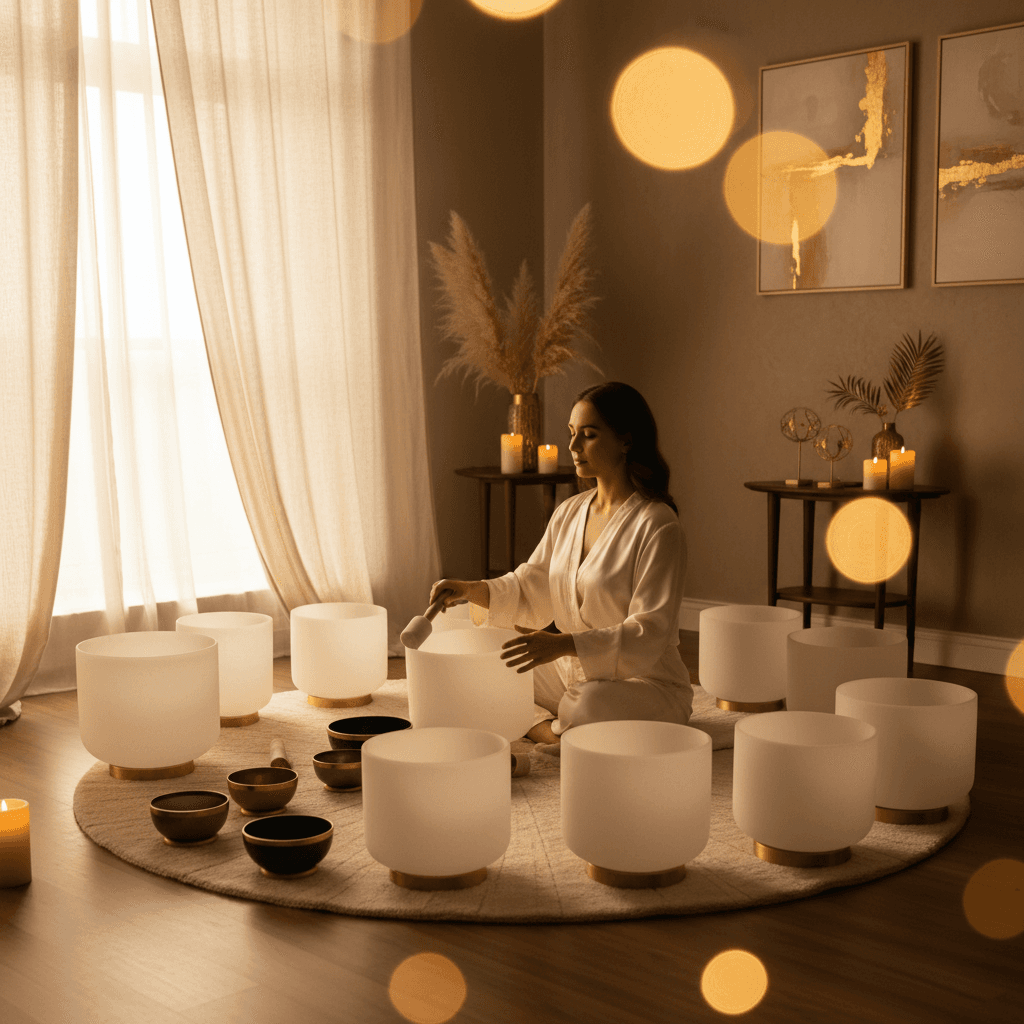
Central to the Soul Art experience is the therapeutic application of resonance and vibrational frequencies. During our sound wellness sessions, participants are immersed in a meticulously crafted soundscape created by a variety of instruments. These include Himalayan singing bowls, crystal singing bowls, gongs, chimes, and other resonant tools, each chosen for its specific acoustic properties. These instruments produce complex sound waves that are believed to interact with the body's energetic fields and cellular structures.
While we do not make medical claims, preliminary studies and anecdotal evidence suggest that exposure to specific frequencies and vibrations may gently influence the nervous system. This influence can potentially shift the body from a state dominated by the sympathetic (fight-or-flight) nervous system towards a greater activation of the parasympathetic (rest and digest) nervous system. By promoting this parasympathetic state, sound wellness may support the body in achieving a more balanced norepinephrine profile, reducing excessive arousal and fostering a sense of calm alertness. It is a deeply immersive experience, where the subtle yet powerful vibrations envelop the body, inviting a profound release of tension and a renewal of inner peace.
Mindful Immersion and Intention
Beyond the mere exposure to sound, Soul Art’s methodology emphasizes mindful immersion and intention as integral components of the wellness journey. Each session, meticulously crafted by Larissa Steinbach, incorporates elements of guided meditation and conscious breathwork. These practices are designed to cultivate a heightened state of awareness and presence, helping participants to consciously engage with their inner landscape.
This intentional focus on mindfulness amplifies the potential for the body to self-regulate its neurochemical environment. By guiding attention inwards and fostering a state of deep relaxation, we create an optimal environment for the nervous system to find its natural equilibrium. This holistic approach supports not only the regulation of norepinephrine but also contributes to overall stress management, emotional balance, and enhanced cognitive clarity. It’s a powerful synergy of sound, breath, and conscious intention, designed to nurture the entire being.
Your Next Steps
Cultivating optimal alertness and achieving balanced norepinephrine regulation is an ongoing journey, but one that yields profound benefits for your overall wellbeing. Incorporating mindful practices into your daily routine can significantly support your body’s natural ability to maintain this delicate balance. There are several practical steps you can take today to begin nurturing a state of calm yet attentive presence.
Here are some actionable steps to support your journey towards balanced alertness and enhanced wellbeing:
- Prioritize Consistent Sleep Hygiene: Establish a regular sleep schedule, aim for 7-9 hours of quality sleep per night, and create a calming bedtime routine. Adequate rest is fundamental for norepinephrine regulation and overall cognitive function.
- Integrate Mindful Movement: Engage in gentle exercises like yoga, stretching, or walking in nature. Physical activity can help balance neurotransmitter levels, reduce stress, and improve focus without overstimulating the nervous system.
- Practice Stress Reduction Techniques: Dedicate time each day to practices such as deep breathing exercises, mindfulness meditation, or journaling. These techniques can activate the parasympathetic nervous system, helping to temper excessive norepinephrine responses during stressful moments.
- Nourish Your Body and Mind: Focus on a balanced diet rich in whole foods, lean proteins, and healthy fats. Some research suggests that certain nutrients, including B vitamins and magnesium, may support neurotransmitter synthesis and function.
- Explore Sound Wellness: Consider experiencing the unique approach offered at Soul Art. Sound baths and vibrational therapy can be a powerful complementary approach to support nervous system regulation and foster a state of deep relaxation and centered alertness.
Remember, these practices are complementary approaches to holistic wellness and are not intended to replace professional medical advice or treatment. By integrating these thoughtful steps into your lifestyle, you empower yourself to navigate daily life with greater clarity, resilience, and a profound sense of inner calm.
Ready to explore how focused relaxation and sound wellness can support your journey towards optimal alertness and overall wellbeing?
Bookings Coming Soon
Soul Art is still in preparation. Session details and booking will be published here after launch.
Coming Soon
In Summary
Norepinephrine is a critical neurotransmitter and hormone, playing a multifaceted role in our alertness, attention, stress response, and sleep-wake cycles. Its balanced regulation is fundamental for optimal cognitive function, emotional stability, and overall wellbeing. Disruptions in its activity can lead to a range of challenges, from heightened anxiety and cognitive decline to difficulties in managing stress.
By understanding the science behind norepinephrine, we can empower ourselves to adopt wellness practices that support its healthy balance. At Soul Art, Larissa Steinbach’s innovative approach to sound wellness offers a unique pathway to cultivate calm alertness and profound inner peace. We invite you to explore the transformative potential of sound and intention to harmonize your nervous system and enhance your capacity for a focused, resilient, and mindful life.
Wellness Disclaimer: This article is for educational and informational purposes only. It does not constitute medical advice, diagnosis, or treatment. Soul Art Dubai provides non-medical wellness experiences focused on relaxation, stress management, and general wellbeing. Sound wellness is a complementary practice and should not replace professional medical care.
Related Articles

Cluster Headaches: Unveiling Pain and the Promise of Frequencies in Wellness

Epilepsy & Sound: Safety, Serenity, and Emerging Wellness Paths
Mastering Focus: Analytical Listening & Brain Engagement at Soul Art