Neurogenesis: Can Sound Frequencies Spark New Brain Cells?

Key Insights
Explore the fascinating science of neurogenesis and how sound frequencies, particularly 40Hz gamma stimulation, may support the growth of new brain cells for enhanced cognitive wellbeing at Soul Art Dubai with Larissa Steinbach.
Imagine a world where your brain, far from being a static entity, possesses the remarkable ability to generate new cells, constantly renewing and adapting. For decades, the scientific community largely believed that adult brains couldn't form new neurons. This long-held belief painted a picture of a brain with a finite capacity, slowly declining with age.
Yet, groundbreaking research is now challenging this paradigm, revealing the extraordinary plasticity of the adult brain. Scientists are increasingly convinced that adult neurogenesis—the process of creating new brain cells—is not only possible but also deeply relevant to our cognitive health and vitality as we age. This discovery opens up exciting avenues for understanding and supporting brain function.
What if certain external stimuli, particularly specific sound frequencies, could gently encourage this intrinsic capacity for renewal? At Soul Art in Dubai, founded by Larissa Steinbach, we explore the profound potential of sound to influence our inner landscape, supporting holistic wellbeing. This article delves into the fascinating science behind neurogenesis and how calibrated sound frequencies may play a role in fostering a healthier, more resilient brain.
Understanding Neurogenesis: A Brain's Lifelong Renewal
The concept of neurogenesis, the birth of new neurons, has been a subject of intense scientific debate. For many years, the prevailing view was that this process ceased in adulthood, leaving the brain with a fixed number of cells. However, recent evidence is compellingly shifting this understanding, revealing that our brains retain an astonishing capacity for renewal.
Researchers at the University of Cincinnati, including molecular geneticist Agnes Luo, PhD, are now convinced that adult human brains can form new neurons. Dr. Luo points to a landmark 2014 paper that examined radioactive particle levels in postmortem brain tissues, providing powerful insights into adult neurogenesis. This was further bolstered by a 2025 study published in Science, which identified cells in adult human brain tissue exhibiting the genetic hallmarks of neuron-generating cells. These findings strongly suggest that, for at least some individuals, new neurons are indeed produced in adulthood, albeit at a slow pace.
This evolving understanding has significant implications, especially when considering phenomena like "superagers"—individuals who maintain exceptional cognitive abilities well into their later years. A paper published in Nature suggested that the secret behind superagers might be their higher number of new neurons compared to their peers. This connection between new brain cells and sustained cognitive performance underscores the importance of fostering neurogenesis for overall brain health. The scientific discussion is now moving beyond if neurogenesis occurs in adults to how much and how consistently it happens, opening doors for innovative wellness approaches.
The Power of Sound and Frequency on Brain Health
Beyond the general understanding of neurogenesis, emerging research specifically explores how sound—its tones, frequencies, and absence—can influence this intricate biological process. The auditory system's ability to perceive sound stimulus, primarily determined by frequency, plays a significant role in our neural development and wellbeing.
Studies have begun to shed light on the direct impact of sound on brain structure. For example, research involving mice exposed to different musical tones for a few hours daily showed increases in the length of dendrites and the number of dendritic spines in the hippocampus and prefrontal cortex. Dendrites are tree-like extensions of nerve cells that receive signals from other neurons, while dendritic spines are small protrusions that form synaptic connections. An increase in these structures suggests enhanced neuronal connectivity and improved information transmission within the nervous system. This particular study also observed an increase in proteins like SYP and PSD95, crucial for synaptic plasticity, and activated the MAPK/ERK/CREB pathway, which is known to regulate neuronal cell survival, proliferation, and differentiation.
While diverse musical experiences contribute to neural development, specific frequencies are garnering significant scientific attention for their potential therapeutic applications. The 40Hz gamma frequency rhythm stands out as particularly promising. Researchers at institutions like MIT’s Picower Institute for Learning and Memory have conducted extensive studies on the benefits of exposing individuals or animal models to 40Hz stimulation via light, sound, or a combination of both.
One key study, published in Nature in 2016 and further elaborated in 2025, demonstrated that 40Hz sensory stimulation significantly improved cognition, neurogenesis, and circuit connectivity in mice genetically engineered to model Down syndrome. The analysis revealed an improved expression of the TCF4 gene and direct evidence of more new neurons in the dentate gyrus—a region of the hippocampus critical for memory formation. These increases in neurogenesis, while correlational, are hypothesized to contribute to the observed improvements in new synapses and short-term memory function.
Furthermore, a growing body of evidence from the same collaboration indicates that 40Hz audio and visual stimulation may reduce hallmarks of Alzheimer’s pathology, such as amyloid and tau proteins, prevent neuron death, decrease synapse loss, and sustain memory and cognition in various Alzheimer’s mouse models. These investigations into underlying mechanisms have identified specific cellular and molecular responses across many brain cell types, including neurons, microglia, astrocytes, and the brain’s blood vessels. It appears that 40Hz stimulation may induce interneurons to increase the release of specific neurochemicals, fostering a broad-based restorative neurological health response.
Conversely, not all sound is beneficial. Research highlights that chronic or high-intensity noise exposure can have detrimental effects, being associated with neurotoxicity, accelerated neurocognitive decline, and even structural brain alterations. Noise trauma with inner ear hair cell loss has been linked to a reduction of precursor cell proliferation in the hippocampus of rats, impacting neurogenesis negatively. Interestingly, studies also show that periods of silence or exposure to novel, ethologically irrelevant sounds like classical music (e.g., Mozart) can induce a stronger proliferation effect on adult hippocampal neurogenesis compared to ambient noise or unstructured white noise. This suggests that the brain responds positively to both specific stimulating frequencies and environments that promote deep quiet and novelty.
"The brain's ability to grow new connections and cells, once thought impossible in adulthood, is now understood as a dynamic, lifelong process. Sound, especially targeted frequencies, may serve as a gentle catalyst for this innate renewal."
Even in the animal kingdom, the connection between sound and neurogenesis is apparent. Studies on songbirds, specifically canaries, provide fascinating insights. The act of singing itself regulates the addition of new neurons in the HVC region of their brains, which is crucial for song learning and maintenance. Birds that sang at high rates had significantly more new HVC neurons compared to those not allowed to sing. This evidence suggests an inherent link between auditory input, vocal output, and the brain's capacity for neural regeneration.
These collective findings underscore a powerful message: the acoustic environment we immerse ourselves in, whether through curated sound experiences, music, or even silence, profoundly influences the health and regenerative capacity of our brains. Understanding these mechanisms allows us to make more informed choices about how we nurture our cognitive wellbeing.
How It Works in Practice
Connecting the fascinating scientific discoveries about neurogenesis and sound to a tangible experience can illuminate the potential benefits of sound wellness practices. At Soul Art, we translate this cutting-edge understanding into a unique, immersive experience designed to support your mind and body. This is not about medical treatment, but about creating an optimal environment for your brain to thrive.
In a practical sense, harnessing sound frequencies for wellness involves a precise and gentle approach. Unlike high-intensity ultrasound used in medical procedures, the sound experiences at Soul Art utilize much lower intensities. As Kim Butts Pauly, a researcher at Stanford, aptly puts it, the goal is to "tickle the cells a little bit," rather than to cause any thermal changes or lesions. The sound is often interspersed, pulsed on with time delays in between, stretching out the exposure with significantly less power. This thoughtful delivery ensures a deeply relaxing and non-invasive experience.
When clients engage in a sound wellness session, they step into a tranquil, carefully curated environment. The air is often infused with subtle, calming aromas, and the lighting is soft, creating an immediate sense of peace. Lying comfortably, usually on a mat or cushion, individuals are enveloped by a tapestry of resonant sound. These sounds are not merely background noise; they are intentionally crafted to guide the brain into specific states, potentially influencing brainwave patterns and fostering a receptive state for rejuvenation.
The experience is deeply sensory. You might feel subtle vibrations permeating your body, particularly from instruments placed nearby. These gentle vibrations are believed to transmit frequencies that may interact with your body's cells and energy fields, promoting deep relaxation. The specific tones and frequencies, such as the carefully curated elements that may include gamma frequency modulations, are presented in a way that is both harmonious and profoundly soothing. Many people report feeling a profound sense of calm, as if their nervous system is being gently reset.
Clients often describe a journey into deep meditative states, where mental chatter subsides, and a sense of clarity emerges. This state of profound relaxation is crucial, as chronic stress is known to hinder neurogenesis. By reducing stress and promoting a state of calm, sound wellness practices create an internal environment conducive to the brain's natural regenerative processes. While we do not claim to grow new brain cells, we provide a rich, supportive environment that aligns with the conditions some preliminary studies suggest may favor brain health and neural plasticity. This holistic approach supports cognitive vitality, emotional balance, and an overall sense of enhanced wellbeing.
The Soul Art Approach
At Soul Art in Dubai, Larissa Steinbach leads with a philosophy that beautifully interweaves ancient wisdom with modern scientific insights into brain health and neurogenesis. Our approach is rooted in creating an experience of "quiet luxury"—a sophisticated yet profoundly nurturing environment where every detail is designed to support deep relaxation and intrinsic healing. We believe that true wellbeing is an art, crafted through intentional sound and presence.
Larissa's method is unique in its meticulous curation of soundscapes, focusing on specific frequencies and their potential to influence the body's natural rhythms. This is not simply about playing beautiful music; it’s about understanding the subtle power of vibration and resonance. Each session is an invitation to embark on a personal journey, guided by sounds that may gently encourage the brain into states conducive to mental clarity and cellular rejuvenation.
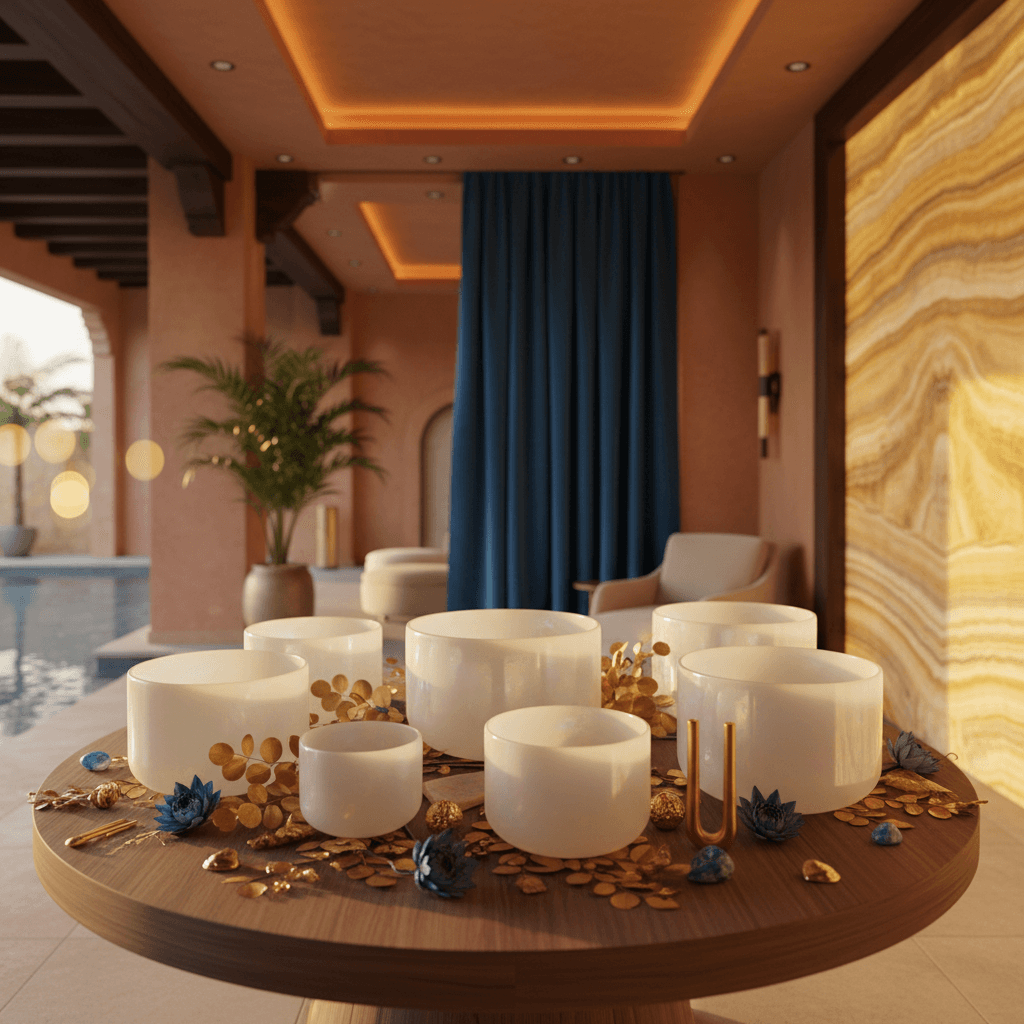
We utilize an exquisite array of instruments chosen for their purity of tone and resonant qualities. Himalayan singing bowls, with their rich, complex harmonics, create a vibrational field that washes over the body. Gongs, with their expansive and deeply penetrating sounds, facilitate profound states of relaxation, often inducing a meditative trance. Tuning forks, calibrated to specific frequencies, are used with precision to introduce targeted vibrations, echoing the scientific exploration of frequencies like 40Hz for brain health. Other resonant instruments, from chimes to crystal bowls, are incorporated to build intricate sound tapestries that envelop and harmonize the listener.
The Soul Art experience is fundamentally a holistic wellness practice. It acknowledges that the brain does not operate in isolation but is deeply connected to the body, emotions, and spirit. By reducing stress, promoting deep relaxation, and gently guiding brainwave states, our sessions aim to create an optimal internal environment. While we highlight the promising research on neurogenesis, our focus remains firmly on providing a complementary approach to self-care that supports overall brain health, cognitive function, and emotional balance. Larissa Steinbach’s expertise ensures that each session is not only scientifically informed but also deeply intuitive and transformative, fostering a space where your innate capacity for renewal can flourish.
Your Next Steps
Embracing the potential of sound for enhanced brain health and overall wellbeing is an empowering journey. While the science of neurogenesis is still unfolding, you can take proactive steps today to nurture your cognitive vitality and integrate these insights into your daily life.
Here are some actionable steps you can implement to support your brain's health and explore the benefits of sound:
- Mindful Listening Practice: Dedicate short periods each day to truly listen—to nature sounds, calming music, or even the quiet hum of your environment. This practice can reduce stress and cultivate mental presence.
- Embrace Moments of Silence: Just as specific sounds can be beneficial, structured periods of silence have been shown to positively impact brain activity. Schedule quiet time for reflection, meditation, or simply to rest your auditory system.
- Explore Curated Sound Experiences: Consider trying a professional sound wellness session, like those offered at Soul Art. These experiences are designed to guide you into deep relaxation and may offer unique auditory stimulation that supports cognitive and emotional balance.
- Prioritize a Brain-Healthy Lifestyle: Complement any sound practices with foundational habits. This includes a balanced diet rich in antioxidants, regular physical activity, sufficient sleep, and engaging in mentally stimulating activities.
- Stay Curious and Open: Keep abreast of new research in neurogenesis and brain plasticity. An inquisitive mind is a healthy mind, and continuously learning supports cognitive function.
Taking these steps can significantly contribute to your holistic wellbeing. If you’re ready to experience the profound effects of intentionally curated soundscapes and embark on a journey towards deeper relaxation and potential cognitive support, we invite you to explore the unique offerings at Soul Art.
In Summary
The long-held belief that adult brains cannot generate new cells is being profoundly challenged by compelling scientific evidence. Neurogenesis, the process of forming new neurons, is now understood as a real and vital aspect of adult brain function, with implications for cognitive health, memory, and combating age-related decline. This exciting frontier in neuroscience suggests that our brains are far more plastic and regenerative than previously imagined.
Intriguingly, specific sound frequencies, particularly the 40Hz gamma rhythm, are emerging as a powerful area of study, with preliminary research indicating their potential to support neurogenesis, enhance cognition, and even address markers associated with neurodegenerative conditions. From fostering increased synaptic connections to reducing stress, sound presents a non-invasive, complementary pathway to nurturing brain vitality.
At Soul Art in Dubai, Larissa Steinbach meticulously crafts sound wellness experiences that draw upon these evolving scientific insights. We offer a serene sanctuary where expertly guided soundscapes, utilizing resonant instruments, aim to promote deep relaxation, reduce stress, and create an optimal internal environment for your brain's natural capacities. We invite you to explore this unique journey, to immerse yourself in the frequency of wellbeing, and discover a profound sense of inner harmony and cognitive support.
Bookings Coming Soon
Soul Art is still in preparation. Session details and booking will be published here after launch.
Coming Soon
Wellness Disclaimer: This article is for educational and informational purposes only. It does not constitute medical advice, diagnosis, or treatment. Soul Art Dubai provides non-medical wellness experiences focused on relaxation, stress management, and general wellbeing. Sound wellness is a complementary practice and should not replace professional medical care.
Related Articles

Cluster Headaches: Unveiling Pain and the Promise of Frequencies in Wellness

Epilepsy & Sound: Safety, Serenity, and Emerging Wellness Paths
Mastering Focus: Analytical Listening & Brain Engagement at Soul Art