Harmonizing Bonds: The Science of Mother-Baby Sound Connection

Key Insights
Explore the profound science behind mother-baby sound bonding, a holistic wellness practice at Soul Art, enhancing connection and wellbeing through sound.
Imagine a connection so primal, so innate, it begins not with a touch, but with a sound. Long before their first breath, newborns already possess a profound ability to recognize and prefer their mother's voice, a phenomenon that lays the foundation for lifelong attachment and development. This remarkable finding, highlighted by pioneering research from DeCasper and Fifer in 1980, reveals the extraordinary power of auditory experiences in the womb.
At Soul Art, Dubai’s premier sound wellness studio, we delve deep into this fascinating science to cultivate stronger, more resonant bonds between mothers and their babies. We explore how gentle frequencies and mindful vocalizations can become powerful tools for prenatal and postnatal wellbeing. This article will guide you through the scientific underpinnings of mother-baby sound bonding, explain its practical applications, and unveil how Larissa Steinbach and the Soul Art team harness these principles to create transformative experiences.
The Science Explained: A Symphony of Connection
The journey of sound perception begins remarkably early in human development. By the 24th to 28th week of gestation, the fetal auditory system is largely mature, allowing the unborn baby to react to auditory stimuli from its environment. This prenatal period is a critical window for learning and sensory development, profoundly shaping the infant’s initial understanding of the world.
During this time, the womb is far from silent. The fetus is enveloped in a rich auditory landscape, dominated by the rhythmic sounds of the mother’s body—her heartbeat, blood flow, and, most significantly, her voice. These internal sounds become the baby’s first lullabies, imprinting a sense of security and familiarity even before birth.
Prenatal Auditory Learning and Recognition
Pioneering research by DeCasper and Fifer (1980) provided compelling evidence that newborns actively prefer their mother’s voices. In their groundbreaking study, infants were observed to adjust their sucking patterns to activate recordings of their own mother's voice over that of another female. This demonstrated that not only could newborns distinguish their mother's voice, but they had also learned to prefer it while in utero.
Further studies support this early learning capability. Researchers like Mehler (1978) and MacFarlane (1975) have shown that infants exhibit recognition and preference for their mother's voice within days, sometimes even hours, of birth. This sensitivity to the prosodic properties of the maternal voice—its rhythm, pitch, and intonation—is formed already in fetal life. It provides strong evidence for the fetus's ability to:
- Perceive sounds actively.
- Attend to and process auditory information.
- Memorize simple auditory patterns.
The Neurobiological Basis of Bonding
The maternal voice acts as a crucial "special channel of communication" (Maternal singing of lullabies, 2017) between mother and baby, even before birth. This auditory connection initiates the formation of emotional bonds, a process vital for the baby's development and well-being, aligning with the Theory of Attachment. The neural pathways involved in processing sound, particularly human voices, begin to develop early and are reinforced by consistent exposure.
When a mother speaks or sings, the vibrations of her voice resonate through her body and the amniotic fluid, directly reaching the fetus. This sensory input contributes to the baby's developing brain structure and function, particularly in areas related to language, emotion, and social cognition. The soothing tones of a mother's voice can trigger a calming response in the fetus, mediated by the vagal nerve, which plays a central role in regulating stress and promoting relaxation.
"The rhythmic flow and gentle melody of a mother's voice are the foundational harmonies of her child's earliest world, a secure auditory anchor in the journey of life."
Exposure to the mother's voice and gentle music during pregnancy has been associated with:
- Enhanced Bonding: A stronger emotional connection between mother and infant (Maternal singing of lullabies, 2017).
- Improved Infant Regulation: Anecdotal evidence suggests babies who experienced prenatal sound engagement may exhibit calmer behavior and better self-regulation after birth.
- Reduced Maternal Stress: The act of singing or speaking gently to the baby can be a deeply calming and mindful practice for the expectant mother, reducing cortisol levels and fostering a sense of peace.
- Early Musical and Language Foundations: The prosodic sensitivity developed in utero acts as a prerequisite for later musical development and language acquisition (The Effect of Musical Stimulation, 2021).
These scientifically validated observations underscore the immense significance of sound as a powerful, non-invasive tool for fostering deep connection and promoting holistic wellness for both mother and baby.
How It Works in Practice: Cultivating Connection Through Sound
Understanding the science is the first step; integrating it into daily life is where the magic unfolds. Mother-baby sound bonding practices transcend mere theoretical knowledge, transforming into tangible, heartfelt experiences that enrich the prenatal and postnatal journey. These practices are intuitive, accessible, and remarkably effective in nurturing an intimate connection.
In practice, sound bonding involves conscious engagement with the auditory landscape shared by mother and baby. It's about creating a harmonious environment that promotes relaxation, security, and mutual recognition. This isn't about formal music lessons, but rather about intentional interaction through vocalizations and gentle sound.
The Power of the Maternal Voice
The most potent tool for sound bonding is, unequivocally, the mother's voice itself. Whether she sings, speaks, or hums, her unique vocal signature is already familiar and comforting to her baby. Many people report that engaging in these simple vocal practices offers a deep sense of presence and connection.
Consider these practical applications:
- Singing Lullabies: Singing simple lullabies during pregnancy and after birth has been shown to positively influence mother-infant bonding and newborns' behavior. The repetitive, melodic nature of lullabies is inherently soothing and predictable, providing a sense of safety.
- Reading Aloud: The rhythmic cadence and varied intonation of reading stories or poems can be incredibly stimulating for the fetus and calming for the newborn. It introduces the baby to the nuances of language and the emotional context of the mother’s voice.
- Gentle Vocal Toning: Simply humming, chanting soft 'Om' sounds, or creating sustained, gentle vocal tones can send calming vibrations through the mother's body. These internal vibrations are felt by the baby, often eliciting a peaceful response.
Integrating Gentle Sounds and Rhythms
Beyond the maternal voice, incorporating other gentle, resonant sounds can further enhance the bonding experience. The key is to choose sounds that are naturally soothing and non-intrusive. These complementary approaches support a serene environment for both mother and child.
Clients often experience profound relaxation and a heightened awareness of their baby's presence during these sessions. The sensory details of sound—the deep hum of a singing bowl, the delicate chime, or the gentle rhythm of a drum—create an immersive and restorative atmosphere. The subtle vibrations are not just heard but felt, creating a full-body experience that resonates with the nascent sensory system of the baby. This physical sensation of sound helps bridge the gap between internal and external worlds for the developing infant, making the connection tangible.
These practices contribute to:
- Emotional Regulation: Calming the nervous system of both mother and baby, promoting a sense of peace and reducing stress.
- Enhanced Attachment: Strengthening the emotional ties through shared, pleasant auditory experiences.
- Mindful Presence: Encouraging mothers to slow down, connect with their bodies, and acknowledge the life growing within or beside them.
By consciously engaging with sound, mothers create a nurturing auditory cocoon, providing a continuous thread of comfort and connection that extends from the womb into the world. This holistic wellness practice is a beautiful way to lay a foundation of love and security.
The Soul Art Approach: Larissa Steinbach's Harmonious Vision
At Soul Art, we believe that true wellness resonates from within. Under the expert guidance of Larissa Steinbach, our approach to mother-baby sound bonding is a meticulously crafted journey that blends ancient wisdom with contemporary scientific understanding. We create an exquisite space where mothers can explore the profound connection with their babies through the power of sound, fostering a "quiet luxury" experience of inner peace and profound bonding.
Larissa Steinbach envisions sound as a bridge, connecting the conscious and subconscious, the mother and her child, in a symphony of shared experience. Her method at Soul Art is designed to be deeply empathetic, gentle, and profoundly effective, providing a unique Soul Art touch that prioritizes individual needs and comfort. This is not a one-size-fits-all solution, but a personalized journey tailored to each mother and baby's unique frequency.
Unique Techniques and Instruments
The Soul Art method is distinguished by its mindful selection and application of specific sound tools and techniques:
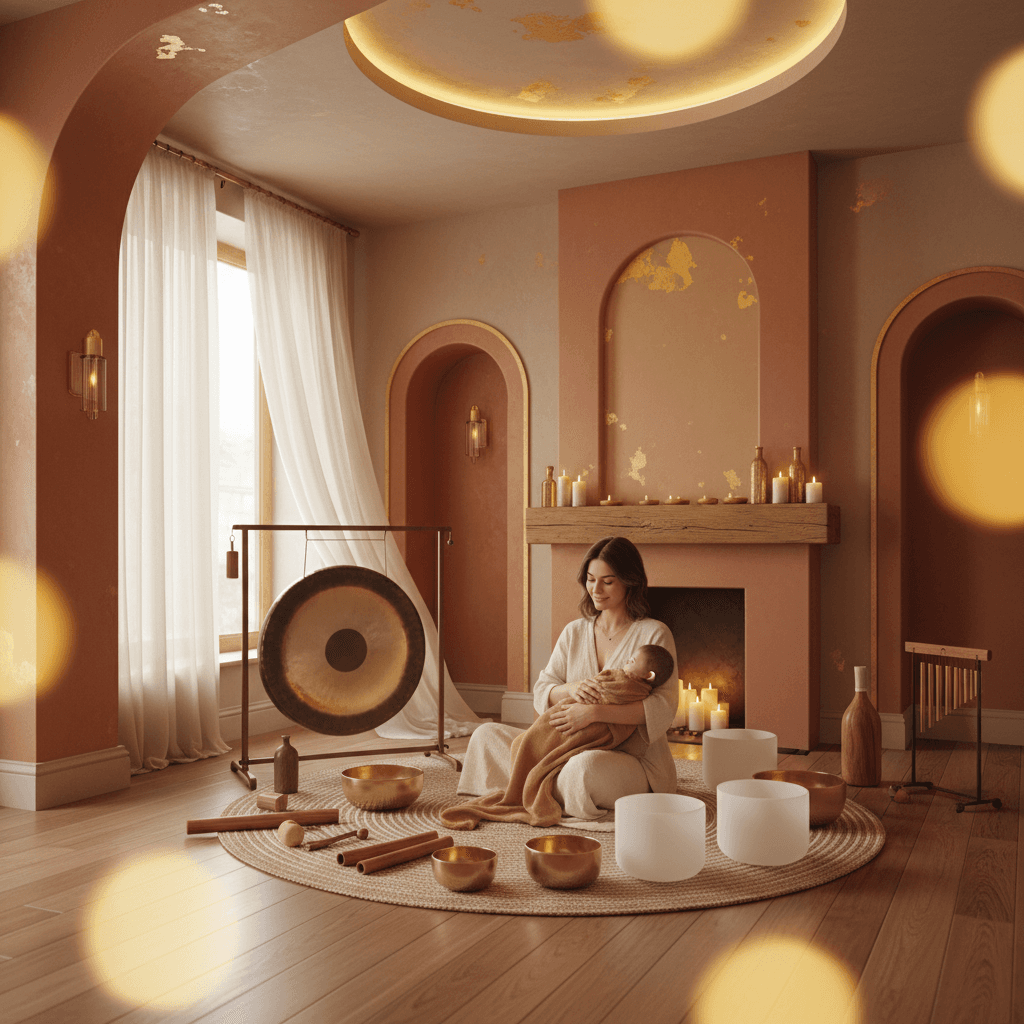
- Curated Sound Baths: We utilize a collection of high-quality, resonant instruments, including crystal singing bowls, Himalayan singing bowls, gongs, and chimes. These instruments produce pure, sustained tones and vibrations that are incredibly soothing. The frequencies are carefully chosen to be gentle and harmonious, creating an enveloping soundscape that promotes deep relaxation for the mother and a serene environment for the baby.
- Guided Vocal Toning and Humming: Building upon the established science of the maternal voice, our sessions incorporate guided practices where mothers are encouraged to use their own voice through humming, gentle vocalizations, and soft singing. This personal vocal resonance is amplified by the studio's acoustics, creating an intimate, vibrating connection directly with the baby.
- Heartbeat Synchronization: Some practices involve tuning into and gently mirroring the mother’s heartbeat with soft rhythmic instruments, creating a familiar, comforting rhythm that mimics the earliest sounds experienced in the womb. This can evoke a profound sense of security and primal connection.
- Mindful Movement and Breathwork: Integrated into the sound experiences are gentle movements and conscious breathwork. These practices enhance the mother's awareness of her body and her baby, allowing her to fully absorb the benefits of the sound vibrations and deepen the bond.
- Personalized Sound Journeys: Recognizing that every mother and baby journey is unique, Larissa Steinbach and her team design bespoke sound experiences. Whether it’s a prenatal session focused on preparing for birth, or a postnatal session for gentle bonding, the focus remains on creating a supportive and loving environment.
What makes the Soul Art method truly unique is its holistic integration of these elements within a serene and luxurious setting. We do not just play sounds; we facilitate an experience that encourages mothers to listen with their whole being, to feel the vibrations, and to consciously connect with the developing life within or beside them. This complementary approach supports emotional well-being, stress management, and a profound sense of attachment. Larissa Steinbach ensures that every session is a nurturing embrace, a moment to truly feel the frequency of connection.
Your Next Steps: Embracing Sound in Your Motherhood Journey
The journey of motherhood is filled with profound moments, and cultivating a strong bond with your baby through sound is one of the most beautiful and accessible paths. You don't need to be a musician or an expert; simply opening your heart and your voice can create a powerful connection. Remember, these are wellness practices designed for relaxation and nurturing, not medical treatments.
Here are 3-5 actionable steps you can implement today to start or enhance your mother-baby sound bonding practice:
- Talk and Sing to Your Baby Regularly: Whether prenatal or postnatal, make it a daily ritual to talk, read, or sing to your baby. Your voice is their favorite sound. Don't worry about sounding perfect; your intention and emotion are what truly resonate.
- Create a Calming Auditory Environment: Play gentle, soothing music or natural sounds (like soft waves or ambient nature sounds) at a low volume during moments of rest or quiet interaction. This can help both you and your baby relax.
- Practice Mindful Humming or Toning: Take a few moments each day to gently hum or create sustained vocal tones. Focus on feeling the vibrations within your body and imagine them comforting your baby. This self-care practice can be incredibly grounding.
- Engage with Gentle Rhythmic Activities: Swaying, gentle rocking, or even tapping a soft, consistent rhythm on your lap while holding your baby can introduce soothing patterns that mimic the prenatal environment.
- Explore Professional Sound Wellness Sessions: For a deeply immersive and expertly guided experience, consider visiting a sound wellness studio like Soul Art. Our specialized sessions are designed to facilitate profound relaxation and enhance the mother-baby bond in a nurturing environment.
Embracing sound bonding is a beautiful way to enrich your motherhood journey, fostering a deeper sense of connection, peace, and mutual well-being. Preliminary studies indicate that such practices may support emotional resilience for both mother and child.
In Summary: The Unseen Resonance of Love
The bond between a mother and her baby is an intricate tapestry woven with myriad threads of connection, and sound stands out as one of its most ancient and profound. From the earliest whispers of the maternal voice in utero to the soothing lullabies sung after birth, auditory experiences lay a vital foundation for attachment, security, and development. Research consistently shows that newborns not only recognize but prefer their mother's voice, highlighting the biological imperative for this sonic bond.
By embracing intentional sound practices, mothers can cultivate a powerful channel of communication and comfort, reducing stress for themselves and fostering a sense of peace for their babies. These holistic wellness practices are a beautiful, accessible way to nourish the mother-baby dyad. At Soul Art, Larissa Steinbach and our dedicated team invite you to explore the transformative power of sound, experiencing a unique journey of harmony, connection, and deep well-being. Discover how the subtle frequencies can resonate with the deepest parts of your soul and forge an unbreakable bond with your little one.
Bookings Coming Soon
Soul Art is still in preparation. Session details and booking will be published here after launch.
Coming Soon
Wellness Disclaimer: This article is for educational and informational purposes only. It does not constitute medical advice, diagnosis, or treatment. Soul Art Dubai provides non-medical wellness experiences focused on relaxation, stress management, and general wellbeing. Sound wellness is a complementary practice and should not replace professional medical care.
Related Articles

Moving Home: How Sound Wellness Supports Child Adaptation
Sound Wellness for Sibling Adjustment: Nurturing Family Harmony

Teen Identity & Sound: Self-Discovery for Adolescents at Soul Art Dubai