The Unseen Connection: Mirror Neurons & Group Sound Healing
Key Insights
Explore how mirror neurons amplify collective wellbeing in group sound healing at Soul Art, transforming individual journeys into shared harmony with Larissa Steinbach.
Have you ever found yourself subtly mimicking a friend's smile or feeling a wave of calm wash over you simply by being in a serene group setting? This powerful, often unconscious, ability to resonate with others is more than just social empathy; it's deeply rooted in our neurobiology. It points to a fascinating phenomenon that underpins much of our collective experience: the mirror neuron system.
At Soul Art, Dubai's premier sound wellness studio, we harness these profound neural mechanisms to elevate our group sound healing experiences. This article will delve into the cutting-edge science of mirror neurons and how they amplify the therapeutic benefits of collective sound journeys. Discover how Larissa Steinbach and the Soul Art method create an environment where individual wellbeing is synergistically enhanced by the shared presence of others, fostering a deeper sense of connection and profound relaxation.
The Enigma of Empathy: Understanding Mirror Neurons
The concept of mirror neurons offers a compelling lens through which to view our interconnectedness. These remarkable brain cells are pivotal in understanding how we learn, empathize, and form social bonds, playing a foundational role in human interaction and collective experiences. Their discovery has reshaped our understanding of social cognition.
What Are Mirror Neurons?
Mirror neurons are a unique class of interneurons distinguished by their dual activation pattern. They fire not only when an individual performs an action but also when they observe another person performing that same action. Primarily located in the frontal and parietal cortex areas of the brain, these neurons are thought to be crucial for interpreting others' actions and emotions, as well as for the ability to imitate and learn new motor skills.
The initial discovery of mirror neurons was serendipitous, occurring during a study of macaque monkeys. Researchers observed that certain neurons in the monkeys' brains activated both when the monkeys grasped an object and when they witnessed an experimenter performing the same action. While the direct replication of these findings in humans has been a subject of ongoing debate in some scientific circles, strong indirect evidence from fMRI studies, transcranial magnetic stimulation (TMS), and even single-neuron recordings in human brains support their existence and function. These findings suggest that humans possess a similar "mirror mechanism" that supports our capacity for understanding and imitation.
Mirror Neurons and Social Connection
Beyond simple imitation, mirror neurons are believed to play a crucial role in higher-level social processes. They are intricately linked to empathy, allowing us to "feel" what others feel by mirroring their emotional states within our own neural pathways. This mirroring mechanism provides insights into how the brain processes social cues and contributes to motor learning, fostering stronger social interactions and mutual understanding.
Research indicates that these neurons are involved in sound imitation and language processing, suggesting their influence on speech acquisition and verbal communication. Furthermore, studies on emotional contagion, such as observations of distress in rodents witnessing another's pain, reveal the presence of "pain mirror neurons" in the anterior cingulate cortex. This region is homologous to an area associated with empathy for pain in humans, highlighting an evolutionarily conserved role for mirroring mechanisms in emotional alignment during social exchanges. This collective understanding and shared experience contribute significantly to our social fabric.
Synchronicity and Cooperation
The power of collective activity, particularly synchronized movements or sounds, to foster social cohesion is well-documented. Some research has demonstrated that adults exhibit significantly more cooperative behavior in group economic exercises when they have previously engaged in synchronized singing or moving activities, compared to unsynchronized ones. This suggests that shared music-making and synchronized actions have the capacity to engage neural systems that support strong social drives and shared affective processes.
This idea is further complemented by studies showing that singing abilities in patients with aphasia, a language disorder, were only observed when they sang in synchrony or 'in chorus' with another voice; singing alone was not effective. These findings underscore the profound implications of shared musical experience and synchronicity for communication in therapeutic and educational contexts. The collective rhythm and shared focus can unlock neural pathways that enhance connection and cooperation.
Music's Broad Neural Impact
Music's profound influence on the brain is unparalleled. Scientific research has revealed that different aspects of musical processing recruit almost all regions of the brain. This includes the prefrontal cortex, premotor cortex, motor cortex, somatosensory cortex, temporal lobes, parietal cortex, occipital cortex, cerebellum, and limbic regions such as the amygdala and thalamus.
Unlike almost any other stimulus or cognitive process, music engages such a vast network of neural activity. This widespread brain engagement suggests why music can be such a potent tool for influencing mood, memory, and overall wellbeing. In a group setting, this comprehensive neural activation is not only an individual experience but also one that can be subtly mirrored and amplified across participants, creating a powerfully resonant collective field.
How It Works in Practice: The Collective Resonance of Sound
Connecting the science of mirror neurons to the practical experience of group sound healing unveils a deeper understanding of its transformative power. It’s more than just individuals relaxing in the same room; it’s a dynamic interplay of shared neural experiences that amplifies the therapeutic journey for everyone involved. The collective nature of these sessions creates a unique energetic environment.
When you participate in a group sound healing session, you are immersed in a field of rich, sustained vibrations from instruments like gongs, singing bowls, and chimes. As one person enters a state of deep relaxation, their physiological responses—such as a slowed breath, relaxed facial muscles, and subtle shifts in posture—are unconsciously observed by others. It is believed that these observed states of calm can activate mirror neurons in fellow participants, subtly guiding them towards similar states of peace. This creates a powerful feedback loop.
This isn't just a theoretical concept; many people report a palpable sense of unity and shared tranquility during group sound baths. The collective resonance helps to dissolve feelings of isolation, replacing them with a profound sense of belonging. The sustained tones and frequencies, combined with the presence of others in a similar state of receptivity, may support enhanced brainwave coherence and stimulate the parasympathetic nervous system, promoting a deeper state of rest and repair than might be achieved alone. Preliminary studies indicate that sound healing can reduce stress and improve emotional regulation.
"In a group sound healing session, the collective intention and shared state of surrender become a powerful, unspoken symphony, harmonizing not just our bodies but our very nervous systems."
The experience is profoundly sensory. As the vibrations wash over you, the brain regions associated with mirroring others' states are believed to be subtly engaged. Observing someone else's calm breathing, or hearing their relaxed sigh, can unconsciously trigger a similar response within your own system. This collective "tuning" means that the sum of the group's relaxation is often greater than its individual parts, leading to a more profound and expansive wellness practice.
The Soul Art Approach: Larissa Steinbach's Harmonious Vision
At Soul Art, Larissa Steinbach, the visionary founder, has meticulously crafted an environment designed to optimize these powerful neurobiological connections. The Soul Art method isn't merely about playing beautiful sounds; it's about intentionally creating a resonant field that facilitates collective healing and deep connection, leveraging the natural human capacity for mirroring. Larissa’s expertise lies in orchestrating these subtle dynamics.
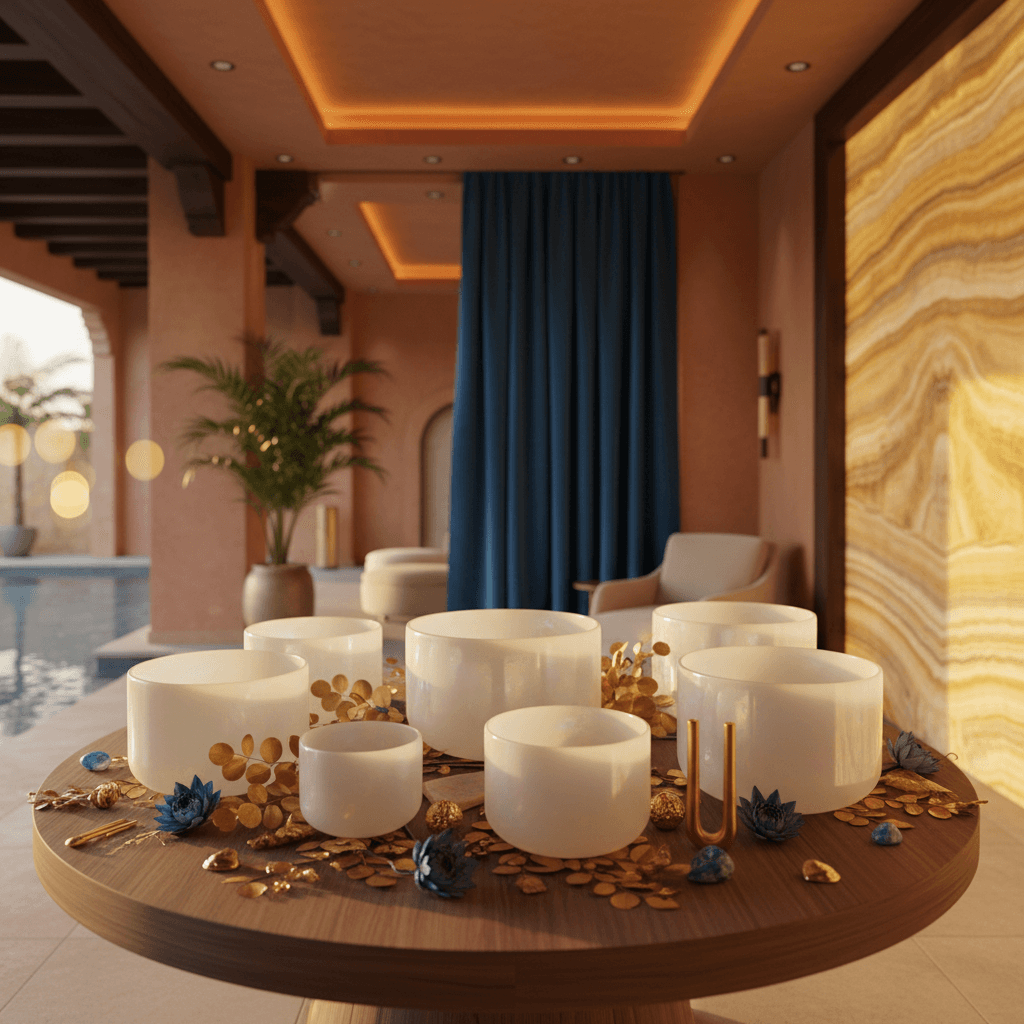
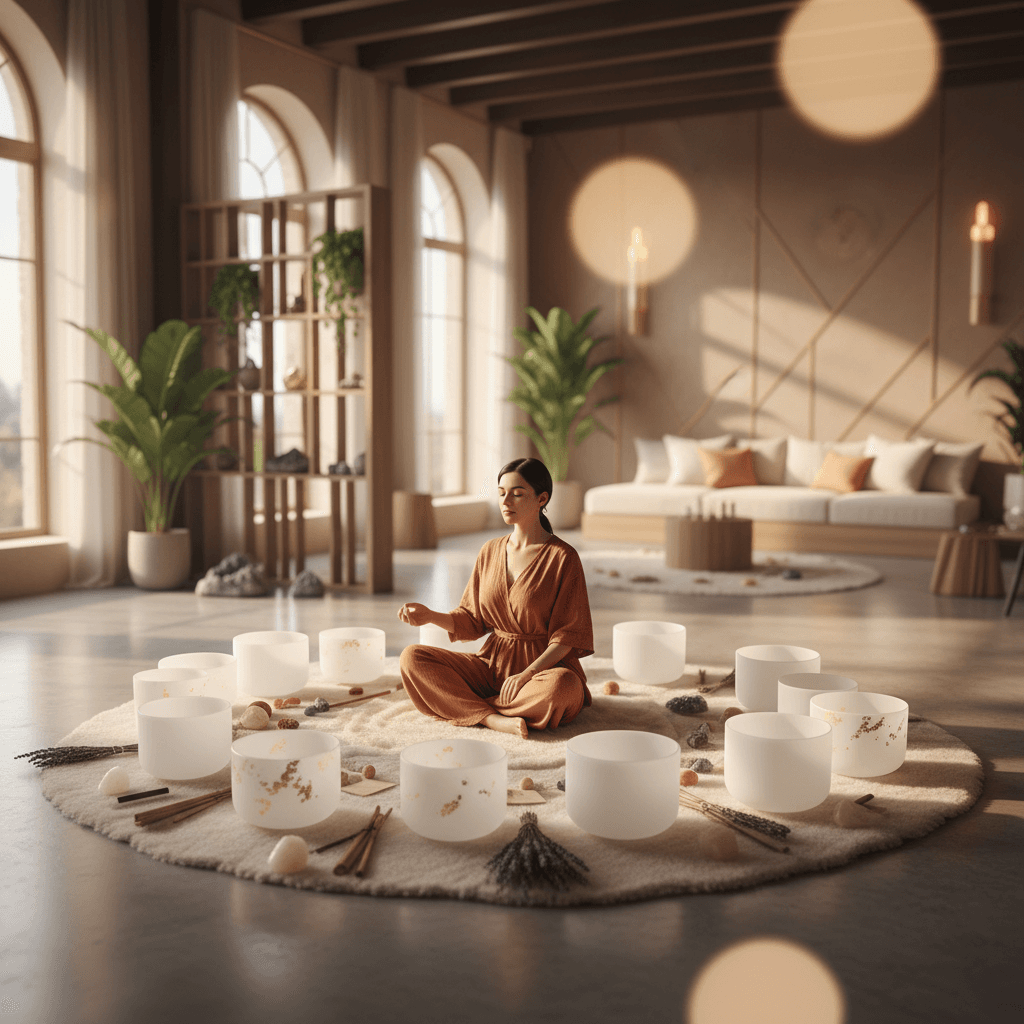
Larissa Steinbach understands that the power of group sound healing lies in its ability to foster a shared energetic space. Her sessions are carefully curated, utilizing a diverse array of sacred instruments—including Himalayan singing bowls, crystal alchemy bowls, symphonic gongs, and various chimes—each chosen for its unique vibrational frequency and therapeutic properties. The combination of these instruments, played with mindful intention, creates a symphonic tapestry of sound that bathes participants in a profound auditory and somatic experience. This intentional soundscape promotes deep relaxation and inner harmony.
What makes the Soul Art method unique is its emphasis on guided synchronicity and a compassionate presence. While participants lie comfortably, there's no requirement for synchronized movement or singing. Instead, the synchronicity emerges from the shared listening experience and the collective receptivity to the healing frequencies. Larissa's skilled facilitation guides the group into a unified state, where the collective intention for wellbeing amplifies individual experiences. This focused intention allows mirror neurons to work their magic, facilitating a shared journey into deeper states of relaxation and inner peace.
Clients at Soul Art consistently report experiencing profound stress release, emotional regulation, and a renewed sense of community. The carefully chosen frequencies and the expertly guided sessions allow participants to effortlessly enter states of profound relaxation. This allows for a deeper exploration of inner landscapes, all while feeling supported by the harmonious energy of the group. Larissa Steinbach’s dedication ensures that each Soul Art session is a powerful, holistic wellness experience, fostering not just individual calm but also a sense of collective restoration.
Your Next Steps: Embracing Collective Harmony
Understanding the profound impact of mirror neurons on group sound healing empowers you to integrate these insights into your daily life and elevate your wellbeing journey. The power of shared experience is readily accessible, offering numerous benefits for your stress management and self-care practices. You can cultivate these connections intentionally.
Here are a few actionable steps to embrace the power of collective harmony and deepen your personal wellness:
- Engage in Mindful Group Activities: Seek out wellness practices that involve shared, calm environments, such as group meditation, gentle yoga classes, or, of course, sound healing sessions. Simply being present with others who are also seeking peace can subtly influence your own state.
- Cultivate Intentional Presence: When you are in a group, practice being fully present and openly receptive. Notice the calm in others and allow it to resonate within you. This conscious mirroring can enhance your own feelings of tranquility.
- Explore Synchronized Sounds: Listen to music with friends or loved ones, allowing the shared auditory experience to foster deeper connection. Even simply humming or softly chanting together can create a powerful sense of unity and shared calm.
- Prioritize Collective Wellness Practices: Consider integrating group sound healing into your regular self-care routine. The amplified benefits of a shared experience can provide a deeper and more lasting sense of relaxation and emotional balance.
- Practice Empathy and Observation: Pay attention to how others' calm or joyful expressions affect you. Recognizing this mirroring effect can strengthen your emotional intelligence and capacity for connection.
By consciously engaging with these principles, you can harness the innate power of your mirror neuron system to enrich your personal wellness journey. Experiencing the collective embrace of a Soul Art group sound healing session offers a unique opportunity to deepen your relaxation and connect with others on a profound, vibrational level.
In Summary
Mirror neurons are extraordinary brain cells that ignite when we perform an action and when we observe that same action in others, playing a critical role in empathy, learning, and social connection. This inherent mirroring mechanism is amplified in group settings, particularly within the serene environment of sound healing. Synchronized experiences, even passive ones like collective listening, are believed to enhance cooperation and deepen emotional resonance, engaging a vast network of brain regions.
At Soul Art, Larissa Steinbach expertly curates these group sound journeys, creating a harmonious space where individual relaxation is profoundly enhanced by the collective energy and vibrational frequencies. The shared experience, subtly guided by the power of mirror neurons, supports a deeper sense of peace, emotional regulation, and community. Discover the unique synergy of science and ancient wisdom at Soul Art, and allow the unseen connections to guide you towards holistic wellbeing.
Bookings Coming Soon
Soul Art is still in preparation. Session details and booking will be published here after launch.
Coming Soon
Wellness Disclaimer: This article is for educational and informational purposes only. It does not constitute medical advice, diagnosis, or treatment. Soul Art Dubai provides non-medical wellness experiences focused on relaxation, stress management, and general wellbeing. Sound wellness is a complementary practice and should not replace professional medical care.
Related Articles
Cluster Headaches: Unveiling Pain and the Promise of Frequencies in Wellness

Epilepsy & Sound: Safety, Serenity, and Emerging Wellness Paths
Mastering Focus: Analytical Listening & Brain Engagement at Soul Art