Mindfulness & Sound: Neural Keys to Present Awareness

Key Insights
Explore the neural science behind mindfulness and sound, revealing how these practices reshape the brain for heightened present awareness and calm with Soul Art Dubai.
Have you ever found yourself lost in thought, replaying past events or pre-planning future ones, only to realize minutes or even hours have slipped by unnoticed? This common experience, known as mind-wandering, is a hallmark of our busy modern lives, often leaving us feeling disconnected and stressed. Yet, there’s a powerful, scientifically-backed antidote: present-moment awareness, profoundly enhanced through the synergy of mindfulness and sound.
At Soul Art, Dubai's premier sound wellness studio founded by Larissa Steinbach, we delve into the intricate dance between our minds and the resonant frequencies that surround us. This article will journey into the fascinating neural correlates of present awareness, exploring how mindfulness, particularly when integrated with sound, can reshape our brains for deeper calm, clarity, and connection. Prepare to discover the sophisticated science underpinning these ancient practices and how they can unlock a more vibrant, present you.
The Science Explained
Our brains are incredibly dynamic, constantly adapting to our experiences. Modern neuroimaging techniques, such as fMRI, have provided remarkable insights into how mindfulness, especially with sound, influences neural activity, shifting us from habitual distraction to deliberate present awareness. These changes are not just subjective feelings; they are measurable shifts in brain function and connectivity.
The Default Mode Network (DMN) and Mind-Wandering
Mind-wandering is a natural state where our thoughts drift away from the present task or environment. Scientifically, this state is strongly associated with heightened activity in the Default Mode Network (DMN). The DMN is a collection of interconnected brain regions, including the medial prefrontal cortex (mPFC), posterior cingulate cortex (PCC), and left temporoparietal junction.
This network is typically active when we are engaged in self-referential thought, future planning, rumination, or recalling memories. Research consistently shows that during mindful attention, brain regions typically associated with the DMN exhibit significantly less neural activation. This reduction in DMN activity suggests a shift away from self-referential processing towards direct, present-moment experience.
Shifting Neural Activity: Attention Control and Self-Awareness
Mindfulness interventions are designed to cultivate present-moment attention and reduce the frequency of mind-wandering. This shift involves significant changes in the brain's functional connectivity and activity. Functional MRI studies indicate that mindfulness is related to changes in the Default Mode Network (DMN), Frontoparietal Network (FPN), and Salience Network (SN).
Specifically, mindfulness practice may lead to increased connectivity between the posterior cingulate cortex (part of the DMN) and the dorsolateral prefrontal cortex (dlPFC), a key region within the FPN. This enhanced connectivity is believed to bolster attentional control, allowing individuals to sustain focus and inhibit distractions more effectively. Furthermore, mindfulness training can alter neural processes related to self-reference, promoting a shift from cognitive self-evaluation (the "narrative self") towards a more direct, experiential self-awareness, often correlated with increased activation in the right sensory cortex. This indicates a reduced tendency towards rumination and an increased focus on immediate, present-moment sensations.
The Amygdala and Emotional Regulation
Beyond attention and self-awareness, mindfulness also profoundly impacts our emotional landscape. The amygdala, often called the brain's "fear center," plays a crucial role in processing emotions, particularly those related to stress and anxiety. When we experience stress, the amygdala typically becomes highly active, initiating the body's fight-or-flight response.
However, research into mindfulness-based stress reduction (MBSR) programs has shown altered amygdala responses in participants, leading to reduced stress responses. This suggests that mindfulness practices can directly influence the neural correlates of emotional reactivity, promoting a more balanced and regulated emotional state. Many studies indicate that mindfulness training can diminish negative emotion and amygdala activity, while simultaneously increasing activity in brain regions involved in attentional deployment, allowing for more adaptive responses to emotional stimuli.
The Role of Sound in Neural Engagement
Sound is a particularly potent anchor for present-moment awareness, directly engaging specific brain regions. Studies using fMRI have explored brain activation during meditation with sound, revealing remarkable insights. Compared with concentrative control tasks, focusing on a meditation sound has been found to evoke significantly higher activation in the bilateral areas of the inferior frontal gyrus.
Intriguingly, this activation did not decrease over time; instead, it often increased with the length of the meditation sessions. This suggests that specific sounds can powerfully and sustainably engage attentional networks. The auditory experience, whether from the rich harmonics of crystal bowls or the deep resonance of gongs, provides a consistent focal point that can help quiet the DMN and recruit neural regions involved in attention and interoceptive awareness, such as the orienting attention network, thereby enhancing present-moment focus.
How It Works in Practice
Connecting the complex neural pathways with the tangible experience of sound wellness reveals a profound practicality. When you engage in a sound meditation at Soul Art, you are not merely listening; you are actively engaging your brain in a sophisticated process of present-moment conditioning. The carefully curated sounds act as a gentle yet firm anchor, guiding your attention away from the ceaseless chatter of the Default Mode Network.
As Larissa Steinbach guides a session, the rich harmonics and gentle vibrations of instruments like Himalayan singing bowls and gongs provide a singular focus. Initially, your mind may still wander, thoughts of daily tasks or future plans interjecting. However, the sustained, immersive sound serves as a non-judgmental invitation to return your awareness to the present moment. Each time your attention drifts and you consciously bring it back to the sound, you are performing a mental "rep," strengthening the neural pathways associated with attentional control and reducing DMN activity.
This repeated gentle redirection fosters experiential acceptance, allowing thoughts and emotions to arise and pass without attachment. Clients often report a profound sense of calm washing over them, a clarity that replaces mental fog, and a heightened awareness of their bodily sensations. The sound facilitates a deeper state of relaxation, supporting the nervous system's shift from a state of fight-or-flight to rest-and-digest, profoundly impacting stress reduction and overall emotional balance. It’s an immersive experience that trains the brain to reside more often in the stillness of the present.
"To truly hear is to truly be here. Sound is a profound vehicle for awakening the neural pathways of present awareness, guiding us gently back to the core of our being."
The Soul Art Approach
At Soul Art, Larissa Steinbach intuitively understands the profound connection between sound, mind, and spirit, meticulously crafting experiences that are rooted in scientific understanding yet delivered with heartfelt intention. Our approach is uniquely designed to leverage the neural benefits of sound and mindfulness, creating an immersive journey into present awareness. Larissa combines her deep knowledge of ancient sound healing traditions with modern insights into neurobiology, offering a powerful pathway to well-being.
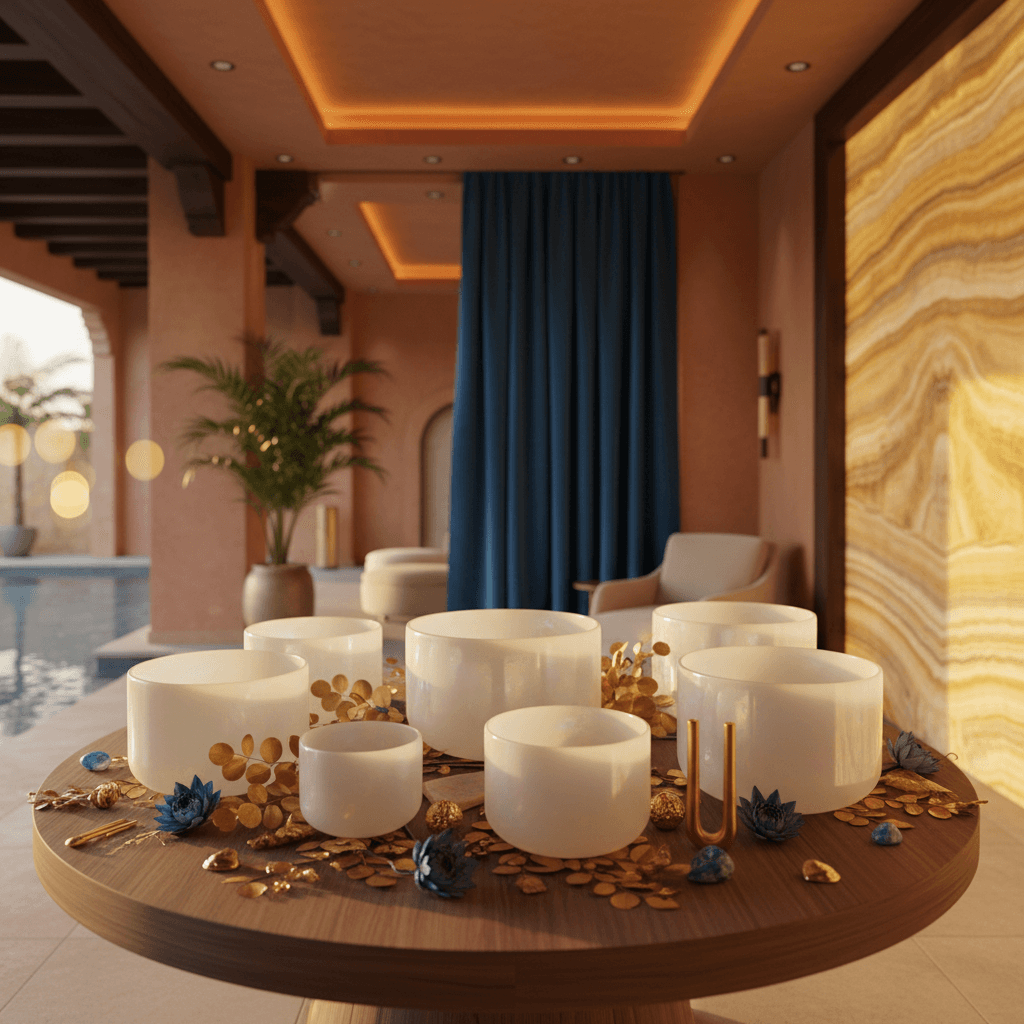
What makes the Soul Art method unique is the deliberate selection and orchestration of specific instruments, each chosen for its unique vibrational frequency and resonant quality. Himalayan singing bowls, crystal bowls, gongs, chimes, and other resonant tools are played with precision, creating multi-layered soundscapes that deeply engage the auditory cortex and influence brainwave states. This curated sonic environment is not just ambient; it is a dynamic catalyst for shifting neural activity, inviting the mind to enter states of deep relaxation and focused attention.
Larissa's guidance encourages participants to use the sound as a focal point for their mindfulness practice, helping to quiet the analytical mind and enhance interoceptive awareness – the ability to perceive internal bodily sensations. By integrating conscious breathing techniques with the unfolding sound journey, Soul Art sessions support individuals in strengthening the neural correlates of attention control and emotional regulation, fostering a sustained sense of peace and presence long after the session concludes. It’s a sophisticated, yet accessible, method for cultivating profound inner harmony.
Your Next Steps
Embracing the power of mindfulness and sound to cultivate present awareness is a journey, not a destination. Even small, consistent steps can yield significant benefits for your neural well-being and overall quality of life. Here are a few actionable steps you can begin integrating into your daily routine:
- Practice Conscious Listening: Take a few moments each day to simply listen to your environment. Notice the subtle sounds around you—the hum of the refrigerator, distant traffic, the rustle of leaves. Let these sounds anchor you to the present moment, observing them without judgment.
- Integrate Mini Sound Meditations: Find a quiet space and listen to a short piece of calming instrumental music or an online sound bath recording for 5-10 minutes. Focus solely on the evolving sounds, gently bringing your attention back whenever your mind wanders.
- Engage with Your Body: Pay attention to the sensations within your body throughout the day. Notice how your feet feel on the ground, the touch of clothing on your skin, or the rhythm of your breath. This enhances interoceptive awareness, a key component of mindfulness.
- Explore Guided Sound Wellness: Consider experiencing a professional guided sound wellness session. The expert guidance of a practitioner like Larissa Steinbach at Soul Art can provide an optimal environment for you to deepen your practice and discover profound states of relaxation.
- Mindful Breathing Breaks: Throughout your day, pause and take three deep, intentional breaths. Focus on the sensation of each inhale and exhale, using your breath as an anchor to re-center your attention in the present.
Ready to restore your nervous system and discover deep relaxation within a professionally guided environment?
Bookings Coming Soon
Soul Art is still in preparation. Session details and booking will be published here after launch.
Coming Soon
In Summary
The intricate dance between mindfulness and sound offers a powerful pathway to enhanced present awareness, with profound, measurable impacts on our neural landscape. By consistently engaging in these practices, we can actively reduce the chatter of the Default Mode Network, strengthen our attentional control, and foster healthier emotional regulation. Sound, in particular, serves as a potent anchor, guiding our brains into states of focused calm and deep relaxation.
This journey is about cultivating a brain that is more attuned to the present, less susceptible to the pulls of past and future, and ultimately, more resilient and peaceful. At Soul Art, Larissa Steinbach is dedicated to providing exquisite sound wellness experiences that not only resonate deeply but also empower you to harness these scientifically-backed benefits. Embrace the opportunity to quiet the mind, nourish the spirit, and discover the transformative power of present awareness.
Related Articles
Cluster Headaches: Unveiling Pain and the Promise of Frequencies in Wellness

Epilepsy & Sound: Safety, Serenity, and Emerging Wellness Paths
Mastering Focus: Analytical Listening & Brain Engagement at Soul Art