The Science of Sound: Unlocking Well-being Across Conditions
Key Insights
Explore the meta-analysis on sound therapy's effectiveness for stress, anxiety, tinnitus, and sleep. Discover Soul Art's science-backed approach to holistic wellness.
Have you ever noticed how certain sounds can instantly shift your mood, calm your nerves, or even help you focus? From the gentle rhythm of ocean waves to the resonant hum of a singing bowl, sound holds a profound, often underestimated, power over our physiological and psychological states. This isn't merely anecdotal; a growing body of scientific research, including comprehensive meta-analyses, is now illuminating the deep impact of sound interventions on our overall well-being.
This article delves into the compelling scientific evidence supporting sound therapy's effectiveness across a spectrum of conditions, from chronic stress and anxiety to specific challenges like tinnitus and sleep disturbances. We will explore the intricate mechanisms by which sound interacts with our brain and body, transforming our internal landscape. Join us as we unravel the science and discover how these insights are masterfully applied by Larissa Steinbach at Soul Art, Dubai’s premier sound wellness studio, to foster profound relaxation and inner harmony.
The Science Behind Sound: How Frequencies Reshape Well-being
Sound therapy, often perceived as a gentle, alternative practice, is increasingly validated by rigorous scientific inquiry, including meta-analyses and randomized controlled trials. These studies demonstrate its integrative impact on both psycho-emotional and physiological outcomes, positioning it as a valuable complementary approach for various stress-related conditions. The mechanisms underlying its efficacy are complex, involving our brain, nervous system, and even cellular responses.
The Psychophysiological Impact of Sound
Sound interventions directly influence our psychophysiological responses, helping to regulate the body's stress systems. Research indicates that sound therapy can lead to measurable improvements in stress markers such as salivary cortisol levels, heart rate variability, and electrodermal activity. These objective measures provide concrete evidence of sound's ability to shift the body from a state of fight-or-flight to one of rest-and-digest [3-6].
Beyond these markers, neuroimaging studies offer deeper insights into how sound reshapes brain activity. Specific sound frequencies and patterns have been associated with changes in brain structural and white matter microstructural reorganization, particularly in individuals experiencing conditions like idiopathic tinnitus. This suggests that sound is not just a distraction, but an active agent in neurological recalibration [36]. The cerebellum, known for its role in motor control, also shows activation during auditory function, further highlighting the widespread brain engagement induced by sound [38].
Brain Reorganization and Attentional Shifting
One of the most profound ways sound therapy works is by leveraging the brain’s neuroplasticity – its ability to reorganize itself by forming new neural connections. For conditions like tinnitus, where persistent internal sounds can be debilitating, sound therapy aims for partial masking or mixing rather than complete obliteration. This encourages the brain to habituate to the tinnitus signal, gradually filtering it into the background and reducing its prominence [utahhearingaids.com].
Consistent, strategic exposure to carefully selected external sounds, such as broadband noise or nature sounds, helps the brain reallocate its attentional resources. This process shifts focus away from the intrusive internal sounds, guiding the brain to learn to prioritize other auditory inputs [utahhearingaids.com]. Studies have shown that the effectiveness of sound therapy in tinnitus management improves with the duration of daily treatment, supporting the need for consistent engagement to facilitate brain reorganization [Nature, 2024].
Beyond Music: Diverse Sound Modalities
While music therapy has traditionally been a dominant focus, the broader field of sound therapy encompasses a rich tapestry of acoustic stimulations. Different sound types, including pure tones, various forms of noise (white, pink, brown), and even the nuanced "music of speech," all hold unique therapeutic potential. The characteristics of sound per se—such as frequency, tempo, sentiment, and style—are key factors in determining its impact [mental.jmir.org].
For instance, studies exploring the effectiveness of singing bowls have indicated potential reductions in anxiety and depression, although challenges in meta-analysis due to significant heterogeneity across studies necessitate further standardized research [pmc.ncbi.nlm.nih.gov/articles/PMC12063014/]. Other interventions, from audio relaxation featuring human voice to customized acoustic beams, are being explored for their specific effects on physiological responses and neurological conditions [mental.jmir.org, Nature, 2024]. This diverse array of sound applications underscores the versatility of acoustic interventions in promoting wellness.
Key Factors Influencing Effectiveness
The effectiveness of sound interventions is not solely dependent on the sound itself but is a synergistic outcome of multiple factors. These can be broadly categorized into characteristics of the sound, personal factors of the individual, and environmental conditions.
Characteristics of the sound, such as specific frequencies, rhythmic patterns, and even the emotional sentiment conveyed by music, play a significant role. For example, studies have investigated how different music styles or specific physical aspects like frequency or tempo influence outcomes [mental.jmir.org].
Personal factors, including a participant's age, existing health conditions, and individual preferences, may influence how they respond to sound. This highlights the importance of personalized approaches in sound wellness.
Environmental factors are also crucial, encompassing the delivery method (e.g., live vs. recorded music, headphone vs. broadcast playback) and contextual settings (e.g., presence of supportive personnel). Live music, for instance, has sometimes shown greater effectiveness than recorded music in reducing physiological markers like heart rate and blood pressure, potentially due to the added human connection and immediacy [mental.jmir.org]. These intricate interplay of factors underscores the nuanced nature of sound's therapeutic potential.
How It Works in Practice: The Embodied Experience of Sound
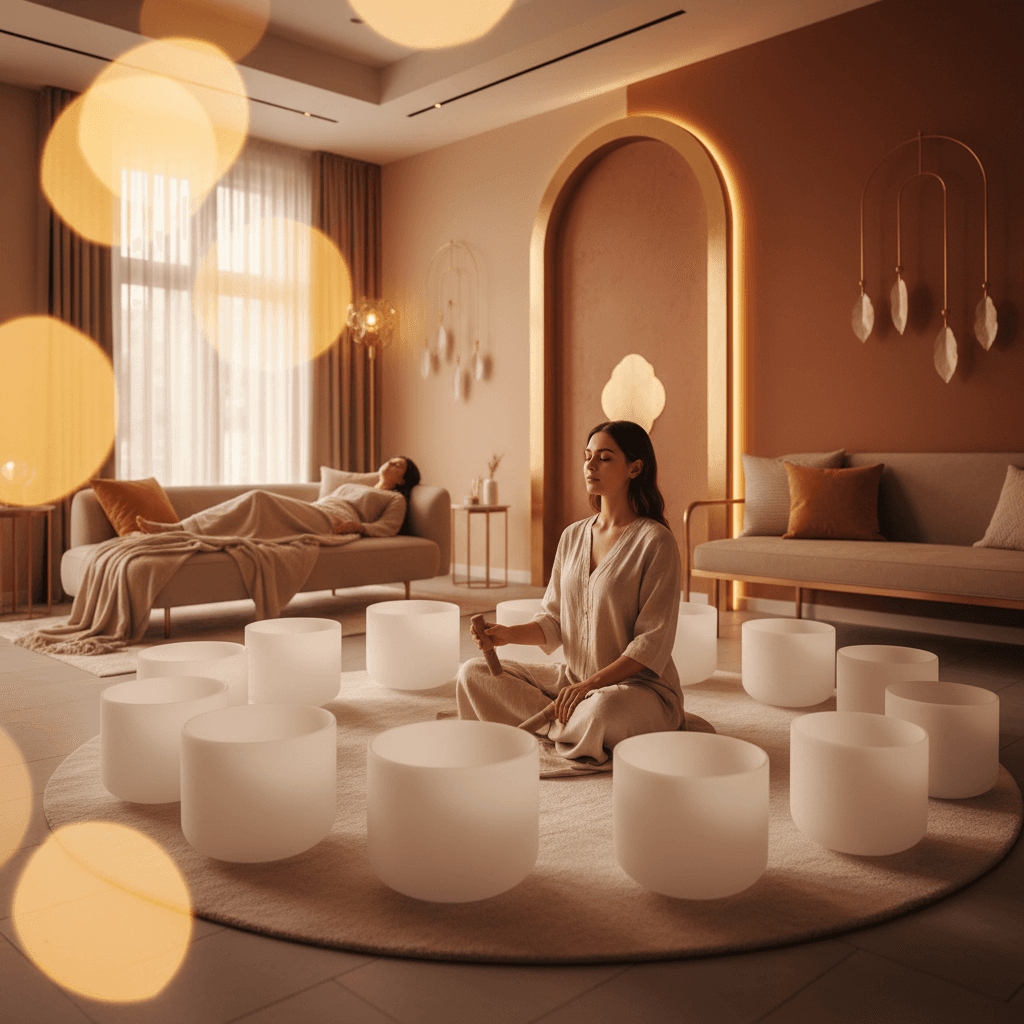
Connecting the scientific understanding of sound to its practical application reveals a profound journey for individuals seeking enhanced well-being. When engaging with sound therapy, clients often experience a multi-sensory immersion that transcends mere auditory perception, engaging the body, mind, and spirit. It's an opportunity to consciously tap into the brain's innate capacity for self-regulation and healing.
Clients typically describe a profound sense of relaxation and inner quiet as the carefully curated sounds wash over them. Vibrational instruments like singing bowls and gongs create palpable sensations that resonate deeply within the body, promoting a release of tension held in muscles and fascia. This physical experience is often accompanied by a mental calming, as the brain shifts from its usual busy state into a more meditative and receptive mode.
For those grappling with stress, the regular practice of sound wellness offers a powerful tool for nervous system regulation. By activating the parasympathetic nervous system, sound helps to lower heart rate, reduce blood pressure, and alleviate feelings of anxiety and overwhelm. This makes it a valuable complementary approach for managing anxiety, with studies showing significant reductions in anxiety symptoms, even in populations with chronic conditions [pmc.ncbi.nlm.nih.gov/articles/PMC12063014/].
In the context of tinnitus, the practice focuses on re-educating the brain. Instead of trying to eliminate the tinnitus, clients learn to integrate external sounds into their auditory landscape in a way that makes the internal ringing less intrusive. Consistent exposure, guided by expert practitioners, encourages habituation, allowing the brain to filter the tinnitus into the background, thereby improving quality of life [utahhearingaids.com].
Sleep disturbances, often exacerbated by anxiety and pain, also show promising responses to sound interventions. Meta-analyses of acoustic stimulation for insomnia have indicated significant improvements in subjective sleep quality and severity, effectively increasing total sleep duration and alleviating symptoms [pmc.ncbi.nlm.nih.gov/articles/PMC12202548/]. Music therapy, in particular, has been associated with enhanced emotional regulation and anxiety relief, which are crucial pathways to better sleep [pmc.ncbi.nlm.nih.gov/articles/PMC11746032/]. The practice provides a gentle, non-pharmacological pathway to unwind and prepare the body for restorative rest.
"The true magic of sound wellness lies not just in the frequencies we hear, but in the profound inner resonance it awakens, inviting us back to our natural state of peace and balance."
The experience is deeply personal, yet universally beneficial. Whether through structured music interventions, resonant instrument play, or guided vocalizations, sound therapy invites individuals into a state of deep presence, allowing for emotional release, mental clarity, and a renewed sense of well-being. It is a journey of rediscovery, guided by the very essence of sound.
The Soul Art Approach: Harmonizing Science with Intuition
At Soul Art, Dubai's premier sound wellness studio, Larissa Steinbach meticulously blends scientific understanding with intuitive artistry to create transformative experiences. Her approach goes beyond simply playing instruments; it's a deeply personalized methodology that acknowledges the unique energetic and physiological landscape of each individual. Larissa's vision is to offer a sophisticated, yet accessible, pathway to profound well-being, embodying the essence of "quiet luxury."
Larissa Steinbach’s expertise lies in curating specific soundscapes tailored to the client's needs, drawing from the vast knowledge base of sound's psychophysiological effects. She understands that the type of sound, its frequency, intensity, and delivery method are critical. For instance, knowing that live sound can sometimes have a greater impact than recorded alternatives, Larissa often conducts immersive, in-person sessions that allow for dynamic interaction between the sound and the individual's energetic field [mental.jmir.org].
The Soul Art method incorporates a range of exquisite instruments, including handcrafted Himalayan singing bowls, crystal bowls, resonant gongs, chimes, and the therapeutic power of the human voice. Each instrument is chosen for its unique vibrational quality and its ability to elicit specific responses in the body and mind. The deep, sustained vibrations of gongs and bowls, for example, are known to gently entrain brainwaves into slower, more restorative states, aligning with the principles observed in neuroimaging studies [36].
Soul Art focuses on cultivating an environment that amplifies the therapeutic effects of sound. From the serene studio ambiance to the mindful guidance provided by Larissa, every detail is designed to support deep relaxation and introspection. This holistic setting, combined with Larissa's intuitive understanding of individual energetic needs, fosters a safe space for clients to release stress, rebalance their nervous system, and reconnect with their inner stillness. It is this thoughtful integration of evidence-based practices with a deeply human, empathetic approach that defines the distinctive Soul Art experience.
Your Next Steps: Integrating Sound into Your Life
The journey to enhanced well-being through sound is accessible to everyone. Whether you're seeking to manage stress, improve sleep, or simply cultivate a deeper sense of peace, incorporating sound into your daily routine can yield remarkable benefits. Here are some actionable steps you can take today:
- Mindful Listening Practice: Dedicate 10-15 minutes daily to simply listen without distraction. This could be to nature sounds, ambient music, or even the subtle sounds of your immediate environment. This practice helps to train your attention and reduce mental chatter.
- Explore Binaural Beats or Solfeggio Frequencies: Many apps and online resources offer these specialized audio tracks, which are designed to influence brainwave states. Some individuals report they may support relaxation, focus, or sleep. Experiment to see if they resonate with you.
- Create a Soothing Sound Environment: During quiet times at home, play gentle, instrumental music or nature sounds (like rain or ocean waves) at a low volume. This sustained sound enrichment, particularly during periods of silence, may help to prevent the brain from focusing on internal stressors, aiding habituation [utahhearingaids.com].
- Integrate Vibrational Tools: Consider exploring personal sound tools like a small singing bowl or tuning fork. Used mindfully, these can offer a direct, localized vibrational experience that may support relaxation and release of tension.
- Seek Professional Guidance: For a truly immersive and personalized experience, consider booking a sound wellness session with an experienced practitioner. A session at Soul Art with Larissa Steinbach offers expertly guided relaxation, tailored to your specific needs, providing a powerful foundation for your well-being journey.
These steps are designed to empower you to harness the power of sound as a complementary tool in your self-care regimen, guiding you towards a more balanced and harmonious life.
In Summary
The scientific landscape of sound therapy is robust and continually expanding, underscoring its significant potential as a complementary wellness practice. From modulating physiological stress markers like cortisol and heart rate to reorganizing brain networks for conditions like tinnitus and improving subjective sleep quality, sound interventions offer a multifaceted approach to well-being. Key factors such as sound characteristics, delivery methods, and individual needs all contribute to its effectiveness, highlighting the importance of personalized experiences.
Larissa Steinbach at Soul Art masterfully integrates these scientific insights with a deep understanding of holistic wellness, creating bespoke soundscapes for profound relaxation and nervous system restoration. Through a thoughtful blend of exquisite instruments and mindful guidance, Soul Art provides a sophisticated sanctuary where clients can experience the transformative power of sound. Embrace the harmonious journey and discover how intentional sound can elevate your everyday life.
Bookings Coming Soon
Soul Art is still in preparation. Session details and booking will be published here after launch.
Coming Soon
Wellness Disclaimer: This article is for educational and informational purposes only. It does not constitute medical advice, diagnosis, or treatment. Soul Art Dubai provides non-medical wellness experiences focused on relaxation, stress management, and general wellbeing. Sound wellness is a complementary practice and should not replace professional medical care.
Related Articles
Cluster Headaches: Unveiling Pain and the Promise of Frequencies in Wellness

Epilepsy & Sound: Safety, Serenity, and Emerging Wellness Paths
Mastering Focus: Analytical Listening & Brain Engagement at Soul Art