Harmonizing Minds: Sound Wellness for Memory Care

Key Insights
Explore how scientifically-backed sound wellness practices, including specific frequencies and music, may support cognitive health and memory care for dementia patients at Soul Art Dubai.
A New Resonance for Memory: The Potential of Sound Wellness
Imagine a simple, non-invasive method that could potentially soothe agitation, enhance communication, and even support cognitive function for those navigating the complexities of memory loss. For many, this sounds like a distant dream, yet emerging scientific research is increasingly pointing to the profound potential of sound and music in memory care, particularly for individuals with dementia and Alzheimer's disease.
At Soul Art, Dubai's premier sound wellness studio founded by Larissa Steinbach, we believe in harnessing these natural frequencies to foster holistic well-being. Our approach integrates cutting-edge research with ancient practices, offering a complementary path to support cognitive vitality. This article delves into the science behind sound for memory care, exploring how thoughtfully curated auditory experiences may offer a gentle yet powerful form of support. Join us as we explore how the subtle power of sound can resonate with the deepest parts of the mind, potentially unlocking moments of clarity and peace.
The Science Explained: How Sound Interacts with the Brain
The intricate relationship between sound, music, and brain function has captivated scientists for decades. Recent studies have shed light on the mechanisms through which auditory stimulation may influence cognitive processes, memory recall, and emotional regulation, offering hope for individuals facing memory challenges. Understanding these pathways is crucial to appreciating the potential of sound wellness practices.
The Brain's Symphony: Music and Memory
Music is a universal language, deeply intertwined with our memories and emotions. Research indicates that when a person listens to music, regions of the brain not solely linked to auditory processing are activated. These include areas involved with movement, attention, and crucially, memory. The hippocampus and parahippocampal regions, vital for memory function and often damaged in Alzheimer's disease (AD) patients, show activation after listening to pleasant music, as observed in functional magnetic resonance imaging (fMRI) studies.
Caregiver singing, a practice known as music therapeutic caregiving (MTC), has shown significant positive effects. Studies by Hammar and colleagues reported that MTC significantly decreased negative emotions and care-resistant behaviors in patients with dementia, such as pulling away or grabbing objects. Conversely, it increased positive behaviors, including the expression of positive emotions and heightened alertness. Furthermore, caregivers providing MTC often reported enhanced communication between themselves and the patient, alongside greater appropriate expression from the patient, even with a decrease in verbal communication from the caregiver. These findings underscore music's capacity to serve as a bridge for connection and emotional regulation.
Rhythmic Sensory Stimulation (RSS) and Gamma Waves
One of the most exciting frontiers in sound and memory care involves rhythmic sensory stimulation (RSS) and its influence on brainwave activity, specifically gamma waves. Neural activity described as gamma waves typically oscillates within the frequency range of 30-80 Hz, and lower-pitched music can drive a neural response within this range. RSS involves stimulating neural activity with sound applied rhythmically to the body or auditory system, with research highlighting its potential to contribute to increased neural rhythmic oscillatory coherence.
A key finding for professionals working with individuals with Alzheimer's disease is that these patients often exhibit lower levels of 40-Hz brain activity. Intriguingly, RSS has demonstrated the ability to drive an increase in this specific 40-Hz brain activity. This area is currently the focus of considerable research interest, with efforts concentrated on using RSS as a potential treatment for conditions including neuropathic pain, Alzheimer's disease, Parkinson's disease, depression, and tinnitus.
Beyond Music: The Power of Specific Sound Frequencies
While music offers broad benefits, specific sound frequencies are also gaining attention for their targeted potential. Recent research on monkeys, for instance, has offered encouraging evidence regarding a steady hum at 40 Hz. This low-frequency sound was found to increase levels of β-amyloid, a waste protein associated with Alzheimer's disease, in the animals’ cerebrospinal fluid. This suggests that the brain's natural cleanup systems might be clearing toxins more effectively.
This effect appeared to persist for several weeks after the one-week daily sound stimulation, hinting at lasting biochemical changes. While these studies are in early stages and require human trials, they bridge the gap between rodent and human research, providing a strong clue for non-invasive treatment development. Furthermore, preliminary human studies, like an "open label" extension study at MIT, have shown that 40 Hz light and sound stimulation may benefit some Alzheimer’s patients. For participants with late-onset Alzheimer’s disease, several measures of cognition remained significantly higher than comparable patients in national databases, and two participants showed significantly decreased levels of Alzheimer’s biomarker tau proteins.
The Dual Nature of Auditory Environments
It is critical to acknowledge that sound's effect on conditions like Alzheimer's disease can be bidirectional. On one hand, unwanted and harmful sound, often defined as noise, may be a risk factor for Alzheimer's. High noise intensity in environments like nursing homes, with average levels often between 55–68 dB(A) during daytime, has been associated with decreased nighttime sleep and increased agitation in dementia patients. Such noise may contribute to hearing loss, oxidative stress in the hippocampus, sleep disturbances, systemic inflammation, and the promotion of AD-like lesions in the brain.
Conversely, carefully chosen auditory environments, often referred to as soundscape augmentation, may have positive health effects. Natural sounds, such as birdsong, wind, or the murmur of water, when experienced independently or paired with visual elements, are frequently evaluated positively and perceived as having restorative qualities. These beneficial auditory elements can influence mood, enhance feelings of safety, and evoke positive responses in individuals with dementia, making the deliberate creation of a serene soundscape a vital aspect of memory care. Music therapy, in its various forms including active engagement, individualized listening, and caregiver singing, has been associated with enhancing neurogenesis and neuroplasticity, stimulating dopamine release, and modulating immune responses in AD patients.
How It Works in Practice: The Soul Art Experience
Translating sophisticated scientific insights into a tangible, beneficial experience is the core of Soul Art's mission. Our sound wellness sessions are designed to connect the theoretical understanding of sound's impact on the brain with real-world application, creating an environment that fosters cognitive and emotional well-being. This approach moves beyond simple relaxation, aiming to engage the brain in ways that may support memory function and reduce common challenges associated with dementia.
When clients or their loved ones step into Soul Art, they enter a sanctuary meticulously designed to optimize the auditory experience. The environment is purposefully curated to minimize the detrimental effects of noise, which, as research suggests, can exacerbate agitation and stress. Instead, the air is filled with carefully selected frequencies and harmonious sounds, guided by Larissa Steinbach's deep understanding of sound science and its therapeutic potential.
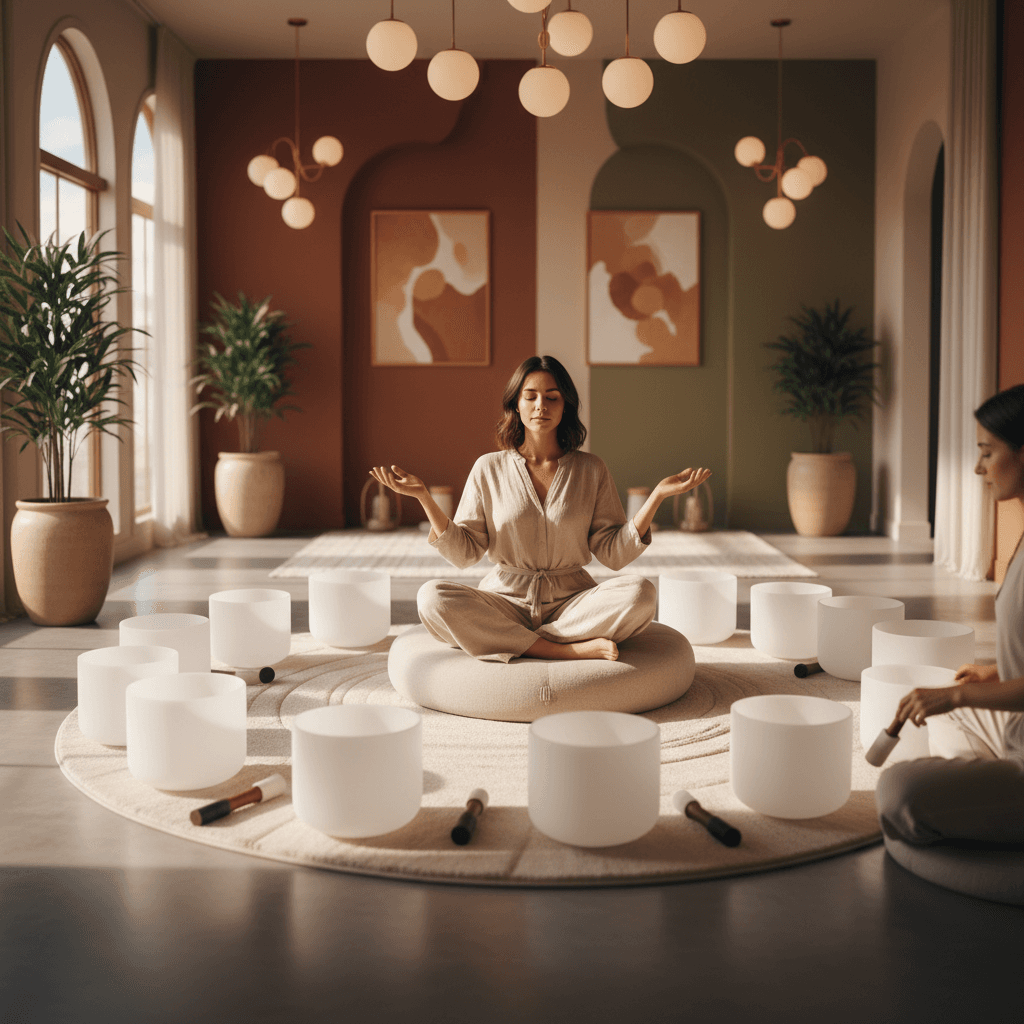
Clients experience a blend of rich, resonant tones from instruments like crystal singing bowls, gongs, and tuning forks, alongside soothing nature-inspired soundscapes. These elements are not randomly chosen; they are thoughtfully combined to create specific auditory patterns that may promote brainwave entrainment, particularly aiming to encourage the beneficial 40 Hz gamma frequencies. The gentle vibrations permeate the body, offering a non-invasive form of rhythmic sensory stimulation that extends beyond the auditory system, creating a profound sense of calm.
Many people report a significant reduction in agitation and anxiety during and after sessions. The consistent presence of harmonious sounds helps to create a stable and predictable auditory environment, which can be particularly grounding for individuals who may feel disoriented. The sensory details of the experience — the deep resonance, the soft reverberations, the serene atmosphere — contribute to a state of deep relaxation, which itself is known to support overall brain health. This focused attention on positive auditory input may help to improve cognitive performance and stimulate areas of the brain associated with memory function. Our practices offer a complementary approach to traditional memory care, providing a unique path to peace and potential cognitive support.
The Soul Art Approach: Larissa Steinbach's Unique Method
At Soul Art, Larissa Steinbach has meticulously developed a sound wellness approach that is both scientifically informed and deeply compassionate. Her method goes beyond conventional sound baths, offering a bespoke experience designed to cater to the unique needs of individuals, particularly those seeking support for memory care. Larissa’s philosophy centers on creating a personalized auditory journey that respects the individual's sensitivities and maximizes potential benefits.
What makes the Soul Art method truly unique is its thoughtful integration of diverse sound tools and techniques, all delivered within an atmosphere of "quiet luxury" and profound expertise. Larissa selects specific instruments like pure quartz crystal singing bowls, which produce powerful, clear tones, alongside resonant gongs that create complex, enveloping soundscapes. Tuning forks, calibrated to precise frequencies, are also utilized to deliver targeted rhythmic sensory stimulation, potentially engaging the brain in beneficial ways.
A key aspect of Soul Art's approach is the emphasis on creating an optimal auditory environment. Larissa understands the bidirectional impact of sound, actively curating sessions to be free from jarring noise while introducing beneficial soundscapes, such as gentle nature sounds that evoke feelings of safety and calm. This careful selection aims to counteract the potential negative effects of chaotic auditory environments often experienced by individuals with memory challenges.
Larissa customizes each session, understanding that a one-size-fits-all approach is insufficient for memory care. She might focus on sustained 40 Hz frequencies, inspired by research on gamma wave stimulation, or integrate music therapeutic caregiving elements through gentle vocalization and rhythmic engagement. The goal is always to provide a complementary, holistic wellness experience that may support cognitive function, alleviate distress, and foster moments of connection and well-being. Soul Art is not just about sound; it is about a curated journey towards inner harmony and cognitive vitality, guided by expert hands.
"Sound is a powerful, non-invasive conduit to the deeper self, capable of awakening dormant memories and soothing the agitated mind. Our purpose at Soul Art is to gently guide this awakening."
Your Next Steps: Integrating Sound for Wellness
The potential of sound to support memory care and overall cognitive wellness is a compelling area of exploration. While sound wellness is a complementary practice and not a medical treatment, there are several practical steps you can take today to integrate beneficial auditory experiences into your or a loved one's daily life. These actions can help create a more supportive and harmonious environment, potentially fostering a sense of calm and promoting cognitive engagement.
Here are a few actionable bullet points to consider:
- Curate Your Auditory Environment: Actively reduce sources of unwanted noise in living spaces. Replace background clutter with gentle, calming sounds like soft instrumental music, nature soundscapes (birdsong, ocean waves, gentle rain), or ambient tones.
- Explore Individualized Music Listening: Create playlists of music that hold personal significance for the individual. Familiar melodies from their youth or favorite genres can often evoke positive emotions and memories, potentially reducing agitation and improving mood.
- Engage with Music: Encourage active participation, such as singing along to familiar songs, tapping to a beat, or gentle movement inspired by music. Caregiver singing can be particularly effective in enhancing communication and reducing resistant behaviors.
- Consider Specific Frequencies: While professional guidance is recommended, there are readily available ambient tracks that incorporate specific frequencies, such as those designed to encourage 40 Hz gamma waves. Always ensure the sound level is comfortable and non-intrusive.
- Seek Professional Sound Wellness Guidance: For a deeper, expertly guided experience, consider exploring sessions at a reputable sound wellness studio like Soul Art. Larissa Steinbach and her team offer personalized approaches tailored to individual needs, providing a serene and supportive environment for cognitive well-being.
By taking these steps, you can begin to harness the power of sound to create a more peaceful, engaging, and potentially supportive environment for memory care.
In Summary: A New Harmony for the Mind
The journey of memory care is complex, but the emerging science of sound wellness offers a hopeful and gentle avenue for support. We've explored how music activates vital memory regions in the brain, how rhythmic sensory stimulation, particularly at 40 Hz, may influence neural activity and amyloid clearance, and how carefully curated auditory environments can profoundly impact mood and cognition. The distinction between harmful noise and beneficial sounds is critical, highlighting the power of conscious soundscape design.
At Soul Art, Larissa Steinbach champions this innovative approach, blending scientific understanding with a deeply empathetic practice. Her unique method provides a "quiet luxury" experience, fostering relaxation, reducing agitation, and potentially supporting cognitive function through personalized soundscapes. We invite you to discover the transformative potential of sound wellness, a complementary path that resonates with the deepest parts of the mind, offering moments of peace and clarity.
Bookings Coming Soon
Soul Art is still in preparation. Session details and booking will be published here after launch.
Coming Soon
Related Articles
Downsizing: Navigating Life's Big Changes with Sound Wellness
Restless Legs Relief: Sound Wellness for Deeper Nighttime Comfort
Embracing Age with Inner Peace: Sound Wellness for Acceptance