Sound Waves & Life's Legacy: Reflecting on Your Deepest Self
Key Insights
Explore how sound shapes our cellular reality, influences life's reflections, and enhances well-being through practices like those at Soul Art Dubai with Larissa Steinbach.
Have you ever considered that your body, right down to its individual cells, might be perceiving sound in ways far beyond what your ears and brain register? This profound concept, currently at the forefront of scientific discovery, invites us to rethink our entire relationship with sound and its influence on our lives. It suggests that the vibrations we encounter daily, whether subtle or intense, contribute to the very fabric of our being, shaping not just our immediate mood but potentially our long-term legacy and capacity for deep reflection.
This article delves into the fascinating world where cutting-edge science meets ancient wisdom, exploring how sound impacts us on a cellular level and influences our psychological landscape. We will uncover the mechanisms by which sound can calm the nervous system, reduce stress, and foster a state conducive to introspection and personal growth. Understanding these principles can empower you to intentionally curate your sonic environment, transforming it into a powerful tool for well-being and a richer, more reflective life.
Join us on a journey to appreciate sound not merely as an auditory experience, but as a total body phenomenon. Discover how intentionally engaging with sound, through practices such as those offered at Soul Art Dubai, can support your overall wellness, enhance your capacity for self-reflection, and contribute to the legacy you wish to build. This deeper understanding of sound's pervasive power can unlock new dimensions of peace, clarity, and purpose in your daily existence.
The Universal Language of Vibration: How Sound Shapes Us
The concept of sound as a universal phenomenon extends far beyond our conscious hearing. Recent scientific advancements are revealing a much more profound and pervasive influence of sound on living organisms, challenging long-held assumptions about how we perceive our environment. This emerging understanding underscores the intrinsic connection between vibration and vitality.
Beyond the Ear: Cellular Sound Perception
Groundbreaking research from Kyoto University, published in April 2025, has unveiled compelling evidence that cells themselves perceive sound. This challenges the traditional view that sound perception is solely mediated by receptive organs like the brain and ears. Instead, it suggests that your cells respond directly to compressional mechanical waves transmitted through substances, which is the technical definition of sound.
This revelation stems from studies in mechanobiology and body-conducted sound, indicating that acoustic pressure is sufficient to induce cellular responses. Researchers designed systems to bathe cultured cells in acoustic waves, observing significant effects. This means that when you experience a sound "in your very being" – like near a powerful speaker – it's not just a poetic phrase; your cells are indeed experiencing it too. Sound is a vital source of environmental information, and its capacity to induce physiological responses at the cellular level is only just beginning to be understood.
The Body's Symphony: Sound's Physiological Impact
The impact of sound on our physiology extends far beyond cellular perception, influencing our nervous system, hormonal balance, and emotional states. Modern research is increasingly catching up with ancient wisdom, providing scientific evidence for sound's therapeutic potential. These studies highlight how specific sound frequencies and harmonic structures can profoundly alter our internal chemistry.
One of the most significant effects of sound healing is its ability to calm the nervous system. Instruments like gongs, singing bowls, and certain rhythmic sounds can activate the parasympathetic nervous system, shifting us into a crucial "rest-and-digest" state. A key 2016 study at the University of California demonstrated that participants experienced significantly lower cortisol levels and heart rates after just 20 minutes of singing bowl meditation. This indicates a direct physiological response to the sonic environment, supporting deep relaxation and stress reduction.
Furthermore, listening to harmonic sounds may support the brain's natural feel-good chemicals. Research suggests that sound therapy can increase levels of serotonin and dopamine, leading to reported feelings of peace and even euphoria after a session. A study published in Frontiers in Human Neuroscience showed that sound therapy helped patients with chronic anxiety reduce symptoms over a four-week period, highlighting its potential as a complementary approach to emotional regulation. The interaction of sound with our internal biology is also visually demonstrated through cymatics, the study of visible sound vibrations on matter. Dr. Hans Jenny's pioneering work visually showed how sound organizes particles into geometric shapes, hinting at a deep link between frequency and form. Considering our bodies are over 70% water, these vibrational patterns may also influence our tissues and cells, promoting brainwave coherence and improving overall well-being.
How It Works in Practice
Connecting the scientific understanding of sound's profound impact to real-world application reveals a powerful pathway to enhanced well-being and a more reflective life. When you engage with intentional sound practices, you’re not just listening; you’re experiencing a full-body immersion that resonates with your core self. The vibrations interact with your body’s natural rhythms, facilitating shifts that support both physical and mental states.
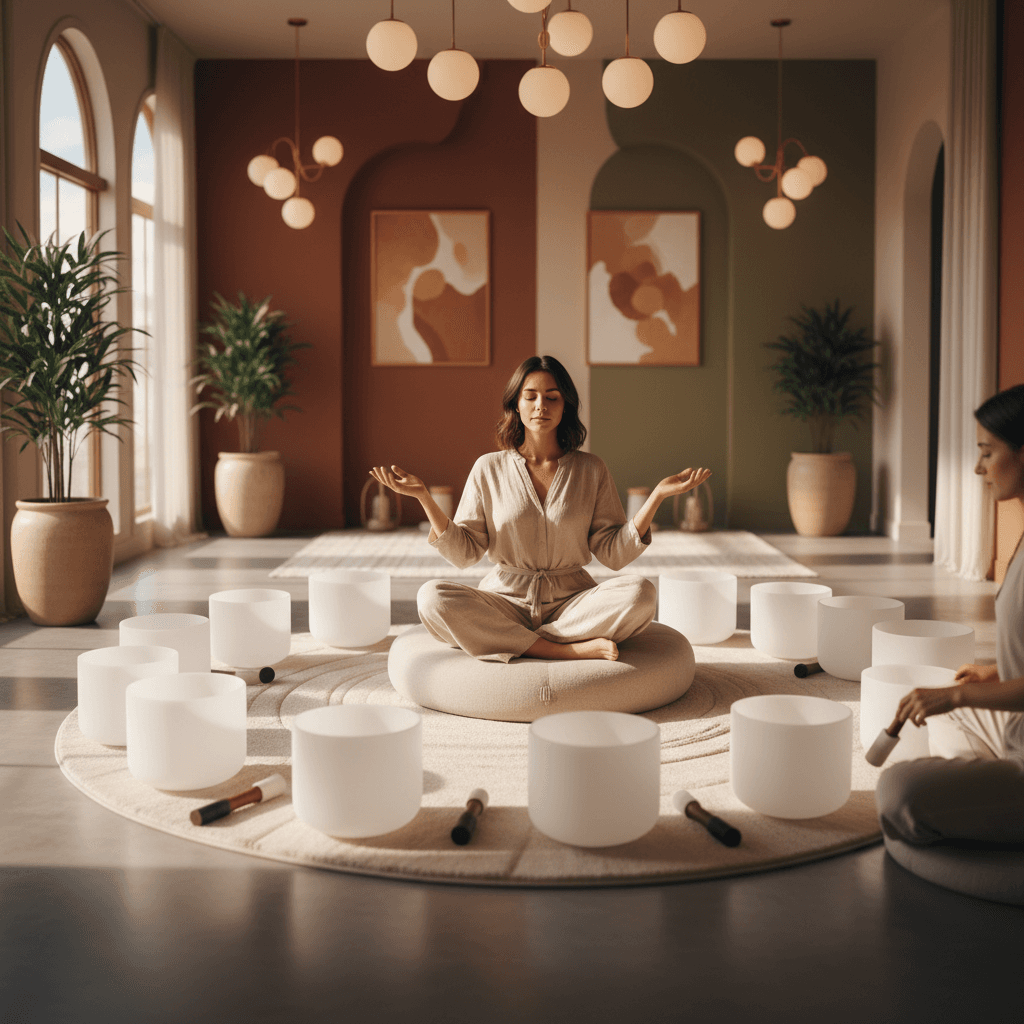
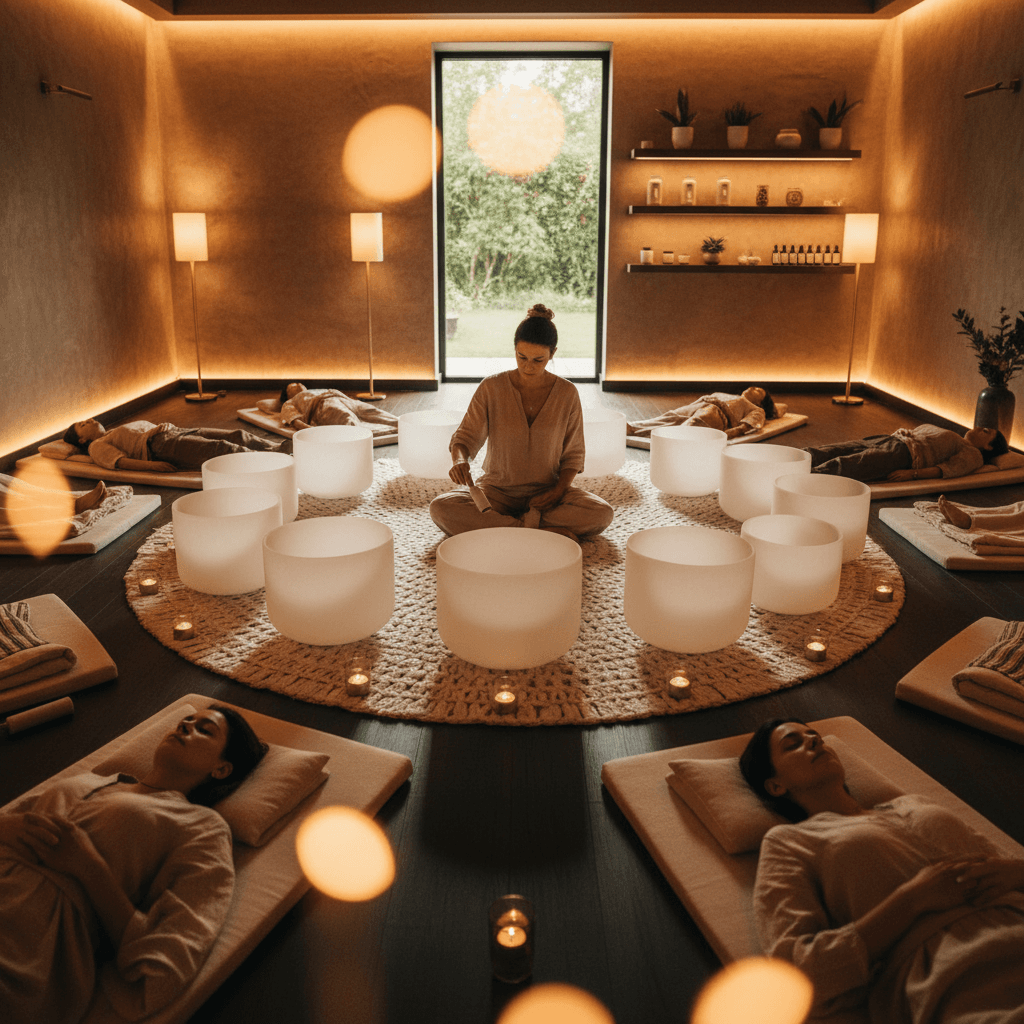
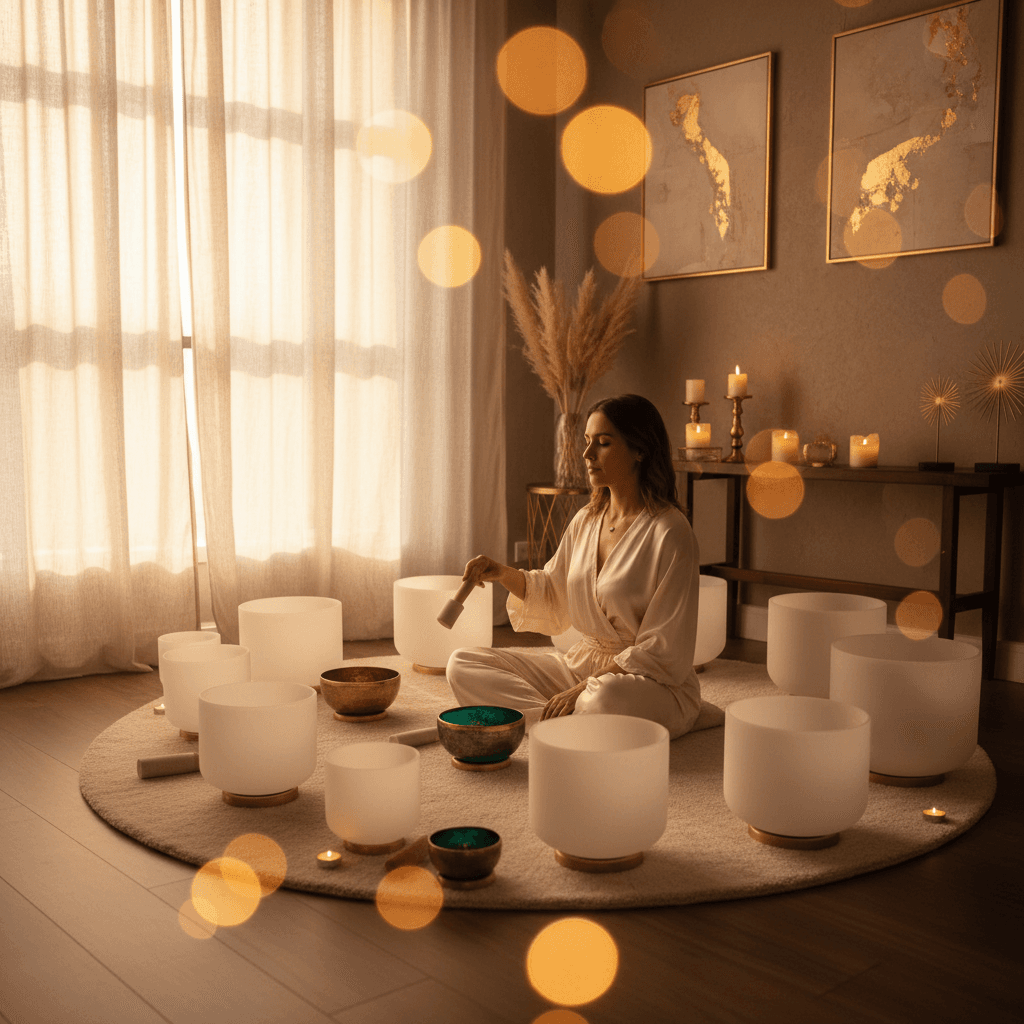
During a sound wellness session, clients often describe a sensation of deep relaxation that permeates their entire being. The rich, resonant tones of instruments like gongs, crystal singing bowls, and tuning forks create a multi-layered sonic field. These vibrations are not merely heard by the ears but are felt through the tissues, bones, and fluids of the body, much like the cellular perception described by Kyoto University's research. This full-body experience can help to release physical tension, quiet mental chatter, and ease emotional burdens.
This practice aligns beautifully with the concept of "optimization with compensation," a key takeaway from the Legacy Project research. This perspective suggests that successful aging involves optimizing what one has left and compensating for what may have been lost, rather than dwelling on regrets or limitations. Sound wellness provides a unique avenue for this optimization. By immersing oneself in harmonious vibrations, individuals are encouraged to be present, to acknowledge their current state, and to consciously shift focus towards inner resources and strengths.
"Many people report feeling a profound sense of peace and mental clarity, allowing them to gently release rumination about past losses and instead focus on cultivating positive emotions in the present."
The intentional infusion of positive emotions into what might otherwise be a stressful or challenging life phase is a powerful aspect. Sound can act as a catalyst for this. Even amidst negative experiences, sound sessions can help bring in positive emotions, which scientific evidence suggests can significantly reduce the impact of negativity. This is not about denying challenges, but rather creating an internal landscape resilient enough to process them, fostering gratitude, presence, and a renewed sense of purpose. This process allows for a more constructive reflection on one's life, shaping a legacy that is rich in wisdom and self-compassion.
The Soul Art Approach
At Soul Art, Dubai's premier sound wellness studio, Larissa Steinbach meticulously crafts experiences that bridge the ancient wisdom of sound healing with contemporary scientific understanding. Larissa's approach is deeply rooted in the principles of vibrational resonance, recognizing sound's capacity to induce profound states of relaxation and self-discovery. Her method is not just about playing instruments; it's about creating a precisely tuned environment that facilitates healing and introspection at a fundamental level.
Larissa integrates her extensive knowledge of acoustics and human physiology to curate soundscapes that resonate with the individual's needs. She understands that the body is an intricate receiver of vibrational information, and that carefully selected frequencies can guide the nervous system into a state of deep calm. This intentional design maximizes the physiological benefits, helping to reduce cortisol levels, elevate mood-enhancing neurotransmitters, and foster a coherent brainwave state, as supported by research into sound's impact on stress and anxiety.
What makes the Soul Art method unique is its holistic and personalized nature. Larissa Steinbach utilizes a diverse array of instruments, each chosen for its specific vibrational qualities:
- Tibetan Singing Bowls: Their rich, sustained tones create intricate harmonic overtones that are felt throughout the body, promoting deep cellular resonance.
- Crystal Singing Bowls: Made from pure quartz crystal, these bowls produce clear, expansive frequencies that are often associated with energetic alignment and mental clarity.
- Gongs: The powerful, complex vibrations of gongs can induce profound states of meditative awareness, often described as a journey through sound.
- Tuning Forks: Precision-calibrated forks are used for targeted vibrational therapy, gently stimulating specific areas of the body to release tension and promote energy flow.
Larissa's expertise lies in orchestrating these elements into a symphony designed to activate the parasympathetic nervous system, allowing clients to transition into a "rest and digest" state essential for recovery and reflection. At Soul Art, the intention is to create a sanctuary where individuals can disconnect from external noise, reconnect with their inner landscape, and reflect on their life’s journey with renewed clarity and emotional balance.
Your Next Steps
Embracing the profound influence of sound on your well-being and life's reflections doesn't require a radical overhaul, but rather a conscious shift in awareness. By taking intentional steps, you can begin to harness the power of sound to cultivate a more peaceful and purposeful existence. Here are some actionable steps you can implement starting today:
- Curate Your Sonic Environment: Be mindful of the sounds you allow into your daily life. Introduce short, sound-free intervals between activities to give your brain space to reset and recover from continuous input. This pause can significantly enhance your capacity for clear thinking and deep reflection.
- Mindful Listening: Practice truly listening to the sounds around you, both natural and man-made, without judgment. Observe how different sounds make you feel. This simple exercise can heighten your awareness and appreciation for your sonic landscape.
- Prioritize Quiet Time: Dedicate specific periods each day for silence or exposure to gentle, harmonious sounds. This might mean starting or ending your day without continuous background audio, creating space for mental recovery and reflection, which is crucial for overall brain health and sustained attention.
- Focus on "Optimization with Compensation": Reflect on what you have left and what you can optimize in your life, rather than dwelling on losses or regrets. As the Legacy Project research suggests, taking action on what you can control and infusing positive emotions into challenging situations can dramatically improve your well-being. Sound practices can be a powerful tool in fostering this mindset.
- Explore Sound Wellness: Consider experiencing a professional sound wellness session. Soul Art offers a guided journey into deep relaxation and self-discovery through expertly facilitated sound baths and vibrational therapy. This complementary approach may support stress reduction, emotional balance, and a profound sense of inner peace.
Taking these steps can help you redefine your relationship with sound, transforming it from mere background noise into a powerful ally for a life rich in reflection and well-being.
In Summary
The journey into "Legacy and Sound: Reflecting on Life" reveals sound as a fundamental force shaping our existence, even at the cellular level. Groundbreaking research from Kyoto University demonstrates that our cells directly perceive sound, challenging traditional notions and opening new avenues for understanding its impact. This cellular perception, coupled with sound's ability to activate the parasympathetic nervous system, reduce stress hormones like cortisol, and boost feel-good chemicals, underscores its profound physiological and psychological benefits.
Intentional sound practices, like those championed by Larissa Steinbach at Soul Art Dubai, offer a powerful tool for navigating life's complexities. By engaging with harmonious vibrations, individuals can cultivate inner peace, enhance emotional regulation, and foster a mindset of "optimization with compensation"—focusing on strengths rather than losses. This holistic wellness approach creates a sacred space for deep reflection, allowing you to connect with your deepest self and consciously shape the legacy you wish to leave. Soul Art invites you to experience this transformative power, guiding you towards profound relaxation and a richer, more meaningful life.
Bookings Coming Soon
Soul Art is still in preparation. Session details and booking will be published here after launch.
Coming Soon
Wellness Disclaimer: This article is for educational and informational purposes only. It does not constitute medical advice, diagnosis, or treatment. Soul Art Dubai provides non-medical wellness experiences focused on relaxation, stress management, and general wellbeing. Sound wellness is a complementary practice and should not replace professional medical care.
Related Articles
Downsizing: Navigating Life's Big Changes with Sound Wellness
Restless Legs Relief: Sound Wellness for Deeper Nighttime Comfort
Embracing Age with Inner Peace: Sound Wellness for Acceptance