Sound Support for Dyslexia: Rewiring Brains for Reading

Key Insights
Explore how sound wellness, pioneered by Larissa Steinbach at Soul Art Dubai, may offer unique support for individuals with dyslexia by enhancing auditory processing and focus.
Have you ever considered that the sounds around us, far beyond spoken words, might hold a key to unlocking new pathways for learning? For individuals navigating the complexities of dyslexia, a common learning difference affecting millions globally, the journey often involves unique challenges in processing information. While traditional interventions are crucial, some research suggests a profound connection between sound processing and reading ability, opening exciting avenues for complementary support.
At Soul Art, Dubai's premier sound wellness studio founded by Larissa Steinbach, we are constantly exploring the frontiers of how sound can nurture cognitive well-being. This article delves into the fascinating science behind dyslexia and how carefully curated sound experiences may offer a unique avenue for support, potentially enhancing auditory processing, improving focus, and fostering a deeper sense of calm for those with learning differences. We will explore the scientific underpinnings and practical applications of sound as a powerful complementary tool, all within a framework of holistic wellness.
The Science Explained: How Sound Interacts with Dyslexic Brains
Dyslexia is a neurobiological disorder primarily affecting the language areas of the brain, particularly speech sound and phonological processing. It manifests as difficulties in acquiring foundational skills for reading decoding and spelling, despite normal intelligence and adequate educational exposure. Recent advancements in brain imaging and neurocognitive research have provided critical insights into the neurological underpinnings of this condition.
Auditory Processing Deficits in Dyslexia
One of the most significant areas of research involves the auditory processing abilities of individuals with dyslexia. A published brain-imaging study from the Developmental Medicine Center at Children's Hospital Boston/Harvard Medical School suggests that children with developmental dyslexia struggle with reading because their brains do not process fast-changing sounds properly. These rapidly changing acoustic properties, occurring over tenths of milliseconds, are crucial for distinguishing individual phonemes within spoken words.
Functional magnetic resonance imaging (fMRI) enabled researchers to observe brain activity in response to short sound intervals where acoustic properties changed either rapidly or relatively slowly. Unlike typical readers whose brains showed differences in 11 regions when listening to fast compared to slow sounds, the brains of children with dyslexia did not represent fast and slow sound changes differently. This fundamental difference can hinder a child's ability to establish a map of which letters go with which sounds, leading to difficulties in learning the phonetic basis for reading.
Brain Rewiring Through Sound Training
The same Harvard Medical School study revealed groundbreaking findings: with the help of computerized sound training, children with developmental dyslexia were able to literally rewire their brains. After eight weeks of daily one-hour sessions (approximately 60 hours total) of a remediation program called Fast ForWord Language, the dyslexic children demonstrated more accurate sound processing. This program involved no reading but used both nonverbal sounds (like chirps and whistles) and speech sounds in the form of syllables, words, and sentences, requiring users to discriminate between paired sounds.
The improvements observed in sound processing were directly linked to better language and reading skills. This evidence strongly supports the hypothesis that auditory interventions can lead to rapid and significant improvements in reading, by enhancing the consistency of neural responses to rapidly changing spectrotemporal acoustic cues in speech.
Enhancing Neural Responses and Phonological Awareness
Further research, reviewed by Hornickel et al. in PNAS, links reading failure to auditory processing disorders and highlights the potential of auditory interventions. Their study reported that a group of dyslexic children who used an assistive listening FM system for one school year during classroom instruction significantly increased their phonological awareness and basic reading scores. This physiological data supports the idea that children with language learning impairments, including dyslexia, respond inconsistently to rapidly changing acoustic cues in speech, and that this response becomes more consistent after auditory intervention.
Dr. Nina Kraus and her colleagues also conducted promising research exploring the benefits of using FM listening devices for students with reading problems. Their findings revealed that students who improved their consistency of response to speech sound stimuli the most post-research were those whose pre-study responses were the most discrepant from typical learners. This suggests that sound-based strategies may offer particular benefits for those with the most pronounced inconsistencies in auditory processing.
"Linking sounds and letters is a key element for learning to read. In children with dyslexia, the brain segments speech differently, and this connection can sometimes be difficult to establish. By offering rhythmic auditory training, we aim to strengthen these neural connections and facilitate learning." - Olesia Platonova, PhD student, Institut Pasteur.
Sound's Impact on Visual Attention and Crossmodal Integration
Beyond direct auditory processing, sound also plays a role in visual attention, which can be challenging for individuals with dyslexia. Research by Robertson et al. (1998) and Van der Burg et al. (2008, 2011) examined the effect of sound on visual attention. They found that a transient nonspatial sound could overcome spatial deficits in visual awareness and improve visual search in dyslexic readers.
This phenomenon, sometimes referred to as the "pip-and-pop effect," suggests that sound can facilitate the disengagement and shifting of attention, areas where dyslexic readers often face difficulties. While early theories suggested this was due to increased alertness, follow-up studies point to a very early multisensory interaction. The effectiveness of sound in this context is also tied to crossmodal temporal integration, meaning the sound needs to be presented in close temporal proximity to visual changes. Various authors have argued that dyslexics exhibit deficits in different sensory systems involving alterations in temporal information processing, making crossmodal approaches potentially very beneficial.
Summary of Scientific Insights:
- Atypical Auditory Processing: Dyslexic brains often struggle to process fast-changing sounds critical for speech comprehension.
- Neural Plasticity: Computerized sound training has demonstrated the ability to "rewire" these neural pathways, improving sound processing.
- Enhanced Phonological Awareness: Auditory interventions, such as assistive listening devices, may significantly boost phonological awareness and reading scores.
- Improved Attention: Non-spatial sounds can enhance visual attention and overcome difficulties in disengaging and shifting focus, areas often challenged in dyslexia.
- Crossmodal Integration: Deficits in temporal processing within and across sensory systems in dyslexia highlight the potential of multisensory approaches.
These scientific insights underscore the profound connection between auditory processing and learning differences, particularly dyslexia, and point towards sound-based interventions as a promising complementary approach for supporting cognitive function.
How It Works in Practice: Experiencing Sound Support
Translating these scientific principles into a real-world experience involves creating carefully crafted auditory environments. At Soul Art, we focus on delivering sound wellness practices that may support the nervous system, potentially enhance focus, and provide a deep sense of relaxation. This is not about 'teaching reading' directly, but rather cultivating an optimal internal state that can be conducive to learning and cognitive processing.
Clients experiencing sound support sessions may notice a range of benefits. The immersive nature of a sound bath, for example, can create an enveloping soundscape that encourages brainwave states associated with deep relaxation, such as alpha and theta waves. This shift in brain activity may help reduce anxiety and stress, common co-travelers with learning challenges, thus creating a more receptive state for learning and cognitive engagement.
The specific frequencies and rhythmic patterns used in sound wellness practices are carefully chosen. Some practitioners suggest that consistent exposure to particular sound patterns, even nonverbal ones, could gently encourage the brain to improve its temporal processing abilities. While this is a complementary wellness practice, many people report a heightened sense of calm, improved clarity, and a better ability to focus after sessions.
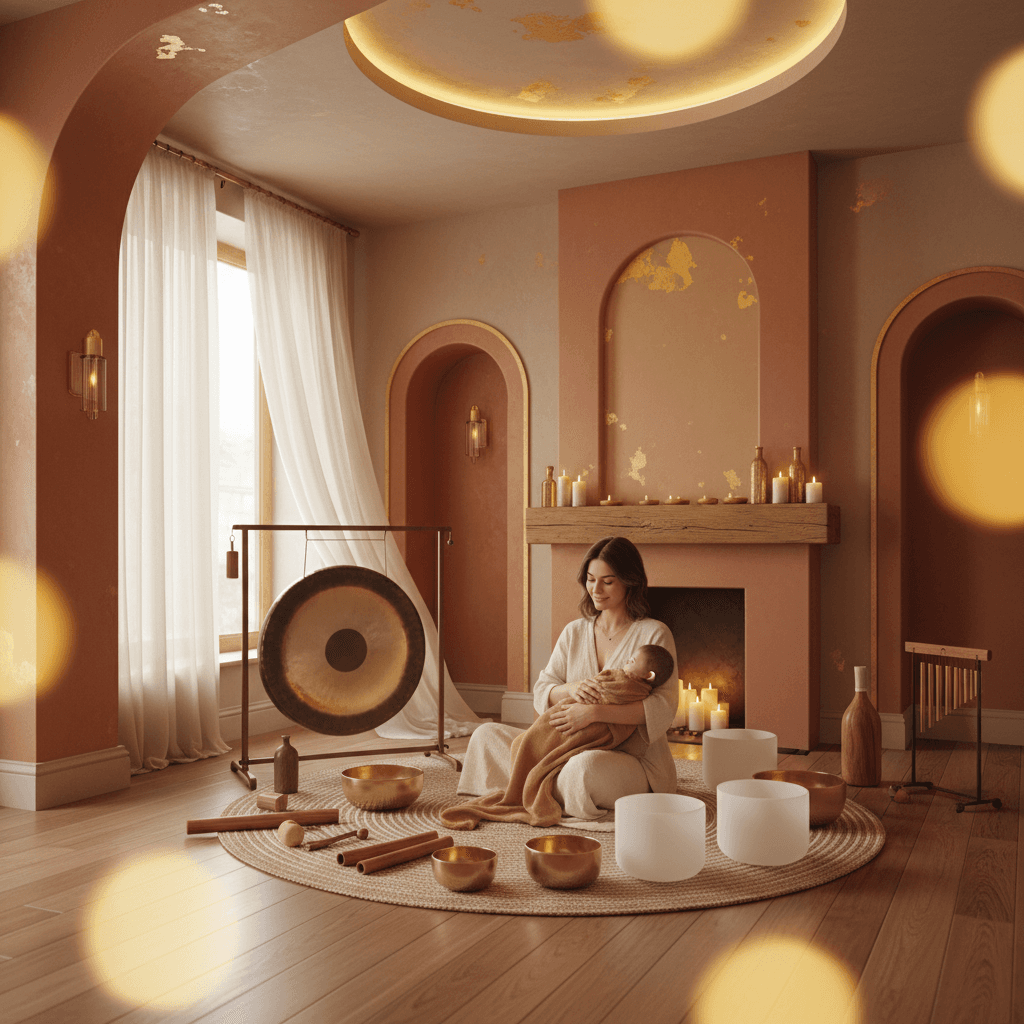
The experience is profoundly sensory. You might feel the gentle vibrations of a singing bowl resonating through your body, or hear the intricate layers of a gong wash over you. These sensory inputs, delivered in a non-demanding way, may offer a subtle form of 'auditory training' that supports the brain's capacity to organize and interpret sound information. It's a holistic approach, aiming to regulate the nervous system and foster a sense of internal harmony, which in turn may support overall cognitive well-being.
The Soul Art Approach: Larissa Steinbach's Vision
Larissa Steinbach, the visionary founder of Soul Art, is dedicated to harnessing the power of sound for holistic well-being. Her unique approach integrates ancient wisdom with contemporary scientific understanding to create bespoke sound wellness experiences. At Soul Art, we understand that individuals with learning differences, including dyslexia, can greatly benefit from environments that nurture cognitive flexibility and emotional resilience.
The Soul Art method is distinctive because it goes beyond passive listening; it involves curated journeys designed to support neurological regulation and promote deep states of relaxation. Larissa and her team employ a diverse range of instruments, each chosen for its specific frequency and resonance. These often include:
- Himalayan Singing Bowls: Their rich, sustained tones and palpable vibrations are known to induce profound relaxation.
- Gongs: Creating immersive soundscapes, gongs can lead participants into meditative states, potentially supporting the nervous system's ability to self-regulate.
- Crystal Singing Bowls: These bowls produce pure, clear tones that some believe resonate with the body's energy centers.
- Chimes and Tuning Forks: Offering precise frequencies, these smaller instruments can be used for targeted energetic work and subtle auditory stimulation.
Larissa Steinbach emphasizes that the aim is to create an environment where the brain may be encouraged to process sound more consistently and efficiently, while simultaneously reducing stress. This is particularly relevant given the research highlighting inconsistent neural responses to rapid sound changes in dyslexia. By immersing individuals in structured, harmonious sound, Soul Art aims to provide a calming, supportive backdrop for personal growth and enhanced cognitive function. Our sessions are designed as a powerful self-care practice, helping individuals cultivate inner peace and a sense of balance.
Your Next Steps: Integrating Sound into Your Wellness Journey
Exploring sound support for learning differences, or simply for general well-being, is a journey of self-discovery. While sound wellness is a complementary approach and not a substitute for professional medical or educational interventions, it offers tangible benefits for stress reduction, focus, and overall nervous system regulation. Here are some actionable steps you can take today:
- Explore Sound Baths for Relaxation: Participate in a group sound bath or a private session at Soul Art. Experience firsthand how deep resonant sounds can induce profound states of relaxation and reduce mental clutter.
- Integrate Mindful Listening: Dedicate a few minutes each day to simply listening to ambient sounds around you. This practice can enhance auditory awareness and improve focus, fostering a deeper connection to your environment.
- Maintain a Supportive Learning Environment: Ensure that individuals with dyslexia have access to evidence-based interventions and a collaborative multidisciplinary team, as highlighted by Parallel Learning. Sound wellness can serve as a supportive pillar within this comprehensive approach.
- Consider Regular Sound Sessions: For sustained benefits, incorporating regular sound wellness sessions into your routine may help in managing stress, improving attention, and supporting an optimal state for learning.
- Connect with Soul Art: Visit Soul Art's studio in Dubai or explore our online resources to learn more about our tailored sound experiences. Larissa Steinbach and her team are dedicated to guiding you on your path to enhanced well-being.
In Summary: Harnessing Sound for Enhanced Well-being
Dyslexia presents unique challenges in auditory processing, particularly with rapidly changing sounds crucial for language and reading. However, cutting-edge research indicates that targeted sound training and rich auditory environments may offer a powerful complementary pathway to support individuals with these learning differences. By potentially enhancing neural responses, improving phonological awareness, and boosting visual attention, sound wellness practices can contribute significantly to a holistic support system.
At Soul Art, Larissa Steinbach’s vision brings these scientific insights to life through curated sound experiences designed for profound relaxation, stress management, and improved cognitive focus. We believe in empowering individuals to unlock their full potential by leveraging the transformative power of sound. While a wellness practice, sound support can complement traditional educational strategies, helping to create an internal landscape conducive to learning and overall well-being. Discover how sound can be a beacon of support on your journey.
Bookings Coming Soon
Soul Art is still in preparation. Session details and booking will be published here after launch.
Coming Soon
Wellness Disclaimer: This article is for educational and informational purposes only. It does not constitute medical advice, diagnosis, or treatment. Soul Art Dubai provides non-medical wellness experiences focused on relaxation, stress management, and general wellbeing. Sound wellness is a complementary practice and should not replace professional medical care.
Related Articles

Moving Home: How Sound Wellness Supports Child Adaptation
Sound Wellness for Sibling Adjustment: Nurturing Family Harmony

Teen Identity & Sound: Self-Discovery for Adolescents at Soul Art Dubai