Sound Waves of Tomorrow: Latest Clinical Trials in Sound-Based Therapy 2026
Key Insights
Explore groundbreaking 2026 clinical trial insights into sound-based therapies for Alzheimer's, ADHD, and tinnitus. Discover how Soul Art and Larissa Steinbach integrate cutting-edge neuroacoustic wellness.
Sound Waves of Tomorrow: Latest Clinical Trials in Sound-Based Therapy 2026
Imagine a world where the simple act of listening could unlock profound benefits for your brain health, sharpen your focus, or soothe persistent discomfort. While it may sound like science fiction, the year 2026 is witnessing an unprecedented surge in clinical research, revealing sound as a truly powerful force in the realm of holistic wellness. Groundbreaking studies are emerging, demonstrating how precisely calibrated sound frequencies may support cognitive function, manage neurological challenges, and enhance overall well-being.
This article delves into the most compelling findings from recent clinical trials in sound-based therapy, offering a glimpse into a future where sound wellness plays an increasingly vital role. We will explore cutting-edge research in areas like Alzheimer's disease, ADHD, and tinnitus management, connecting scientific breakthroughs to practical applications. As a pioneer in sound wellness, Soul Art, founded by Larissa Steinbach, is dedicated to translating these scientific advancements into transformative experiences, guiding you towards enhanced mental clarity, emotional balance, and deep relaxation. Join us on a journey to understand how the subtle power of sound is reshaping our approach to health and vitality.
The Neuroscience of Sound: A Symphony for the Brain
The human brain is a complex orchestra of electrical activity, producing various brainwave frequencies associated with different states of consciousness. Sound-based therapy leverages this inherent rhythm, using specific auditory stimuli to encourage the brain to synchronize with external frequencies, a process known as entrainment. This non-invasive approach is garnering significant scientific attention for its potential to positively influence a range of cognitive and physiological processes.
Researchers are diligently working to uncover the intricate mechanisms through which sound interacts with our neural pathways and entire nervous system. Understanding these pathways helps us appreciate the growing body of evidence supporting sound's role as a complementary wellness practice. From modulating brainwave patterns to influencing cellular processes, the impact of carefully curated sound is proving to be far more profound than previously imagined.
Gamma Wave Entrainment & Alzheimer's Breakthroughs
One of the most exciting developments in sound-based therapy for 2026 comes from new research published in PNAS, highlighting promising effects of 40 Hz auditory stimulation for Alzheimer’s disease. Chinese scientists conducted an experiment on nine aged rhesus macaques, animals that naturally develop amyloid plaques similar to human Alzheimer’s patients. Just seven days of daily one-hour sessions, listening to a 40 Hz tone, resulted in a remarkable increase of more than 200% in beta-amyloid (Aβ) levels in their cerebrospinal fluid.
This significant increase suggests that the 40 Hz stimulation enhances the clearance of harmful protein from the brain, likely via the glymphatic system – the brain's waste removal pathway. A key surprise was the longevity of this effect, lasting over five weeks after the sessions concluded, a long-term action not previously observed in mouse studies. While no effect on tau protein was noted in these monkeys (who had minimal tau pathology), the findings strongly indicate that neuroacoustic therapy deserves serious scientific attention as a potential complementary approach for brain health.
The implications are substantial, suggesting that noninvasive auditory brain stimulation may support cognitive resilience. Additionally, similar 40 Hz tone stimulation has shown promise in noise-exposed mice, sustainably dampening auditory cortex hyperactivity and restoring normal loudness sensitivity for one week. This raises intriguing questions about the potential links between auditory processing and neurodegenerative conditions, warranting further human clinical trials. We eagerly await results from the large-scale HOPE study, involving 670 participants aged 50-90, with data readout expected around August 2026. This study aims to provide clinical validation, potentially paving the way for wider availability of this therapy as early as 2027.
Regulating Focus: Sound for ADHD & Cognitive Enhancement
For individuals seeking to enhance focus and manage attention challenges, sound therapy continues to evolve rapidly in 2026. Experts are now recommending personalized and intentional approaches, often combining science-backed strategies with practical adjustments. The field is exploring AI-personalized soundscapes and adaptive playlists that respond to real-time attention levels, creating bespoke auditory environments.
A notable systematic review on music therapy for ADHD highlights improved attention and reduced hyperactivity for many children and adolescents. The effectiveness of ADHD sound therapy lies in its ability to regulate sensory input. Auditory masking, where steady sounds like white or pink noise cover up inconsistent background noise, can calm the nervous system and make it easier to concentrate. Recent research, for instance, found that white and pink noise improved focus in children with ADHD, showing measurable gains in cognitive performance.
Rhythmic and ambient sounds may help block disruptive stimuli, thereby reducing the brain's tendency to seek out distractions, promoting relaxation and sustained attention. User surveys indicate that up to 60 percent of individuals with ADHD report better focus after integrating sound therapy into their routines, although anecdotal claims should always be approached with caution and combined with clinical treatment. Beyond ADHD, gamma wave entrainment studies, such as those referenced in "The Brain Song" research, continue to show that specific frequencies may impact focus and memory, potentially increasing attention span and improving memory encoding. These findings suggest that sound programs, when properly set, may offer small to moderate effects on mood, relaxation, and cognitive performance.
Calming the Noise: Tinnitus Relief Through Sound
Tinnitus, the perception of ringing or buzzing in the ears, can be profoundly distressing. Fortunately, sound-based therapies are emerging as a significant area of research for managing this condition. Clinical trials are actively investigating novel sound treatments to alleviate tinnitus-related discomfort, offering new hope for those affected.
Toronto Metropolitan University is sponsoring a study (NCT06083519), updated in February 2026, which is assessing a novel sound-based treatment for managing distress related to tinnitus. This trial is investigating interventions such as white noise and music with auditory beat stimulation for participants aged 40-70+. These studies aim to refine protocols and identify the most effective sound modalities for personal relief.
Further exciting news comes from Newcastle University, where recent research published in Hearing Research in February 2026 showcased a novel cross-frequency de-correlating stimulus modulation that demonstrably quietened chronic tinnitus. Importantly, a placebo version of the sound therapy, modifying frequencies away from the tinnitus, had no effect, underscoring the specificity of the active treatment. This new method compares favorably to existing sound therapies, many of which require longer durations, specialist oversight, or costly equipment, making it a potentially more accessible and effective option for managing tinnitus. These advancements underscore the potential of sound as a complementary tool in helping to reduce the perception and distress associated with tinnitus.
Beyond the Ears: Vibroacoustic Benefits
The impact of sound therapy extends beyond auditory perception, encompassing the often-overlooked dimension of vibration. When sound waves interact with the body, they create subtle vibrations that can be perceived through the skin, potentially offering a different pathway for therapeutic benefits. Experts believe that both the sounds we hear and the vibrations we feel may hold significant health potential.
Research on the benefits of sound therapy, while still growing and in early stages for many applications, is increasingly pointing towards positive outcomes. Studies on vibroacoustic therapy are particularly intriguing. For instance, a study mentioned by UCLA Health measured pain relief associated with seated therapeutic vibration in individuals with moderate-to-severe pain in their feet, legs, and lower back. Participants reported a statistically significant reduction in pain that lasted several hours. This suggests that vibration may be a viable complementary alternative for pain relief, though more extensive research is needed to fully understand its potential and mechanisms.
Beyond specific conditions, the overarching benefit of sound therapy lies in its capacity to induce deep relaxation and enhance mood. Sound baths, for example, tend to produce a profound state of calm, which may help reduce stress and anxiety. Engaging the brain with focused listening can help quiet racing thoughts and may contribute to lowering heart rate and blood pressure. These findings highlight the holistic potential of sound and vibration as tools for general well-being, supporting the body’s innate ability to relax and restore itself.
"The subtle yet profound power of sound resonates deep within our being, inviting not just auditory perception but a symphony of physiological responses that guide us back to a state of equilibrium and inner peace."
How It Works in Practice
Translating these scientific insights into a tangible experience involves a deliberate and artful process. In a sound wellness session, the scientific principles of resonance, entrainment, and auditory masking come alive, creating an immersive environment designed to guide you into profound states of relaxation and balance. It's an opportunity to consciously engage with sound, allowing its frequencies to interact with your internal landscape.
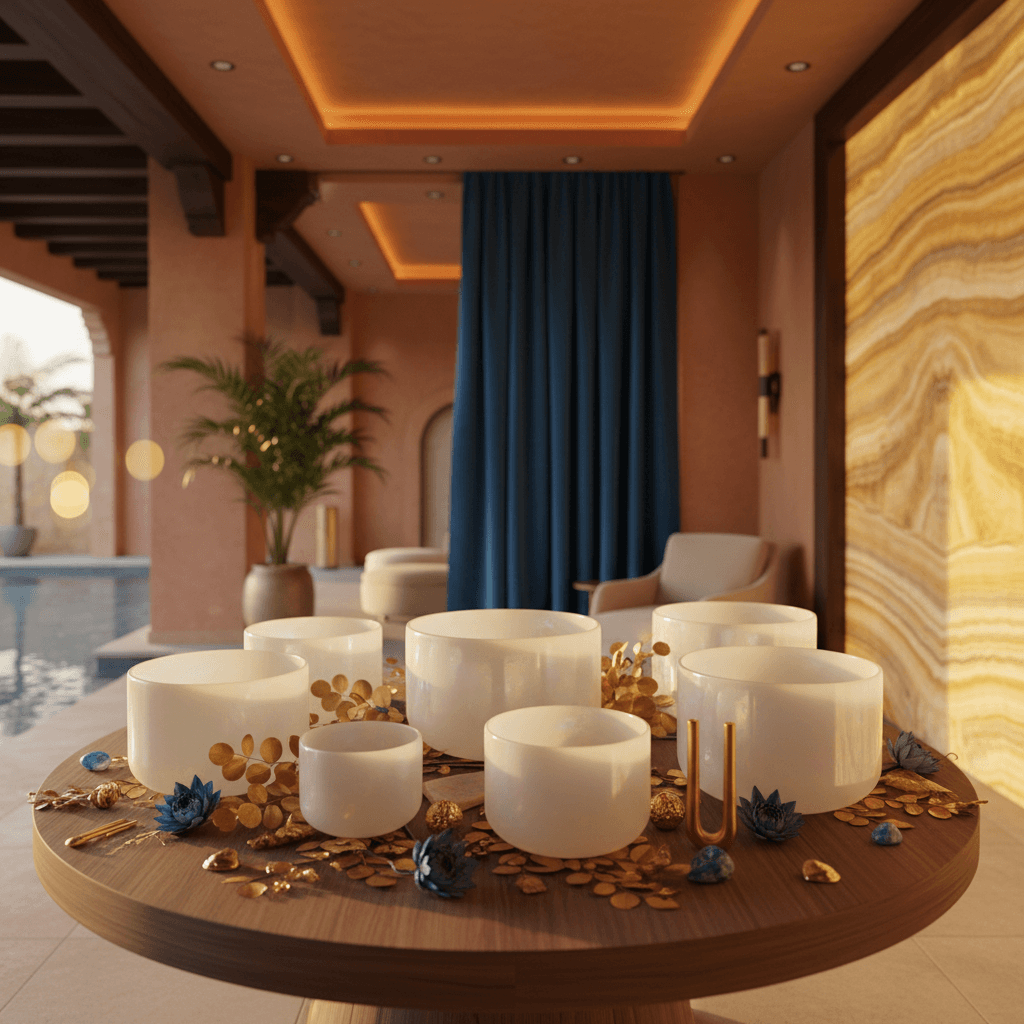
Clients often begin by finding a comfortable position, typically lying down, in a serene and thoughtfully curated space. The session then unfolds with the intentional introduction of various instruments – perhaps the deep, resonant hum of gongs, the clear, sustained tones of crystal singing bowls, or the intricate melodies of chimes. These sounds are not merely listened to; they are felt. The vibrations travel through the air, permeating the body, creating a full-sensory experience that bypasses the analytical mind. This is where the concept of feeling sound truly comes to life, enhancing the deep impact on the nervous system.
The steady, rhythmic nature of the sounds often acts as a form of auditory masking, gently overlaying and absorbing extraneous mental chatter and environmental noise. This allows the brain to transition away from its usual high-alert beta state, potentially moving towards more relaxed alpha or deeply restorative theta wave patterns. Many people report a sense of profound calm washing over them, a quietude where thoughts become less intrusive and the body enters a state conducive to healing and restoration. The experience is both deeply personal and universally resonant, offering a unique pathway to stress reduction, mental clarity, and emotional release.
The Soul Art Approach
At Soul Art, founded by the visionary Larissa Steinbach, these cutting-edge scientific principles are meticulously woven into every experience. Our philosophy transcends mere relaxation, aiming for a deeper neuroacoustic engagement that fosters sustainable well-being. Larissa Steinbach's unique approach blends ancient wisdom traditions with contemporary scientific understanding, creating a truly distinctive method that resonates with Dubai’s discerning clientele.
What makes the Soul Art method unique is its profound intentionality and personalized curation. Larissa Steinbach carefully selects instruments for their specific harmonic qualities and vibrational frequencies, from Nepalese singing bowls to crystal gongs and various chimes. These instruments are played with precision and intuition, guiding participants through carefully constructed sound journeys designed to support specific outcomes, whether it's enhancing mental focus, promoting deeper sleep, or facilitating emotional release. Our bespoke soundscapes are crafted to optimize brainwave entrainment, drawing on insights from studies on 40 Hz stimulation for brain health and gamma wave frequencies for cognitive enhancement.
Soul Art provides a sanctuary where clients can explore the potential of sound in a luxurious, supportive environment. We focus on creating a multi-sensory experience, emphasizing not just what you hear, but what you feel through the subtle vibrations, encouraging a holistic restoration of the nervous system. Larissa Steinbach ensures that each session is more than just a sound bath; it's a meticulously designed neuroacoustic wellness experience, empowering individuals to tap into their innate capacity for self-regulation and profound inner harmony. This commitment to integrating scientific advancements with an artful, empathetic delivery truly sets Soul Art apart as Dubai's premier sound wellness studio.
Your Next Steps
Embracing sound-based therapy as a part of your wellness journey can be a deeply rewarding experience. With the growing body of scientific evidence supporting its benefits, there are many accessible ways to begin exploring its potential. Here are some actionable steps you can implement today to integrate the power of sound into your daily life:
- Explore Different Soundscapes: Experiment with various types of sound, such as ambient nature sounds, binaural beats, white noise, or specialized gamma-wave entrainment tracks. Different sounds may resonate differently with your unique needs and preferences.
- Consistency is Key: Just like any wellness practice, consistency can amplify the benefits. Try incorporating short, focused sound sessions into your daily routine, even just 10-15 minutes, to build a regular practice.
- Create a Conducive Environment: Find a quiet, comfortable space where you can immerse yourself without distractions. Using quality headphones can enhance the experience, especially for specific frequency work.
- Combine with Mindfulness: Pair your sound listening with mindfulness or meditation practices. This synergy can deepen relaxation, improve focus, and heighten your awareness of the present moment.
- Seek Expert Guidance: While self-exploration is valuable, consider consulting with a wellness professional or experiencing a guided session. A trained practitioner, like those at Soul Art, can help you understand the nuances of sound therapy and tailor experiences to your specific wellness goals.
To truly understand the profound impact of expertly guided sound, consider exploring a session at Soul Art. Allow Larissa Steinbach and her team to introduce you to a world where sound becomes a pathway to elevated well-being and inner tranquility.
In Summary
The year 2026 marks a pivotal moment in the scientific understanding of sound-based therapy, with clinical trials revealing its exciting potential across various health and wellness domains. From novel approaches in managing Alzheimer's disease and enhancing cognitive function for ADHD to providing significant relief for tinnitus, sound is emerging as a powerful complementary tool. The research highlights sound's capacity to influence brainwave activity, clear harmful proteins, and regulate the nervous system, offering a non-invasive pathway to improved well-being.
As these scientific advancements continue to unfold, wellness studios like Soul Art, led by Larissa Steinbach, are at the forefront of translating this knowledge into transformative experiences. By integrating cutting-edge research with an artful, intentional approach, Soul Art provides a luxurious sanctuary where you can explore the profound benefits of neuroacoustic wellness. These practices offer a unique avenue for stress reduction, enhanced focus, and deep relaxation, inviting you to discover a harmonious state of mind and body.
Bookings Coming Soon
Soul Art is still in preparation. Session details and booking will be published here after launch.
Coming Soon
Wellness Disclaimer: This article is for educational and informational purposes only. It does not constitute medical advice, diagnosis, or treatment. Soul Art Dubai provides non-medical wellness experiences focused on relaxation, stress management, and general wellbeing. Sound wellness is a complementary practice and should not replace professional medical care.
Related Articles
Cluster Headaches: Unveiling Pain and the Promise of Frequencies in Wellness
Epilepsy & Sound: Safety, Serenity, and Emerging Wellness Paths
Mastering Focus: Analytical Listening & Brain Engagement at Soul Art