Sound's Symphony: Nurturing Language Development Through Sonic Enrichment

Key Insights
Explore how sound enrichment, rhythmic speech, and mindful acoustic environments profoundly influence early language development, guided by Soul Art's insights.
Compelling Introduction
Did you know that the rhythm of your voice, more than individual speech sounds, might be the secret key to unlocking your child's language abilities? From the earliest moments of life, the acoustic environment surrounding a child is not merely background noise; it is a rich, dynamic tapestry that fundamentally shapes their cognitive and linguistic development. Understanding this profound connection can empower us to create nurturing spaces where language flourishes naturally.
This article delves into the fascinating science behind how sound enrichment influences language acquisition, exploring the subtle yet powerful roles of caregiver speech, rhythmic patterns, and acoustic environments. We will uncover how intentional sound can lay a robust foundation for communication, offering insights into fostering holistic well-being from infancy. Join us as we explore the sonic world that helps build the very architecture of language.
The Sonic Blueprint: How Sound Shapes Early Language Acquisition
The journey of language acquisition is intricate, beginning long before a child utters their first word. Recent scientific investigations illuminate the critical role of sound, not just in conveying meaning, but in shaping the neural pathways essential for linguistic competence. This process is deeply intertwined with the acoustic qualities of a child's environment and the specific ways caregivers communicate.
The Power of Caregiver Speech (CDS)
Caregiver-directed speech (CDS), often known as "parentese" or "motherese," is more than just cute baby talk; it is a finely tuned linguistic tool. Researchers define enrichment in this context as the acoustic and structural modifications caregivers naturally employ when addressing children compared to adults (Cristià 2013). These modifications can span all linguistic levels, from the phonetic expression of sounds to higher-level aspects like word order and syntax (PMC11984552).
The prosodic features of CDS — referring to the rhythm, stress, and intonation of speech — have been shown to contribute positively to a child's attentional as well as prelinguistic and linguistic abilities. Studies by Spinelli et al. (2017) and Ferjan Ramírez et al. (2019) indicate a link between these prosodic elements and improved vocal responsiveness and vocabulary size in infants. It is believed that such enrichment may facilitate language learning by guiding a child's attention to relevant linguistic entities within the complex flow of speech.
However, it is important to note that while beneficial, certain features like hyperarticulated vowels and consonants are not universal across all forms of CDS, suggesting a more nuanced understanding of enrichment benefits is required (PMC11984552). As children mature in their language development, there is a natural decline in CDS enrichment (Cox et al. 2022). Still, caregiver enrichment of their speech remains crucial, needing to meet the specific cognitive, socio-emotional, and communicative needs of their children (Rowe & Snow 2020). These practices complement best practice recommendations for early intervention, especially for children with hearing loss (Moeller et al. 2013; JCIH 2019; WHO 2021; Yoshinaga-Itano 2023).
Rhythm: The Universal Language Foundation
Beyond the clarity of individual sounds, a compelling body of evidence points to rhythm as a fundamental building block of language. Groundbreaking research from the University of Cambridge and Trinity College Dublin, published in Nature Communications, revealed that phonetic information — the smallest sound elements of speech typically represented by the alphabet — is not reliably encoded until around seven months old and remains sparse even at eleven months, when babies often begin to speak their first words (Usha Goswami, University of Cambridge).
This challenges the long-held belief that infants learn language by first mastering individual speech sounds and then combining them into words. Instead, Professor Usha Goswami, a lead neuroscientist, suggests that rhythmic speech is far more effective. Rhythm helps babies learn language by emphasizing the boundaries of individual words, a mechanism that is effective even in the earliest months of life (University of Cambridge Research News).
"In all language that babies are exposed to there is a strong beat structure with a strong syllable twice a second. We’re biologically programmed to emphasise this when speaking to babies." – Professor Usha Goswami
Rhythm is a universal aspect of every language worldwide, and this inherent "beat structure" is something we are biologically programmed to emphasize when speaking to infants. This perspective suggests that individual differences in children's language abilities may originate more with their sensitivity to rhythm rather than purely phonetic issues (University of Cambridge Research News). Further review in PMC10216937 confirms that rhythm is the musical component most predictive of infants’ language development, particularly in expressive and receptive language. It is defined as the structured arrangement of successive sound events over time, influencing early linguistic production and enabling infants to distinguish languages based on their rhythmic structures (63,64,65,66,67,68,69,70,71).
The importance of music in language development cannot be overstated. The same review highlights that higher levels of home engagement with singing, music making, and greater exposure to music can serve as powerful scaffolding for acquiring verbal skills, significantly extending previous suggestions (PMC10216937). Melody ability, too, seems associated with more complex linguistic abilities, such as processing emotional prosody in speech phrases, demonstrating a deep entanglement between music and language from early years.
Environmental Sound and Neural Pathways
The surrounding acoustic environment profoundly impacts a child's developing brain and language abilities. Just as enriching sounds can support development, detrimental sounds can hinder it. A scoping review highlighted concerns about chronic nighttime noise exposure on childhood development (Sciencedirect). Studies indicate that hazardous sound outputs from white noise devices intended for infants can be problematic (Hong et al. 2021), and exposure to community noise (Raess et al. 2022) or traffic noise (Brumm et al. 2021) has been associated with disruptions in children's cognitive and behavioral development. Noise exposure during early development has also been shown to impair sound intensity processing in adult rats (Bures et al. 2010), suggesting potential long-term impacts on auditory processing.
For children with hearing loss, regardless of severity, enhanced audibility of speech sounds is crucial for language acquisition. They do not yet have the capacity to "fill in the blanks" for inaudible sounds in the way that adult listeners do (American Academy of Audiology 2013). High-frequency speech sound information is particularly essential for speech understanding, articulation, and perceiving grammatical cues of language (Ento Key). Therefore, providing sufficient audibility of these sounds is paramount.
Interestingly, multilingual environments, characterized by greater linguistic complexity (e.g., more languages or more distant languages), may prompt children to develop a broader range of communicative strategies and greater flexibility. Research suggests that diverse, but balanced, linguistic environments can support language development and vocabulary size (Wermelinger et al., 2024; Gampe et al., 2018). This underscores the idea that varied and intentional acoustic input, both linguistic and musical, plays a crucial role in shaping adaptive communicative skills.
How It Works in Practice
Connecting these scientific insights to daily life reveals clear paths to support language development through sound enrichment. It's about consciously curating a child's auditory world, recognizing that every sound experience contributes to their growing linguistic architecture. This isn't just about formal lessons; it's woven into the fabric of everyday interactions.
Consider the simple act of a parent singing a lullaby or reading a nursery rhyme. This isn't just a bonding moment; it's a powerful language lesson. The rhythmic patterns, the varied pitch, and the exaggerated intonation inherent in these activities directly tap into the brain's innate capacity for rhythmic processing, which we now understand is a primary driver of word segmentation and language acquisition. By emphasizing the strong beat structures, caregivers implicitly teach children how to identify word boundaries and absorb the musicality of their native tongue.
Creating a sonically rich environment also means being mindful of what not to expose children to. Reducing chronic background noise, such as constant television, excessive white noise, or loud traffic sounds, allows the important speech signals to emerge more clearly. When the auditory landscape is calmer, a child’s brain has the opportunity to focus on and process crucial linguistic input without being overwhelmed or distracted. This conscious effort provides a clearer channel for speech sounds to reach and be interpreted by the developing auditory cortex.
Practically, this involves active engagement rather than passive exposure. Speak clearly, vary your tone, and sing songs. Engage in rhythmic clapping games or simply hum melodies. These actions strengthen the neural connections associated with auditory processing and linguistic understanding. The warmth and engagement conveyed through these sonic interactions also foster socio-emotional bonds, which are intrinsically linked to communicative development. By embracing intentional sound, we offer a multisensory experience that enriches both the mind and spirit.
The Soul Art Approach
At Soul Art, Dubai's premier sound wellness studio, founded by Larissa Steinbach, we understand the profound impact of sound on human development and well-being. While our primary focus is often on adults seeking relaxation and stress reduction, the scientific principles underpinning our practices resonate deeply with the research on language development and sound enrichment. Larissa Steinbach’s philosophy emphasizes the holistic power of sound to create harmonious internal and external environments, which naturally extends to fostering optimal conditions for cognitive processes like language acquisition.
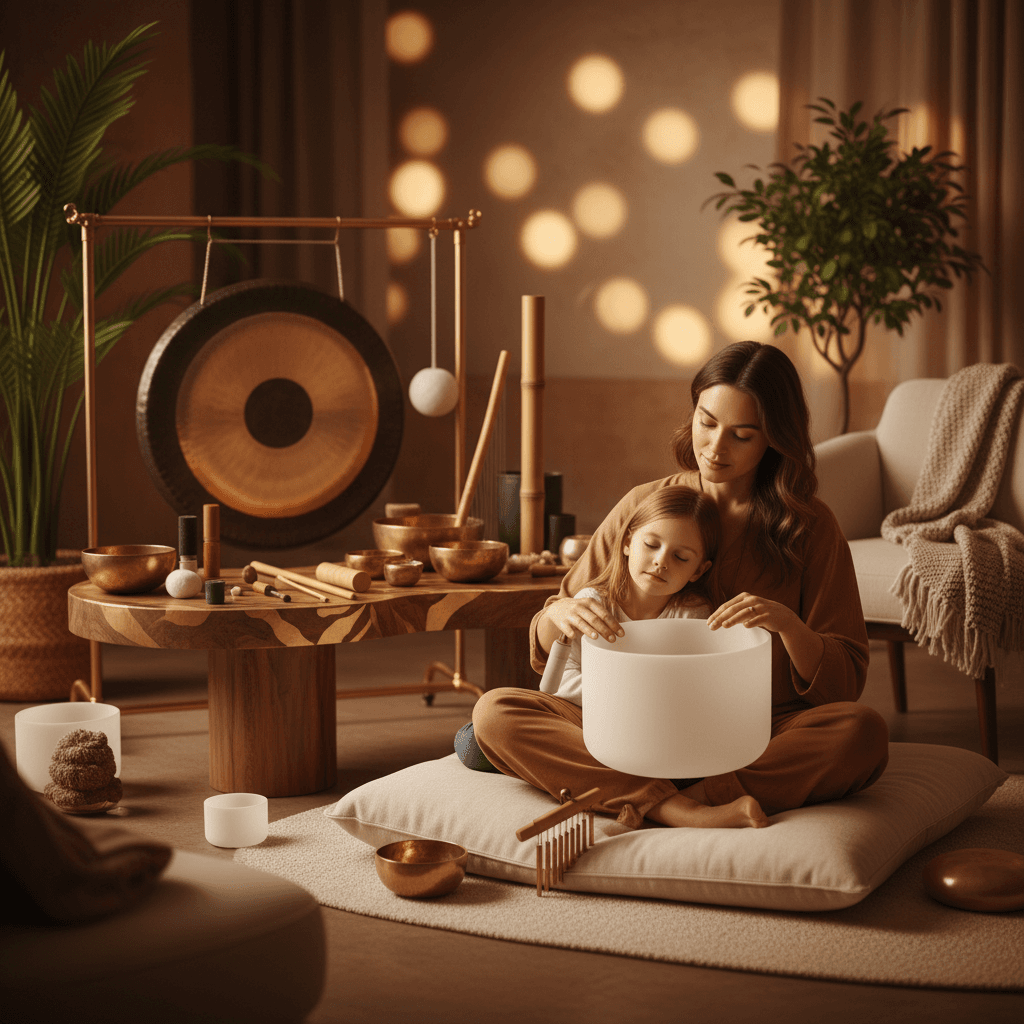
The unique Soul Art method curates immersive soundscapes designed to bring the brain into states conducive to deep relaxation and enhanced receptivity. We use a precise combination of therapeutic instruments, including deeply resonant gongs, crystal singing bowls, and delicate chimes. These instruments produce specific frequencies and overtones that encourage brainwave entrainment, guiding the listener towards alpha and theta states, which are associated with heightened awareness, creativity, and learning.
For children, or even adults interacting with children, the intentional exposure to such pure and structured sounds, mirroring the beneficial rhythmic and melodic aspects of caregiver speech, can be incredibly nurturing. While Soul Art sessions are not explicitly designed as language therapy, the creation of a consistently calm, sonically coherent environment aligns perfectly with the scientific understanding of what supports auditory processing and cognitive development. Larissa Steinbach meticulously crafts each sound journey to reduce noise pollution from the internal and external world, allowing the nervous system to recalibrate and optimize its functions. This commitment to intentional, high-quality sound indirectly supports the very foundations upon which language skills are built, by cultivating a state of focused presence and reduced cognitive load.
Our sound wellness practices provide a complementary approach to creating an environment where the brain can best integrate and respond to the complex patterns of language. By offering a sanctuary of refined sound, Soul Art helps foster an internal state of balance and clarity, which may support overall cognitive agility and receptive capacities, beneficial for individuals of all ages.
Your Next Steps
Understanding the profound influence of sound on language development empowers us to make conscious choices for our own well-being and that of our families. Integrating these insights into daily life can create a more supportive and enriching environment. Here are some actionable steps you can implement today:
- Embrace Rhythmic Communication: Actively engage in singing, reading nursery rhymes, and using rhythmic speech patterns when interacting with children. Emphasize syllables and vary your intonation, as this helps highlight word boundaries and strengthens their rhythmic processing abilities.
- Cultivate Quiet Spaces: Be mindful of your acoustic environment. Minimize chronic background noise such as constant television, unnecessary white noise, or loud music. Create dedicated periods of quiet to allow the brain to rest and process sounds more effectively, fostering clearer auditory perception.
- Practice Mindful Speech: When speaking, particularly to children, strive for clarity, varied prosody (intonation and rhythm), and a pace that allows for comprehension. Your intentional vocalizations serve as rich linguistic input, reinforcing the natural "music" of language.
- Explore Diverse Linguistic Exposure: If applicable, expose children to different languages or diverse linguistic patterns. Research suggests that navigating greater linguistic complexity can foster broader communicative strategies and flexibility, enriching their overall language acquisition journey.
- Consider Sound Wellness as a Complementary Practice: Explore how intentional sound experiences, such as those offered by Soul Art, can support a calm and receptive state of being for the whole family. While not directly aimed at language therapy, these sessions may support reduced stress and enhanced cognitive clarity, beneficial for overall wellness and the ability to process complex information.
In Summary
The intricate dance between sound and language development is a powerful testament to our innate connection with the auditory world. From the nurturing rhythms of caregiver speech to the profound impact of environmental acoustics, every sonic interaction shapes the foundation of communication. Research consistently highlights the critical role of prosody and rhythm, showing that engaging in singing, rhyming, and creating intentional soundscapes can significantly support a child's linguistic journey.
By consciously curating our acoustic environments and embracing mindful vocal interactions, we can foster a rich tapestry of sounds that nurtures not only language skills but also overall cognitive and emotional well-being. At Soul Art, Larissa Steinbach's approach to sound wellness offers a sanctuary where intentional sound fosters deep relaxation and clarity, providing a complementary pathway to support holistic development for all ages.
Bookings Coming Soon
Soul Art is still in preparation. Session details and booking will be published here after launch.
Coming Soon
Wellness Disclaimer: This article is for educational and informational purposes only. It does not constitute medical advice, diagnosis, or treatment. Soul Art Dubai provides non-medical wellness experiences focused on relaxation, stress management, and general wellbeing. Sound wellness is a complementary practice and should not replace professional medical care.
Related Articles
Moving Home: How Sound Wellness Supports Child Adaptation

Sound Wellness for Sibling Adjustment: Nurturing Family Harmony

Teen Identity & Sound: Self-Discovery for Adolescents at Soul Art Dubai