When Sound Feels Too Much: A Guide to Sensory Safety
Key Insights
Explore the science of sound sensitivity (hyperacusis) and learn how to communicate your needs to a wellness practitioner for a safe, restorative experience.
Have you ever found the gentle clinking of coins, the hum of an air conditioner, or even a loved one's chewing to be jarringly, uncomfortably loud? If so, you're not alone, and this experience is far more than just a personal preference. It's a physiological reality rooted deep within the brain's processing centers.
For many, the world of sound wellness—with its resonant gongs and singing bowls—can seem intimidating. The fear is that an experience designed for relaxation might instead become a source of sensory overload. This journal article is for you.
We will explore the fascinating science behind sound sensitivity, connecting it to everything from chronic pain to stress. More importantly, we will provide a clear, empathetic guide on how to communicate your needs to a practitioner. Understanding and articulating when "sound feels too much" is not a sign of weakness; it is the key that unlocks the profound, restorative potential of a truly personalized wellness experience.
The Science Explained: Why Your Brain Hears So Loudly
When everyday sounds feel overwhelming, it’s not a simple matter of hearing. It’s a complex interplay between your ears, your nervous system, and your brain's interpretation of sensory data. Modern research has illuminated this connection, validating what many have felt for years.
The Brain's Volume Knob: An Introduction to Hyperacusis
The clinical term for this condition is hyperacusis, a recognized auditory disorder where the brain's "auditory gain" is set too high. As described by Waterloo Audiology, this isn't a single experience but a spectrum:
- Loudness Hyperacusis: Everyday sounds are perceived as uncomfortably or painfully loud.
- Pain Hyperacusis: Specific sounds trigger physical pain or discomfort in the ears.
- Fear Hyperacusis (Phonophobia): Anxious or fearful responses are triggered by certain sounds.
- Annoyance Hyperacusis (Misophonia): An intense emotional response of irritation or disgust is prompted by sounds like chewing or breathing.
Understanding which type you experience can be the first step in managing it. It’s your brain’s volume knob, not a flaw in your character.
The Pain-Sound Connection: A Wider Sensory Amplification
Groundbreaking research from the University of Colorado Anschutz has revealed a profound link between chronic pain and sound sensitivity. A study published in Annals of Neurology found that individuals with chronic back pain process sounds more intensely because their brains are in a state of broader sensory amplification.
As senior author Dr. Yoni Ashar explains, “chronic back pain isn’t just about the back. There’s a broader sensory amplification happening in the brain, and that opens the door for treatments that can help turn that volume down.” This means the same neural pathways that amplify pain signals can also amplify auditory signals, making the world seem harsher and louder. This state of heightened alert is often called central sensitization.
Stress, Anxiety, and Your Auditory System
Your nervous system is designed to protect you. When you are stressed or anxious, your sympathetic nervous system—the "fight-or-flight" response—is activated. In this state, your brain becomes hyper-vigilant, scanning the environment for potential threats.
Everyday sounds that would normally be filtered out are instead flagged as important, potentially dangerous information. This is why, as the Cleveland Clinic notes, symptoms of hyperacusis often worsen with stress and fatigue. Research has also found that nearly half of people with hyperacusis have a co-occurring condition like anxiety or depression, creating a feedback loop where sensitivity causes stress, and stress heightens sensitivity.
The Paradox of Silence: Why Avoidance Can Worsen Symptoms
It may seem intuitive to avoid noise if you are sensitive. However, both the NHS and audiology experts warn against this. Constantly wearing earplugs or isolating yourself in silence can be counterproductive.
This overprotection can make the brain even more sensitive to sound. By depriving the auditory system of normal stimulation, you lower its tolerance. When you inevitably encounter sound again, the brain’s reaction can be even more extreme. The key is not avoidance, but rather mindful, gradual, and controlled exposure in a safe environment.
How It Works in Practice: From Theory to the Treatment Room
Understanding the science is empowering. Applying that knowledge in a real-world wellness setting is where true transformation begins. A sound bath should be a sanctuary, not a test of endurance.
What "Too Much" Feels Like
Sensory overload during a sound session is not just about volume. It can manifest in many ways, and recognizing your personal signals is crucial. You might experience:
- A sharp, stabbing pain inside your ear.
- A sudden headache or the onset of a migraine aura.
- A feeling of intense vibration inside your skull.
- A wave of anxiety, a racing heart, or a feeling of panic.
- An overwhelming sense of irritation or anger.
- The desire to physically flee the room.
These are valid signals from your nervous system. Honoring them is a fundamental act of self-care.
Why Communication is Essential (But Often Difficult)
Studies on patient-provider communication, like those from the National Academy of Medicine, show that people often feel uncomfortable telling a professional they are confused or in discomfort. In a wellness setting, you might worry about "ruining the experience" for others, appearing "difficult," or interrupting the practitioner's flow.
It is vital to reframe this mindset. A true wellness practitioner is not a performer; they are a facilitator. Their primary goal is your wellbeing. Your feedback is not an interruption—it is essential data that allows them to tailor the experience to your specific needs.
"Your comfort is not an inconvenience; it is the entire purpose of the session. Voicing your sensory needs is a courageous and necessary part of your healing journey."
By speaking up, you are not just helping yourself; you are engaging in a co-creative process with your practitioner to build a space of ultimate safety and relaxation.
The Soul Art Approach: A Dialogue of Sound and Sensation
At Soul Art, we recognize that every nervous system is unique. This understanding is woven into the very fabric of our practice, guided by founder Larissa Steinbach. Our approach is founded on communication, personalization, and respect for your sensory boundaries.
A Foundation of Trust and Openness
Every session at Soul Art begins with a conversation. Before any instruments are played, we take the time to check in with you about your current state and any known sensitivities. This isn't a formality; it's the most important part of the session. We create an environment where you feel safe and empowered to share your needs without judgment.
Personalized Frequencies and Gradual Immersion
There is no one-size-fits-all sound bath. Based on our initial conversation, we curate the experience for you. This may involve:
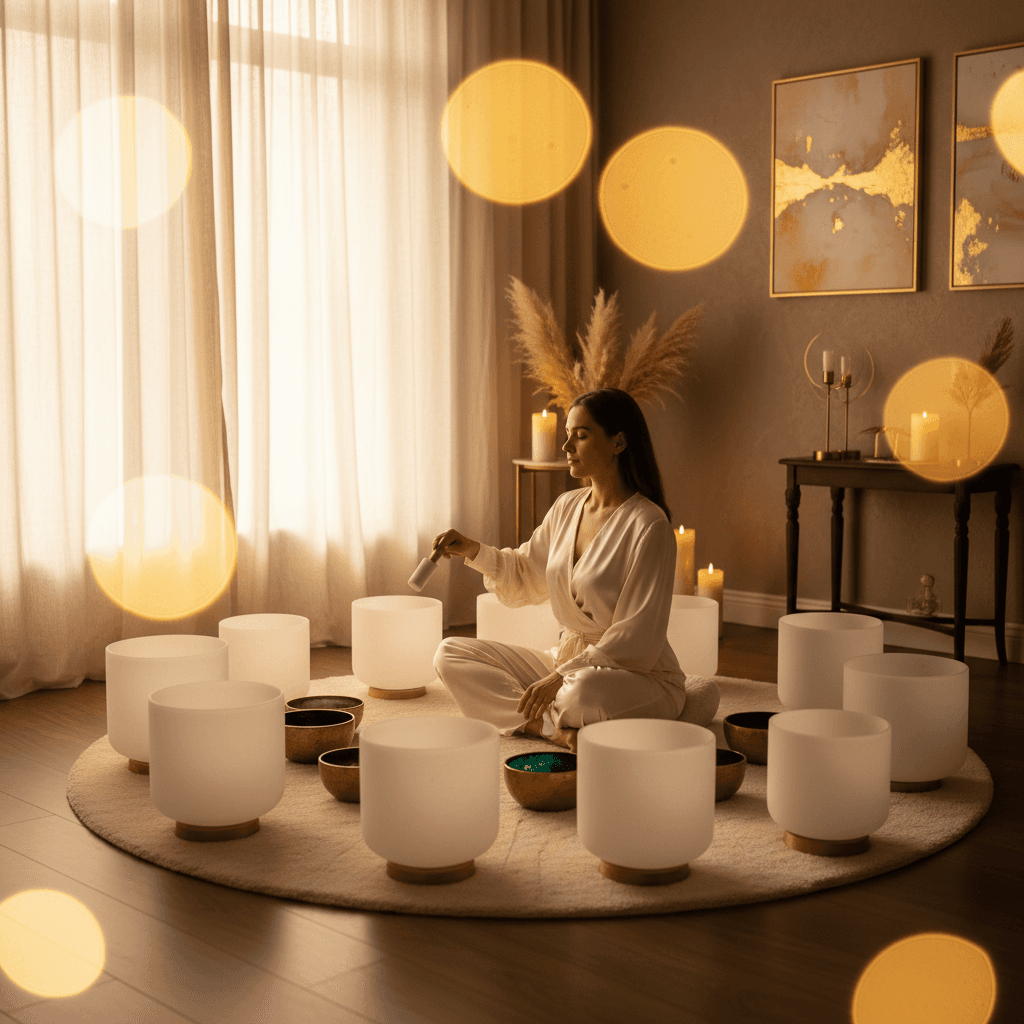
- Instrument Choice: Selecting instruments known for their softer, more gentle frequencies, such as Koshi chimes or specific crystal bowls.
- Technique & Proximity: Using softer mallets, playing instruments further away from your body, and focusing on lower volumes.
- Gradual Immersion: We never begin with a loud "gong crash." Instead, we gently introduce sound, allowing your nervous system to acclimate and co-regulate. This method respects the brain's need for safety and predictability, preventing the 'fight-or-flight' response.
This bespoke approach, championed by Larissa Steinbach, ensures that the sound serves as a gentle invitation into relaxation, not a forceful demand.
Your Next Steps: Advocating for Your Auditory Wellness
Empowerment comes from having the right tools. Here are practical, actionable steps you can take to ensure your next sound wellness experience is deeply restorative.
-
Communicate Beforehand: When booking your session, mention your sensitivity. A simple note like, "I experience some sensitivity to loud or high-pitched sounds and would appreciate a gentle session," gives your practitioner time to prepare.
-
Establish a Non-Verbal Signal: At the start of your session, agree on a simple, discreet hand signal with your practitioner—such as placing a flat palm over your heart. This allows you to communicate discomfort instantly without having to speak, maintaining your meditative state.
-
Use Simple, Clear Language: If you need to speak, you don't need a lengthy explanation. Try these gentle but effective phrases: "That sound feels a bit sharp for me right now," or "Could we bring the volume down just a little?"
-
Focus on Your Breath: If you feel a wave of sensory overwhelm, bring your focus immediately to your breath. Slow, deep exhales activate the parasympathetic nervous system (your body's 'rest-and-digest' function), which acts as a natural antidote to the 'fight-or-flight' stress response.
-
Trust the Professional Response: A skilled and compassionate practitioner, like those at Soul Art, will respond with gratitude and immediately adjust. Their positive response will reinforce that you did the right thing, building trust for future sessions.
In Summary: Your Sound, Your Sanctuary
Sound sensitivity, or hyperacusis, is a real neurophysiological phenomenon, not a personal failing. It is often linked to the body's broader stress and pain responses, where the brain's internal volume dial is turned up too high. Avoiding sound is not the answer; mindful, managed exposure in a safe and communicative environment is.
By understanding the science and arming yourself with simple communication strategies, you can transform a potentially overwhelming experience into a profoundly healing one. Your voice is the most important instrument in the room.
We invite you to Soul Art Dubai to experience a sound journey where you are heard, respected, and held in a space of complete sensory safety.
Bookings Coming Soon
Soul Art is still in preparation. Session details and booking will be published here after launch.
Coming Soon
Related Articles

Empowered Choices: The Art of Clarity Without Overexplaining

Unveiling the Power: Photosensitivity & Visuals in Sound Sessions

The Subtle Art of Slow Transitions: Guiding Your Brain to Calm