Sound for Service: Revitalizing Hospitality Workers' Well-being
Key Insights
Explore how sound wellness supports hospitality workers in noisy environments, enhancing focus, reducing stress, and improving service quality with Soul Art Dubai.
The Unseen Toll: Reclaiming Serenity for Hospitality Professionals
Imagine a bustling restaurant, the clinking of cutlery, the hum of conversations, the whir of blenders, and the background music all merging into a constant sonic tapestry. For hospitality workers, this isn't just a backdrop; it's their daily reality. A surprising 2016 Consumer Reports survey found that excessive noise is the top reason people complain about restaurants, even surpassing concerns about service or food quality. This statistic underscores a critical truth: the sound environment is paramount, not only for guest satisfaction but, crucially, for the well-being of the dedicated individuals who create these experiences.
This article delves into the profound impact of constant auditory exposure on hospitality workers, from potential health risks to diminished job satisfaction and even its ripple effect on customer experience. We will explore the science behind how sound shapes our physiology and psychology, revealing why the demanding environments of hotels, restaurants, and bars can lead to chronic stress and burnout. Most importantly, we will uncover how sound wellness practices, such as those championed by Larissa Steinbach at Soul Art Dubai, offer a powerful, complementary approach to restore balance, enhance resilience, and foster a deeper sense of well-being for those who serve us. Prepare to understand the silent strain on this vital workforce and discover empowering tools for holistic self-care.
The Science Explained: Unpacking the Sonic Burden
The hospitality industry, characterized by its vibrant energy, often masks a less visible challenge: a pervasive, high-decibel environment. This constant exposure to noise is not merely an annoyance; it is a significant factor contributing to stress, health concerns, and even impacting service quality for both employees and guests. Understanding the scientific basis of these impacts is the first step towards creating more supportive workplaces.
The Invisible Burden: Noise and its Impact on Hospitality Workers
Hospitality venues, from bustling kitchens to lively dining rooms and late-night bars, are notoriously noisy. This constant auditory input can lead to a range of potential health risks for employees. A concerning study by NIOSH (National Institute for Occupational Safety and Health) found that hearing loss affected 17 percent of all service industry workers, highlighting a serious occupational hazard often overlooked.
Beyond auditory damage, chronic noise exposure has far-reaching physiological and psychological consequences. Research from the Journal of Small Business Strategy notes that unpleasant sounds (e.g., background music, clatter of silverware and dishes, diner conversations) significantly influence customer satisfaction. For employees immersed in this environment for extended shifts, the impact is even more profound. Constant noise is associated with a wide array of long-term effects, including cardiovascular issues, reduced job satisfaction, impaired psychological well-being, communication difficulties, annoyance, and even sleep disturbances (PMC study). The National Sleep Foundation also found that exposure to noise pollution during sleep can cause cardiovascular issues, underscoring the cumulative effect of daily exposure.
Furthermore, studies indicate that industrial noise can heighten aggression among employees and diminish their overall quality of life and work performance. The U.S. Noise Control Act of 1972 and subsequent OSHA regulations mandate employers to control noise levels in the workplace. This includes noise from HVAC systems, appliances like blenders and coffee grinders, and even loud music from entertainment activities. Despite these regulations, the day-to-day reality in many hospitality settings often exceeds comfortable and safe auditory thresholds, making sound wellness a crucial complementary tool for worker health.
The Customer's Perspective: Sound, Satisfaction, and Service Recovery
The ambient soundscape of a service environment is inextricably linked to customer satisfaction. The Journal of Small Business Strategy emphasizes the centrality of the "soundscape" concept when investigating noise levels, noting that unpleasant sounds can negatively influence customer perception. This aligns with findings from Bramley (2019) and Kivela et al. (1999), who extensively documented how environmental sounds shape the dining experience.
Consumer Reports highlighted excessive noise as a leading complaint, often overshadowing service or food quality (Belluz, 2018). This indicates that the auditory environment is a direct determinant of perceived service quality. Moreover, the study reveals that a manager's proactive handling of situational sounds directly influences customer satisfaction, aligning with research by Andaleeb & Conway (2006) which found that the responsiveness of frontline employees greatly impacts customer perception.
While some scholars support the "service recovery paradox" – where a successful recovery after a failure can enhance satisfaction (Kaur & Singh, 2020) – others argue that delivering successful service the first time is paramount (Hazarika & Dhaliwal, 2019). Dissatisfied customers may not always grant a second chance. Therefore, supporting hospitality workers with tools to manage their stress and enhance their focus through practices like sound wellness can indirectly elevate the initial service experience, making proactive well-being a strategic advantage.
The Physiological Response to Auditory Stress
Constant exposure to noise triggers a fundamental physiological response in the human body: the fight-or-flight mechanism. When the brain perceives persistent loud noises, even if not immediately threatening, it interprets them as stressors. This activates the sympathetic nervous system, leading to the release of stress hormones such as cortisol and adrenaline.
While useful in acute situations, chronic activation of this stress response can have detrimental effects. Over time, elevated cortisol levels may support increased anxiety, fatigue, headaches, digestive issues, and a compromised immune system. For hospitality workers, who often operate under high-pressure conditions and long hours, this physiological state can become chronic, leading to burnout and reduced overall well-being. The sustained physiological tension can also impair cognitive functions, impacting memory, decision-making, and the ability to maintain composure during challenging customer interactions.
By understanding these intricate connections between sound, stress physiology, and workplace performance, we can appreciate the profound potential of interventions like sound wellness. These practices may support the body's natural ability to return to a state of calm, helping to regulate the nervous system and mitigate the long-term effects of auditory stress.
How It Works in Practice: From Chaos to Calm
The theoretical understanding of noise's impact on hospitality workers paints a clear picture: these professionals operate in environments that, while dynamic, are often energetically depleting. From the moment they clock in, they are exposed to a symphony of sounds that can keep their nervous systems in a constant state of alert. This continuous demand for attentiveness, coupled with the need for cultural competency to interpret diverse guest cues (Betancourt et al., 2003) and profound empathy (Parasuraman, Zeithaml, & Berry, 1985), makes the job both mentally and emotionally taxing.
Imagine a server navigating a crowded room, holding multiple orders in their head, while simultaneously responding to a guest's request for an extra napkin, all against a backdrop of clattering dishes and boisterous laughter. This scenario requires immense focus, emotional regulation, and a capacity to remain outwardly calm and professional, even when internal resources are stretched thin. Traditional stress management advice often falls short for individuals whose job demands such an immersive, constant level of engagement.
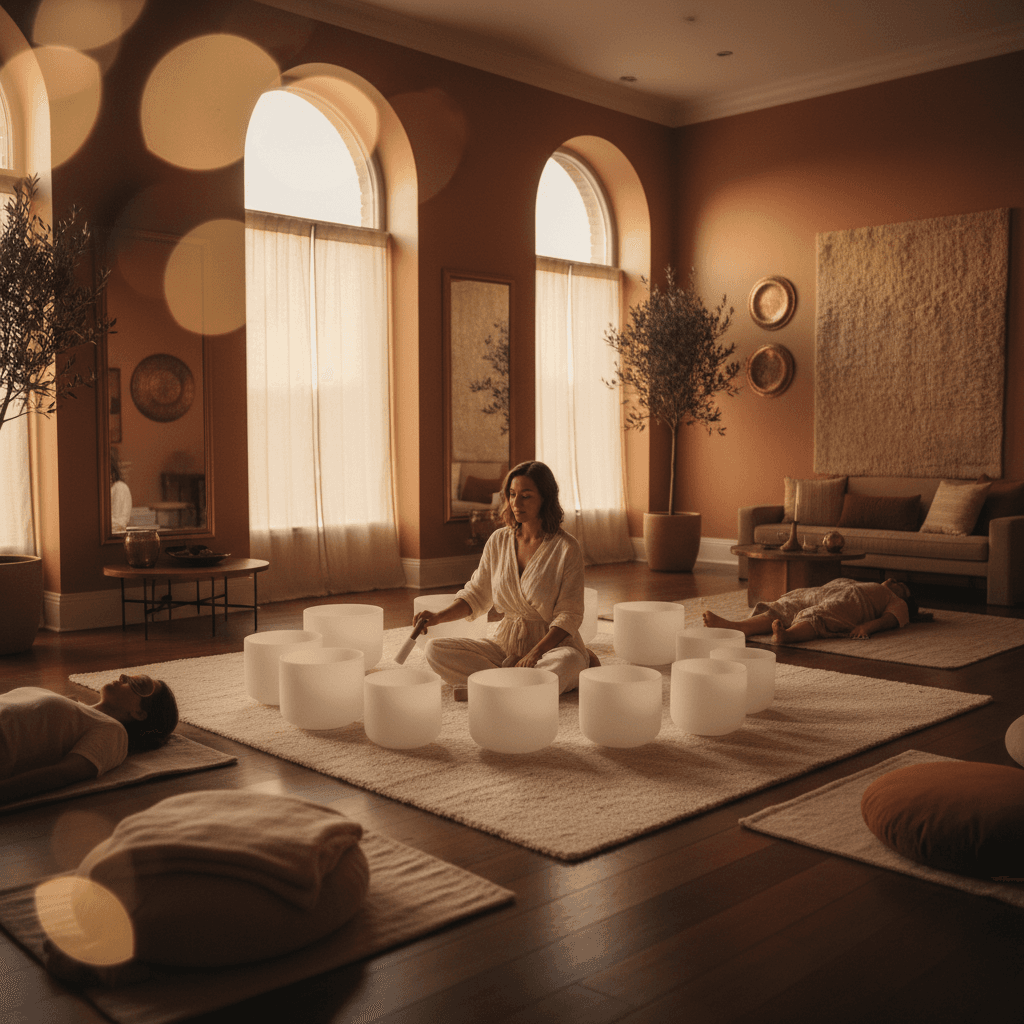
This is where sound wellness practices offer a transformative shift. By deliberately introducing harmonious, therapeutic frequencies, these practices provide a stark contrast to the chaotic auditory environment of the workplace. During a sound wellness session, the body and mind are invited to release tension and actively down-regulate the nervous system. The gentle vibrations of specialized instruments, such as singing bowls or gongs, may support the brain in shifting from a dominant beta-wave state (associated with alertness and activity) to alpha or theta waves (associated with relaxation, meditation, and creativity).
"In the heart of Dubai's vibrant hospitality scene, a moment of profound quiet is not just a luxury; it's a vital reset for the soul of service."
Clients often describe an immediate sense of relief, a palpable unwinding of physical and mental tension. The experience is deeply sensory: the body feels lighter, thoughts become clearer, and a sense of calm permeates their being. This deliberate immersion in a harmonically rich soundscape offers a unique form of self-care, allowing hospitality professionals to truly disengage from the demands of their day. Over time, consistent engagement with sound wellness may support improved sleep quality, enhanced emotional resilience, and a greater capacity for empathy – all critical attributes for delivering exceptional service and navigating the inherent challenges of their roles.
The Soul Art Approach: Larissa Steinbach's Vision for Hospitality Wellness
At Soul Art Dubai, Larissa Steinbach, a visionary in the realm of sound wellness, has cultivated a unique approach tailored to address the specific needs of high-stress professions, particularly within the hospitality sector. Recognizing the silent burden carried by these dedicated individuals, Larissa's methodology is rooted in a deep understanding of acoustics, neuroscience, and the subtle energies of the human body. Her goal is not just relaxation, but a profound restoration that equips hospitality workers with enhanced resilience and well-being.
Larissa Steinbach's Vision for Hospitality Wellness
Larissa Steinbach's philosophy at Soul Art centers on creating a sanctuary of sound where the pervasive stressors of daily life, particularly those experienced in demanding service roles, can be gently dissolved. She understands that for hospitality workers, whose sensory systems are constantly overloaded, the need for intentional downtime and therapeutic quiet is paramount. Her sessions are designed to counteract the effects of noise pollution and chronic stress, offering a powerful antidote to the fast-paced, high-pressure environments they navigate.
The Soul Art method integrates a range of carefully selected instruments, each chosen for its unique vibrational qualities and its potential to induce deep states of relaxation. These include ancient Himalayan singing bowls, which produce rich, sustained tones that resonate deeply within the body; crystal singing bowls, known for their pure, resonant frequencies; and gongs, whose powerful vibrations can facilitate profound energetic shifts. Additionally, chimes, tuning forks, and various percussion instruments are used to create a multi-layered soundscape that invites the body and mind to surrender to the present moment.
What makes the Soul Art method particularly unique is Larissa's intuitive ability to curate specific sound journeys. She expertly blends these instruments, guiding participants into states where the sympathetic nervous system (fight-or-flight) can calm, and the parasympathetic nervous system (rest-and-digest) can activate. This activation is key to promoting deep rest, fostering cellular regeneration, and encouraging the body's natural healing processes. Participants often report leaving sessions feeling not only deeply relaxed but also more centered, mentally clear, and emotionally balanced – qualities that directly translate into improved focus and presence in their professional roles.
Larissa's work at Soul Art Dubai is more than just a session; it's an invitation to rediscover inner peace and cultivate a sustainable approach to well-being in a challenging industry. She champions sound wellness as an essential self-care practice for hospitality workers, providing them with a vital tool to mitigate stress, enhance their overall health, and continue offering exceptional service with renewed energy and genuine joy.
Your Next Steps: Embracing Sound for Service Longevity
For hospitality workers, the path to sustained well-being amidst demanding environments requires proactive and intentional self-care. Recognizing the cumulative impact of noise and stress is the first step; integrating effective strategies is the next. Sound wellness offers a unique and powerful pathway to restore your inner balance and enhance your professional longevity.
Here are practical steps you can take today to begin your journey towards greater serenity:
- Conscious Breathing: Throughout your shift, take short, intentional pauses for deep, diaphragmatic breathing. Inhale slowly through your nose, feeling your belly expand, hold briefly, then exhale even more slowly through your mouth. This simple practice may support nervous system regulation and help you manage acute stress.
- Mindful Micro-Breaks: Whenever possible, seek out moments of quiet. Step away from the immediate source of noise – perhaps a brief visit to a quiet storage room or an outdoor area – to give your ears and mind a temporary reprieve.
- Curated Auditory Environments: Outside of work, actively choose soothing sounds. Instead of more background noise, try listening to calming music, nature sounds, or guided meditations that incorporate therapeutic frequencies. This may support a healthier "auditory diet."
- Explore Sound Wellness: Consider exploring formal sound wellness sessions. Experiences like those offered by Larissa Steinbach at Soul Art Dubai are specifically designed to counteract the effects of chronic noise exposure, promoting deep relaxation and mental clarity.
- Advocate for Auditory Health: Speak with your management about the importance of noise reduction strategies in the workplace, such as acoustic paneling or designated quiet zones, and explore potential wellness initiatives that include sound practices.
In Summary: A Harmonic Path to Resilience
The hospitality industry, while vibrant and rewarding, places unique demands on its workforce, often exposing them to chronic noise and high-stress environments. Scientific studies clearly demonstrate that this constant auditory exposure can lead to significant health risks, including hearing loss, cardiovascular issues, and diminished well-being for workers, alongside impacting customer satisfaction. Recognizing these challenges is crucial for fostering a sustainable and thriving service sector.
Sound wellness offers a profound, complementary solution, providing a much-needed counterbalance to the sonic overload of daily work. Practices like those expertly guided by Larissa Steinbach at Soul Art Dubai may support the nervous system in returning to a state of calm, mitigating the physiological effects of stress, and enhancing mental clarity and emotional resilience. By embracing sound for self-care, hospitality professionals can not only safeguard their health but also elevate their capacity to deliver exceptional service with renewed energy and authentic presence. It's time to invest in the well-being of those who serve us, inviting them to experience the transformative power of restorative sound.
Bookings Coming Soon
Soul Art is still in preparation. Session details and booking will be published here after launch.
Coming Soon
Wellness Disclaimer: This article is for educational and informational purposes only. It does not constitute medical advice, diagnosis, or treatment. Soul Art Dubai provides non-medical wellness experiences focused on relaxation, stress management, and general wellbeing. Sound wellness is a complementary practice and should not replace professional medical care.
Related Articles
Chefs: Mastering Kitchen Pressure Through Sound Wellness
Sound for Death Workers: Managing Stress for Funeral Directors

Sound Wellness: Respite for Retail's Customer-Facing Heroes