fMRI: Visualizing Brain Shifts During Sound Wellness Journeys
Key Insights
Explore how fMRI research illuminates the brain's profound changes during sound healing, validating ancient practices at Soul Art Dubai.
Imagine a technology that allows us to peer inside the living brain, watching as its intricate networks respond to the subtle vibrations of a singing bowl or the resonant thrum of a gong. This isn't science fiction; it's the reality of modern neuroimaging, specifically functional magnetic resonance imaging (fMRI). For centuries, cultures across the globe have intuitively understood the profound effects of sound on human well-being. From Australian Aboriginal didgeridoo ceremonies spanning over 40,000 years to the ancient Tibetan singing bowls used in spiritual rituals, sound has been a conduit for healing and transformation.
Today, cutting-edge science is catching up to this ancient wisdom, providing tangible proof of what many have long felt. Institutions like UCLA, Stanford University, and the University of California San Diego are leveraging advanced tools to explore how sound healing truly alters our brains and bodies. At Soul Art, Dubai's premier sound wellness studio founded by Larissa Steinbach, we are deeply inspired by this convergence of ancient practice and modern scientific validation. This article delves into the fascinating world of fMRI research, offering a glimpse into the measurable shifts occurring in the brain during sound wellness sessions and how these insights inform our unique approach.
The Science Explained: Unveiling the Brain's Response to Sound
The human brain is a marvel of complexity, constantly processing information and adapting to its environment. Sound, in particular, is a powerful modulator of brain activity, capable of shifting our mental and emotional states. Recent breakthroughs in neuroimaging technology, especially fMRI, are providing unprecedented insights into how this transformation occurs during sound wellness practices.
Unlike many wellness trends built solely on anecdotal evidence, sound healing is increasingly substantiated by peer-reviewed research. These studies utilize sophisticated neuroimaging technologies to map the intricate dance of neural activity. They reveal the measurable changes that unfold within our brains and bodies when immersed in therapeutic soundscapes.
Understanding Functional Magnetic Resonance Imaging (fMRI)
Functional Magnetic Resonance Imaging (fMRI) is a non-invasive neuroimaging technique that measures brain activity by detecting changes associated with blood flow. When an area of the brain is more active, it demands more oxygenated blood. The fMRI machine detects these changes in blood oxygenation level-dependent (BOLD) signals. This allows researchers to create dynamic maps of brain activity, showing which regions are "lighting up" in real-time response to stimuli, such as sound.
Early contributions from PET and fMRI studies, for example by Benson et al. (1996) and Binder et al. (1997), highlighted the distributed and parallel nature of speech processing in the human brain. This challenged older models that suggested single streams of processing. Similarly, fMRI now allows us to visualize the complex, bilateral patterns of activation in response to various auditory stimuli. This high-resolution imaging provides a powerful lens through which to observe the brain’s intricate responses to sound frequencies.
Brainwave Transformations: From Agitation to Calm
One of the most profound effects of sound healing, as revealed by EEG technology, is its ability to rapidly transform brainwave patterns. Within minutes of exposure to the frequencies produced by instruments like singing bowls and gongs, the brain can shift from agitated wave patterns to exceptionally calm and restorative forms. While EEG directly measures electrical activity, fMRI can visualize the locations in the brain where these shifts in activity are occurring by mapping corresponding blood flow changes.
Different brainwave frequencies correlate with distinct mental states:
-
Delta Waves (0.5-4 Hz): These low-frequency waves are characteristic of the deepest states of relaxation and healing, often associated with profound restoration similar to deep sleep. EEG studies on singing bowls have indeed observed distinct changes in delta brain activity, suggesting their role in promoting such deep rest. fMRI research, while indirectly measuring neural activity, can indicate the brain regions involved in facilitating these states.
-
Theta Waves (4-8 Hz): Associated with creativity, deep meditation, and emotional processing, theta waves represent a state between waking and sleeping. Research suggests that during sound wellness sessions, the brain can shift from normal or agitated states (characterized by higher-frequency beta waves) into these deeply relaxed theta states, fostering insight and emotional release.
-
Alpha Waves (8-14 Hz): These waves are linked to calm alertness, often experienced during relaxed focus or light meditation. Studies indicate that low-frequency sounds can increase alpha wave production, correlating with enhanced relaxation and a boost in creative thinking. fMRI can help pinpoint the cortical areas where these alpha wave-associated activities are increasing.
These brainwave changes are not merely subjective experiences; they are measurable biological phenomena. The functional organization of the auditory cortex is well understood, making it an ideal candidate for fMRI studies. For example, fMRI has been used to decode "what" (which vowel) and "whom" (which speaker) was speaking, based on BOLD response patterns in the superior temporal gyrus and superior temporal sulcus (Formisano et al., 2008). This exemplifies fMRI's power to reveal how specific conceptualizations of sound are encoded in the brain.
The Impact of Sound Level and Brain Plasticity
Further fMRI research has illuminated the intricate relationship between sound characteristics and brain activation. Studies have shown an increased fMRI activation with increasing broadband noise levels across every major stage of auditory processing—brainstem, thalamus, and cortex (Logothetis et al., 2001). This demonstrates that fMRI can effectively sum neural activity over spatial scales of millimeters, reflecting changes in neuronal populations. The volume of the brain-activated area has been confirmed to be positively correlated with the stimulus level.
Moreover, the brain's inherent plasticity—its ability to adapt and reorganize neural networks—is a critical factor in sound wellness. Electroencephalography (EEG) evidence suggests that music and sound can induce highly specific and complex cortical phase synchronization. For instance, low-frequency (bass) sounds enhance selective neural locking to the beat, and binaural beats (when slightly different frequencies are played in each ear) can increase theta rhythm. Dr. Yune S. Lee at UT Dallas investigates how rhythm helps focus the brain's abilities to process language, noting a connection between rhythm, cognition, and sensorimotor activities. His research aims to use fMRI to track blood oxygen-level dependent (BOLD) changes in the brain in response to binaural beats, offering concrete neurological evidence for the beneficial effects of sound therapy.
Even cutting-edge research is exploring direct brain circuit activation using sound. A new technique, led by scientists at NYU Langone Health, uses focused ultrasound waves combined with holograms to visualize brain targets directly activated by sound in living animals. This revolutionary approach lays groundwork for potentially treating neurological and mental health disorders by precisely activating brain regions with sound from outside the body. Such advanced methods underscore the incredible potential of sound as a therapeutic tool.
How It Works in Practice: The Immersive Sound Journey
Translating these scientific insights into a tangible, transformative experience is at the heart of sound wellness. When you step into a sound bath session, you are entering an environment carefully curated to facilitate the very brainwave shifts and neurological responses discussed by research. It's a journey from the often-agitated state of daily life (beta waves) to profound relaxation and inner calm (alpha, theta, and delta waves).
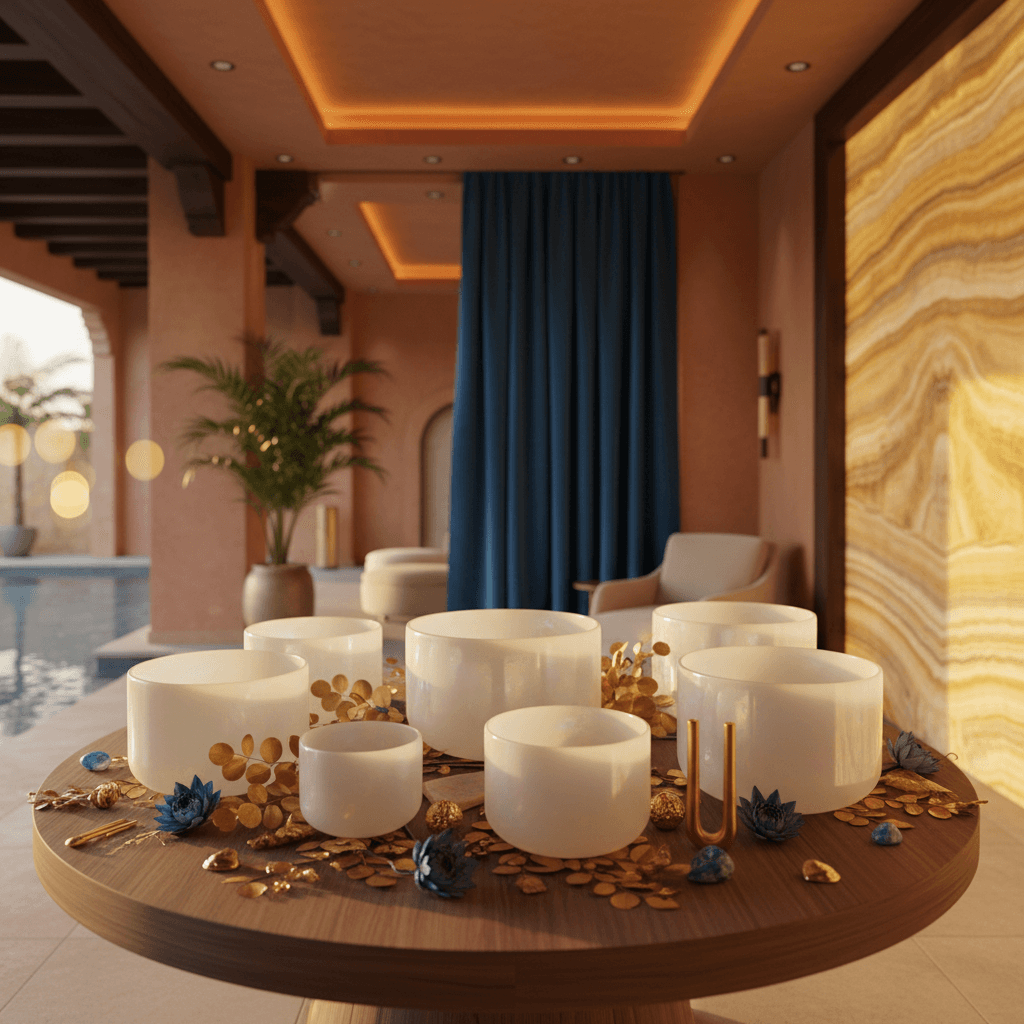
The experience begins with gentle guidance, inviting you to lie down comfortably and prepare to receive. As the session unfolds, skilled practitioners introduce a symphony of therapeutic instruments. The rich, resonant tones of Himalayan and crystal singing bowls, the deep, enveloping vibrations of gongs, and other resonant tools fill the space. These aren't just sounds; they are carefully chosen frequencies and harmonic structures designed to entrain your brainwaves, guiding them towards deeper states of relaxation.
Clients often describe a profound sense of peace washing over them. The vibrations permeate the body, creating a subtle yet powerful internal massage that helps release tension. As the brain shifts from its usual busy patterns, thoughts begin to quiet, and a space for introspection and emotional processing opens up. Many people report feeling deeply rested, as if they've had hours of restorative sleep, while others experience heightened clarity, creativity, or emotional release. The immersive nature of the sound, often described as a "sonic cocoon," allows the nervous system to downregulate, moving away from a stress response and into a state of rest and repair. This is where the measurable physiological changes, as observed through fMRI, translate into a deeply felt, holistic experience of well-being.
"The true magic of sound wellness lies in its ability to not just soothe the ears, but to profoundly recalibrate the entire nervous system, inviting the brain to dance into states of harmony and healing."
The beauty of this practice is its simplicity and accessibility. There's no need to "do" anything other than simply be present and allow the sound to work its gentle magic. This passive engagement is key, enabling the brain to naturally follow the sonic guidance, much like a boat gently carried by a river's current. The practice effectively bypasses the analytical mind, allowing the body's innate wisdom to initiate its own restorative processes.
The Soul Art Approach: Larissa Steinbach's Vision for Sound Wellness
At Soul Art, Larissa Steinbach, our esteemed founder, has meticulously crafted an approach that harmonizes ancient wisdom with the latest scientific understanding of sound's impact on the brain. Our philosophy is rooted in providing a sophisticated yet accessible pathway to profound well-being, leveraging the insights from fMRI and EEG research to optimize every session. Larissa's vision for Soul Art transcends mere relaxation; it aims to facilitate genuine neuro-physiological shifts that support sustained calm, mental clarity, and emotional balance for our discerning clientele in Dubai.
Larissa's method is distinct in its careful curation of the sound experience. We utilize a diverse array of high-quality, authentic instruments, including finely tuned crystal singing bowls, resonant Himalayan bowls, powerful gongs, and other vibrational tools. Each instrument is selected not only for its beautiful tonal quality but also for its specific frequency range and its capacity to induce particular brainwave states. For instance, the deep, sustained tones might encourage delta and theta wave activity, guiding participants into states akin to deep meditation or restorative sleep.
Our sessions at Soul Art are more than just a collection of sounds; they are intelligently designed sonic journeys. Larissa and her team understand that different sound levels and specific frequencies can elicit varied responses in the brain's auditory processing centers, as revealed by fMRI studies on sound level dependence. Therefore, the progression of sounds, the interplay of harmonies, and the dynamic variations in intensity are all carefully orchestrated to create a deeply immersive and transformative experience. This intentional design encourages the brain to naturally shift its activity patterns, promoting enhanced coherence in areas like the prefrontal cortex, which is associated with cognitive function and emotional regulation.
We pride ourselves on offering a sanctuary where clients can truly disconnect from the demands of their busy lives and reconnect with their inner equilibrium. Larissa Steinbach believes that by providing a scientifically informed yet deeply intuitive sound environment, Soul Art empowers individuals to harness their brain's innate capacity for self-regulation and healing. Each session is a testament to the elegant synergy between timeless practices and modern neurological validation, offering a unique opportunity for holistic rejuvenation and profound inner peace.
Your Next Steps: Embracing Sound for Enhanced Well-being
The growing body of fMRI research provides compelling evidence that sound wellness is far more than just a fleeting trend; it's a powerful tool for cultivating profound states of relaxation and supporting overall neurological health. Integrating sound practices into your routine can be a gentle yet effective way to manage stress, enhance creativity, and improve your cognitive function.
Here are a few actionable steps you can take today to begin your journey with sound wellness:
- Explore Guided Sound Meditations: Start with accessible online resources or apps that offer guided sound meditations using singing bowls, chimes, or binaural beats. Even 10-15 minutes daily may support a shift towards calmer brainwave states.
- Create a Personal Sound Sanctuary: Designate a quiet corner in your home where you can comfortably listen to soothing sounds. This could involve ambient music, nature sounds, or soft instrumentals that resonate with you.
- Be Mindful of Your Auditory Environment: Pay attention to the sounds you encounter throughout your day. Consciously reduce exposure to harsh or agitating noises, and seek out peaceful sounds that uplift and calm your nervous system. Remember, fMRI studies even show how acoustic noise during scans can alter brain activation patterns, emphasizing the impact of our auditory environment.
- Learn About Brainwave Entrainment: Deepen your understanding of how different frequencies can influence your brainwaves. Explore resources on alpha, theta, and delta waves to appreciate the specific benefits each state offers for relaxation and focus.
- Experience a Professional Sound Wellness Session: The most impactful way to truly understand the benefits is to experience it firsthand. Consider booking a session at a reputable studio like Soul Art, where experienced practitioners can guide you through a deeply immersive and restorative sound journey.
Soul Art is still in preparation. Session details and booking will be published here after launch.
Bookings Coming Soon
Soul Art is still in preparation. Session details and booking will be published here after launch.
Coming Soon
In Summary: Bridging Ancient Wisdom and Modern Science
The journey from ancient healing rituals to sophisticated fMRI scans reveals a remarkable truth: the profound impact of sound on the human brain is not merely anecdotal, but a measurable biological phenomenon. Neuroimaging research provides compelling visual evidence of how sound healing can shift brainwave patterns, activate key auditory processing centers, and promote states of deep relaxation and cognitive coherence. These findings validate millennia of intuitive wisdom, showing us exactly how instruments like singing bowls and gongs guide the brain into restorative states.
At Soul Art, under the guidance of Larissa Steinbach, we are dedicated to offering sound wellness experiences that are deeply rooted in this scientific understanding. By harmonizing traditional practices with modern insights, we provide a unique sanctuary where you can harness the power of sound to support your overall well-being, manage stress, and unlock inner calm. We invite you to explore the transformative potential of sound and visualize a calmer, more focused you.
Wellness Disclaimer: This article is for educational and informational purposes only. It does not constitute medical advice, diagnosis, or treatment. Soul Art Dubai provides non-medical wellness experiences focused on relaxation, stress management, and general wellbeing. Sound wellness is a complementary practice and should not replace professional medical care.
Related Articles

Cluster Headaches: Unveiling Pain and the Promise of Frequencies in Wellness

Epilepsy & Sound: Safety, Serenity, and Emerging Wellness Paths
Mastering Focus: Analytical Listening & Brain Engagement at Soul Art