Soundscapes of Resilience: How Sound Wellness Supports Firefighters in Trauma Recovery

Key Insights
Explore how sound wellness offers critical support for firefighters navigating trauma and stress, enhancing mental fortitude and promoting deep recovery. Discover Soul Art's unique approach.
Compelling Introduction
Imagine a sound so deeply ingrained in your professional life that merely hearing it triggers a racing heart, a jolt of anxiety, or a flashback to a harrowing scene. For nearly half of all firefighters, that sound is the dispatch bell. A recent study from Hallym University Hangang Sacred Heart Hospital revealed that 45% of firefighters experience trauma from this ubiquitous sound, highlighting a profound and often unseen toll on these courageous individuals.
These everyday heroes face an almost unimaginable gauntlet of physical and psychological stressors, from intense noise exposure to witnessing critical incidents daily. While traditional treatments are crucial, a growing body of evidence suggests that complementary wellness practices, particularly sound, offer a unique pathway to trauma recovery and nervous system regulation. This article delves into the profound impact of occupational stress on firefighters and explores how the therapeutic power of sound wellness, championed by Larissa Steinbach at Soul Art in Dubai, may support their journey towards resilience and post-traumatic growth.
We will uncover the science behind how sound interacts with our physiology, examine practical applications, and understand how a dedicated approach like Soul Art’s can create a much-needed sanctuary for those who protect us all. Ultimately, we aim to demonstrate why incorporating sound into a holistic wellness strategy is not just beneficial, but potentially transformative for firefighters.
The Science Explained
The Firefighter's Burden: A Symphony of Stressors
The life of a firefighter is defined by a unique and intense array of occupational stressors, far beyond the visible dangers of flames and collapsing structures. From the moment they begin their shift, firefighters are immersed in environments that constantly challenge their physical and psychological resilience. This relentless exposure to high-stress situations can manifest in various forms of trauma, often exacerbated by a prevailing culture of stoicism and a stigma surrounding mental health support.
One significant yet often overlooked aspect is pervasive noise exposure. Firefighters are repeatedly subjected to brief but intense sounds throughout their shifts, including alarms, blaring sirens, radios, and powerful engines and water hoses. Research from the University of Miami indicates that the cumulative noise exposure experienced by firefighters during a 24-hour service is significantly higher and persists for longer durations compared to non-firefighters. This intense acoustic environment not only contributes to the risk of delayed-onset hearing loss, but also keeps the nervous system in a state of heightened alert, making relaxation and recovery challenging.
Beyond the auditory assault, the psychological toll is immense. The dispatch bell itself becomes a potent conditioned stimulus, triggering a fight-or-flight response in nearly half of firefighters, often without them having received any prior trauma treatment. Keywords related to PTSD mentioned by surveyed firefighters include cardiopulmonary resuscitation (CPR), the dispatch bell sound, accident scenes, memories of traumatic events, and injuries. Firefighters are constantly prepared for trauma at any moment, with strict time standards – 80 seconds to suit up and four minutes to arrive at a scene – leaving little to no time for psychological preparation or processing. This chronic state of readiness, combined with exposure to critical incidents, places them at a high risk for developing stress-related disorders such as PTSD, depression, anxiety, and even somatic symptoms.
The Brain's Response to Trauma and Sound
When exposed to chronic stress and trauma, the human nervous system can become dysregulated, often leaning heavily into its sympathetic branch – the "fight, flight, or freeze" response. This results in hypervigilance, difficulty relaxing, sleep disturbances, and a persistent state of internal alarm. The brain's amygdala, responsible for processing emotions and fear, may become overactive, while the prefrontal cortex, which governs rational thought and emotional regulation, might show reduced activity. For firefighters, this often means that their baseline state is one of heightened arousal, making it incredibly difficult to unwind even when off duty.
Sound, however, possesses a unique ability to directly influence brainwave states and nervous system activity, offering a powerful avenue for regulation. Groundbreaking work by Galina Mindlin, MD, PhD, at St. Luke’s Roosevelt Hospital, led to the development of Brain Music Therapy. This approach uses an individual's "brain music" – personalized sound frequencies derived from their own brainwave patterns – to help cope with stress, improve sleep, and enhance daytime function. A randomized controlled study on first responders demonstrated that listening to these personalized brain music files led to significant improvements in sleep quality, insomnia, mood, and daytime function. This suggests that specific auditory stimuli can communicate directly with the brain, supporting its return to more balanced states.
Sound wellness practices, utilizing instruments like crystal singing bowls, gongs, and chimes, leverage the principle of resonance and entrainment. These instruments produce specific frequencies and harmonic overtones that encourage the brain to shift from faster, more active beta waves (associated with alertness and stress) to slower alpha and theta waves (linked to deep relaxation, meditation, and restorative sleep). This shift may help to calm the amygdala, activate the parasympathetic nervous system (the "rest and digest" response), and create a safe physiological space for emotional processing. Unlike cognitive therapies that might require direct confrontation with traumatic memories, sound wellness can gently facilitate release and relaxation, bypassing some of the cognitive resistance often associated with trauma recovery.
The Power of Post-Traumatic Growth
While much research rightly focuses on Post-Traumatic Stress Disorder (PTSD) in firefighters, it is equally important to acknowledge the potential for Post-Traumatic Growth (PTG). PTG refers to the positive psychological changes experienced as a result of struggling with highly challenging, traumatic life circumstances. These changes can include a deeper appreciation for life, stronger relationships, a new sense of personal strength, spiritual development, and new possibilities in life.
For firefighters, who are regularly exposed to traumatic events, fostering PTG is crucial for long-term well-being and career longevity. Research indicates that occupational support plays a vital role in helping workers cope with work-related crises and promoting PTG. While qualitative studies specifically exploring PTG among firefighters are rare, the existing literature emphasizes the need for programs that move beyond just addressing symptoms to cultivating resilience and growth.
Sound wellness may support PTG by providing a restorative environment where individuals can safely process their experiences, reduce hypervigilance, and reconnect with their inner resources. By inducing states of deep relaxation and altered consciousness, sound can facilitate introspection and emotional release, paving the way for new perspectives and a strengthened sense of self. It can act as a complementary approach, working alongside other support systems to help firefighters transform their experiences into profound personal development.
How It Works in Practice
Engaging in a sound wellness session offers a deeply immersive and sensory experience that connects the scientific principles directly to personal well-being. Far from a passive activity, it is an active engagement of your auditory system and your entire energetic field. As you settle into a comfortable position, the air fills with a tapestry of resonant tones and gentle vibrations, carefully curated to guide your mind and body into a state of profound relaxation.
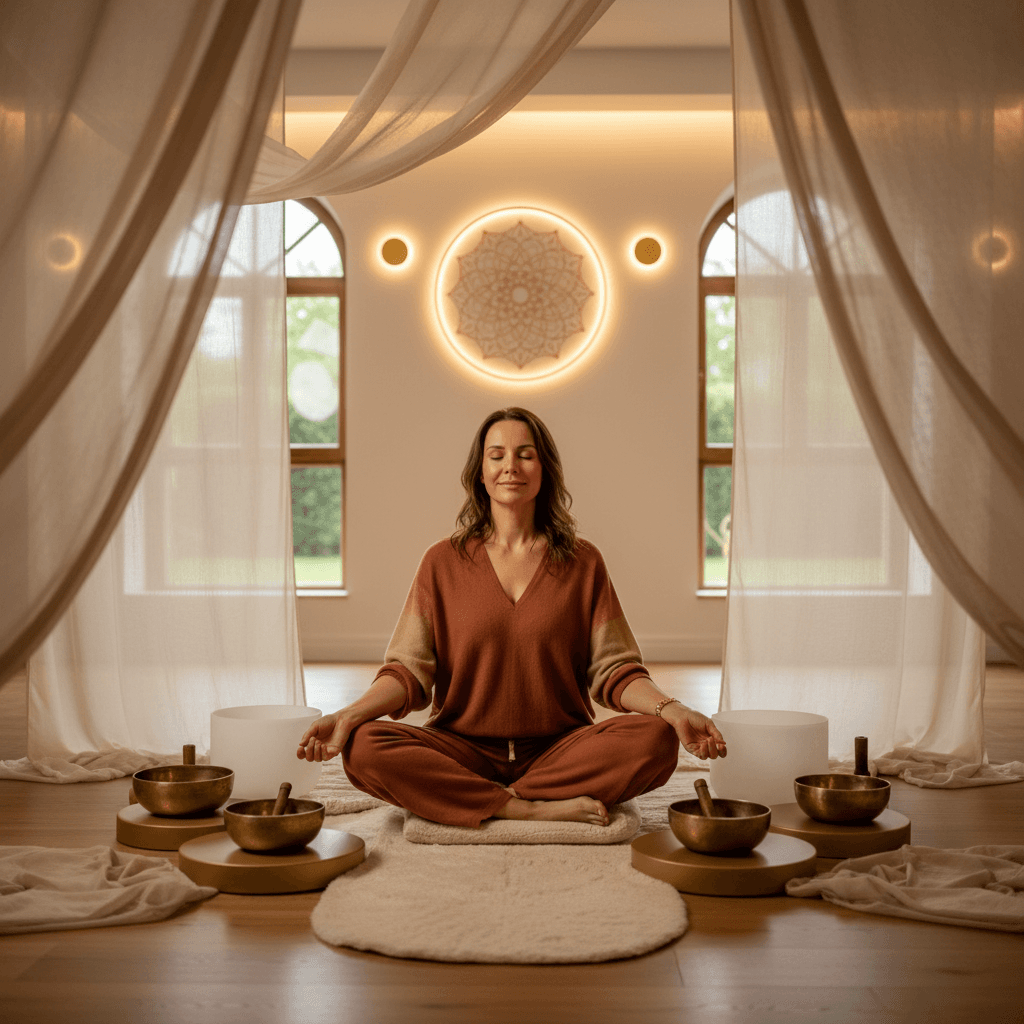
The experience often begins with sounds that are grounding and rhythmic, encouraging the nervous system to gently release tension. Instruments such as crystal singing bowls produce pure, sustained tones that resonate not only through the ears but are also felt as subtle vibrations within the body. These vibrations interact with your cellular structure, potentially stimulating circulation and promoting cellular relaxation, almost like an internal massage. As the session progresses, the soundscape may evolve, incorporating instruments like gongs, chimes, and tuning forks, each with unique frequencies designed to elicit specific responses.
Clients often report a tangible shift in their physiological state. Heart rate naturally slows, breathing deepens, and muscular tension begins to dissipate. The constant mental chatter that often accompanies stress and trauma starts to quiet, making way for a sense of calm and mental clarity. For firefighters accustomed to high-alert states, this can be a revolutionary experience – a rare opportunity to fully disengage from the demands of their profession and allow their nervous system to truly rest and recalibrate. This non-invasive approach offers a gentle yet powerful way to address the stored tension and emotional residue that accumulates from repeated exposure to traumatic events. It provides a space where the body's innate healing mechanisms may be activated, supporting a return to balance and peace.
The Soul Art Approach
At Soul Art in Dubai, Larissa Steinbach has meticulously crafted a sound wellness experience that transcends mere relaxation, offering a sophisticated and scientifically-informed pathway to deep nervous system regulation and trauma recovery. Her approach is rooted in the understanding that true well-being comes from harmonizing mind, body, and spirit, making it an ideal complementary practice for the unique challenges faced by first responders.
What makes the Soul Art method truly unique is its thoughtful integration of cutting-edge scientific understanding with the intuitive wisdom of ancient sound practices. Larissa does not simply play instruments; she curates intentional soundscapes designed to facilitate specific physiological and psychological shifts. Her sessions are personalized, acknowledging that each individual's journey with stress and trauma is distinct. This bespoke attention ensures that the frequencies and vibrations introduced are precisely those that may support optimal healing and emotional release for the client.
Larissa utilizes a carefully selected array of instruments, including Himalayan singing bowls, crystal singing bowls, gongs, chimes, and tuning forks, each chosen for its specific vibrational qualities. For example, the deep, enveloping resonance of a large gong can induce profound alpha and theta brainwave states, ideal for deep meditation and stress reduction. Crystal singing bowls, tuned to specific chakras or energy centers, are employed to promote energetic balance and emotional flow. Tuning forks, with their precise frequencies, may be used for targeted energetic recalibration, gently guiding the body back into harmony. Through these expertly facilitated sound journeys, Larissa Steinbach creates a sanctuary where firefighters can find profound rest, release accumulated tension, and reclaim their inner sense of peace and resilience. It is a space dedicated to supporting their long-term well-being and fostering a deep sense of post-traumatic growth.
Your Next Steps
Taking proactive steps towards your mental and emotional well-being is a powerful act of self-care, especially for those in high-stress professions like firefighting. Embracing sound wellness can be a transformative journey, complementing other support systems and helping you cultivate a greater sense of peace and resilience. Here are a few actionable steps you can implement today to begin exploring the benefits of sound:
- Mindful Listening Practice: Start by simply listening to calming sounds. This could be nature sounds, gentle music, or even the subtle hum of your environment. Close your eyes, focus on the sounds, and notice how your body responds. This practice can gently train your nervous system to find moments of quiet.
- Create a Calming Auditory Environment: Identify sounds that bring you a sense of peace and incorporate them into your daily routine. Perhaps a wind chime in your garden, a soothing playlist during your commute, or a sound bath meditation video before sleep. Reducing exposure to abrasive noises and replacing them with harmonious ones can significantly impact your mood.
- Set Intentions for Relaxation: Before engaging with any sound-based practice, take a moment to set an intention. Whether it’s to release tension, improve sleep, or simply find a moment of calm, a clear intention can enhance the effectiveness of your experience.
- Explore Sound Wellness Locally: Seek out reputable sound wellness practitioners or studios in your area. Attending a group sound bath or exploring one-on-one sessions can provide an immersive experience that guides you into deeper states of relaxation.
- Consider a Personalized Session: For a truly tailored experience, consider a personalized sound wellness session. At Soul Art in Dubai, Larissa Steinbach offers bespoke sessions designed to address individual needs, providing a dedicated space for deep healing and nervous system recalibration.
These practices are not about avoiding the realities of your profession but about building a robust internal toolkit to navigate its challenges with greater ease and resilience.
In Summary
The incredible bravery of firefighters comes with a significant, often invisible, cost: a profound vulnerability to trauma and chronic stress. The persistent threat of incident, coupled with high-intensity noise exposure and the psychological impact of critical events, creates a unique burden that demands comprehensive support. Traditional mental health resources are vital, yet the persistent stigma and the unique physiological responses to trauma necessitate complementary approaches that prioritize nervous system regulation and deep relaxation.
Sound wellness, through its scientifically-backed ability to shift brainwave states and calm the autonomic nervous system, emerges as a powerful, non-invasive avenue for recovery. It offers a sanctuary where the body and mind can release tension, process emotional residue, and move towards a state of post-traumatic growth. Soul Art, led by Larissa Steinbach in Dubai, provides a uniquely tailored and sophisticated sound wellness experience, designed to support firefighters in cultivating lasting resilience. By embracing the therapeutic frequencies of sound, we can honor our heroes by helping them find profound peace amidst the demands of their selfless service.
Bookings Coming Soon
Soul Art is still in preparation. Session details and booking will be published here after launch.
Coming Soon
Wellness Disclaimer: This article is for educational and informational purposes only. It does not constitute medical advice, diagnosis, or treatment. Soul Art Dubai provides non-medical wellness experiences focused on relaxation, stress management, and general wellbeing. Sound wellness is a complementary practice and should not replace professional medical care.
Related Articles
Chefs: Mastering Kitchen Pressure Through Sound Wellness
Sound for Death Workers: Managing Stress for Funeral Directors

Sound Wellness: Respite for Retail's Customer-Facing Heroes