Overcoming Fear of Failure: Sound for Creative Courage & Flow
Key Insights
Discover how sound wellness can help conquer fear of failure, unlock creative potential, and foster resilience. Explore scientific insights and practical steps at Soul Art Dubai.
The blank page, the unstarted project, the nascent idea – for many, these represent not opportunities but daunting challenges shrouded in a pervasive anxiety: the fear of failure. This apprehension, often lurking beneath the surface, can silently stifle imagination, prevent bold experimentation, and ultimately hinder the very act of creation. It's a common adversary for artists, entrepreneurs, and anyone aspiring to bring something new into the world.
At Soul Art, Dubai's premier sound wellness studio founded by Larissa Steinbach, we understand that unlocking creative potential often begins with addressing the emotional barriers that hold us back. This article delves into the complex relationship between the fear of failure and creativity, exploring how the profound practice of sound wellness can cultivate the courage needed to innovate and express freely. We'll uncover the scientific underpinnings of this powerful approach and offer practical ways to embrace your creative journey with newfound resilience.
The Science Explained: Unpacking Fear of Failure and Its Impact
The fear of failure (FoAF) is a nuanced psychological construct with a significant, often detrimental, influence on our creative endeavors. It's more than just a passing worry; it can be a deeply ingrained pattern that reshapes how we approach tasks requiring originality and risk. Understanding its mechanisms is the first step towards transforming its power.
The Paradox of Fear and Creativity
For decades, research has consistently pointed to the fear of failure as a primary antagonist of creative performance. Studies emphasize that under strong evaluative pressure and with a low sense of control, FoAF leads to a measurable decrease in our ability to generate novel ideas. This isn't surprising when we consider the core elements of creative work.
One significant explanation for this decline is risk aversion. Individuals gripped by FoAF tend to favor safe, well-learned responses over exploratory and innovative approaches, as documented by research from Byron et al. (2010) and Huang and Yu (2025). This preference for the familiar naturally curbs the spontaneous, divergent thinking essential for creativity. Moreover, FoAF often manifests as a fear-based perfectionism, where concerns over making mistakes lead to procrastination and avoidance.
Anxiety-linked fixed-ability beliefs also play a crucial role, discouraging persistence after setbacks and fostering a belief that talent is innate and unchangeable. This mindset makes individuals less likely to push through challenges or learn from errors. Researchers like Amabile (1983) and Daker et al. (2023) highlight how FoAF can also impair the ability to sustain task-absorbed states, making it difficult to fully immerse oneself in the creative process. Instead, attentional focus narrows, orienting primarily toward error prevention rather than the expansive thought required for idea generation.
When Fear Fuels (Under Specific Conditions)
While the general consensus is that FoAF hinders creativity, some intriguing correlational research offers a more nuanced perspective. A study (PMC12827794) observed a modest positive association between higher FoAF scores and slightly higher creative problem-solving (CPS) scores. This suggests that under certain, very specific conditions, fear-related appraisals might co-occur with task focus and persistence.
This doesn't imply that fear improves creativity directly, but rather that a network of emotional and cognitive factors can mediate its impact. For instance, Henry et al. (2019) demonstrated that higher FoAF was associated with greater cognitive effort and more frequent problem-solving behaviors. Similarly, Hong et al. (2019) found that students with strong emotional regulation, even with high FoAF, reported higher creative self-efficacy and motivation to tackle complex tasks.
Wang and Jiang (2022) further argued that effective emotional modulation allows individuals to channel fear into productive engagement. Orakci (2023) reported that FoAF can predict CPS, but this relationship is significantly shaped by academic motivation and self-efficacy. Collectively, these findings indicate that FoAF can relate to problem-solving, but only within a broader context of robust emotional and cognitive coping mechanisms. This is precisely where sound wellness offers a powerful, complementary pathway.
Sound's Role in Emotional Regulation and Cognitive Opening
Sound wellness practices provide a unique avenue to address the detrimental aspects of FoAF while nurturing the conditions under which fear can be productively managed. The fundamental premise is to regulate the nervous system, shifting it from a state of stress and vigilance to one of calm and receptivity.
Preliminary studies on sound meditation, particularly involving sound baths with singing bowls, show promising results. Participants often report significantly reduced feelings of tension, anger, fatigue, and depression following even a single session, as noted in a study cited by UCLA Health. This profound state of relaxation is crucial because it directly counteracts the anxiety and narrowed attentional focus that FoAF induces.
"When people are struggling, facing a challenge, or even a health crisis —their own words or language fails them." Art therapy and, by extension, sound wellness, offer non-verbal pathways for processing these complex emotions.
Binaural beats, another sound wellness technique, have demonstrated a moderate but consistent effect on anxious thoughts when used before engaging in a task. A review of over 20 studies also suggests that binaural beats may support improved memory and attention, depending on specific frequencies and exposure. By calming the mind and enhancing cognitive functions, sound wellness creates an internal environment more conducive to creative exploration and less dominated by the fear of making mistakes.
The vibrations generated during sound sessions also contribute significantly. Beyond what the ears hear, the body receives sound waves through the skin, leading to potential health benefits that complement the auditory experience. This multi-sensory engagement helps quiet the overthinking mind, allowing for a more task-absorbed state. This supports a shift away from error prevention and towards expansive idea generation, fostering the courage to be vulnerable and embrace the inherent risks of creativity.
How It Works in Practice: Experiencing Creative Release Through Sound
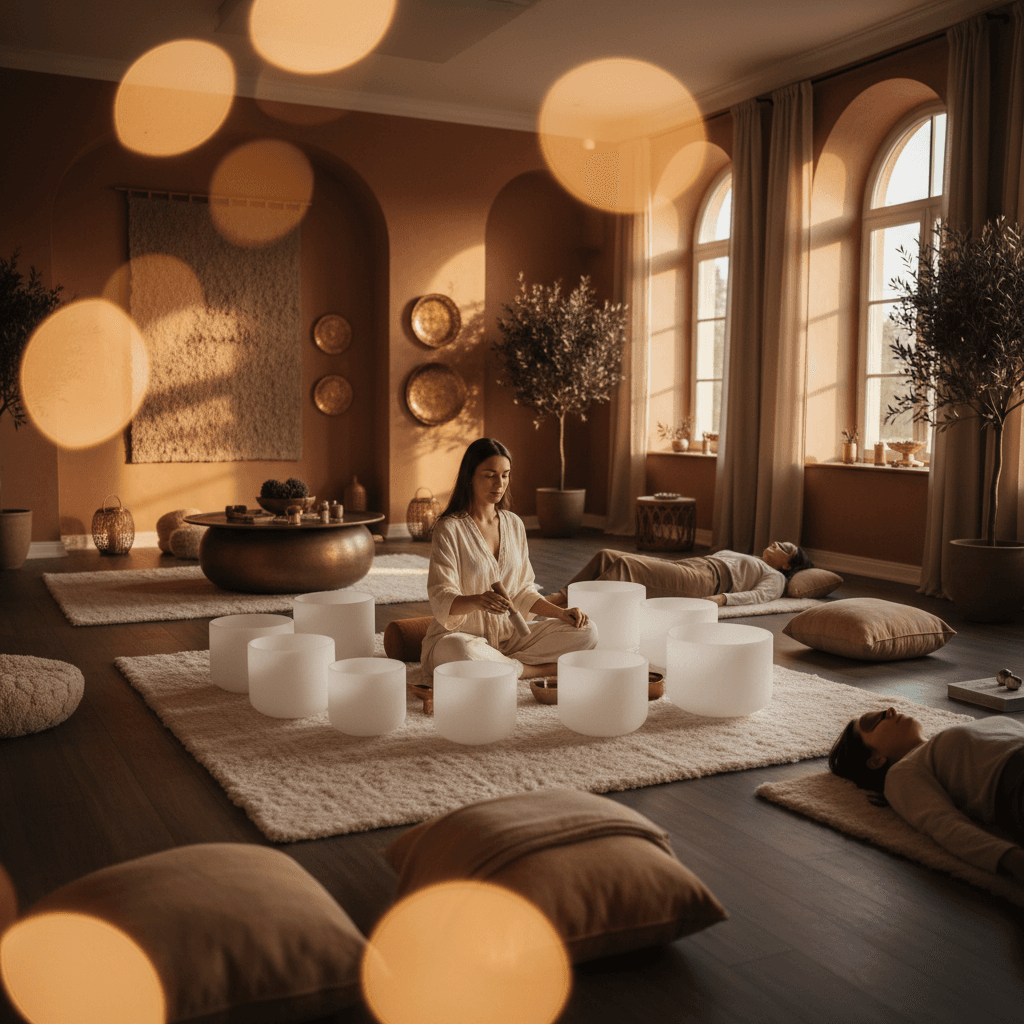
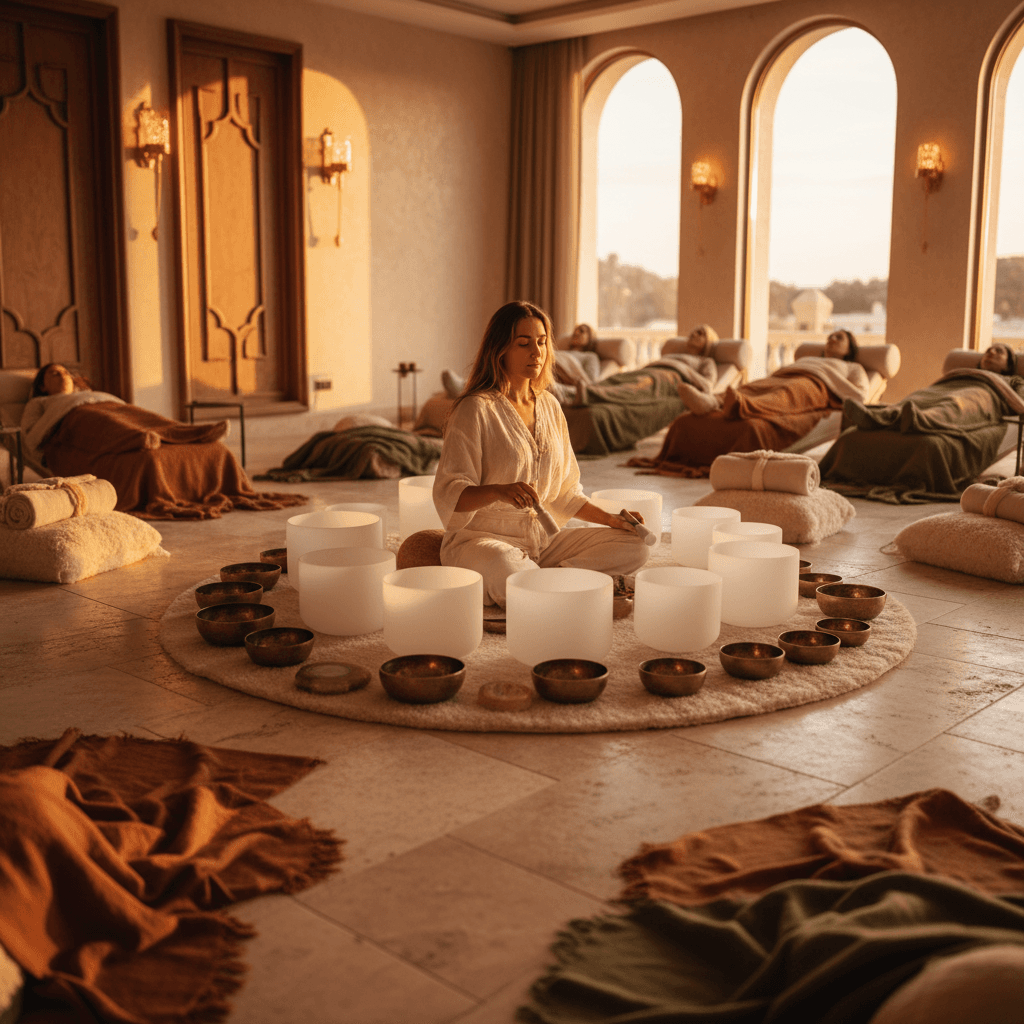
Stepping into a sound wellness session at Soul Art is an immersive experience designed to gently guide your nervous system into a state of deep relaxation and openness. It's a sanctuary where the usual demands of the external world fade, allowing your inner landscape to come into focus. This journey is crucial for disarming the fear of failure and inviting creative courage.
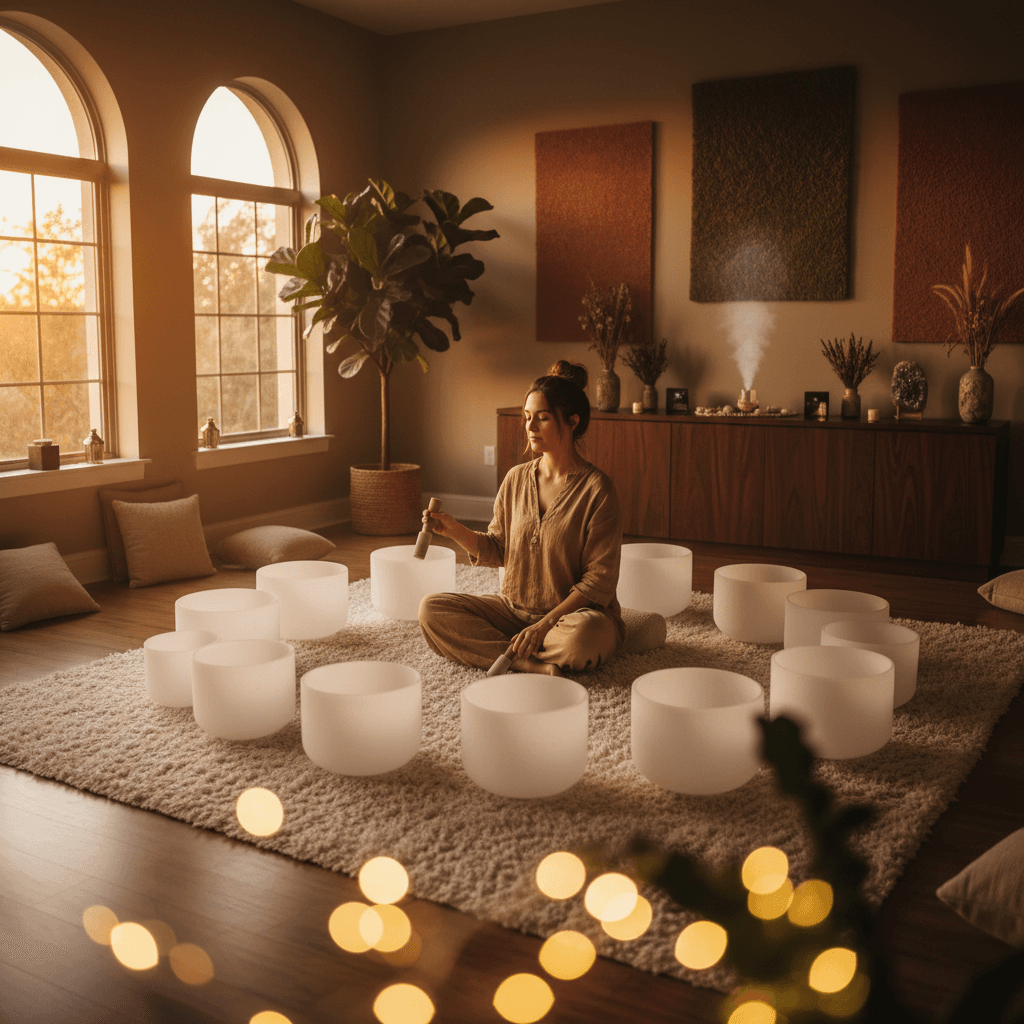
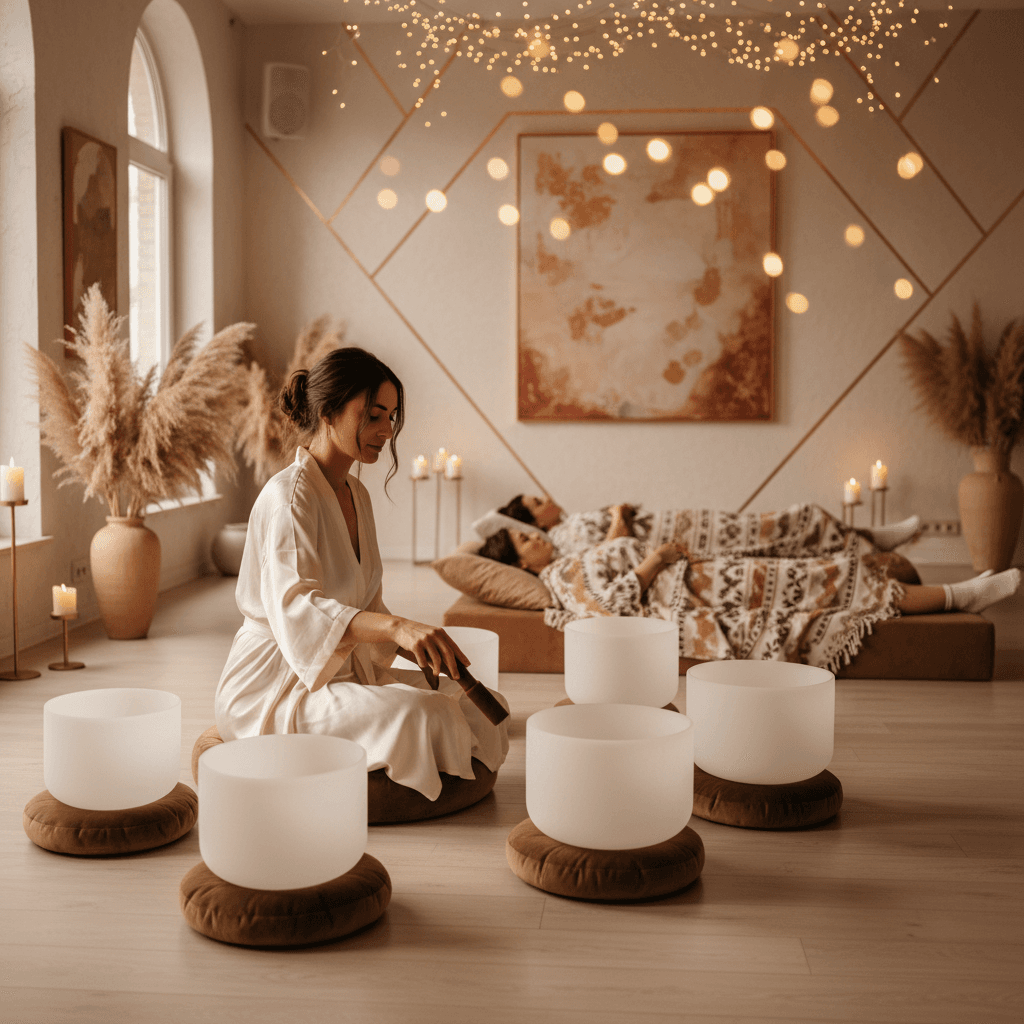
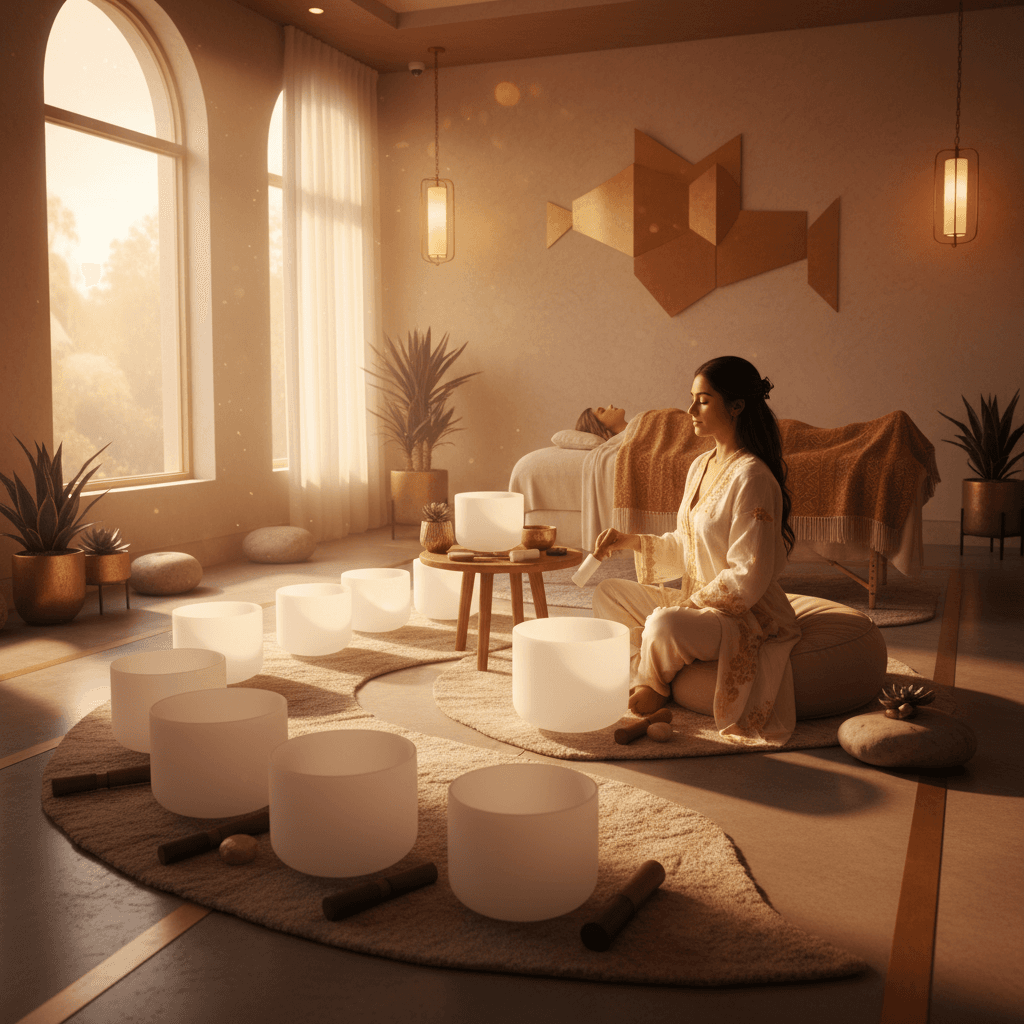
The experience often begins with a soothing introduction, where you settle into a comfortable position, ready to receive the sounds. As the session progresses, a symphony of intentional frequencies fills the space. You might hear the resonant tones of Himalayan singing bowls, the deep vibrations of gongs, or the harmonious hum of crystal bowls. These aren't just pleasant sounds; they are carefully selected frequencies designed to interact with your body’s energy centers and nervous system.
Many people report a profound sense of peace and a reduction in worrying thoughts during these sessions. The brain, given the "task" of listening and processing the intricate soundscape, can quiet its usual mental chatter and the persistent loops of self-doubt often associated with FoAF. This shift allows for the release of tension, both physical and mental, which often accompanies creative blocks.
The vibrations are a key component, felt not just heard. They travel through your body, encouraging cellular relaxation and promoting a sense of grounding. This physical release can be incredibly liberating, as creative stagnation often manifests as somatic tension. As your body unwinds, your mind often follows, becoming more spacious and less judgmental.
By consistently engaging in these practices, you create a safe inner space where vulnerability can emerge without overwhelming anxiety. Sharing creative work, as Spencer Education highlights, is an act of vulnerability that sets one up for judgment. Sound wellness helps build an internal reservoir of self-compassion and resilience, enabling you to embrace this vulnerability and develop the courage to share your art, ideas, and authentic self with the world, knowing that mistakes are merely part of the learning journey.
The Soul Art Approach: Larissa Steinbach’s Vision for Creative Empowerment
At Soul Art, Larissa Steinbach has meticulously crafted an approach that transcends simple relaxation, aiming for profound transformation in how individuals relate to their creative selves. Her philosophy is rooted in the understanding that true creative courage emerges from a regulated nervous system and a mind free from the pervasive shadow of fear. It’s about creating an internal environment where innovation isn't just possible, but natural.
Larissa's method at Soul Art is unique due to its personalized and deeply intentional nature. Each sound experience is carefully curated, drawing upon a diverse range of instruments and techniques known for their specific effects on the mind and body. This includes traditional instruments like ancient Himalayan singing bowls and planetary gongs, alongside modern modalities such as precisely engineered binaural beats and vibroacoustic applications.
The focus is not merely on listening, but on a holistic sensory engagement. The powerful vibrations from instruments like crystal bowls are felt throughout the body, engaging cellular memory and promoting deep energetic shifts. This physical sensation works in tandem with the auditory experience to bring the nervous system into a parasympathetic state, the "rest and digest" mode crucial for calming the fight-or-flight response associated with FoAF.
Larissa Steinbach emphasizes that the Soul Art method helps individuals cultivate emotional regulation, a key factor identified in research for channeling fear into productive engagement. By reducing anxiety and enhancing mental clarity, participants are better equipped to sustain task-absorbed states and engage in exploratory thinking, rather than being confined by risk aversion or perfectionism. This allows for the playful, experimental mindset often lost to fear.
The studio offers a tranquil haven where individuals can gently confront and reframe their perceptions of failure. Through consistent practice, the aim is to foster a sense of inner strength and capability, much like the "boldness" described by Ranjay Gulati in his work on courage. Soul Art empowers clients to see themselves as inherently creative and capable, equipped with the tools to navigate challenges and embrace their unique artistic expressions with confidence and joy.
Your Next Steps: Cultivating Courage and Creativity Daily
Integrating the principles of sound wellness into your daily life can significantly shift your relationship with the fear of failure, paving the way for greater creative courage. The journey toward unfettered expression is continuous, but these practical steps can provide a strong foundation.
- Mindful Listening & Sound Exposure: Begin by consciously incorporating intentional sound into your routine. This could involve listening to ambient nature sounds, calming instrumental music, or guided sound meditations with binaural beats for even 10-15 minutes a day. Focus on how the sounds impact your body and mind, noticing any shifts in tension or mental clarity.
- Embrace Imperfection Through "Creative Play": Consciously engage in creative activities without the pressure of a perfect outcome. Whether it's doodling, writing stream-of-consciousness, or simply experimenting with a new craft, allow yourself to "fail" without judgment. Remember the concept of celebrating "epic fails" to reframe mistakes as valuable learning experiences, fostering a climate of positive risk-taking.
- Journaling with Sound: Combine sound exposure with reflective journaling. After a sound session or mindful listening practice, dedicate time to writing down any thoughts, emotions, or ideas that emerge. This can help process underlying fears and clarify your creative intentions in a calmer state of mind, bridging inner experience with outward expression.
- Practice Self-Compassion: Recognize that fear of failure is a common human experience. Instead of self-criticism, cultivate self-compassion. Speak to yourself with the kindness and understanding you would offer a friend. This internal nurturing creates a safer space for vulnerability, which is essential for creative acts, and strengthens your capacity to persist through setbacks.
- Explore a Sound Wellness Session: Consider experiencing a professional sound wellness session at Soul Art. Under the guidance of Larissa Steinbach, you can delve deeper into personalized frequencies and vibrations designed to specifically target stress, anxiety, and creative blocks. This structured approach can accelerate your journey toward cultivating a resilient, creatively courageous mindset.
In Summary: Harmonizing Your Path to Creative Freedom
The fear of failure, while a natural human emotion, often acts as a significant barrier to our creative potential and personal fulfillment. It narrows our focus, fosters risk aversion, and inhibits the vulnerable act of bringing new ideas into the world. However, research suggests that with effective emotional regulation and a supportive internal environment, this fear can be managed, allowing our inherent problem-solving abilities to shine.
Sound wellness offers a scientifically-grounded, complementary approach to cultivating this inner resilience. Practices like sound baths and binaural beats have been associated with reduced anxiety, enhanced mood, and improved cognitive function, creating the mental and emotional space needed for creative exploration. By calming the nervous system and quieting the mind, sound empowers individuals to embrace the courage necessary for innovation.
At Soul Art, Larissa Steinbach provides a transformative experience, guiding clients through meticulously curated soundscapes that foster deep relaxation and emotional release. Her unique method helps individuals unlock their creative spirit by disarming fear and building a foundation of inner strength. Step into the world of Soul Art and discover how the frequencies of well-being can harmonize your path to creative freedom and bold self-expression.
Bookings Coming Soon
Soul Art is still in preparation. Session details and booking will be published here after launch.
Coming Soon
Wellness Disclaimer: This article is for educational and informational purposes only. It does not constitute medical advice, diagnosis, or treatment. Soul Art Dubai provides non-medical wellness experiences focused on relaxation, stress management, and general wellbeing. Sound wellness is a complementary practice and should not replace professional medical care.