Evidence-Based Wellness: The Certainty in Your Self-Care Journey
Key Insights
Explore evidence-based practice in wellness. Learn how scientific research, expert wisdom, and personal values create trusted paths to well-being at Soul Art, Dubai.
The world of wellness is vibrant, diverse, and sometimes, a little overwhelming. From ancient traditions to cutting-edge techniques, how do we discern what truly supports our well-being from what might just be fleeting trends? The answer lies in Evidence-Based Practice (EBP) – a rigorous approach that integrates the best available research with practical expertise and individual needs.
At Soul Art, founded by Larissa Steinbach, our commitment to your holistic wellness is underpinned by this very principle. We believe that understanding why certain practices are effective, and what the available evidence suggests, empowers you to make informed choices for your health and inner peace. This article delves into the scientific bedrock of EBP, exploring what we know for certain about creating impactful wellness experiences.
The Foundation of Evidence-Based Practice
Evidence-Based Practice (EBP) is a cornerstone across many health and wellness disciplines, initially gaining prominence in medicine and now adopted widely in fields from social work to education. At its core, EBP represents the conscientious, judicious, and explicit use of current best evidence in conjunction with clinical expertise and patient values to guide decision-making. This tripartite model ensures a holistic and personalized approach to care and wellness.
The "best evidence" itself is multifaceted, encompassing a spectrum of scientific rigor. It includes robust empirical evidence derived from randomized controlled trials (RCTs), which are considered the gold standard for establishing cause-and-effect relationships. Beyond RCTs, evidence from other scientific methods, such as descriptive and qualitative research, also contributes valuable insights into lived experiences and specific phenomena. Furthermore, information from case reports, established scientific principles, and expert opinion play a crucial role, particularly when extensive research is not yet available for a specific area.
The Hierarchy of Evidence
Not all evidence carries the same weight, and understanding the hierarchy of research is fundamental to EBP. While there isn't one universally agreed-upon hierarchy, a common perspective ranks evidence based on its ability to minimize bias and demonstrate reliable outcomes. This hierarchy guides practitioners and researchers in evaluating the strength and applicability of findings.
At the pinnacle of this hierarchy are systematic reviews of multiple intervention research studies and meta-analyses. These comprehensively synthesize data from numerous individual studies, providing a broader and more statistically robust understanding of an intervention's effectiveness. They meticulously identify, assess, and combine results from relevant research, striving to minimize bias through transparent, pre-established criteria.
Following these comprehensive reviews, Randomized Controlled Trials (RCTs) stand as a strong form of evidence. In an RCT, participants are randomly assigned to either an intervention group or a control group, allowing for a direct comparison of outcomes while reducing confounding variables. This design provides sound evidence for cause-and-effect relationships, crucial for determining if a practice genuinely supports specific wellness outcomes.
Further down the hierarchy are cohort studies, which follow groups of individuals over time, comparing those exposed to a particular factor with those who are not. Case control studies look back retrospectively, comparing individuals with a condition to those without it to identify potential exposures. While valuable for generating hypotheses and identifying associations, these studies are less reliable for proving causation than RCTs due to potential biases. Finally, case reports or case series provide detailed accounts of individual patients or small groups, offering anecdotal evidence that can inform future research, alongside expert opinion and program evaluations.
From Research to Practice: Translation Science
The journey from a research finding to its implementation in daily practice is often complex and falls within the domain of translation science. This field specifically investigates how to best promote the use of evidence in real-world settings, bridging the gap between scientific discovery and practical application. Studies in translation science explore what interventions work, for whom, in what circumstances, and in what types of settings, critically examining the underlying mechanisms of effective strategies.
For a wellness studio like Soul Art, this means continually observing, learning, and adapting practices as new research emerges. While a significant body of research evidence might not be available for every single element of sound wellness—a relatively nascent field in terms of rigorous clinical trials—the EBP framework encourages the integration of all available evidence. This includes descriptive and qualitative research, which provides rich insights into client experiences, as well as established scientific principles concerning acoustics, physiology, and neuroscience.
When a sufficient research base is available, practice should be guided by that research evidence in conjunction with clinical expertise and patient values. However, in areas where research is still building, health care and wellness decision-making may derive principally from non-research evidence sources, such as expert opinion and scientific principles. As more research is conducted in a specific area, that new evidence must be incorporated, leading to an evolving and responsive practice. This iterative process ensures that wellness approaches remain informed and effective, even as scientific understanding grows.
How It Works in Practice
Connecting the rigorous framework of Evidence-Based Practice to real-world wellness applications means translating scientific insights into tangible experiences. For clients, this translates into a sense of trust and confidence that the practices offered are not just based on fads, but are thoughtfully considered through a lens of informed understanding. It’s about leveraging the three-legged stool of EBP: clinical research, a practitioner's expertise, and the client's preferences and values.
When a wellness studio integrates EBP principles, clients can anticipate an approach that is both grounded and adaptable. While sound wellness is an emerging field, an EBP-informed practitioner continuously reviews relevant findings from related areas like neuroscience, psychology, and even acoustics, which may support the mechanisms behind sound’s effect on the human body. This allows for the thoughtful selection and application of instruments and techniques, rather than relying solely on tradition or intuition.
Consider the experience: the resonant frequencies selected for a sound journey, the specific rhythm of a breathwork exercise, or the guided meditation techniques employed are all, to some extent, informed by available knowledge. While direct, large-scale RCTs on specific sound bath protocols may be scarce, preliminary studies and anecdotal evidence often suggest beneficial associations with stress reduction, relaxation, and nervous system regulation. The integration of this emerging evidence with the practitioner's deep understanding of human physiology and psychological responses creates a powerful synergy.
For many people, the subtle vibrations and harmonies experienced in a sound wellness session contribute to a profound sense of calm and mental clarity. These subjective experiences are validated by the practitioner's clinical expertise, honed through years of practice and observation, and further tailored to the client's expressed needs and preferences. This dynamic interplay ensures that the practice is not a one-size-fits-all solution, but a personalized journey towards well-being, continuously refined by observation and feedback.
"True wellness emerges when the wisdom of tradition meets the rigor of science, guided by the unique story of each individual."
The Soul Art Approach
At Soul Art, Larissa Steinbach’s vision is deeply rooted in these evidence-based principles, even within the evolving landscape of sound wellness. She expertly weaves together ancient wisdom with modern understanding, creating a unique and impactful experience designed to support profound relaxation and inner harmony. Her approach acknowledges that while the scientific literature on the direct mechanisms of sound on the body is still expanding, the existing body of knowledge in neuroscience, psychology, and integrative health offers valuable guidance.
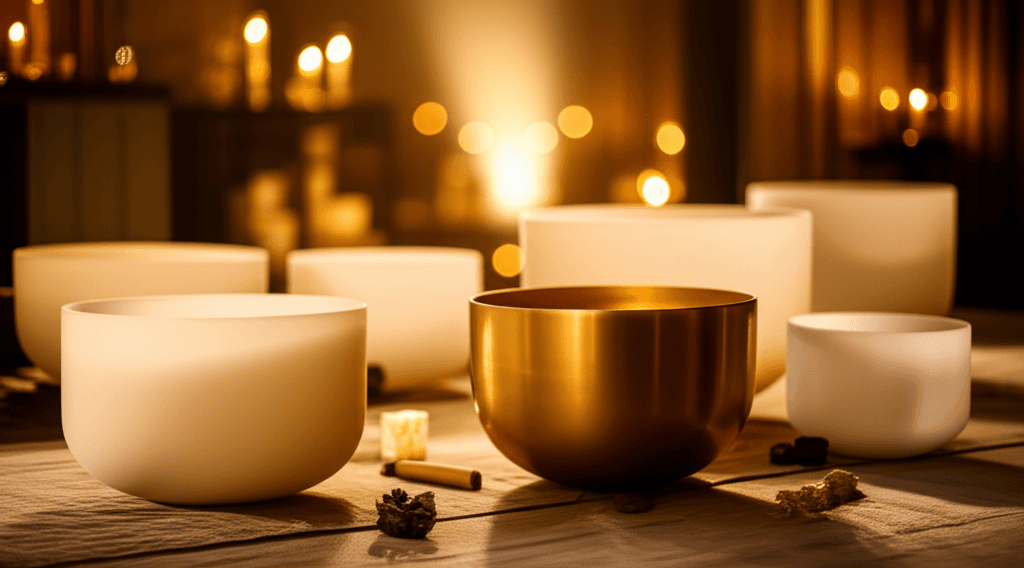
Larissa's expertise, gained through extensive training and years of practical experience, forms a crucial "leg" of the EBP stool at Soul Art. She meticulously selects instruments such as Himalayan singing bowls, crystal bowls, gongs, and chimes, understanding their unique vibrational qualities and how they may interact with the body's subtle energy systems. These choices are informed by a blend of traditional knowledge, scientific principles of resonance and frequency, and her deep intuitive wisdom developed through countless client sessions.
The Soul Art method is not about making unsubstantiated medical claims, but about providing a highly refined wellness experience. We focus on creating an environment and employing techniques that are widely reported to foster deep relaxation, stress reduction, and nervous system regulation. For instance, specific sound frequencies may support the shift into parasympathetic nervous system dominance, often associated with rest and digest states. This holistic approach is designed to complement existing health routines, offering a sanctuary for self-care.
What makes the Soul Art method unique is Larissa's commitment to personalized care, ensuring that each session respects the individual's values and preferences. This client-centered philosophy, combined with her dedication to staying informed about emerging research and refining her expertise, creates a sophisticated yet accessible path to well-being. It is a testament to how an evidence-informed perspective can elevate even the most intuitive and ancient of practices.
Your Next Steps
Empowering yourself with knowledge about Evidence-Based Practice can transform your wellness journey. Here are actionable steps you can implement today to navigate the world of self-care with greater certainty and confidence:
- Educate Yourself: Be curious about the practices you engage in. Ask your wellness providers about the principles behind their methods and what kind of evidence, whether research, expert opinion, or client feedback, informs their approach.
- Seek Integrated Approaches: Look for practitioners and studios that openly discuss how they combine available research, their professional expertise, and your personal preferences. This "three-legged stool" approach is a hallmark of informed practice.
- Listen to Your Body and Mind: While external evidence is crucial, your internal experience is equally important. Pay attention to how different practices make you feel and if they genuinely resonate with your personal wellness goals. Your individual values are a vital part of EBP.
- Explore Complementary Practices: Understand that wellness is often a multi-faceted journey. Sound wellness, like other self-care practices, is a complementary approach that can work synergistically with other elements of your health regimen, designed to support your overall well-being.
- Embrace Continuous Learning: The landscape of wellness and scientific understanding is always evolving. Stay open to new insights and be willing to adapt your self-care routine as you learn more about what best supports your unique needs.
Ready to restore your nervous system and discover deep relaxation within a framework of informed practice? We invite you to experience the thoughtful, evidence-informed approach offered by Larissa Steinbach at Soul Art.
Bookings Coming Soon
Soul Art is still in preparation. Session details and booking will be published here after launch.
Coming Soon
In Summary
Evidence-Based Practice provides a powerful framework for navigating the diverse world of wellness, ensuring that our choices are grounded in certainty. It systematically integrates the best available research evidence with the seasoned clinical expertise of practitioners and the unique values and preferences of each individual. This holistic approach helps to distinguish meaningful practices that may support well-being from those that lack a substantiated foundation.
At Soul Art, Larissa Steinbach champions this informed path, offering sound wellness experiences that are thoughtfully designed to foster relaxation and inner peace. By understanding the principles of EBP, you are empowered to make choices that truly resonate with your quest for holistic wellness. We invite you to discover the serene and supported journey that awaits you at Soul Art.
Wellness Disclaimer: This article is for educational and informational purposes only. It does not constitute medical advice, diagnosis, or treatment. Soul Art Dubai provides non-medical wellness experiences focused on relaxation, stress management, and general wellbeing. Sound wellness is a complementary practice and should not replace professional medical care.
Related Articles

40 Hz Sensory Stimulation and Alzheimer's Research
Unlocking Wellness: The Science of Sound Healing Research Design

Unlocking Wellness: Biomarkers for Effective Sound Therapy