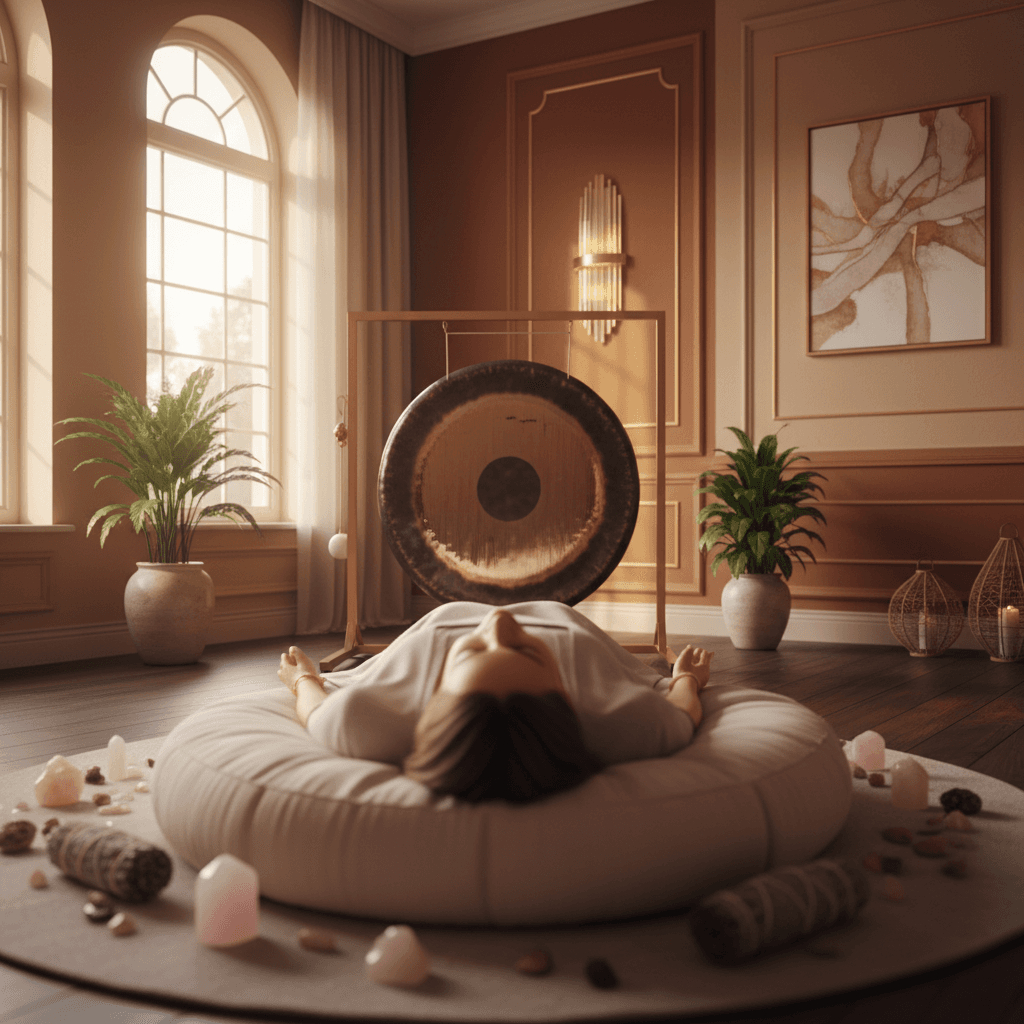
The Subtle Art of Sound: Optimal Distance for Sensitive Ears
Key Insights
Discover how optimal instrument distance at Soul Art Dubai enhances sound wellness for sensitive ears, guided by Larissa Steinbach.
Have you ever considered that the distance between you and a sound source can profoundly alter your experience, especially if you have sensitive hearing? In the serene world of sound wellness, this seemingly simple variable holds the key to unlocking deeper relaxation and profound vibrational journeys for many. It's more than just about volume; it's about the intricate dance of sound waves, our physiology, and individual perception.
At Soul Art, Dubai's premier sound wellness studio, we often delve into the nuanced understanding of how our bodies interact with sound. Larissa Steinbach, our visionary founder, emphasizes a personalized approach, recognizing that what soothes one ear might overwhelm another. This article explores the scientific underpinnings of auditory distance perception and offers practical insights into optimizing your sound bath experience, particularly for those with sensitive ears. We aim to illuminate how a thoughtful adjustment in distance can transform a good session into an extraordinary one, fostering a sanctuary where every sound is a gentle invitation to peace.
The Science Explained: How Distance Shapes Our Auditory Experience
Our perception of sound is a marvel of biological engineering, a complex interplay between physical acoustics and neurological processing. When it comes to understanding sound distance, our brains rely on an array of subtle cues, constantly evaluating the environment to create a coherent auditory landscape. For individuals with sensitive hearing, these cues become even more critical, influencing comfort, relaxation, and overall well-being.
Auditory Cues for Distance Perception
The human auditory system is incredibly adept at discerning the distance of a sound source, even in the absence of visual input. Our brains analyze several factors simultaneously:
- Loudness: This is perhaps the most intuitive cue. As a sound source moves further away, its intensity, or loudness, decreases. This follows the inverse square law, meaning sound pressure level diminishes by approximately 6 dB for every doubling of distance in a free field. However, in enclosed spaces like our sound studio, reflections also play a significant role.
- Spectral Cues: The composition of a sound's frequencies changes with distance. Higher frequencies tend to attenuate, or lose energy, more rapidly over distance due to air absorption and scattering. This means that a distant sound will generally sound "duller" or less bright than a close one, losing some of its high-frequency sparkle. Research indicates that the source spectrum can significantly affect perceived distance, especially with moving sounds. A study by Gordon, Russo, and MacDonald (2013) found that errors in judging time to arrival were smallest for sound bands with center frequencies between 120 and 250 Hz, and highest for those between 2000 and 7500 Hz, suggesting that higher-frequency content can create a sense of increased urgency or proximity.
- Direct-to-Reverberant Ratio (DRR): In an enclosed space, we hear both the direct sound from the source and its reflections (reverberation) off surfaces. As distance from the source increases, the direct sound becomes weaker relative to the reverberant sound. Our brain processes this changing ratio to estimate distance. For individuals with severe visual loss, DRR sensitivity for distance discrimination is often enhanced, though it can be reduced following hearing impairment.
- Interaural Cues: While primarily used for sound localization (determining direction), the slight differences in how sound arrives at each ear (interaural time differences and interaural level differences) can also contribute to distance perception, particularly for sounds in very close proximity. Studies exploring virtual auditory distance perception consider whether this process is binaural (using both ears), monaural (one ear), or both.
Physiological Impact of Sound Intensity and Duration
Beyond perception, the sheer intensity and duration of sound can have a profound physiological impact, especially on sensitive ears. Our inner ear contains delicate hair cells that translate sound vibrations into electrical signals for the brain. Excessive or prolonged exposure to high decibel levels can fatigue or even permanently damage these cells, leading to hearing loss.
The Centers for Disease Control and Prevention (CDC) recommends limiting noise exposure to no more than 40 hours per week at 85 decibels. Even at lower volumes, constant sound can fatigue the auditory system. Taking periodic "quiet breaks" allows the ears to rest and recover. For sensitive ears, even sounds below typical damaging thresholds can feel overwhelming or cause discomfort. This physiological response underscores the importance of carefully managing instrument distance in sound wellness practices, moving beyond a "one-size-fits-all" approach to ensure a deeply restorative, rather than jarring, experience.
Individual Variability in Auditory Processing
It is crucial to acknowledge that auditory sensitivity is highly individual. Factors such as genetics, past noise exposure, inner ear structure, and neurological processing differences all contribute to how a person experiences sound. What one person finds subtly stimulating, another might perceive as intensely overwhelming. This variability is a cornerstone of Soul Art's philosophy, guiding Larissa Steinbach's approach to creating bespoke sound journeys. Understanding these scientific principles allows us to craft environments where the inherent therapeutic qualities of sound can be fully realized, even for the most sensitive listeners.
How It Works in Practice: The Embodied Experience of Sound Distance
Connecting the scientific understanding of auditory perception to the tangible experience of a sound bath reveals the profound impact of instrument distance. It's not merely about the decibel reading; it's about the very texture and presence of sound waves as they interact with our entire being. For sensitive ears, this practical application transforms a potentially challenging environment into a haven of sonic tranquility.
When sound instruments are positioned at an optimal distance, the sound waves have the opportunity to expand and unfold, losing their initial sharp attack and allowing their full harmonic richness to emerge. This creates a more diffused, enveloping sound field rather than a focused, direct beam. The initial "edge" of a strike on a gong or a singing bowl is softened, allowing the sustained resonance and overtones to truly bloom.
Consider the feeling of sound. Close to a gong, you might feel its vibrations intensely through your chest and body, a powerful physical sensation that can be overwhelming for some. As the distance increases, this physical vibration becomes less localized and more diffused, transitioning into a gentle internal hum that resonates throughout your being without any sense of pressure or impact. It transforms from a direct energetic input to a subtle, yet pervasive, somatic experience. The underwater hearing studies, though in a different medium, touch on similar principles – at distances of three feet and greater, swimmers often did not report hearing underwater background noise, suggesting a threshold where background sensory input diminishes, allowing for a clearer, less cluttered auditory experience.
The perceived "urgency" of higher frequencies, as highlighted by auditory distance perception research, is also mitigated by distance. When instruments are too close, the rapid, high-frequency components can trigger a heightened state of awareness, or even anxiety, in sensitive individuals. By creating space, these frequencies naturally attenuate, allowing the deeper, more grounding low-frequency components (which are also crucial for accurate distance perception, as studies suggest errors were smallest for bands between 120 and 250 Hz) to dominate the experience. This cultivates a sense of calm and safety, essential for deep relaxation.
Many people report that at an ideal distance, the sound doesn't just enter their ears; it washes over them. It becomes less about "hearing" and more about "feeling" the vibrational current. This holistic engagement promotes a deeper state of relaxation, supporting the nervous system's shift from fight-or-flight to rest-and-digest. It's a journey into the heart of sonic immersion, where every note is an invitation to release tension and surrender to the moment, tailored to the unique needs of each individual's auditory landscape.
The Soul Art Approach: Larissa Steinbach's Philosophy of Harmonious Distance
At Soul Art, Larissa Steinbach has meticulously crafted an environment where the science of sound meets the art of intuitive well-being. Her approach to instrument placement and session design is deeply rooted in understanding the nuanced relationship between sound, space, and individual sensitivity. This commitment ensures that every client, regardless of their auditory profile, can experience profound relaxation and rejuvenation.
Larissa's philosophy centers on creating a personalized sanctuary of sound, where the therapeutic benefits are maximized through conscious spatial arrangement. She understands that a "powerful" sound does not always equate to a "loud" sound, especially for sensitive ears. Instead, the power lies in its ability to resonate gently, yet deeply, within each person without causing discomfort or overstimulation. This involves a delicate balance of acoustic principles and empathetic intuition.
"The true magic of sound wellness isn't in how loud a gong can be struck, but in how deeply its ripples can reach, gently and inclusively, at the perfect distance for every soul in the room." - Larissa Steinbach
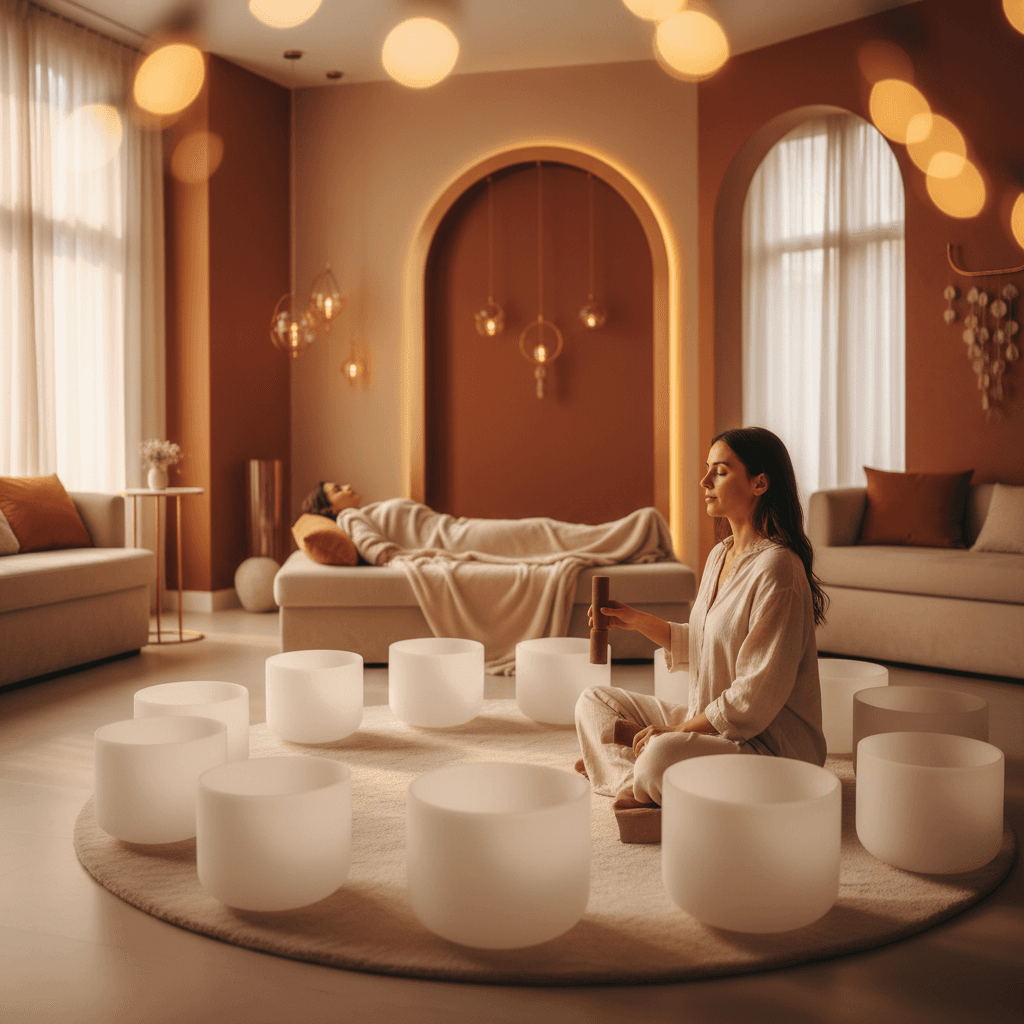
One of the unique aspects of the Soul Art method is the careful selection and placement of a diverse array of instruments. Tibetan singing bowls, crystal bowls, gongs, chimes, and tuning forks are strategically positioned to create an expansive, multidimensional soundscape. Larissa often adjusts the distance of specific instruments relative to each participant, considering their expressed sensitivities and observed responses. For someone with particularly sensitive hearing, a gong might be placed further away, or played with a lighter touch, allowing its expansive resonance to envelop rather than overwhelm.
Specific techniques employed at Soul Art include:
- Pre-session Consultations: Larissa and her team engage in brief conversations with clients to understand their needs, any past experiences with sound baths, and particularly any sensitivities they might have. This allows for proactive adjustments in instrument placement and playing style.
- Intuitive Instrument Placement: Beyond standard layouts, instruments are often moved during a session, or played from different positions, to finely tune the sonic environment. This dynamic approach ensures that the sound field remains fluid and responsive to the collective and individual energies present.
- Modulation of Intensity and Frequency: Larissa guides the session with a masterful control over sound dynamics. Rather than sustained loud play, she emphasizes the subtle shifts in intensity, allowing instruments to sing and fade, creating natural quiet breaks that prevent auditory fatigue. The lower frequency components, which are crucial for anchoring perception and promoting calm, are given ample space to unfold, creating a grounding experience that is particularly beneficial for sensitive individuals.
- Focus on Reverberation: By using the studio's acoustics to her advantage, Larissa ensures that sounds are allowed to fully reverberate, creating a sense of being enveloped rather than directly hit by sound waves. This enhances the direct-to-reverberant ratio in a way that is comforting and immersive, rather than jarring.
The Soul Art approach, pioneered by Larissa Steinbach, is a testament to the idea that thoughtful, scientifically informed, and deeply empathetic practices can transform wellness. It highlights how mindful distance from instruments can unlock a world of profound relaxation and energetic recalibration, making sound wellness accessible and deeply beneficial for all, especially those with sensitive ears.
Your Next Steps: Cultivating Your Ideal Sound Environment
Understanding the science and practice behind optimal distance for sensitive ears empowers you to take a more active role in your sound wellness journey. Whether you're attending a session at Soul Art or exploring sound at home, these practical steps can help you cultivate your ideal sonic environment.
- Listen to Your Body's Cues: Before and during any sound experience, pay close attention to how your body responds. Do certain sounds feel too sharp, too loud, or create a sense of tension? Your body's signals are invaluable guides. If you feel any discomfort, it's an indication that an adjustment might be needed, whether it's moving further from an instrument or requesting a change in play intensity.
- Communicate Your Sensitivities: Never hesitate to communicate your auditory sensitivities to your sound wellness practitioner. At Soul Art, we encourage an open dialogue. Informing Larissa Steinbach or her team beforehand allows them to make proactive adjustments in instrument placement or playing style, ensuring your comfort and maximizing your session's benefits. This personalized approach is a cornerstone of our philosophy.
- Experiment with Positioning: During a group sound bath, if possible, gently experiment with your position. Sometimes, moving just a few feet can dramatically alter your perception of sound intensity and frequency. Observe how shifting your angle or increasing your distance from a particularly resonant instrument changes your experience. This self-exploration can help you discover your personal "sweet spot."
- Integrate Quiet Breaks: Just as recommended for preventing hearing fatigue in everyday noisy environments, incorporate intentional quiet breaks into your sound wellness routine. Even a few minutes of silence during or after a session can help your auditory system process and integrate the experience, preventing overstimulation, especially for sensitive ears. This allows for a deeper and more sustainable engagement with sound.
- Be Mindful of All Sound Inputs: Extend your awareness of sound to your daily life. Limiting prolonged headphone use, using ear protection in loud environments, and taking regular quiet breaks can significantly preserve your auditory health. This holistic approach supports your ears in being more receptive and resilient during sound wellness practices.
By adopting these steps, you empower yourself to create a sound environment that nurtures rather than challenges your sensitive hearing. This conscious engagement ensures that your journey into sound remains a deeply restorative and personalized path to well-being.
In Summary: The Art and Science of Distance at Soul Art
The journey into sound wellness, particularly for those with sensitive ears, is a delicate balance of scientific understanding and intuitive practice. We've explored how fundamental principles of acoustic physics and human auditory perception—from the attenuation of sound waves with distance to the brain's processing of spectral cues and direct-to-reverberant ratios—all contribute to our unique experience of sound. The physiological impact of sound intensity and the critical need for personalized care for sensitive hearing underscore the importance of mindful instrument placement.
Larissa Steinbach's vision at Soul Art embraces these insights, fostering an environment where every sound journey is meticulously crafted for individual comfort and profound healing. By honoring the subtle art of distance from instruments, Soul Art ensures that the powerful, transformative potential of sound is accessible and deeply nurturing for all. We invite you to experience this thoughtful approach, where your well-being is our ultimate frequency.
Bookings Coming Soon
Soul Art is still in preparation. Session details and booking will be published here after launch.
Coming Soon
Wellness Disclaimer: This article is for educational and informational purposes only. It does not constitute medical advice, diagnosis, or treatment. Soul Art Dubai provides non-medical wellness experiences focused on relaxation, stress management, and general wellbeing. Sound wellness is a complementary practice and should not replace professional medical care.
Related Articles

Empowered Choices: The Art of Clarity Without Overexplaining
Unveiling the Power: Photosensitivity & Visuals in Sound Sessions
The Subtle Art of Slow Transitions: Guiding Your Brain to Calm