Sound for Creative Problem Solving: A Designer's Guide
Key Insights
Discover the neuroscience of creativity and how sound wellness can unlock a designer's potential. Learn how Soul Art Dubai uses sound for innovative problem-solving.
What if the greatest obstacle to a designer's breakthrough isn't a lack of ideas, but a lack of the right mental environment? For architects, UX designers, graphic artists, and innovators, the process of creation is rarely a straight line. It is a dance with ambiguity, a journey into what cognitive neuroscientists call an "ill-defined problem space." This very vagueness, which can often feel like a frustrating creative block, is scientifically recognized as the fertile ground from which true innovation springs.
The modern designer faces immense pressure to produce novel solutions on demand. This relentless expectation can lead to cognitive rigidity, stress, and eventual burnout, stifling the very creative spark they rely on. This article explores a powerful, complementary approach to nurture the creative mind: sound wellness. We will delve into the science of creative problem-solving, understand how specific sonic environments can support the necessary brain states for innovation, and discover practical ways to integrate this practice into your professional life. This is about more than just relaxation; it's about tuning your mind to the frequency of creativity.
The Cognitive Landscape of Design Thinking
To understand how sound can be a catalyst for creativity, we must first appreciate the intricate mental processes that define the act of design. It's a sophisticated cognitive function that goes far beyond simple aesthetics or linear problem-solving. Modern research has illuminated the key neural mechanics that underpin a designer's unique ability to innovate.
### The Co-Evolution of Problem and Solution
Unlike solving a math equation with a single correct answer, design challenges are fundamentally different. Research in The Cognitive Neuroscience of Design Creativity highlights a fascinating process called the co-evolution of the problem and the solution. This means that designers don't just solve a pre-defined problem; they actively shape and redefine the problem itself as they explore potential solutions.
Studies show that expert designers who dedicate significant time to this initial problem structuring phase—embracing its ambiguity rather than rushing past it—consistently produce more creative and effective outcomes. This initial phase is not about finding answers but about asking better, more profound questions. It requires a state of mental openness and a tolerance for uncertainty.
### Divergent Thinking and Cognitive Flexibility
How does a designer generate a wealth of novel ideas from this ambiguous starting point? The key lies in two related cognitive functions:
- Divergent Thinking: This is the ability to generate multiple, varied, and original ideas from a single prompt. It’s the mental process behind a brainstorming session, where the goal is quantity and diversity of thought over quality and feasibility. It's about exploring every possible avenue.
- Convergent Thinking: This is the subsequent process of analyzing, evaluating, and selecting the most promising idea from the pool generated during divergent thinking. It is analytical, logical, and goal-oriented.
While both are crucial, the initial spark of innovation is almost entirely dependent on robust divergent thinking. The primary obstacle to this process is cognitive rigidity—getting stuck in familiar patterns and being unable to see the problem from new perspectives.
### How Sound Influences Brain States for Creativity
This is where sound wellness enters the picture as a powerful tool. A growing body of research demonstrates that specific auditory environments can directly influence our cognitive functions. A study published in Greater Good Science Center at UC Berkeley found that participants listening to "happy" music—characterized by high emotional valence—performed significantly better on divergent thinking tasks.
They generated more ideas, and those ideas were rated as more innovative. Interestingly, this effect was independent of whether the participant personally "liked" the music, suggesting a direct physiological impact on the brain. The researchers propose that this type of auditory stimulation enhances cognitive flexibility, making it easier for the brain to switch between different concepts and perspectives. It helps to dissolve the mental rigidity that holds us back, creating an ideal state for making unexpected connections.
"Creative problem-solving is not about forcing a solution; it's about creating the internal conditions where a solution can emerge naturally. Sound provides the fertile ground for this emergence."
This state of enhanced flexibility is also crucial for analogical reasoning, another cornerstone of design creativity. This is the cognitive strategy of mapping a solution from a past problem (the source) onto a current problem (the target). True creativity often involves making a connection between a source and target that are very distant—a process that requires a flexible, associative mind.
From Theory to the Studio: Sound in Action
Understanding the science is one thing, but experiencing its effects is another. Imagine a typical scenario: a designer is facing a tight deadline, staring at a blank screen or a half-finished model. The pressure mounts, and the mind starts circling the same few tired ideas. This is cognitive rigidity in action. The analytical brain, fueled by stress, has taken over, shutting down the pathways to novel thought.
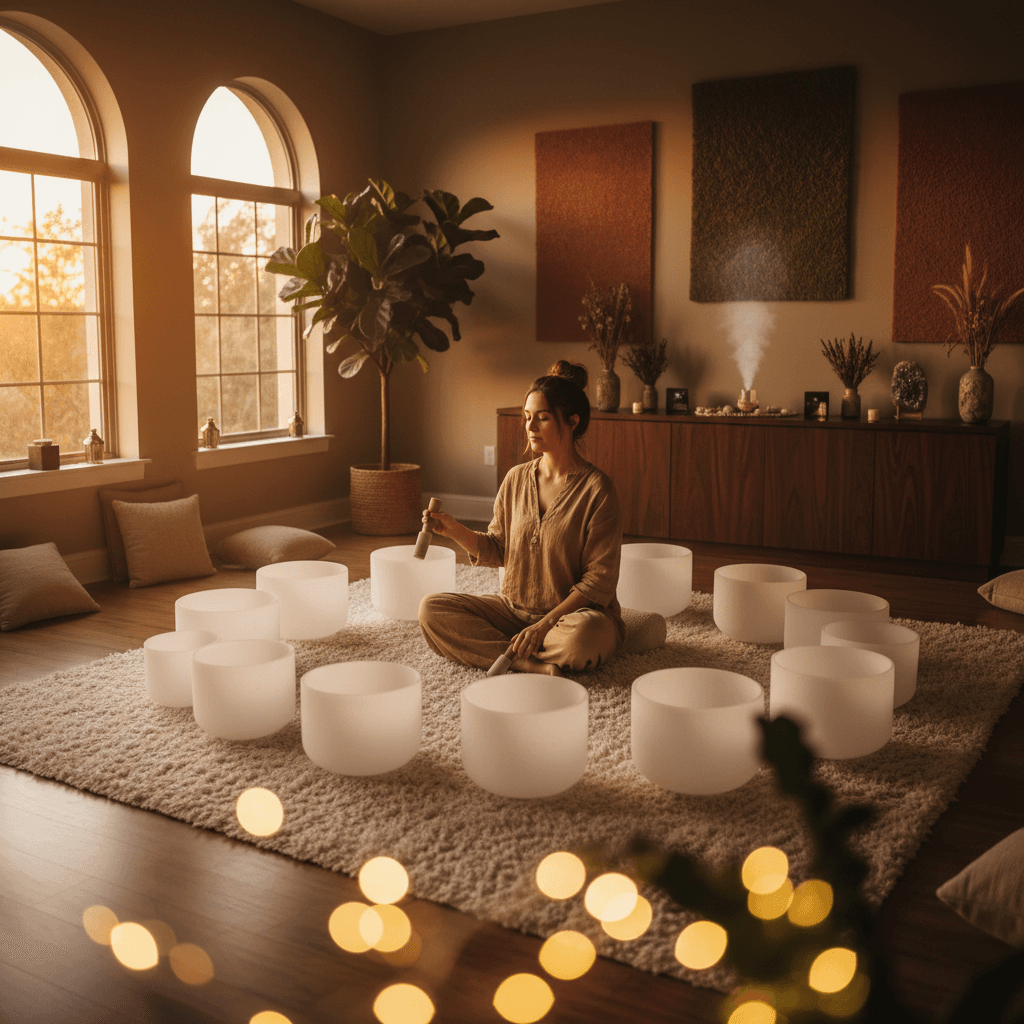
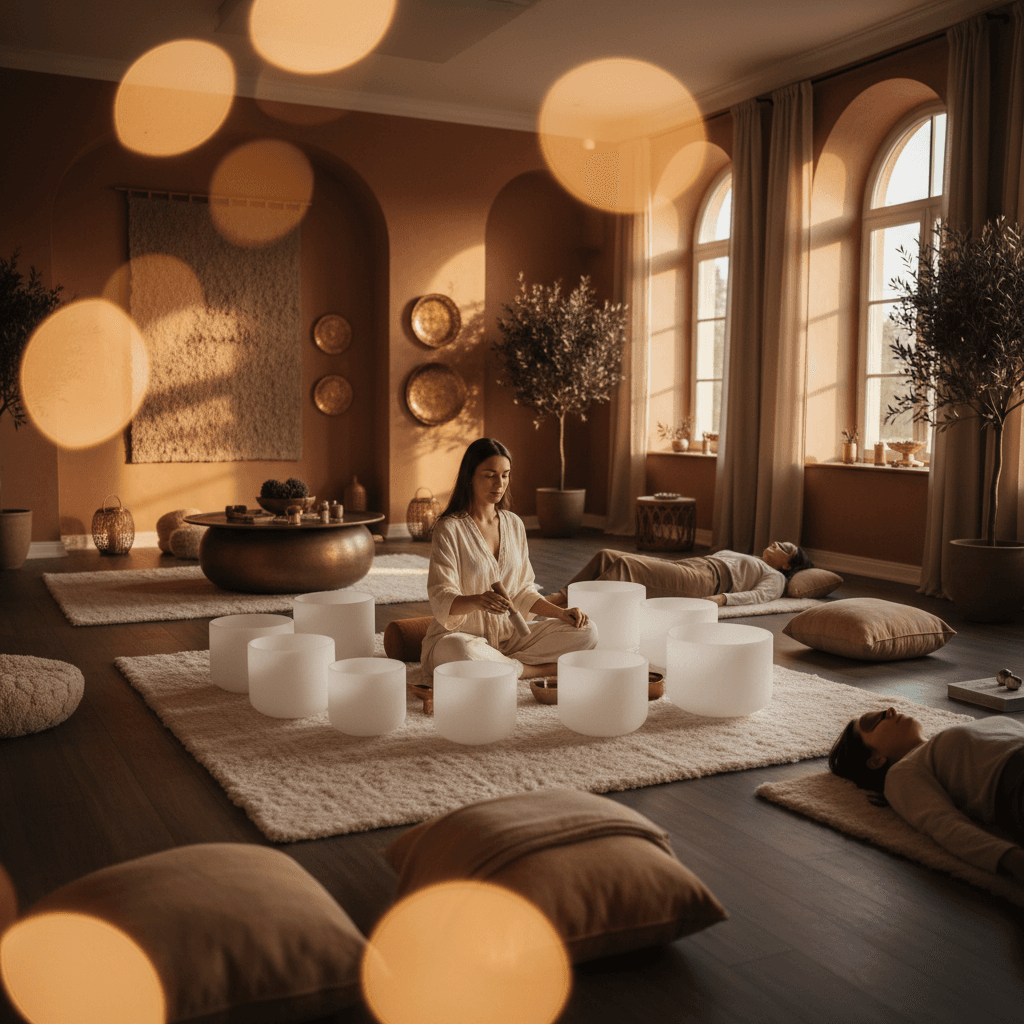
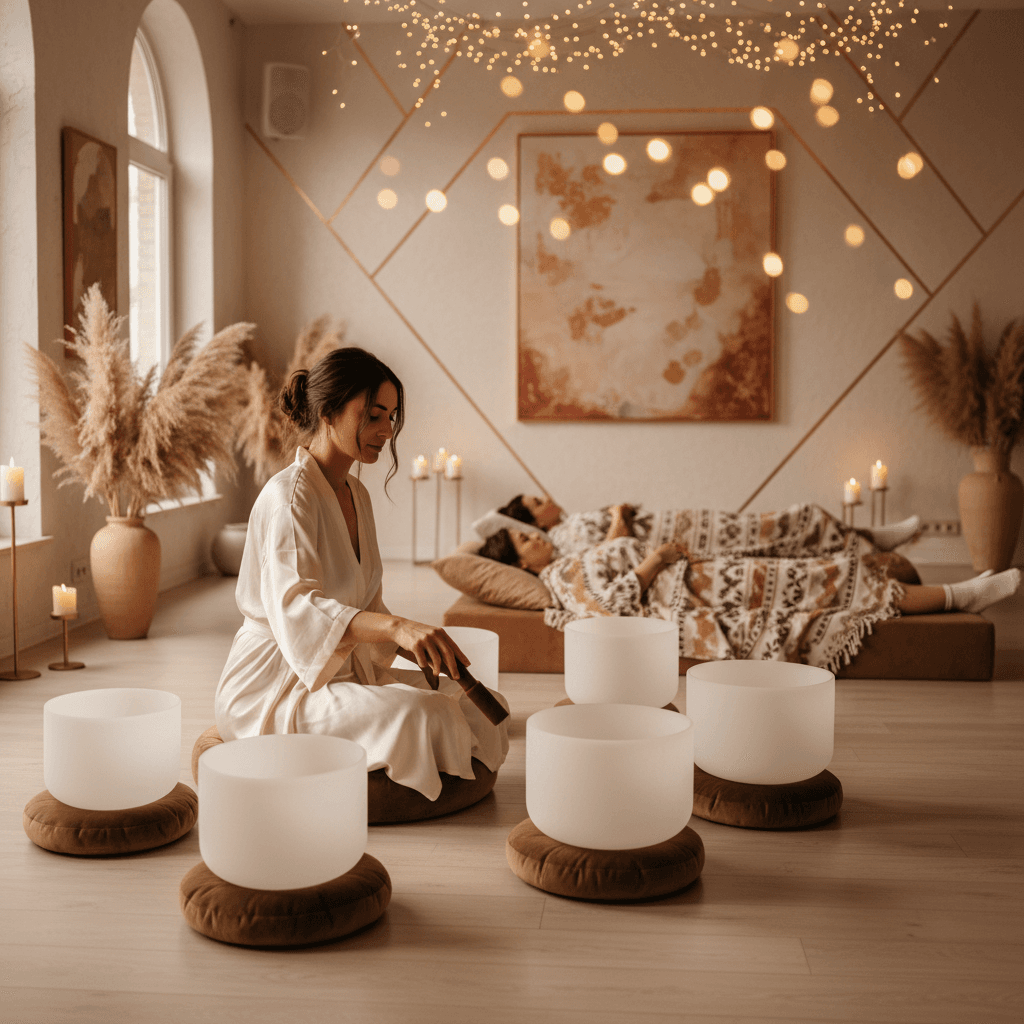
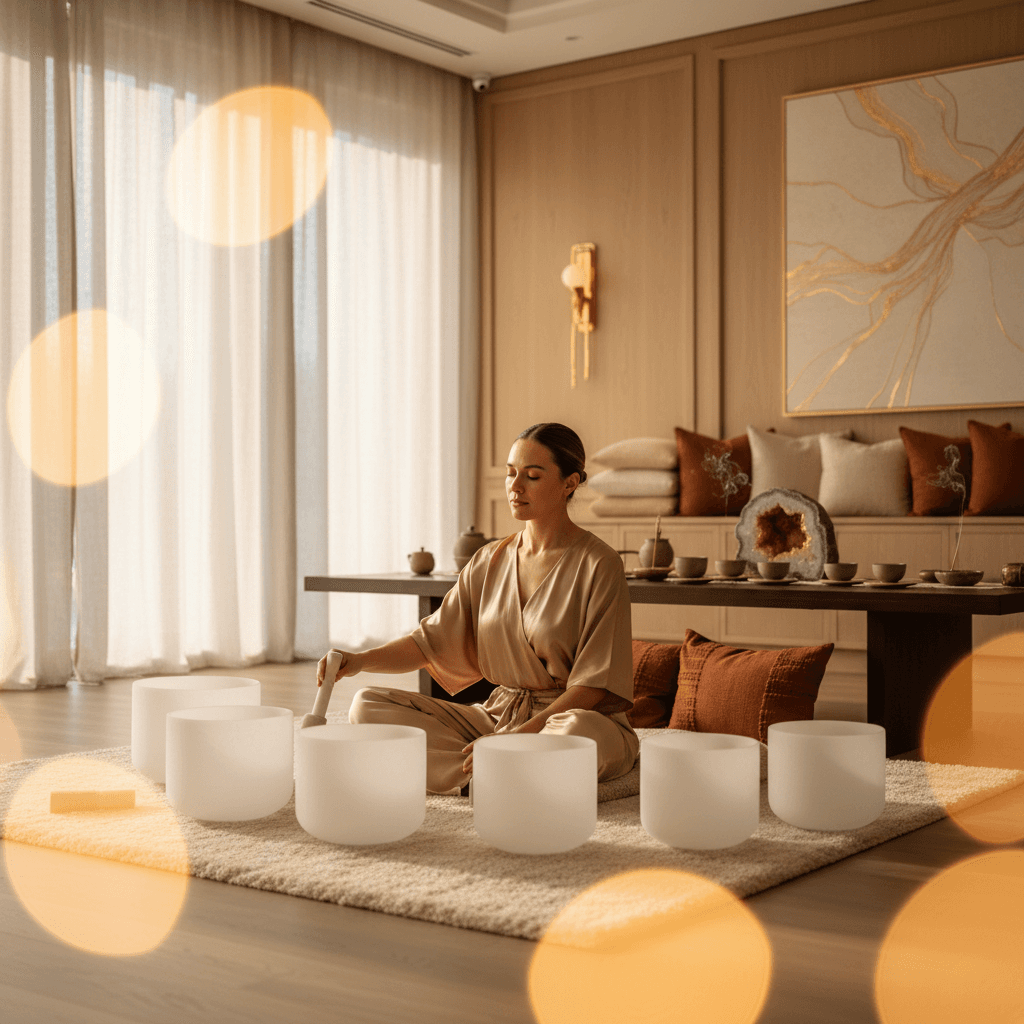
Now, picture that same designer stepping into a dedicated sound wellness space, like a session at Soul Art. The environment itself begins the process of shifting their mental state. The lighting is soft, the external distractions are gone, and the focus turns inward. As the first resonant tones of a crystal alchemy bowl fill the room, something profound begins to happen on a neurological level.
The complex, harmonic overtones are not just "heard" by the ears; they are felt as subtle vibrations throughout the body. This sensory input provides the brain with a novel, non-linear stimulus to process. It bypasses the analytical "editor" part of the mind that is often so critical and loud during a creative block. The sound encourages the brain to transition from the high-alert Beta state, associated with active problem-solving and stress, to the calmer Alpha and even dreamlike Theta brainwave states.
Some preliminary research associates these states with:
- Reduced mental chatter and anxiety
- Enhanced creative insight and intuition
- Improved ability to make novel associations
In this deeply relaxed yet aware state, the mind is free to wander. The rigid boundaries between concepts soften. It is here that the powerful analogical leaps can occur. An architect might suddenly envision a structural support system inspired by the pattern of veins on a leaf. A UX designer struggling with user flow might gain an insight from the memory of navigating a forest path. This is biomimicry and other forms of deep analogical thinking in practice—spontaneous connections that are nearly impossible to force but emerge effortlessly in the right mental environment. The sound session acts as a key, unlocking these deeper, more associative parts of the mind.
The Soul Art Approach: Curating a Creative Sanctuary
At Soul Art, founder Larissa Steinbach has developed a method specifically attuned to the needs of creative professionals and entrepreneurs in Dubai. She recognizes that for this demographic, wellness is not a luxury but a fundamental necessity for peak performance and professional longevity. The goal of a session extends beyond simple relaxation; it is a strategic tool for cognitive enhancement and creative rejuvenation.
The Soul Art approach is distinguished by its intentionality. Each session is a curated sonic journey, meticulously designed to guide the client's mind through the phases of the creative process itself. This isn't a random assortment of pleasant sounds; it is a structured experience.
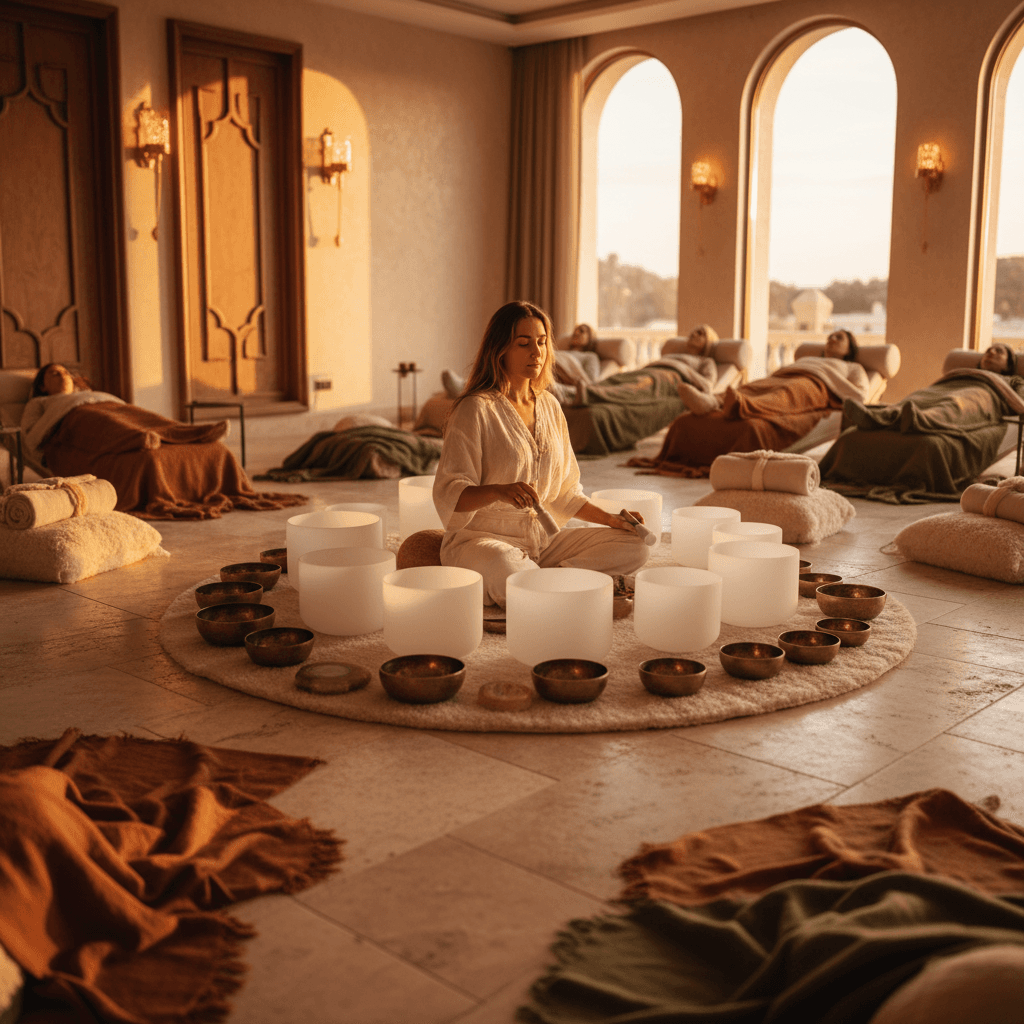
Larissa utilizes a range of precisely tuned instruments, each chosen for its specific psychoacoustic properties:
- Himalayan Singing Bowls: Their ancient, grounding frequencies are often used at the beginning of a session to quiet the analytical mind and anchor the client in the present moment, creating a stable foundation.
- Crystal Alchemy Bowls: Forged with quartz and infused with precious metals and gemstones, these bowls produce remarkably pure and powerful tones. Their sustained resonance is particularly effective at inducing states of deep meditation and fostering cognitive flexibility.
- Planetary Gongs: The immense, complex soundscape of a gong is a powerful tool for pattern disruption. The wave of cascading harmonics can help to "shake loose" rigid thought patterns and neural habits, creating a mental blank slate upon which new ideas can be written.
The journey might begin with sounds that encourage release and letting go, then transition into more uplifting and expansive frequencies designed to stimulate divergent thinking, and finally conclude with grounding tones that promote clarity and focus—preparing the designer to return to their work with a renewed and integrated perspective.
Your Next Steps: Cultivating Your Creative Mind with Sound
Integrating the power of sound into your creative workflow doesn't have to wait for your next session. You can begin to cultivate a more creative-friendly mental environment today with these simple, actionable practices.
-
Curate a 'Divergent Thinking' Playlist: Based on the scientific findings, create a playlist of instrumental music that feels uplifting and has a high emotional valence. Avoid music with lyrics, which can engage the language centers of the brain and be distracting. Use this playlist specifically during the initial brainstorming and ideation phases of a project to encourage cognitive flexibility.
-
Practice 'Sonic Priming': Before starting a demanding creative task, take five minutes for a focused listening exercise. Close your eyes and listen to a single, sustained sound—a bell, a chime, or a tone from a singing bowl app. This practice helps to quiet the internal monologue and prime your brain for a more focused and receptive state.
-
Embrace Sonic Novelty: Just as new visual and conceptual inputs can spark ideas, so can new auditory experiences. Make a point to listen to a genre of music or a type of soundscape (e.g., ambient nature sounds from a rainforest, electronic ambient music) that is completely unfamiliar to you. This novelty can help create new neural pathways and inspire unexpected analogical connections.
-
Schedule a Professional Reset: While personal practices are beneficial, the depth and impact of a professionally guided sound session are unparalleled. Consider it a strategic investment in your most valuable asset: your mind. A session with an experienced practitioner like Larissa Steinbach provides a deep cognitive and nervous system reset that is difficult to achieve on your own, clearing the way for profound creative breakthroughs.
In Summary: The Resonance of a Great Idea
The core of a designer's work is navigating ambiguity to create clarity and form. The cognitive processes that enable this—problem structuring, cognitive flexibility, and divergent thinking—thrive in a state of relaxed awareness, not high-strung stress. Modern neuroscience validates what ancient wisdom has long suggested: our mental and emotional states are profoundly influenced by our sonic environment.
A deliberate sound wellness practice is a scientifically-grounded method for nurturing the very brain states required for innovative problem-solving. It is a powerful wellness practice for mitigating the stress and burnout so common in creative fields. By consciously using sound, you are not just relaxing; you are actively tuning your instrument of creation. At Soul Art, we create the sanctuary for your next great idea to find you, empowering you to work from a place of clarity, inspiration, and sustainable wellbeing.
Bookings Coming Soon
Soul Art is still in preparation. Session details and booking will be published here after launch.
Coming Soon