Sound and Dementia: Evidence for Wellness in Care

Key Insights
Explore the science-backed evidence for using music and sound in dementia care. Learn how sound wellness may support cognitive engagement and emotional wellbeing.
Have you ever heard a song and been instantly transported back to a specific moment in your life? Music possesses a unique power to unlock corridors of memory that we thought were long sealed. This profound connection is not just a quirk of nostalgia; it’s a neurological phenomenon that holds significant promise as a supportive wellness tool, especially in the context of dementia care.
As our global population ages, dementia is becoming an increasingly prevalent concern, affecting millions of individuals and their families. While there is no cure, the focus on enhancing quality of life through compassionate, non-pharmacological approaches has never been more critical. This is where the world of sound and music offers a gentle yet powerful intervention.
In this article, we will delve into the compelling scientific evidence surrounding the use of music and sound in dementia care. We’ll explore how these vibrations interact with the brain, review what the research suggests about their benefits for mood and engagement, and discuss how these principles can be applied to foster connection, peace, and moments of clarity.
The Scientific Harmony: How Sound Interacts with the Brain in Dementia
To understand why sound can be so impactful for individuals with dementia, we must first look at the brain itself. Dementia, a group of symptoms caused by conditions like Alzheimer's disease, is the result of progressive damage to brain cells, which impairs communication between different brain regions. This damage often affects areas responsible for short-term memory, language, and executive function.
Music, Memory, and the Resilient Brain
One of the most fascinating findings in dementia research is that the brain networks responsible for musical memory often remain remarkably preserved, even in the late stages of the disease. The brain processes music across multiple, widespread regions, which means it doesn't rely on a single, localized area that might be damaged.
- Emotional Processing: Music with strong emotional connotations activates the amygdala and other parts of the limbic system, areas central to emotion that are often less affected by dementia than the hippocampus (critical for forming new memories).
- Procedural Memory: The ability to play an instrument or sing a familiar song relies on procedural memory, which is stored in areas like the cerebellum. This type of "how-to" memory is often more resilient than the memory for facts and events.
- Familiarity and Identity: Hearing music from one's youth can tap into a deeply ingrained sense of self and personal history, providing a comforting anchor in a world that may feel increasingly confusing.
The Evidence for Engagement and Mood
A growing body of research, though often consisting of smaller studies, points toward tangible benefits of sound-based interventions. It’s important to note that these are supportive practices, not treatments, but their effect on wellbeing can be significant.
Several studies highlight that live, interactive music may be more beneficial than simply listening to a recording. One study found that live music had immediate and positive effects on engagement in subjects with apathy, regardless of their dementia's severity.
Research further suggests that music and sound may help:
- Reduce Anxiety: A small study noted that passively listening to preferred music was effective in reducing measures of anxiety in residential care patients. Another review of fifteen studies, encompassing over 581 people, supported the effectiveness of music-based interventions in lowering anxiety.
- Improve Behavioral Symptoms: While the effects are often short-lived (lasting primarily during the session), music therapy has been associated with modest improvements in composite measures of behavioral and psychological symptoms.
- Combat Loneliness: As loneliness is a known risk factor for dementia, the group setting of many musical activities provides crucial social interaction and a sense of belonging.
The Physiology of Calm: Sound and the Stress Response
Beyond the cognitive and emotional, sound can have a direct physiological impact. Agitation is a common behavioral symptom in dementia, often stemming from overstimulation, discomfort, or an inability to communicate needs.
Some preliminary research indicates that music may lower biological markers of stress. A small study found beneficial effects on chromogranin A, a protein linked to the stress response, in elderly patients with dementia. The principle at work involves the autonomic nervous system. Slow, rhythmic, and harmonious sounds can help shift the nervous system from a state of sympathetic activation ("fight or flight") to one of parasympathetic dominance ("rest and digest"), promoting a sense of physical and mental calm.
From Theory to Tangible Experience
Understanding the science is one thing; witnessing its impact is another. In a care setting, the application of sound moves beyond data points and becomes a deeply human experience, creating moments of connection where words may fail.
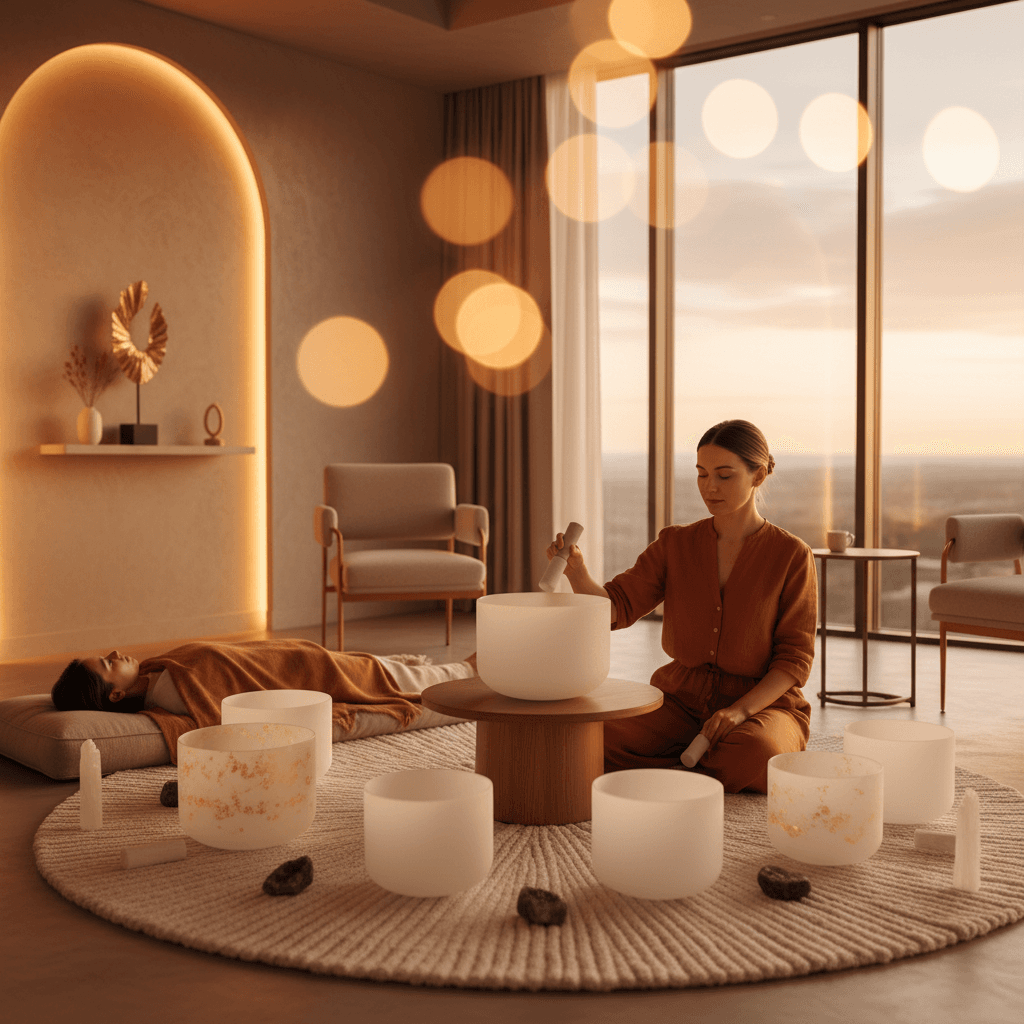
Imagine a resident in a care unit who has become withdrawn and largely non-communicative. The environment can sometimes be clinical or filled with distracting, jarring noises. Now, introduce a trained practitioner who begins to play a crystal singing bowl. The sound is not loud or intrusive; it is a pure, resonant tone that fills the space with a gentle vibration.
The resident's posture might soften. Their gaze, once distant, may focus on the source of the sound. Perhaps a foot begins to tap subtly in time with a simple, slow rhythm played on a frame drum. This is not a grand, miraculous recovery—it is a moment of presence and engagement. For that period, the individual is connected to their environment and to another person through a shared sensory experience.
In the quiet spaces left by diminishing words, the language of sound and music can build powerful new bridges of connection and understanding.
This non-verbal communication is the essence of why sound works so well in practice. It bypasses the need for complex language processing and speaks directly to the emotional and sensory centers of the brain. It can transform a sterile environment into a sanctuary, reduce the feeling of isolation, and provide a predictable, soothing stimulus in an unpredictable world.
The Soul Art Approach: A Curated Soundscape for Wellbeing
At Soul Art, we translate this scientific understanding into a refined wellness practice. Founder Larissa Steinbach has developed an approach that is deeply rooted in the principles of acoustics, resonance, and compassionate presence. It is not clinical music therapy but a holistic wellness experience designed to create a profound state of relaxation and inner balance.
Our method is distinct because it is highly personalized and intentional. We recognize that not all music or sound is beneficial; indeed, some research notes that certain types of music can have adverse effects if they are overstimulating or poorly chosen. The Soul Art experience is carefully curated to be universally soothing and harmonizing.
We primarily utilize instruments known for their pure frequencies and gentle, resonant qualities, such as:
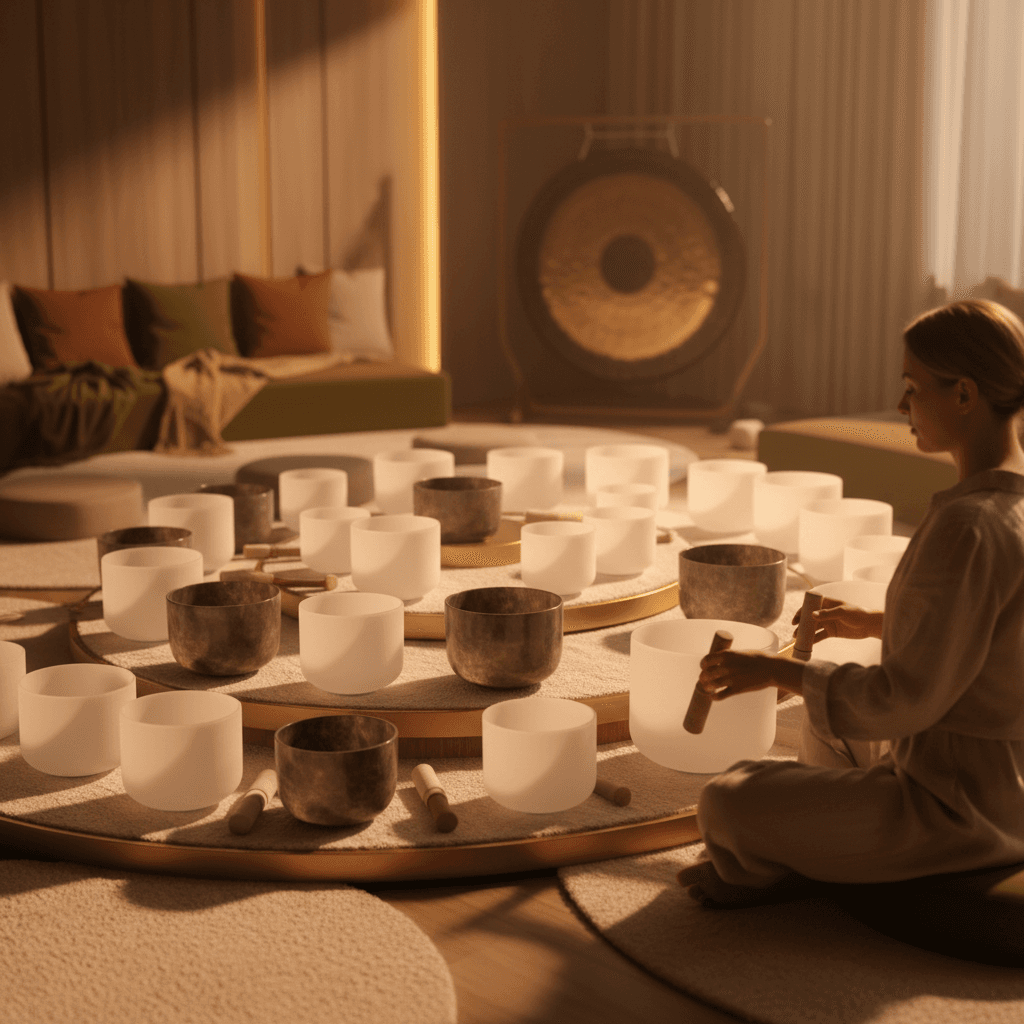
- Crystal Singing Bowls: These produce pure sine waves and rich harmonics that are deeply calming to the nervous system. Their sustained tones create a predictable and enveloping soundscape.
- Therapeutic Chimes: The delicate, high-frequency sounds of chimes can help focus attention and gently guide the mind away from anxious thought patterns.
- The Human Voice: Gentle toning or humming, a core part of Larissa Steinbach's practice, leverages the power of live, organic sound, which studies suggest is particularly effective for engagement.
The Soul Art approach is about creating an environment of acoustic safety and comfort, allowing the individual to simply be, without the pressure to respond or perform.
Integrating Sound into Daily Care: Practical Steps
For caregivers and family members looking to bring the benefits of sound into their loved one's life, there are several simple yet effective steps you can take. These practices can help foster connection and create a more peaceful daily environment.
- Curate a Personalized Playlist: Work with your loved one to create a collection of music from their teenage years and early twenties. This era is often linked to powerful memories and a strong sense of identity. Observe their reactions carefully and favor songs that elicit positive emotions.
- Prioritize Live, Simple Engagement: You don't need to be a musician. Singing a simple, familiar lullaby, humming a tune together, or gently tapping out a rhythm on a tabletop can be more engaging than a passive recording. This aligns with research highlighting the power of live interaction.
- Mind the Auditory Environment: Be conscious of background noise from televisions, radios, or multiple conversations, which can be overstimulating and cause agitation. Create dedicated "quiet time" with soothing soundscapes instead.
- Explore Nature and Ambient Sounds: Gentle sounds like flowing water, birdsong, or soft, ambient music with no jarring changes in tempo or volume can create a consistently calm atmosphere that reduces stress.
- Consider a Professional Session: For a deeper, more structured experience, exploring a guided sound wellness session at a professional studio like Soul Art can provide a powerful tool for relaxation for both the individual and their caregiver.
In Summary: A Symphony of Support
While there is no cure for dementia, a growing body of evidence strongly suggests that music and sound-based wellness practices can be a powerful symphony of support. They offer a compassionate, non-pharmacological pathway to enhance the quality of life for individuals navigating cognitive change.
These approaches are not about reversing the condition but about enriching the present moment. By reducing anxiety, combating apathy, fostering social connection, and providing a direct line to long-held memories and emotions, sound can bring light and peace to both individuals with dementia and those who care for them.
At Soul Art in Dubai, we are honored to provide a sanctuary where the profound potential of sound can be explored. We invite you to discover how these ancient vibrations, guided by modern understanding, can support the journey toward greater wellbeing.
Bookings Coming Soon
Soul Art is still in preparation. Session details and booking will be published here after launch.
Coming Soon
Related Articles

40 Hz Sensory Stimulation and Alzheimer's Research
Unlocking Wellness: The Science of Sound Healing Research Design
Unlocking Wellness: Biomarkers for Effective Sound Therapy