Deep Work: Sound Protocols for Focused Productivity & Flow

Key Insights
Unlock peak cognitive performance with Soul Art's sound protocols. Discover how specific frequencies and sonic environments, guided by Larissa Steinbach, can enhance focus, reduce distractions, and cultivate a flow state for profound productivity.
Have you ever found yourself completely engrossed in a task, losing all sense of time and external distractions? This powerful state, known as "flow," is where your mind operates at its peak, transforming complex work into something almost effortless. Yet, in our constantly connected world, achieving this level of sustained concentration—or "deep work" as author Cal Newport describes it—feels increasingly elusive.
The modern professional navigates a relentless barrage of emails, notifications, and open-plan office chatter, making genuine focus a precious commodity. However, what if a sophisticated, yet ancient, tool could help you cut through the noise and reclaim your cognitive prowess? This article will explore how carefully curated sound protocols, a cornerstone of Soul Art's wellness philosophy under the guidance of Larissa Steinbach, may support you in cultivating profound focus and unlocking your deepest potential for productivity.
We will delve into the compelling science behind sound's impact on our brains, illustrating how specific sonic environments can reduce distractions, synchronize brain activity, and even enhance motivation. You will discover practical applications and understand how integrating sound wellness into your routine may transform your work life and overall well-being. Prepare to learn how the subtle power of sound can become your secret weapon for focused productivity.
The Neuroscience of Sustained Focus
In today's fast-paced digital age, the ability to concentrate deeply is not just a desirable trait; it has become a superpower. Cal Newport, a leading voice in productivity research, defines deep work as "professional activity performed in a state of distraction-free concentration that push your cognitive capabilities to their limit." This contrasts sharply with "shallow work," which encompasses non-cognitively demanding, logistical tasks often performed while distracted. True innovation, complex problem-solving, and high-quality output typically emerge from states of deep work.
The challenge, however, lies in the pervasive nature of modern distractions. Research by Professor Gloria Mark at the University of California indicates that when people are distracted, it can take an average of 23 minutes to fully return to their original task. Considering that many office workers report being distracted every three minutes, the cumulative loss of productive time and cognitive energy is staggering. Multitasking, often lauded as an efficiency hack, is largely a myth according to neuroscience; instead, our brains rapidly switch between tasks, leading to decreased performance and increased cognitive load.
The physical environment also plays a crucial role. Studies consistently show that as noise levels in a workspace increase, our productivity and ability to focus tend to decline. This impact has become particularly evident as many have transitioned from quieter home offices back into bustling, often noisier, shared office spaces. The feeling of being productive and achieving goals is incredibly important for knowledge workers, yet managing time and minimizing distractions remain top improvement points. This is where strategic environmental engineering, including the intelligent use of sound, comes into play.
Sound Environments: Architects of Attention
The impact of sound on our cognitive functions is profound and multi-faceted. Sound protocols do not merely act as background noise; they are designed interventions that can profoundly reshape our mental landscape for deep work.
Reducing External Distractions: One of the most immediate benefits of a curated sound environment is its ability to create a consistent acoustic bubble. By providing a predictable and often gentle soundscape, office chatter, street noise, or other unpredictable auditory disruptions are effectively masked or buffered. This helps minimize the mental energy spent trying to filter out unwanted stimuli, allowing more cognitive resources to be dedicated to the task at hand. Wearing an audio device, for instance, has been reported by nearly half of surveyed knowledge workers to have positive effects on work performance and stress levels, indicating its role beyond just meetings.
Enhancing Focus Through Brainwave Synchronization: Certain rhythms, tempos, and frequencies within specific sound protocols may help synchronize brain activity, promoting states conducive to concentration. Scientific research suggests that specific musical elements can influence cognitive functions. For example, some sounds can encourage the brain to produce alpha waves, which are associated with a relaxed but alert state, or even beta waves, which relate to active, focused concentration. This process, often referred to as brainwave entrainment, may prime the brain for intense focus and reduce the mental friction often experienced when trying to "jump in" to a complex task.
Buffering Internal Distractions: Beyond external noise, our own minds can be significant sources of distraction, leading to mind-wandering or rumination. Engaging background sound, when designed appropriately, can keep the mind gently anchored to the present moment and the task, reducing the likelihood of the Default Mode Network (associated with daydreaming and self-referential thought) taking over prematurely. This helps to maintain cognitive engagement and sustained effort.
Dopaminergic Effects and Motivation: The truth about music and productivity is nuanced, but one key scientific insight stands out: music can have a dopaminergic effect on the brain. Dopamine is a neurotransmitter that plays a vital role in motivation, reward, and stimulating the prefrontal cortex—the brain's center for planning, organizing, inhibition control, and attention. Listening to music you genuinely enjoy, especially specific types of sound designed for focus, may increase dopamine levels, which in turn could make tasks feel less daunting and more engaging, thus enhancing motivation and supporting sustained cognitive effort.
Facilitating Transition into Deep Work: Establishing a consistent sound protocol also serves as a powerful signal to the brain. Just as certain cues prepare us for sleep or exercise, a specific soundscape can signal to your brain that it's time to shift into an intense concentration state. This ritualistic approach helps reduce the "time to start" – the inertia often felt before diving into demanding work. By creating an if-then protocol around sound, you bypass procrastination and accelerate your entry into a focused state.
How It Works in Practice
Connecting the scientific understanding of sound to its real-world application reveals a transformative pathway for individuals seeking to enhance their productivity and well-being. When clients engage with structured sound protocols for deep work, they often describe an immediate and palpable shift in their mental state. The experience moves beyond mere background noise; it becomes an active component in shaping cognitive performance.
One of the most commonly reported experiences is a profound mental decluttering. The enveloping soundscape acts as a sonic filter, not only dampening external auditory distractions but also helping to quiet internal mental chatter. This allows the brain to allocate more resources to the task at hand, reducing the cognitive load associated with internal and external sensory processing. Clients find it easier to sustain attention for longer periods, reducing the frequent context switching that often plagues modern work.
The immersive nature of carefully chosen sound allows for what is often described as a "boundary dissolution," where the sense of the external world fades. This is where the brain's attention and control networks, responsible for working memory, goal-directed reasoning, and sustained effort, become highly engaged and efficient. As a result, complex engineering, programming, or research work feels less arduous and more natural. This intensity can, under the right conditions, tip into a state of "flow," where progress feels seamless, feedback is immediate, and the work itself becomes intrinsically rewarding.
"The right sound environment doesn't just block out noise; it creates a dedicated mental space, a sanctuary for deep thinking where ideas can flourish unobstructed."
Furthermore, sound protocols may help in buffering against the mental fatigue associated with prolonged concentration. By engaging specific neural pathways or promoting specific brainwave states, these sound environments can create a more sustainable rhythm for cognitive output. This means a reduced sense of "torpor" or exhaustion during deep work sessions, potentially allowing for more deep work sets throughout the day without significant energy depletion.
The practice isn't just about the immediate boost; it's about cultivating a protocol. This involves intentionally choosing and implementing sound as part of a ritualized approach to work. By consistently associating specific sounds with focused tasks, the brain learns to transition more rapidly and effectively into a state of intense concentration. This learned association helps to bypass procrastination and create a smooth entry into demanding cognitive activities. It’s also important to remember that deep work loads the system with rich information, and stepping away periodically, perhaps into a different, more ambient soundscape, can allow the Default Mode Network to engage, fostering creative insight and idea formation.
The Soul Art Approach
At Soul Art, Larissa Steinbach and her team harness the profound power of sound to guide individuals toward optimal states of focus, productivity, and overall well-being. The Soul Art approach transcends mere background music; it is a meticulously crafted sound wellness methodology designed to support Cal Newport's principles of deep work within a luxurious, serene environment. Our philosophy centers on creating a sanctuary where cognitive potential can be fully realized, free from the incessant noise and demands of the external world.
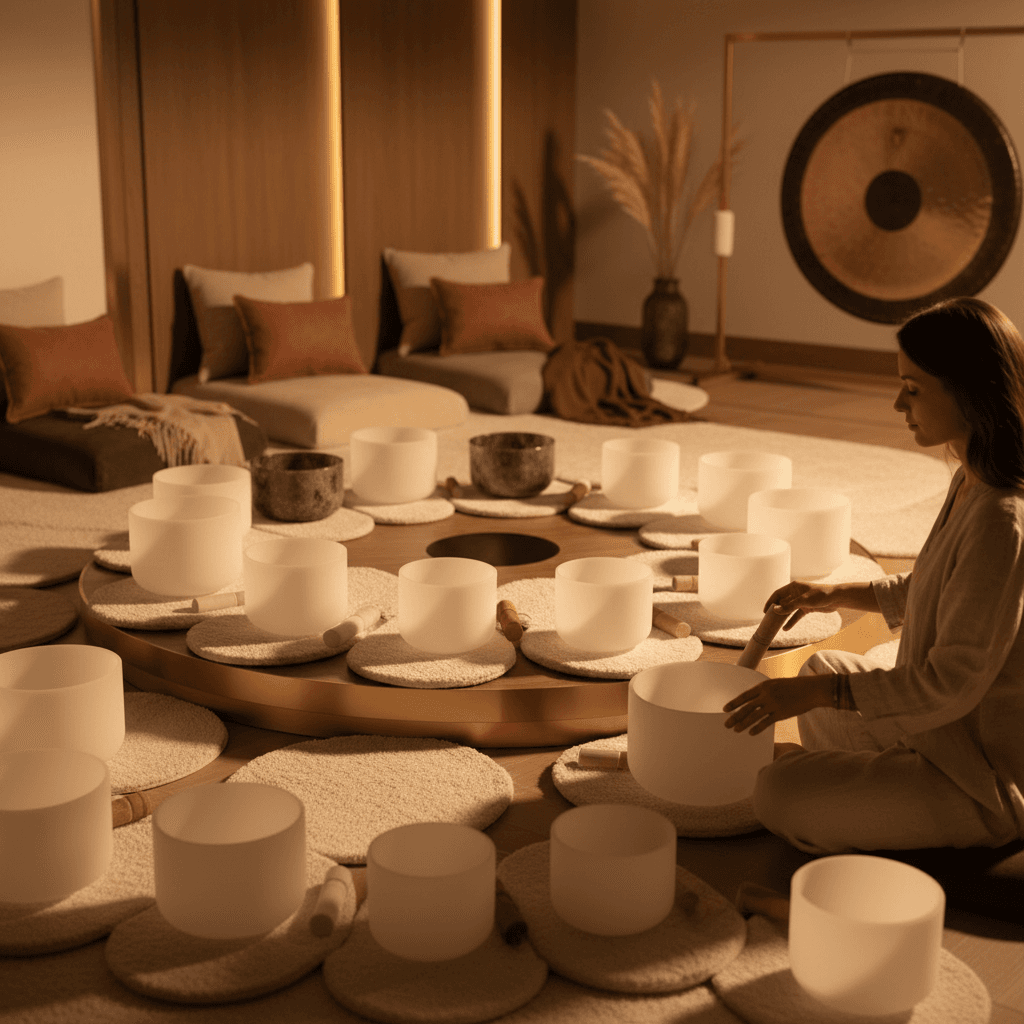
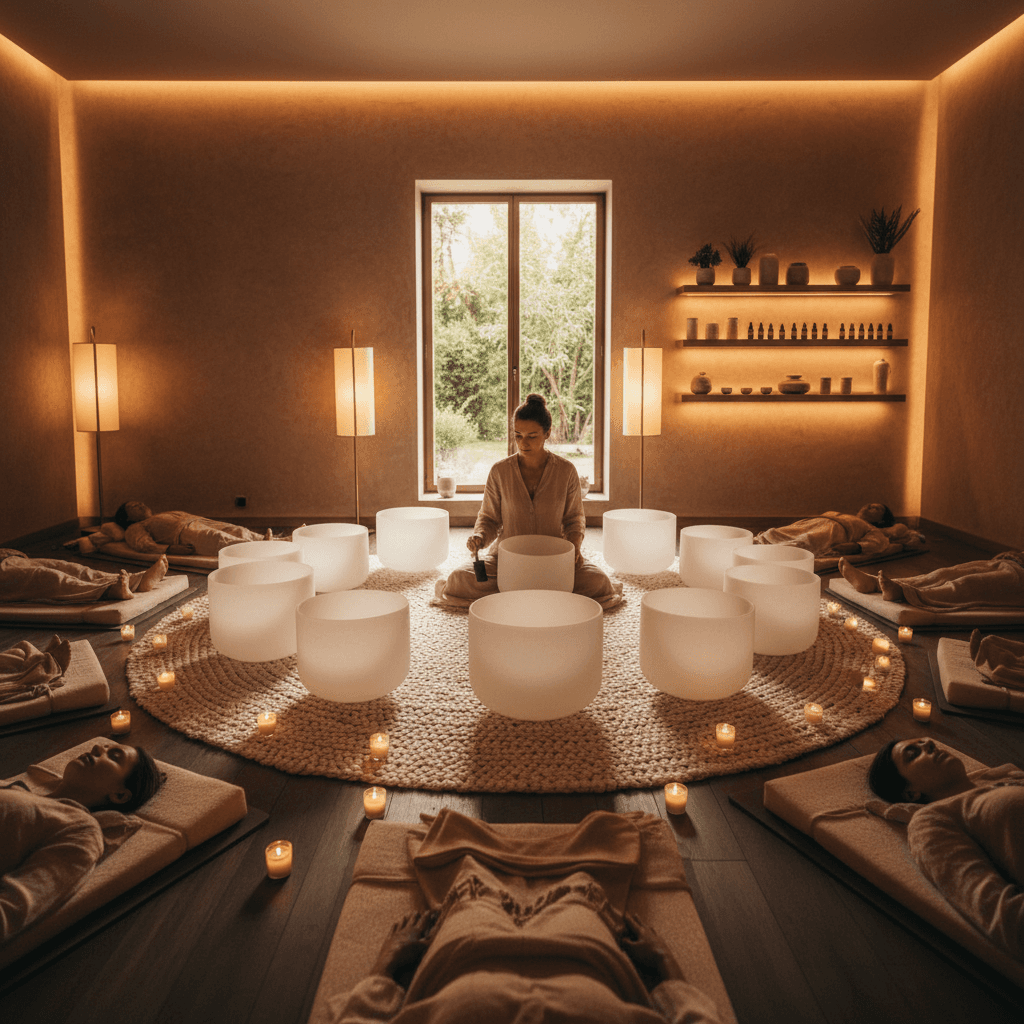
What makes the Soul Art method unique is its dedication to scientifically-grounded, yet deeply intuitive, sound protocols. Larissa Steinbach, with her extensive expertise in sound wellness, curates immersive sonic environments using a rich tapestry of instruments and frequencies. These may include the resonant tones of Himalayan singing bowls, the deep vibrations of gongs, the delicate melodies of chimes, and specially designed ambient soundscapes. Each element is chosen for its specific potential to influence brainwave activity, calm the nervous system, and enhance cognitive functions.
We understand that true deep work requires more than just silence; it demands an active engagement with an environment that nurtures focus. Our sessions are not passive experiences but rather carefully orchestrated journeys that serve as a powerful catalyst for concentration. The intention behind each sound protocol is to guide the listener into a sustained state of focused attention, helping to synchronize brain activity and mitigate both internal and external distractions.
Larissa Steinbach’s vision is to offer a personalized and transformative experience. Rather than a one-size-fits-all solution, Soul Art designs its sound protocols to address individual needs, whether that is overcoming procrastination, enhancing creative problem-solving, or simply sustaining attention on complex tasks. This bespoke approach ensures that clients receive a truly impactful experience, fostering not only improved productivity but also a deeper sense of calm and mental clarity. It’s a complementary wellness practice that seamlessly integrates into a holistic self-care routine, supporting professional excellence and personal fulfillment.
Your Next Steps
Embracing sound protocols for deep work is a journey towards greater cognitive control and enhanced well-being. You don't have to overhaul your entire routine overnight, but rather implement small, intentional changes that can yield significant results. Here are some actionable steps you can take today to begin integrating sound into your focus strategy:
- Audit Your Current Sound Environment: Become aware of the sounds around you when you try to focus. Identify common distractions – whether they are sudden noises, conversational chatter, or even the distracting silence that can invite mind-wandering. Understanding your current sonic landscape is the first step toward optimizing it.
- Curate Your Deep Work Soundtrack: Experiment with different types of sound protocols specifically designed for focus. This could include ambient instrumental music, nature soundscapes (like gentle rain or ocean waves), or even binaural beats (which use different frequencies in each ear to encourage specific brainwave patterns). Avoid music with lyrics, as these can engage the language processing parts of your brain, potentially diverting attention.
- Establish a "Sound Ritual": Create a specific routine where you consciously choose a particular sound protocol before diving into a deep work session. This acts as a powerful psychological cue, signaling to your brain that it's time to shift into an intense concentration mode. Consistency with this ritual can significantly reduce your "time to start" on demanding tasks.
- Combine with Other Deep Work Strategies: Sound protocols are most effective when integrated with other proven deep work techniques. Turn off non-essential notifications, close distracting tabs, and plan your deep work blocks in advance. Use sound as an anchor for these distraction-free periods, amplifying their effectiveness.
- Explore Professional Guidance: For a truly refined and personalized experience, consider exploring sound wellness sessions designed by experts. A professionally guided session, such as those offered at Soul Art by Larissa Steinbach, can provide access to precisely calibrated soundscapes and techniques that are difficult to replicate on your own.
Ready to transform your approach to productivity and experience profound states of focus?
In Summary
In an era defined by constant distraction, the ability to engage in "deep work" stands out as a critical skill for both professional excellence and personal fulfillment. Sound protocols, grounded in scientific understanding, offer a powerful and accessible tool to cultivate this focused state. By creating consistent sound environments, synchronizing brain activity, reducing internal and external distractions, and boosting motivation through dopaminergic effects, sound can profoundly enhance our cognitive capabilities.
The curated experiences at Soul Art, pioneered by Larissa Steinbach, provide a unique pathway to leverage these benefits. Through expertly designed sound protocols, individuals can learn to enter and sustain periods of intense concentration, unlocking creativity, mastering complex information, and achieving higher levels of output. Embracing sound as a deliberate wellness practice is not just about doing more, but about doing better, with greater clarity and a deeper sense of accomplishment. Reclaim your focus and discover the transformative power of sound.
Bookings Coming Soon
Soul Art is still in preparation. Session details and booking will be published here after launch.
Coming Soon
Wellness Disclaimer: This article is for educational and informational purposes only. It does not constitute medical advice, diagnosis, or treatment. Soul Art Dubai provides non-medical wellness experiences focused on relaxation, stress management, and general wellbeing. Sound wellness is a complementary practice and should not replace professional medical care.
Related Articles
Sound Resilience for First-Time Managers: Thrive as a New Leader

Harmonizing Global Teams: Sound Healing for Time Zone Stress
Transforming Workplace Conflict: Sound for Team Harmony