Unlocking Creativity: Sound for Deadline Pressure & Flow
Key Insights
Transform deadline pressure into creative flow and enhance well-being with sound wellness at Soul Art Dubai, led by Larissa Steinbach.
Have you ever noticed how some deadlines ignite your most brilliant ideas, while others leave you feeling utterly drained and creatively blocked? This paradox of deadline pressure is a familiar landscape for professionals across industries, from artists to executives. Understanding this complex relationship between time constraints and innovation is not just about meeting targets; it's about safeguarding your sustained creative output and overall well-being.
At Soul Art, Dubai's premier sound wellness studio, we explore how specific auditory environments can be intentionally leveraged to transform stressful urgency into a powerful catalyst for creative flow. This article delves into the science behind this phenomenon, offering insights into how sound can help you navigate deadline pressure with grace and enhanced ingenuity. We aim to empower you with strategies to foster an internal environment where creativity thrives, even when the clock is ticking.
The Science Explained: Navigating the Creative Paradox
The influence of deadline pressure on creativity is far from straightforward. Research reveals a nuanced interplay, distinguishing between conditions that foster innovation and those that stifle it. Understanding these distinctions is paramount for anyone seeking to maintain peak creative performance under pressure.
The Dual Nature of Deadline Pressure
In their seminal work, Creativity Under the Gun (Amabile et al., 2002), researchers explored the varying effects of deadline pressure. They found that high-pressure days conducive to creativity were characterized by clear goals and a meaningful sense of urgency, where participants felt "on a mission." This contrasts sharply with high-pressure days that stifled creativity, which were marked by a lack of focus, no clear purpose, and constant task switching, leading to a feeling of being "on a treadmill."
This distinction aligns closely with the concepts of challenge stressors versus hindrance stressors. Challenge stressors, like a meaningful deadline, can motivate and engage, potentially facilitating a state of flow and enhancing creativity (Csikszentmihalyi, 1990). Hindrance stressors, however, are perceived as obstacles that deplete resources, leading to negative outcomes like reduced creativity and increased stress.
Impact on Radical vs. Incremental Creativity
Further research by Zhang et al. (2023) differentiates between two types of creativity: radical creativity (novel, groundbreaking ideas) and incremental creativity (minor, practical improvements). Their findings indicate that time pressure generally results in lower radical creativity, especially when individuals lack the opportunity to seek external inspiration. However, the ability to plan effectively can significantly mitigate these negative effects, preserving radical creativity even under tight deadlines.
Interestingly, this study also found a curvilinear relationship for incremental creativity: it suffered under both too little or too much time pressure, reaching its peak at moderate levels. This suggests that a sweet spot exists where a moderate amount of urgency can actually stimulate practical, creative improvements. The goal, then, is to avoid the extremes of overwhelming or insufficient pressure.
The Neuroscience of Creativity Under Pressure
When under intense time pressure, our cognitive processes can shift in ways that impede creativity. Studies suggest that time pressure leads people to narrow their range of information processing and take fewer risks (Ben Zur & Breznitz, 1981). This constrictive mode is counterproductive to exploratory, playful behaviors that are crucial for generating novel ideas and truly creative work.
Constantly switching tasks under pressure can disrupt underlying neural processes, breaking the state of flow that is so vital for deep creative engagement. This fragmented approach can also negatively impact an individual’s sense of control, leading to increased stress and reduced intrinsic motivation, which is a known driver of creativity. The brain needs adequate time and an uncluttered mental space to cycle through various creative cognitive processes repeatedly, allowing for incubation and insight.
The Role of Auditory Environments in Fostering Creativity
Our environment, particularly its soundscape, plays a significant role in our cognitive functions and creative capacity. Research by Ravi Mehta, published in the Journal of Consumer Research, highlights the surprising impact of ambient noise on creativity. He found an "inverted-U relationship" between noise levels and creative cognition.
A moderate level of ambient noise, approximately 70 decibels (comparable to a passenger car on a highway or a bustling coffee shop), may enhance creative problem-solving by triggering abstract thinking. This "Goldilocks principle" suggests that the right amount of background sound can lead to a greater adoption of innovative ideas. However, high levels of noise, around 85 decibels (like heavy traffic), can actually hurt creativity by reducing information processing and increasing distraction.
"Our findings imply that instead of burying oneself in a quiet room trying to figure out a solution, walking outside of one’s comfort zone and getting into a relatively noisy environment like a cafe may actually trigger the brain to think abstractly, and thus generate creative ideas." — Ravi Mehta
This research provides a crucial link to sound wellness. By consciously curating our auditory environment, we may support our brains in reaching optimal states for creative output, transforming the way we respond to deadline pressure.
How It Works in Practice: Sound as a Catalyst for Flow
Understanding the science allows us to develop practical strategies. Sound wellness, especially when applied with intention, offers a powerful methodology to create the optimal internal and external environment that fosters creative flow and mitigates the detrimental effects of hindrance stressors. It's about shifting our brain's operating state to one that is more conducive to insight and ingenuity.
Specific sound frequencies have a profound impact on our brainwave activity. For instance, alpha waves (8-12 Hz) are associated with a relaxed, alert state, ideal for creative thinking and problem-solving. Theta waves (4-7 Hz) relate to deep relaxation, meditation, and dream states, often linked to moments of sudden insight and inspiration. Sound wellness practices, through their carefully calibrated frequencies and vibrations, may gently guide the brain into these beneficial states.
In a practical sense, sound can help mitigate the negative effects of deadline pressure by:
- Reducing Mental Clutter: The immersive nature of sound baths, for example, helps quiet the incessant internal dialogue and external distractions that lead to a "lack of focus." This allows for a clearer mental space where ideas can emerge and connect more readily.
- Supporting Sustained Engagement: By promoting a relaxed yet focused state, sound wellness may help individuals maintain attention on a single task, counteracting the impulse to constantly switch between tasks. This sustained focus is a cornerstone of flow states.
- Differentiating Urgency: The "mere urgency effect" (Zhu, Johns Hopkins) describes our tendency to prioritize urgent, often unimportant tasks over more significant ones simply because of a perceived deadline. Sound practices can foster greater clarity, helping us discern meaningful urgency from illusionary pressure and focus on task payoffs rather than just completion windows.
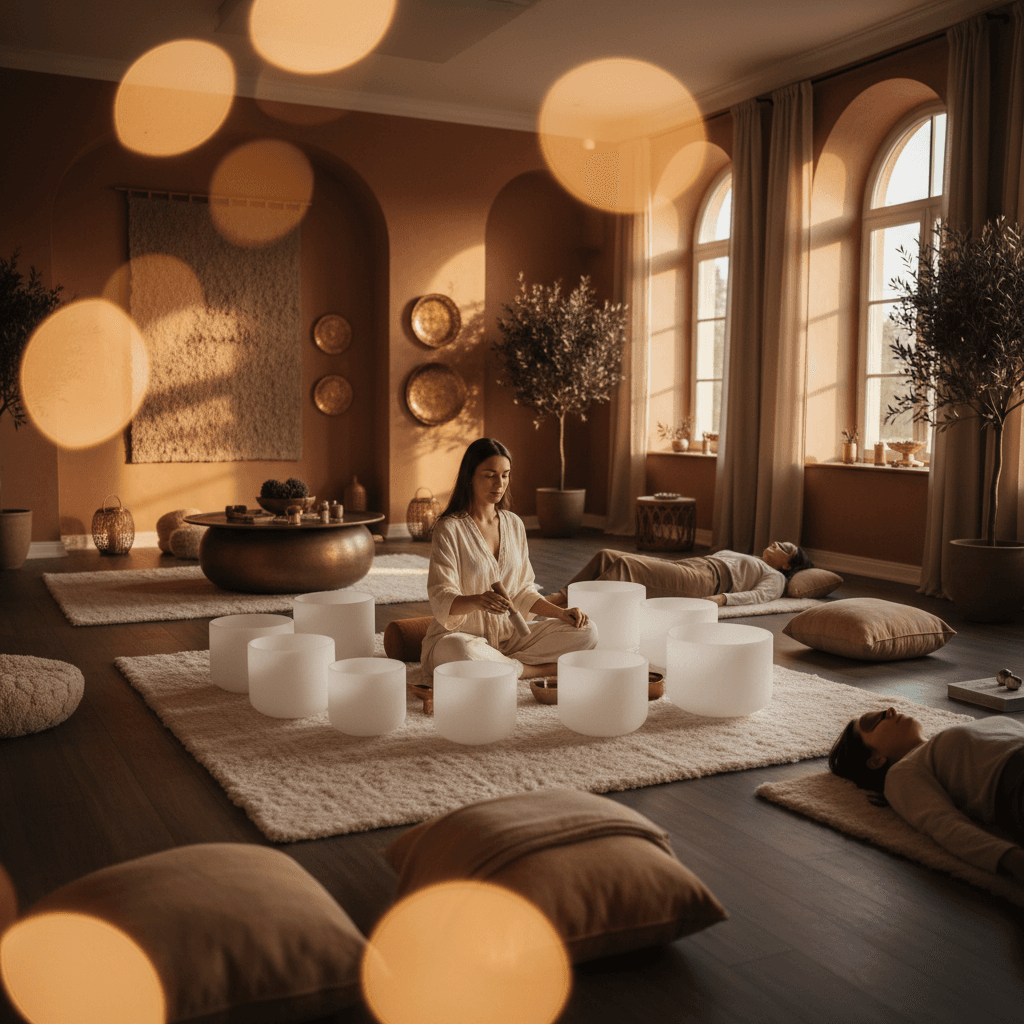
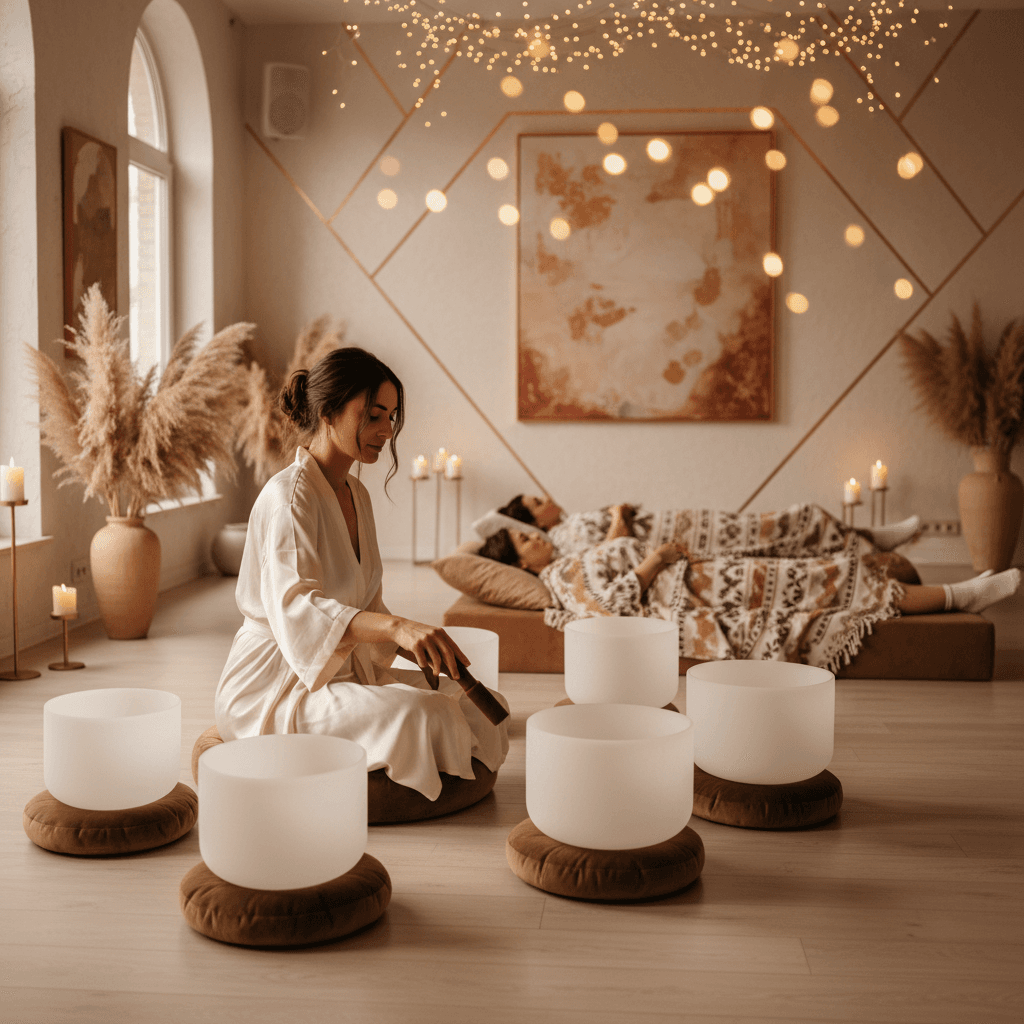
Clients frequently report an immediate sense of calm and a noticeable reduction in stress levels after a sound wellness session. The deep, resonant vibrations of instruments can be felt throughout the body, providing a grounding sensation that helps release physical tension. This combination of mental clarity and physical relaxation creates a fertile ground for creativity. The experience is deeply sensory, drawing you into the present moment and away from the anxieties of impending deadlines.
The Soul Art Approach: Larissa Steinbach's Method for Creative Urgency
At Soul Art, Larissa Steinbach, our esteemed founder, has meticulously crafted a unique methodology that harnesses the power of sound to address the very challenges presented by deadline pressure. Her approach is rooted in both ancient wisdom and contemporary scientific understanding, offering a sophisticated pathway to enhanced creative capacity and resilience. Larissa understands that creativity is not just about having ideas, but about cultivating the optimal state of being where those ideas can flourish.
Larissa Steinbach's expertise lies in curating specific sound environments designed to foster challenge stressors – that meaningful sense of urgency with clear goals – while actively mitigating the effects of hindrance stressors that derail focus and creativity. She doesn't just play instruments; she orchestrates a finely tuned sonic experience intended to guide your brainwaves and nervous system into states that are conducive to deep concentration and innovative thought. This is particularly relevant for those facing creative urgency, helping to transform potential overwhelm into productive momentum.
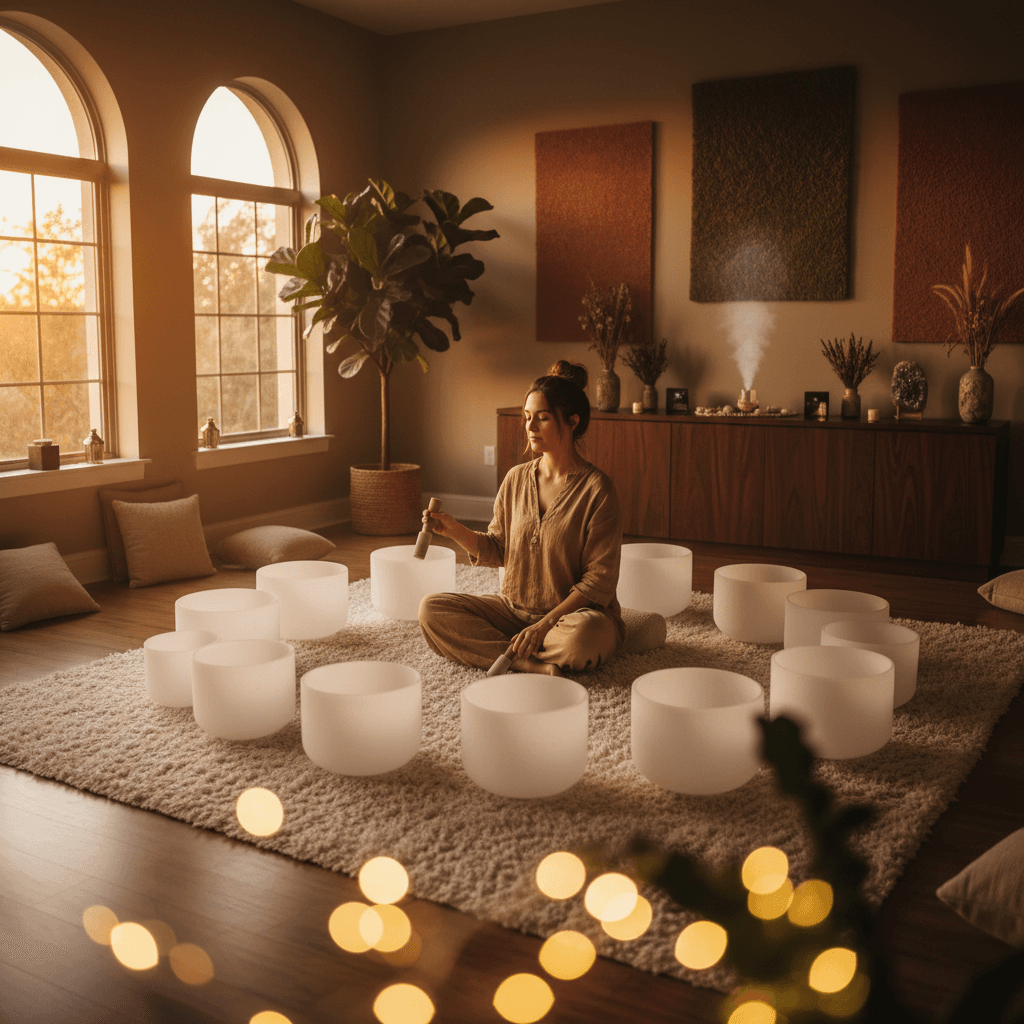
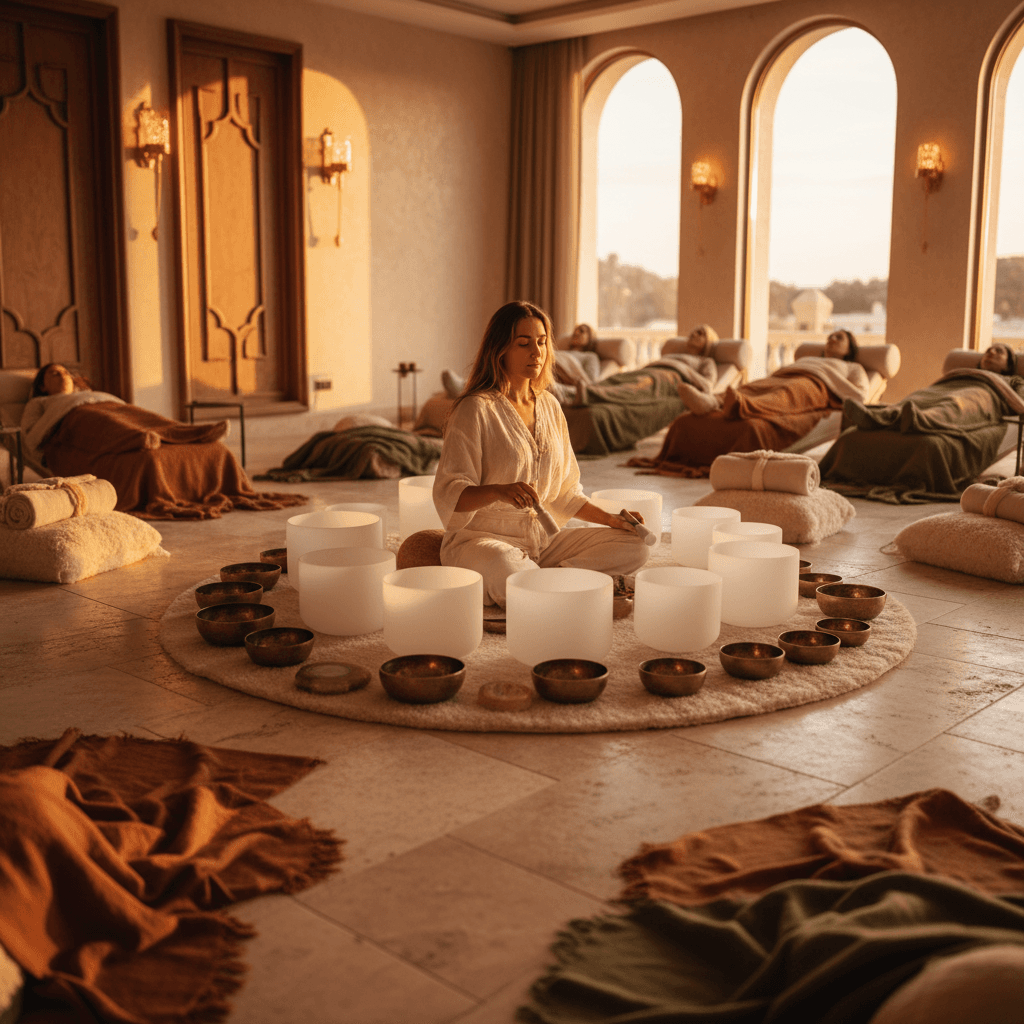
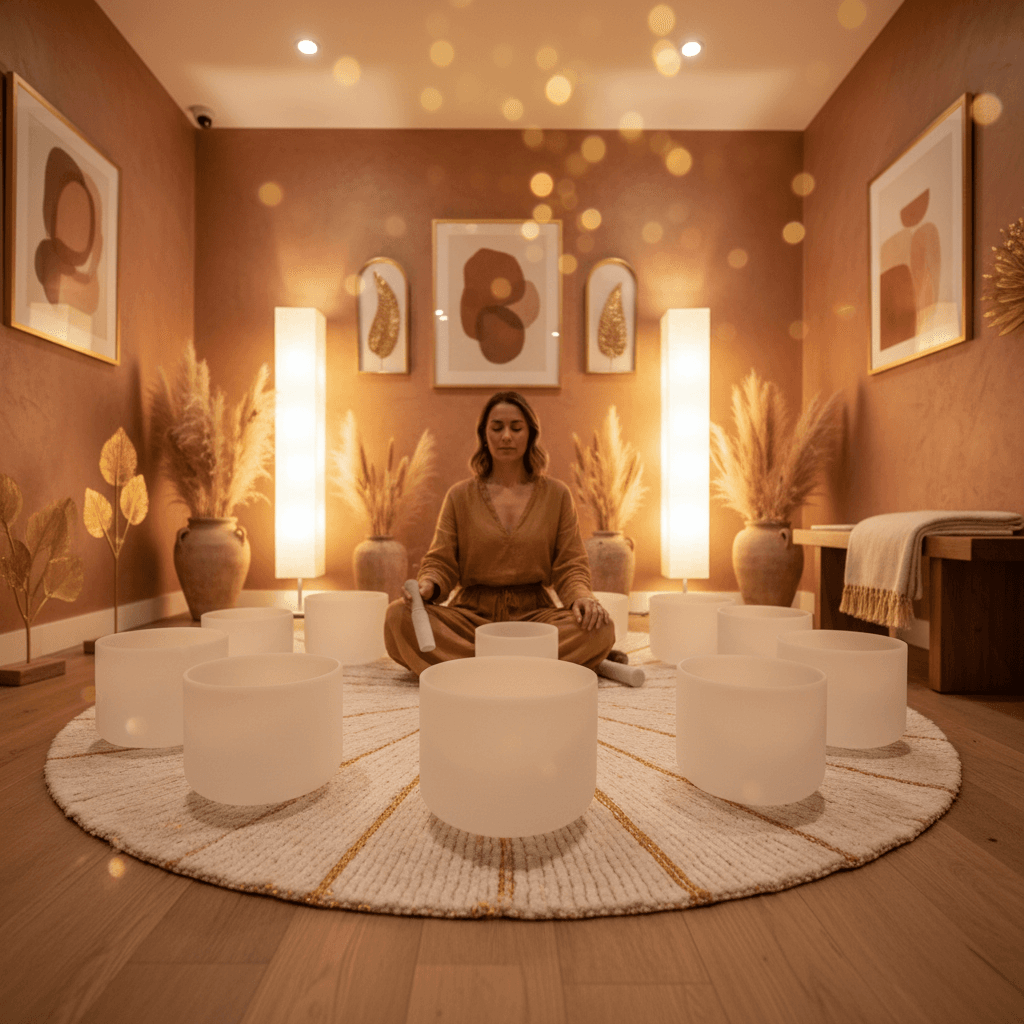
The Soul Art method utilizes a diverse array of sacred instruments, each selected for its unique vibrational qualities. This includes the profound, grounding tones of Himalayan singing bowls, the crystalline resonance of crystal singing bowls, the expansive frequencies of gongs, and the delicate, harmonizing chime of tuning forks. Larissa intuitively blends these elements, often incorporating vocal toning and guided breathwork, to create an immersive soundscape that supports profound relaxation and mental clarity.
What makes the Soul Art approach unique is Larissa Steinbach’s deep understanding of individual needs. Each session, whether private or group, is intuitively guided, allowing participants to move beyond the superficial stresses of deadlines and access deeper wells of creativity. By regulating the nervous system and promoting a state of relaxed alertness, Soul Art sessions facilitate:
- Entry into Flow States: The carefully constructed sound journeys aid in silencing distractions, making it easier to become fully immersed in a task with heightened focus and enjoyment.
- Enhanced Focus and Engagement: Through consistent practice, individuals may find it easier to concentrate for extended periods, avoiding the task-switching that breaks creative flow.
- Promotion of Exploratory Thought: By fostering a sense of inner calm and safety, the sound environments encourage the playful and risk-taking cognitive processes essential for radical creativity.
- Reduction of "Time Famine" Perception: By bringing the mind into the present moment and fostering a sense of calm, the overwhelming feeling of "never enough time" can be perceptibly reduced, allowing for more strategic and less panicked responses to deadlines.
Soul Art, under Larissa Steinbach's vision, offers more than just relaxation; it provides a powerful toolkit for creative professionals to thrive amidst the pressures of a fast-paced world. Our Dubai studio serves as a sanctuary where individuals can recharge, recalibrate, and rediscover their innate creative potential.
Your Next Steps: Cultivating Creative Resilience
Understanding the intricate relationship between deadlines, stress, and creativity empowers you to proactively shape your creative process. Incorporating these insights into your daily life can significantly enhance your ability to thrive under pressure. Here are actionable steps you can implement today to transform creative urgency into a powerful asset:
- Define Your "Mission" Clearly: Before starting a project, spend time articulating its precise goals and identifying the meaningful urgency behind it. When you feel "on a mission," the pressure can become a challenge rather than a hindrance, as highlighted in the Amabile study.
- Prioritize Long-Term Planning: As research suggests, the ability to plan can significantly mitigate the negative effects of time pressure on radical creativity. Break down large projects into manageable steps and schedule dedicated time for deeper, exploratory work that requires undisturbed focus.
- Schedule "Play Time" Deliberately: Embrace the concept of intellectual playfulness. Dedicate specific time slots, even during tight projects, for doodling, brainstorming without judgment, learning new inputs, or simply messing around with ideas. This space allows for the exploratory thought crucial for novel solutions.
- Curate Your Auditory Environment: Experiment with your surroundings. While complete silence can be beneficial for some, consider the impact of moderate ambient noise (around 70 decibels, like a gentle hum or distant chatter) to potentially stimulate abstract thinking. Avoid excessively loud or distracting environments, especially for complex creative tasks.
- Embrace Sound Wellness as a Proactive Tool: Integrate sound wellness practices into your routine. Whether through personal sessions, group sound baths, or even mindful listening to calming frequencies, these practices may support nervous system regulation, enhance focus, and provide a sanctuary for creative contemplation.
By taking these deliberate steps, you can begin to shift your relationship with deadline pressure, transforming it from a source of stress into a powerful catalyst for your most innovative work. Consider exploring the profound benefits of sound wellness to support this journey.
In Summary: Harnessing the Power of Sound for Creative Urgency
Deadline pressure, a ubiquitous feature of modern life, presents a complex challenge for creativity. While it can, under specific conditions of clear goals and meaningful urgency, catalyze innovative thought, it can also stifle radical ideas and lead to burnout when perceived as a hindrance. The science is clear: fostering an environment that supports focus, engagement, and exploratory thinking is crucial for navigating this dual effect.
Sound wellness offers a sophisticated, yet accessible, pathway to cultivate such an environment. By intentionally engaging with specific frequencies and vibrations, practices like those championed by Larissa Steinbach at Soul Art Dubai may help regulate the nervous system, quiet mental chatter, and guide the brain into states conducive to profound creative insight and sustained focus. We invite you to explore how the transformative power of sound can help you not just meet deadlines, but truly thrive under creative urgency, unlocking your fullest potential.
Bookings Coming Soon
Soul Art is still in preparation. Session details and booking will be published here after launch.
Coming Soon
Wellness Disclaimer: This article is for educational and informational purposes only. It does not constitute medical advice, diagnosis, or treatment. Soul Art Dubai provides non-medical wellness experiences focused on relaxation, stress management, and general wellbeing. Sound wellness is a complementary practice and should not replace professional medical care.