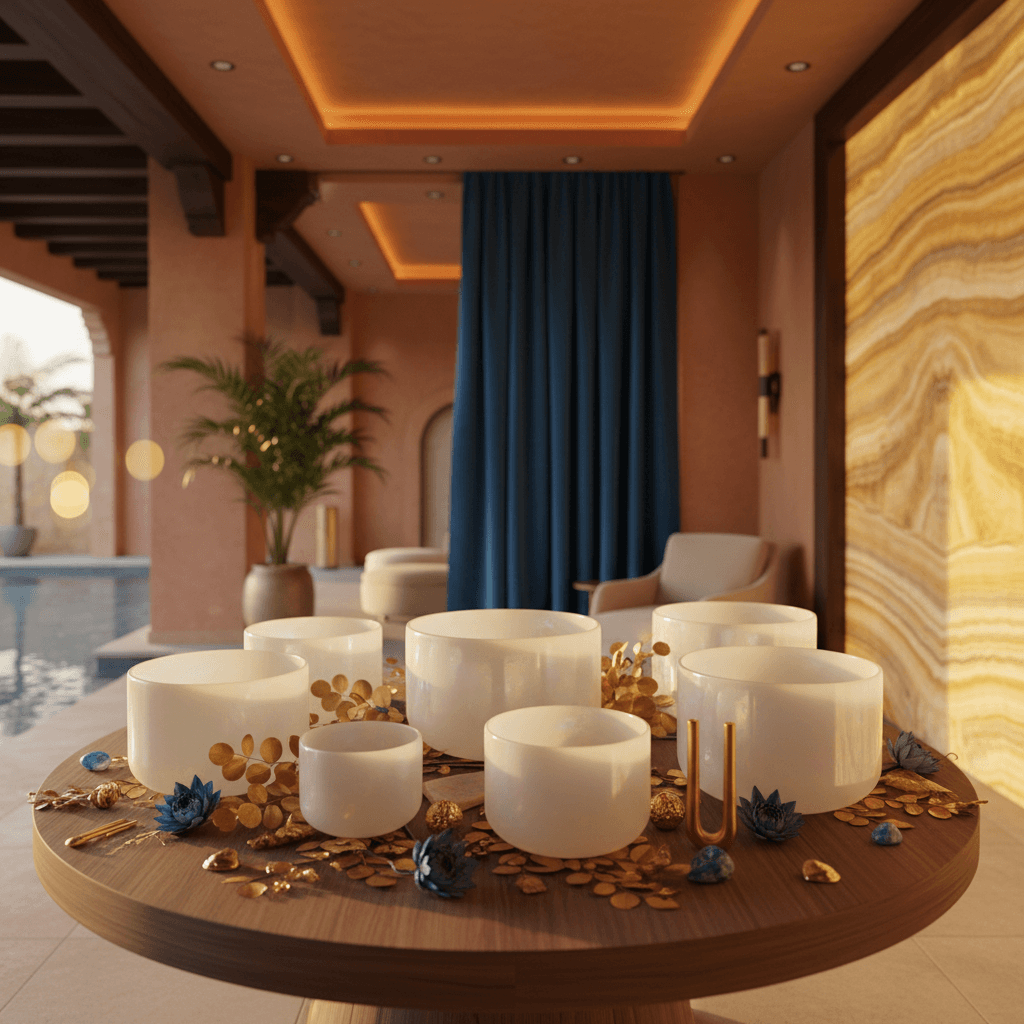
Cross-Modal Plasticity: When Sound Ignites Visual Sensation

Key Insights
Explore the neuroscience of cross-modal plasticity at Soul Art Dubai. Discover how sound can create vivid visual experiences, enhancing wellbeing through sensory integration.
Have you ever closed your eyes during a profound musical piece and seen colours, patterns, or even landscapes unfold before you? This isn't merely imagination; it's a fascinating phenomenon rooted in the intricate workings of your brain, known as cross-modal plasticity. It’s the remarkable ability of our brain to rewire itself, allowing one sensory input to influence or even evoke another, bridging the seemingly distinct worlds of sound and sight.
At Soul Art, Dubai's premier sound wellness studio, founder Larissa Steinbach guides clients through experiences designed to gently awaken this inherent capacity within the nervous system. Understanding cross-modal plasticity can unlock deeper states of relaxation, heightened sensory awareness, and a richer, more integrated experience of life. This article will delve into the compelling science behind how sound can create visual experience and explore how Soul Art harnesses these principles for your holistic wellbeing.
The Brain's Symphony: Understanding Cross-Modal Plasticity
For a long time, scientists believed that our sensory cortices were "hardwired," with specific brain regions solely dedicated to processing one type of sensory input – the visual cortex for sight, the auditory cortex for sound, and so on. However, groundbreaking research over the past few decades has completely transformed this understanding, revealing the brain's impressive capacity for rewiring and cross-modal plasticity. This means that sensory areas are not isolated islands but are constantly interacting, adapting, and even taking on new roles when conditions change.
Beyond the Five Senses: What is Cross-Modal Plasticity?
Cross-modal plasticity describes the brain's ability to reorganize itself, allowing one sensory modality to compensate for or influence another. It's a testament to the brain's dynamic and adaptive nature. While often studied in cases of sensory deprivation, such as blindness, where the visual cortex may be recruited for processing auditory information, these cross-modal interactions are also present and active in sighted individuals, influencing everyday perception and enhancing our overall sensory experience.
Studies have demonstrated that even in sighted subjects, occipital regions – traditionally associated with vision – play a more significant role than previously expected in the spatial processing of sounds (PubMed: https://pubmed.ncbi.nlm.nih.gov/18762928/). This suggests that our senses are far more interconnected than we typically perceive, constantly influencing and informing one another to create our unified experience of the world. The brain doesn't just process information; it actively integrates it, painting a rich, multi-sensory tapestry.
The Occipital's Secret Life: Visual Cortex and Sound
One of the most compelling areas of research in cross-modal plasticity focuses on the visual cortex's surprising involvement in auditory processing. In individuals who are blind, especially those who lost their sight in early infancy, the occipital regions—normally responsible for processing visual inputs—show remarkable plastic properties. These regions can be recruited to enhance auditory spatial processing, allowing blind individuals to develop exceptional abilities in localizing sounds (PubMed: https://pubmed.ncbi.nlm.nih.gov/18762928/). This neural reorganization helps compensate for the lack of visual input, highlighting the brain's incredible compensatory mechanisms.
Even in sighted individuals, there is evidence of direct cross-modal interaction between sensory cortices. For instance, research using in vivo whole-cell recordings has shown that auditory stimulation can elicit inhibitory synaptic currents in the primary visual cortex (Lee Lab: https://sites.krieger.jhu.edu/lee-lab/files/2023/12/Lee_CurrOpinNeurobiol_2015.pdf). This indicates a direct, measurable influence of sound on the visual processing areas of the brain, even at a fundamental neuronal level. This connection is not just a theoretical concept; it's an observable physiological reality, suggesting a constant, subtle interplay.
Rewiring the Mind: Synaptic Changes and Neural Networks
The underlying mechanisms of cross-modal plasticity involve profound changes at the synaptic level. Synapses are the junctions where neurons communicate, and their strength and number can be constantly modified by experience. Researchers have identified that these cross-modal interactions involve the plasticity of lateral intracortical synapses, while compensatory plasticity often acts on feedforward synapses (Lee Lab: https://sites.krieger.jhu.edu/lee-lab/files/2023/12/Lee_CurrOpinNeurobiol_2015.pdf). This means that the brain is not just rerouting signals but actively changing the fundamental communication pathways between its cells.
One of the first studies to pinpoint molecular mechanisms underlying these changes demonstrated that homeostatic synaptic scaling and bidirectional AMPA receptor regulation are involved in cross-modal synaptic plasticity (Lee Lab: https://sites.krieger.jhu.edu/lee-lab/files/2023/12/Lee_CurrOpinNeurobiol_2015.pdf). These complex molecular processes essentially allow neurons to adjust their sensitivity and connectivity based on sensory input, creating new or strengthened pathways between different sensory processing areas. This intricate dance of molecular biology gives rise to the macroscopic phenomenon of cross-modal experience, underscoring the brain’s dynamic adaptability.
Synesthesia: A Window into Cross-Modal Connections
While cross-modal plasticity is a general brain phenomenon, synesthesia offers a heightened, more direct glimpse into this sensory interconnectedness. Synesthesia is a fascinating neurological condition where stimulation in one sensory modality consistently and automatically triggers concurrent percepts in another modality. For example, a "colored-music synesthete" might report seeing specific colours upon hearing musical sounds (Science.gov: https://www.science.gov/topicpages/s/synesthesia+reveals+evidence.html).
Research into synesthesia provides compelling evidence for the structural and functional underpinnings of cross-modal associations. Studies using diffusion tensor imaging (DTI) have shown that colored-music synesthetes might have different patterns of connectivity, specifically enhanced white matter connectivity, between visual and auditory association areas (Science.gov: https://www.science.gov/topicpages/s/synesthesia+reveals+evidence.html). This suggests that while most of us experience subtle cross-modal influences, in synesthetes, these connections are profoundly enhanced, making the link between senses an automatic and vivid part of their conscious experience. The study of synesthesia offers profound insights into how our brains integrate sensory information.
"The brain's ability to repurpose its visual real estate for sound, even in sighted individuals, is a profound reminder of its limitless adaptability and our untapped sensory potential."
How It Works in Practice: The Sound-Visual Connection
The scientific understanding of cross-modal plasticity isn't just for researchers; it has profound implications for wellness practices that engage multiple senses, such as sound wellness. When you immerse yourself in a sound bath or a guided meditation with rich auditory textures, you are not only hearing sounds but potentially engaging your visual cortex in a unique way. Many people report experiencing vivid internal imagery, colours, and patterns, even with their eyes closed, during sound healing sessions.
Consider the intricate soundscapes created by gongs, singing bowls, and other resonant instruments. As the frequencies wash over you, the brain may begin to interpret these complex auditory inputs in novel ways. The lack of external visual stimuli in a darkened room, combined with focused auditory attention, can create an optimal environment for cross-modal recruitment. Your visual cortex, deprived of its usual input, may become more receptive to signals from the auditory system, processing the richness of sound into a corresponding visual experience.
This phenomenon is often described as feeling deeply immersive and sometimes even transcendent. Clients at Soul Art often share experiences of "seeing" pulsing light, flowing colours, geometric patterns, or even abstract scenes that evolve with the shifting tones and vibrations. The sustained, resonant frequencies can induce brainwave states associated with deep relaxation (alpha and theta waves), which are also conducive to enhanced visualization and inner exploration. The brain is quite literally creating an internal cinema, orchestrated by sound.
The visual experiences are rarely concrete or literal, but rather abstract and symbolic, reflecting the individual's inner landscape. Some describe a sense of synesthetic colour, where certain pitches or timbres consistently evoke specific hues. Others report a feeling of spatial awareness, as if the sound is sculpting three-dimensional forms within their mind's eye. These experiences are not hallucinations but rather a natural expression of the brain's inherent capacity for sensory integration, gently coaxed forward by specific sonic environments.
The Soul Art Approach: Harnessing Sensory Integration
At Soul Art, Larissa Steinbach designs each sound wellness experience to intentionally cultivate an environment where cross-modal plasticity can flourish. Her approach is rooted in a deep understanding of sound frequencies, their harmonic relationships, and their profound impact on the human nervous system. She carefully selects instruments, orchestrates sound journeys, and creates a serene ambiance that encourages sensory integration and internal exploration.
Larissa utilizes a curated collection of resonant instruments, including large planetary gongs, crystal singing bowls, Himalayan singing bowls, chimes, and other therapeutic percussion instruments. The specific frequencies and vibrations of these instruments are chosen not just for their calming effects but also for their ability to generate complex auditory patterns that can stimulate cross-modal connections. The sustained, immersive tones provide a consistent sensory input, allowing the brain time to adapt and engage its visual processing centres.
The Soul Art method emphasizes mindful immersion and deep listening. Clients are invited to lie down comfortably, close their eyes, and simply receive the sound. This surrender of the external world, combined with the carefully curated soundscape, facilitates a shift in brainwave states, moving from the active beta state to more relaxed alpha and meditative theta states. In these states, the brain is more primed for introspection and the emergence of inner experiences, including vivid visual sensations triggered by sound.
"At Soul Art, we believe that true wellbeing emerges from a harmonious integration of mind, body, and spirit. By gently guiding the brain to integrate sensory experiences, we invite a deeper, more profound connection to oneself." - Larissa Steinbach
Larissa's expertise lies in creating journeys that are both scientifically informed and deeply intuitive. She understands that while the mechanisms are neurological, the experience is deeply personal and holistic. The intention behind each sound session is to support the nervous system, reduce stress, and foster a sense of inner peace, all while allowing the brain's natural plasticity to unfold in beautiful, unexpected ways.
Your Next Steps: Cultivating Your Sensory World
Understanding cross-modal plasticity can empower you to engage with your senses in a more mindful and enriching way. You don't need to be a synesthete to experience the profound connections between sound and sight. Here are some actionable steps you can take to explore your own cross-modal potential and enhance your holistic wellbeing:
- Mindful Listening Practice: Dedicate time each day to truly listen to music or natural sounds without distraction. Close your eyes and notice any colours, shapes, or feelings that arise. Pay attention to how different tones or instruments might evoke particular visual textures.
- Explore Sound Baths: Immerse yourself in a professionally guided sound bath experience. Soul Art offers tailored sessions that are designed to facilitate deep relaxation and sensory exploration. This is an excellent way to experience the potent effects of intentional sound.
- Journal Your Experiences: After a listening session or sound bath, take a few moments to journal about any visual, emotional, or physical sensations you experienced. This practice can help you become more attuned to your inner sensory world and track patterns.
- Reduce Visual Overload: In today's digital age, our visual sense is often overstimulated. Try regular "digital detoxes" or spend time in nature, allowing your visual system to rest. This can make your other senses, including your auditory-visual connections, more acute.
- Engage with Art and Music Holistically: When you listen to music, try looking at abstract art, or vice versa. Notice how one might influence your perception of the other. Actively seek experiences that merge sensory modalities to heighten your awareness.
By consciously engaging with sound in a focused, relaxed environment, you may discover a richer, more vibrant internal landscape. These practices are wonderful complementary approaches to stress management and self-care, supporting your overall nervous system health and promoting a deeper connection with your inner self.
In Summary
The brain is a marvel of adaptability, constantly rewiring itself in response to experience. Cross-modal plasticity, the brain's ability to integrate and even translate sensory inputs, allows sound to profoundly influence our visual experience. From the occipital cortex's surprising role in auditory processing to the intricate synaptic changes that facilitate these connections, neuroscience illuminates the fascinating interplay between our senses. Soul Art, founded by Larissa Steinbach, expertly leverages these principles to create immersive sound wellness experiences that invite deep relaxation, stress reduction, and the emergence of vivid inner visuals. By embracing mindful listening and exploring practices like sound baths, you can awaken your brain's inherent capacity for sensory integration, fostering a more vibrant and harmonious internal world.
Bookings Coming Soon
Soul Art is still in preparation. Session details and booking will be published here after launch.
Coming Soon
Wellness Disclaimer: This article is for educational and informational purposes only. It does not constitute medical advice, diagnosis, or treatment. Soul Art Dubai provides non-medical wellness experiences focused on relaxation, stress management, and general wellbeing. Sound wellness is a complementary practice and should not replace professional medical care.
Related Articles
Cluster Headaches: Unveiling Pain and the Promise of Frequencies in Wellness

Epilepsy & Sound: Safety, Serenity, and Emerging Wellness Paths
Mastering Focus: Analytical Listening & Brain Engagement at Soul Art