Cortisol Studies: Unlocking Science-Backed Stress Reduction
Key Insights
Explore the science of cortisol and stress reduction. Discover how sound wellness, mindfulness, and nature can lower stress, supported by research. Learn about Soul Art's unique approach.
Have you ever felt the relentless grip of stress, impacting your sleep, energy, and overall well-being? It's often your body's "stress hormone," cortisol, working overtime. In today's fast-paced world, understanding how stress truly impacts us, and more importantly, how to effectively mitigate it, has become a cornerstone of modern wellness.
This article delves into the fascinating world of cortisol studies, exploring how scientists measure stress reduction and what the latest research reveals about practices that genuinely support a calmer nervous system. We will unpack the physiological mechanisms behind stress, examine robust scientific evidence for various interventions, and reveal how Soul Art, under the visionary leadership of Larissa Steinbach, integrates these insights into transformative sound wellness experiences. Prepare to discover the tangible links between ancient wisdom and cutting-edge science, offering profound pathways to peace.
Understanding Cortisol: The Body's Stress Messenger
Cortisol, often dubbed the "stress hormone," is a glucocorticoid hormone produced by the adrenal glands. It plays a critical role in the body's 'fight-or-flight' response, mobilizing energy reserves, suppressing non-essential functions, and modulating the immune system to prepare for perceived threats. While essential for survival in acute situations, chronically elevated cortisol levels can have detrimental effects on both mental and physical health. This constant state of alert can contribute to various conditions, from anxiety and sleep disturbances to metabolic imbalances and weakened immunity.
Recent research has significantly advanced our understanding of these intricate biological mechanisms. Scientists are continually exploring the relationship between our daily environments, lifestyle choices, and the subtle yet profound shifts in our hormonal balance. This pursuit is vital for developing effective, evidence-based wellness strategies.
Measuring Cortisol: Beyond the Hype
Accurately measuring cortisol is paramount for understanding stress dynamics and evaluating the effectiveness of stress management interventions. Researchers utilize several methods, each offering unique insights into different aspects of cortisol activity.
Salivary cortisol is a widely adopted non-invasive method, frequently used in studies because it reflects the unbound, biologically active cortisol levels. Its ease of collection allows for measuring diurnal patterns, which capture cortisol levels from morning to night, and the cortisol awakening response (CAR). The CAR measures cortisol within the first hour after awakening, a period when cortisol typically rises sharply before gradually declining throughout the day. Studies such as those by Do et al. and the Green Space and Stress PMC have effectively used salivary cortisol to assess the impact of environmental factors on stress.
Blood cortisol measurements, including serum and plasma cortisol, provide a snapshot of cortisol levels at a specific moment. Hair cortisol concentration (HCC), on the other hand, offers a unique window into chronic stress exposure over several weeks or months. Research by Meyer and Novak, and Wosu et al., underscores HCC's relevance as a novel biomarker for hypothalamic-pituitary-adrenocortical (HPA) activity, linking elevated HCC to stressful life events.
While these measurement techniques are robust, it is crucial to consider individual factors. A systematic review on green space interventions noted that to properly study cortisol for medical purposes, a patient’s age, gender, daily routine, lifestyle characteristics, and behaviors should be taken into consideration alongside the stressor or intervention of a study. This emphasizes the importance of a holistic perspective when interpreting cortisol data, acknowledging that a balanced approach to wellness considers the individual in their unique context.
Scientific Evidence for Stress Reduction Interventions
The demand for effective stress management interventions is ever-growing, and robust scientific research is continuously shedding light on which practices genuinely support cortisol regulation. A significant meta-analysis by Rogerson et al. (2024), encompassing 58 studies with over 3500 participants, revealed compelling evidence for the efficacy of various psychological interventions. This extensive review demonstrated that stress management interventions collectively outperformed pooled control conditions with a medium positive effect size (g = 0.282) on cortisol levels.
Among the different intervention types, mindfulness and meditation (g = 0.345) and relaxation (g = 0.347) interventions were found to be most effective at changing cortisol levels. Interestingly, studies specifically measuring the cortisol awakening response (CAR) showed larger effects (g = 0.644) from stress management interventions compared to those measuring diurnal cortisol (g = 0.255). This highlights the potential of these practices to modulate the body's initial stress response to a new day.
Beyond structured therapeutic approaches, other lifestyle interventions have also demonstrated positive associations with lower cortisol. Contact with green space, for instance, has been repeatedly linked to reduced stress. Custer and van den Berg found that a period of allotment gardening led to greater stress reduction than a restful indoor task, with salivary cortisol as a key measure. Similarly, Park and colleagues, and Lee et al., showed that visiting a Japanese forest or a general forest environment could reduce cortisol concentrations and pulse rates compared to city environments. This suggests that even simple immersion in nature can act as a powerful stress modulator, impacting both perceived and physiological stress as measured by diurnal patterns of cortisol secretion.
"The subtle dance of our hormones, particularly cortisol, offers a profound barometer of our inner landscape. Understanding and gently guiding this dance through mindful practices can unlock a deeper sense of peace and resilience."
Furthermore, everyday lifestyle choices significantly impact cortisol levels. Endocrinologist Scott Lee, MD, emphasizes that rather than relying on unverified supplements, proven lifestyle modifications offer a safer and more effective approach. Regular aerobic exercise, such as walking for 20-30 minutes three times a week, has been shown to significantly reduce cortisol levels. Adequate sleep and a balanced diet, rich in whole grains, fruits, and vegetables, and low in refined sugars and saturated fats, are also associated with lower cortisol levels and improved metabolic health. Even breathwork, particularly slow-paced techniques, has been found to lower the stress hormone cortisol compared to control groups, as noted in a meta-analysis in Nature. These findings underscore the interconnectedness of our daily habits and our physiological stress response.
How It Works in Practice
Connecting the scientific understanding of cortisol reduction to practical, lived experiences is where wellness truly comes alive. The theoretical frameworks of mindfulness, meditation, relaxation, and breathwork translate into tangible shifts in our physical and emotional states, creating a profound sense of calm and clarity. When you engage in these practices, you are not merely performing an action; you are actively engaging your body's innate capacity for self-regulation and healing.
Consider a guided meditation or a sound bath session. As calming frequencies wash over you, or as you focus on your breath, your sympathetic nervous system—responsible for the 'fight or flight' response—begins to quieten. This allows your parasympathetic nervous system, the 'rest and digest' system, to activate. This physiological shift is not just a feeling; it's accompanied by measurable changes within the body, including a potential reduction in cortisol release. The gentle vibrations and soothing sounds, for instance, can help to downregulate the HPA axis, which is the central command system for your stress response.
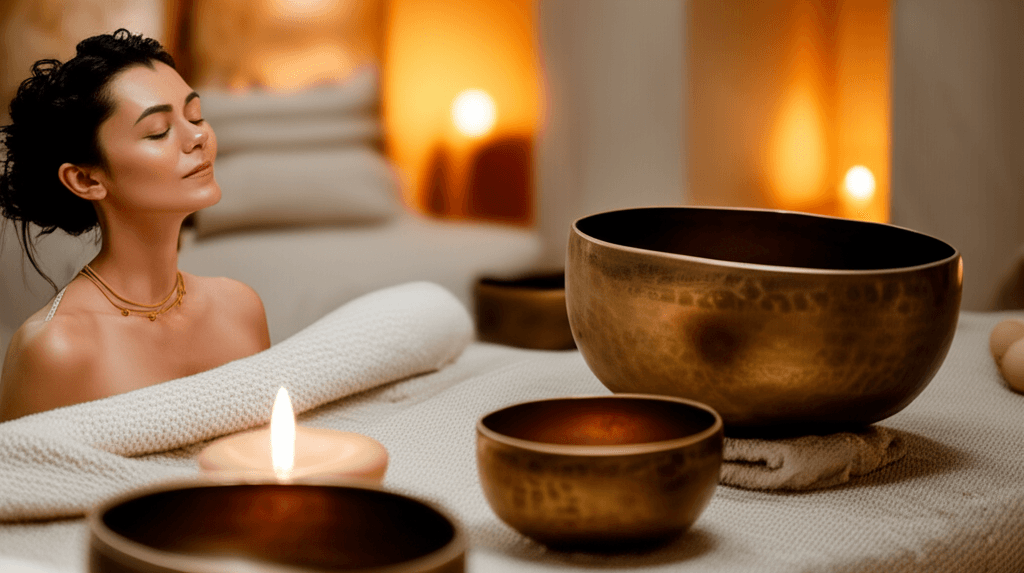
These practices encourage a deeper awareness of the present moment, shifting focus away from anxious thoughts and external stressors. This mental detachment, even for short periods, can prevent the chronic activation of cortisol. Many people report experiencing a profound sense of inner peace, reduced muscle tension, and improved sleep quality after regular engagement. The sensory details—the resonant tones of a gong, the gentle hum of a singing bowl, the focused rhythm of your breath—all contribute to this immersive experience, helping to rewire neural pathways associated with stress.
Consistent practice is key to realizing and sustaining these benefits. Just as regular exercise strengthens muscles, consistent engagement in stress-reducing practices can enhance the body's ability to maintain a balanced cortisol rhythm and respond more effectively to daily challenges. This proactive approach to wellness moves beyond simply reacting to stress, empowering individuals to cultivate resilience from within. Through deliberate engagement with these modalities, clients can gradually experience a rebalancing of their hormonal system, leading to greater emotional stability and overall vitality.
The Soul Art Approach
At Soul Art, Larissa Steinbach has meticulously curated an approach that seamlessly blends scientific insights into stress physiology with the profound wisdom of sound and mindfulness practices. Her vision for Soul Art is to provide a holistic sanctuary where individuals can tap into their inner resources for healing and rejuvenation, grounded in evidence-based principles. The Soul Art method is unique in its emphasis on creating immersive, sensory-rich experiences designed to gently guide the body and mind into deep states of relaxation.
Larissa Steinbach utilizes a diverse array of sacred instruments, including resonant singing bowls, powerful gongs, and delicate chimes. These instruments are not merely tools; they are conduits for specific frequencies and vibrations that interact with the body's energy fields. This interaction may support the modulation of brainwave states, shifting from beta (alert, active) to alpha (relaxed, calm) and even theta (deep meditation, restorative sleep), which are associated with reduced stress and enhanced well-being. The careful selection and application of these sounds are designed to promote a state conducive to lower cortisol levels, echoing the research on relaxation and meditation.
Each Soul Art session incorporates elements of guided meditation and conscious breathwork. These components are critical, as studies confirm that mindfulness and controlled breathing are highly effective in regulating the stress response. The focused attention on breath and the body during a session helps to activate the parasympathetic nervous system, which directly counteracts the effects of cortisol. By creating an environment where the nervous system can reset, Larissa Steinbach facilitates a natural unwinding process, allowing the body to release accumulated tension and re-establish equilibrium.
This integrative approach ensures that every experience at Soul Art is not just aesthetically pleasing but also deeply therapeutic, aligning with the scientific findings on effective stress reduction interventions. Larissa Steinbach believes in empowering individuals with tools for self-care, offering a complementary pathway to holistic wellness that respects the body's natural healing capabilities. The studio’s commitment to scientific grounding, combined with its unique blend of sound, breath, and mindfulness, makes Soul Art a premier destination for those seeking profound stress reduction and inner harmony in Dubai.
Your Next Steps
Empowering yourself with effective stress management tools is one of the most valuable investments you can make in your well-being. Based on the scientific findings regarding cortisol reduction, there are several practical steps you can integrate into your daily life to cultivate a calmer, more resilient state. These actions are designed to support your body's natural ability to regulate stress and enhance your overall health.
Here are 3-5 actionable bullet points you can implement starting today:
- Prioritize Mindful Moments: Dedicate just 5-10 minutes daily to mindfulness or meditation. This could involve focusing on your breath, practicing gratitude, or simply being present without judgment. Regular practice, as supported by research, may significantly influence cortisol levels.
- Embrace the Power of Green Space: Seek out opportunities to connect with nature, even if it's a short walk in a local park or spending time in your garden. Exposure to natural environments has been associated with lower cortisol concentrations and improved physiological stress markers.
- Optimize Sleep and Nutrition: Commit to a consistent sleep schedule and prioritize nutrient-dense foods. A diet high in fiber and low in refined sugars, combined with adequate rest, supports hormonal balance and contributes to lower cortisol.
- Incorporate Gentle Movement: Engage in regular, moderate aerobic exercise, such as walking, for 20-30 minutes, a few times a week. This type of activity has been shown to reduce cortisol levels in both men and women, promoting a healthier stress response.
- Explore Sound Wellness: Consider immersing yourself in sound baths or guided relaxation sessions. Practices offered at Soul Art provide a scientifically informed approach to profound relaxation, leveraging sound frequencies and breathwork to support nervous system regulation and stress reduction.
Taking these intentional steps can make a profound difference in your daily experience of stress. These holistic wellness practices are not quick fixes, but rather consistent habits that build resilience over time.
In Summary
Cortisol, the body's primary stress hormone, serves as a crucial biomarker for understanding our physiological response to daily pressures. Extensive scientific research consistently demonstrates that chronic stress, reflected in elevated cortisol levels, can have significant adverse effects on our health. Fortunately, a wealth of evidence-based interventions offers pathways to effectively manage and reduce these levels.
Studies confirm that practices such as mindfulness, meditation, targeted relaxation techniques, and conscious breathwork are highly effective in modulating cortisol and promoting a calmer nervous system. Furthermore, engaging with natural environments and adopting healthy lifestyle habits like adequate sleep, balanced nutrition, and regular gentle exercise are strongly associated with lower cortisol. Soul Art, led by Larissa Steinbach, integrates these scientifically-backed principles into unique sound wellness experiences. By combining resonant soundscapes with guided meditation and breathwork, Soul Art offers a powerful, complementary approach to support stress reduction and cultivate profound inner peace. Embrace these practices and experience the tangible benefits of a balanced cortisol rhythm for a more harmonious life.
Bookings Coming Soon
Soul Art is still in preparation. Session details and booking will be published here after launch.
Coming Soon
Wellness Disclaimer: This article is for educational and informational purposes only. It does not constitute medical advice, diagnosis, or treatment. Soul Art Dubai provides non-medical wellness experiences focused on relaxation, stress management, and general wellbeing. Sound wellness is a complementary practice and should not replace professional medical care.
Related Articles

40 Hz Sensory Stimulation and Alzheimer's Research
Unlocking Wellness: The Science of Sound Healing Research Design

Unlocking Wellness: Biomarkers for Effective Sound Therapy