Cognitive Renewal: Sound Therapy's Role in Post-Injury Wellness

Key Insights
Explore how scientifically-grounded sound therapy protocols, championed by Larissa Steinbach at Soul Art Dubai, may support cognitive rehabilitation and enhance overall brain wellness after injury.
A New Harmony for the Mind: Sound Therapy and Cognitive Wellness
Imagine a world where your brain, after facing the challenges of injury, could find its way back to clarity and function, supported by the gentle yet powerful embrace of sound. This isn't a futuristic dream, but an emerging reality, as researchers increasingly recognize the profound impact of precise acoustic stimulation on human physiology and cognition. From leading medical schools to advanced wellness practices, sound therapy is being integrated into comprehensive wellness protocols, moving beyond ancient traditions to embrace a foundation of peer-reviewed research.
At Soul Art, Dubai’s premier sound wellness studio, we are at the forefront of this exciting frontier, exploring how carefully curated soundscapes and vibrational experiences may offer a complementary pathway for cognitive rehabilitation post-injury. This article delves into the fascinating science behind sound as a tool for brain wellness, revealing how targeted frequencies can potentially enhance cognitive function, improve memory, and promote neural synchronization. Join us as we explore the scientifically-grounded protocols that may support individuals on their journey toward renewed mental vitality and overall wellbeing.
The Science Explained: Vibrations, Brainwaves, and Neural Plasticity
Sound therapy operates on fundamental principles of physics and biology, which dedicated researchers are actively seeking to understand more fully. At its core, this approach suggests that the human body, a complex system of cells and networks, responds uniquely to specific vibrational inputs. These inputs, delivered through various modalities, may influence physiological and neurological processes in ways that support wellness.
Vibroacoustic Therapy and Brainwave Entrainment
One of the most studied forms of therapeutic sound intervention is Vibroacoustic Therapy (VAT). VAT employs low-frequency sine wave vibrations, typically in the range of 30-120 Hz, which are felt directly by the body. Mechanoreceptors, specialized sensory cells including Pacinian corpuscles, are particularly adept at detecting these vibrations, with some able to register frequencies up to 1,000 Hz. The body's ability to perceive these subtle yet powerful inputs forms the basis for their potential therapeutic effects.
Research indicates that specific frequency ranges appear to promote distinct physiological responses. For instance, 40 Hz stimulation has been associated with the activation of gamma brain waves. These gamma oscillations are crucial for advanced cognitive processing, playing a significant role in memory consolidation, learning, and neural synchronization—the coordinated activity of brain regions. The activation of these pathways through sound may offer a novel approach to supporting cognitive function, memory enhancement, and improved neural connectivity, extending its potential implications into mental wellness and healthy aging.
Autonomic Balance and Stress Reduction
Beyond direct neural effects, vibroacoustic therapy also produces measurable impacts on the autonomic nervous system (ANS), which governs involuntary bodily functions. Studies on vibroacoustic stimulation suggest that low-frequency sound interventions can increase parasympathetic activity, often referred to as the "rest and digest" response. This shift towards parasympathetic dominance helps to mitigate physiological stress.
Measurable physiological stress markers, such as heart rate variability (HRV) and cortisol levels, have shown improvements following these interventions. A balanced ANS is critical for overall health and directly impacts cognitive function, as chronic stress can impair memory and executive functions. By fostering a state of relaxation and physiological equilibrium, sound wellness practices may indirectly support a more conducive environment for cognitive recovery.
Music-Based Rehabilitation and Neuroplasticity
The therapeutic implications of sound extend into the realm of music-based rehabilitation. A systematic review and meta-analysis of various studies, including randomized controlled trials and neuroimaging investigations, revealed positive therapeutic outcomes across a range of functions. These interventions, which include both passive listening and active engagement with music (e.g., piano playing, singing, improvisation), have been linked to improvements in behavioral, cognitive, and motor functions.
Crucially, music has been shown to promote neuroanatomical reorganization during recovery, indicating the brain's remarkable capacity for plasticity. For individuals experiencing cognitive deficits post-brain injury (BD), music-based interventions have reported benefits in memory (through autobiographical recall, enhanced brain connectivity, and verbal memory recovery), attention, and executive function. Active engagement, such as instrument playing, may support cortical plasticity, further improving attention and executive functions. Furthermore, specific approaches like Neurological Music Therapy have been shown to induce white matter plasticity, highlighting the profound potential of structured musical engagement.
Holistic Cognitive Support
Cognitive rehabilitation is recognized as most effective when administered as part of a multidisciplinary or interdisciplinary approach. It is not seen as a standalone therapy but rather a vital component within a broader wellness strategy, often involving physicians, neuropsychologists, and other therapists. Interventions are ideally tailored to individual needs and can encompass both restorative and compensatory approaches. Restorative strategies aim to reinforce and strengthen impaired skills through repeated exercises, while compensatory strategies teach ways to bypass or adapt to challenges.
Sound and music-based protocols, while not a replacement for traditional cognitive rehabilitation, may serve as a powerful complementary tool. They offer a unique avenue for engaging cognitive domains, promoting relaxation, and potentially enhancing the brain's natural capacity for recovery and adaptation. The integration of auditory stimulation with other sensory modalities (visual, olfactory, tactile) has also been explored in rehabilitation settings, suggesting that a multimodal approach may be more effective in stimulating brain function and aiding recovery. This holistic perspective underscores the potential for sound wellness to integrate seamlessly into a person’s overall journey toward cognitive health.
"The symphony of healing isn't just heard; it's felt deep within, resonating with the body's innate capacity for restoration and balance."
How It Works in Practice: Experiencing the Frequencies
In a sound wellness session, the scientific principles translate into a deeply immersive and often profoundly relaxing experience. Clients are invited to a serene environment where carefully selected sounds and vibrations are delivered through various instruments and technologies. This isn't just about listening to music; it’s about feeling the frequencies resonate throughout the body and mind.
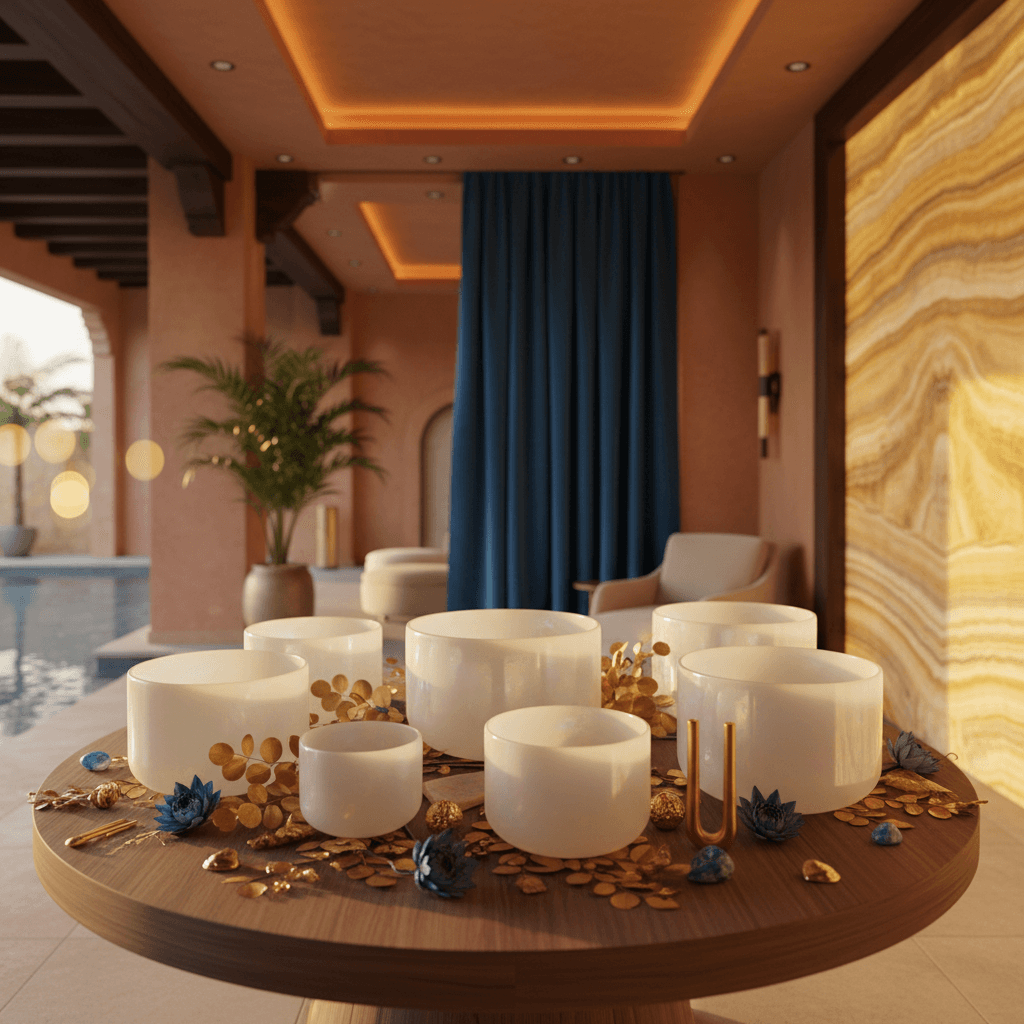
During a session, you might lie comfortably on a cushioned surface, sometimes directly on a vibroacoustic bed designed to transmit low-frequency vibrations directly into your body. As the session begins, the practitioner may utilize a range of instruments such as Tibetan singing bowls, crystal bowls, gongs, or tuning forks. Each instrument produces unique soundscapes and vibrational patterns. The bowls, when played or struck, create rich, sustained tones and palpable vibrations that can be felt in the body when placed on or near it. Gongs offer deeply resonant, often complex soundscapes that can quickly induce a state of profound relaxation and altered consciousness.
The sensory details are paramount: the gentle hum that starts in your core and spreads outwards, the shimmering echoes that fill the room, the subtle shifts in frequency that guide your mind into deeper states of calm. These auditory and tactile sensations work in tandem to engage multiple pathways within your nervous system. The vibrations from the instruments are thought to interact with the body's mechanoreceptors, similar to how VAT works, potentially promoting cellular healing and stress reduction. Simultaneously, the auditory input directly influences brainwave activity, guiding the mind towards states associated with relaxation (alpha, theta waves) or cognitive engagement (gamma waves, as with 40 Hz stimulation).
The experience can be both passive and subtly active. While the body rests, the mind may be gently stimulated by the intricate layers of sound. This gentle stimulation, without demanding active intellectual effort, may help in re-establishing neural pathways and fostering cognitive flexibility. For some, the session might feel like a profound meditation, while for others, it could evoke a sense of mental clarity and emotional release. The goal is to create an optimal physiological and psychological state where the body's innate healing mechanisms and cognitive functions are gently encouraged to flourish, potentially supporting processes like memory recall, improved attention, and enhanced executive function as suggested by studies on music-based interventions.
The Soul Art Approach: Larissa Steinbach’s Vision
At Soul Art, Dubai, Larissa Steinbach, our visionary founder, has meticulously crafted an approach to sound wellness that integrates ancient wisdom with modern scientific understanding. Her method is deeply rooted in the belief that personalized, intentional sound experiences can provide powerful complementary support for individuals navigating the complexities of cognitive recovery and overall wellbeing. Larissa's expertise lies in curating environments and protocols that speak to the unique needs of each client.
The Soul Art method begins with a personalized consultation to understand the client's specific wellness goals, including any areas of cognitive support they may be seeking. Based on this, Larissa and her team design bespoke sound journeys. These journeys often incorporate a diverse array of instruments, each chosen for its specific vibrational qualities and potential effects. Therapeutic gongs are utilized for their deeply immersive resonance, which can facilitate profound relaxation and brainwave entrainment. Crystal singing bowls offer pure, sustained tones and gentle vibrations known for their calming properties. Himalayan singing bowls provide rich, earthy tones and tactile vibrations when placed on the body, further enhancing the sensory experience.
Beyond these traditional instruments, Soul Art also leverages advanced vibroacoustic technologies, such as specialized beds or mats. These devices precisely deliver low-frequency vibrations, targeting specific areas of the body and mind. Larissa's protocols are not merely about playing instruments; they involve a sophisticated understanding of frequency science, rhythm, and intention. For instance, specific frequency patterns might be selected to encourage gamma wave activity, which is associated with improved cognitive function and memory, or lower frequencies to promote parasympathetic nervous system dominance for stress reduction and mental clarity.
What makes the Soul Art method truly unique is the combination of Larissa Steinbach's deep intuition as a sound practitioner with an unwavering commitment to scientifically-informed practices. Every session is an invitation to a "quiet luxury" experience – sophisticated, deeply personal, and designed to foster an internal environment conducive to healing and cognitive renewal. It’s a testament to the belief that true wellness is a symphony of mind, body, and spirit, harmonized through the power of sound.
Your Next Steps: Integrating Sound into Your Cognitive Wellness Journey
Embracing sound as a complementary tool for cognitive wellness is a proactive step toward nurturing your brain and nervous system. Whether you are seeking support post-injury or simply looking to enhance your mental clarity and focus, there are actionable steps you can take today. Remember, these are wellness practices designed to complement, not replace, any medical care you may be receiving.
- Mindful Listening Practices: Dedicate short periods each day to listen attentively to calming sounds, such as nature sounds or soothing instrumental music. Focus on the textures, rhythms, and feelings these sounds evoke to gently engage your auditory processing and promote relaxation.
- Create a Supportive Sound Environment: Curate your living and working spaces with sounds that promote focus and tranquility. Consider white noise, binaural beats designed for cognitive enhancement, or specific classical compositions that are known for their calming effects. This may help in reducing distractions and supporting mental tasks.
- Explore Vibrational Tools: Small, personal vibrational tools like tuning forks can be used for self-application, carefully placed on specific points on the body. These can provide localized vibrational input that many people report as soothing and centering, potentially contributing to a sense of overall calm.
- Journal Your Experiences: After engaging with sound practices, take a few moments to journal any shifts in your mood, clarity, or cognitive ease. This practice can help you become more attuned to how different sounds affect your personal well-being and cognitive state.
- Consider Professional Guidance: For a deeper, more personalized approach, explore sessions with a trained sound wellness practitioner. They can guide you through tailored protocols, using specialized instruments and techniques to address your unique wellness goals in a safe and supportive environment.
At Soul Art, we believe that investing in your cognitive wellness is one of the most powerful forms of self-care. We invite you to explore the profound potential of sound to support your journey towards a more balanced, clear, and harmonious mind.
In Summary: The Resonant Path to Cognitive Wellness
The journey of cognitive rehabilitation post-injury is deeply personal and often complex, but emerging science continues to illuminate new avenues for support and renewal. Sound therapy, grounded in its effects on brainwave activity, autonomic balance, and neural plasticity, presents itself as a compelling complementary wellness practice. From activating gamma brain waves linked to memory and processing to promoting a state of parasympathetic calm, targeted acoustic stimulation offers a sophisticated approach to nurturing cognitive health.
At Soul Art, Larissa Steinbach and her dedicated team are committed to translating this scientific understanding into deeply transformative experiences. Through bespoke protocols utilizing gongs, bowls, and advanced vibroacoustic technology, Soul Art provides a sanctuary for individuals seeking to enhance their cognitive function and achieve a profound sense of wellbeing. We believe in empowering you with tools that resonate with your body's innate capacity for harmony and healing, inviting you to discover a renewed sense of mental clarity and calm.
Bookings Coming Soon
Soul Art is still in preparation. Session details and booking will be published here after launch.
Coming Soon
Related Articles

Cluster Headaches: Unveiling Pain and the Promise of Frequencies in Wellness

Epilepsy & Sound: Safety, Serenity, and Emerging Wellness Paths
Mastering Focus: Analytical Listening & Brain Engagement at Soul Art