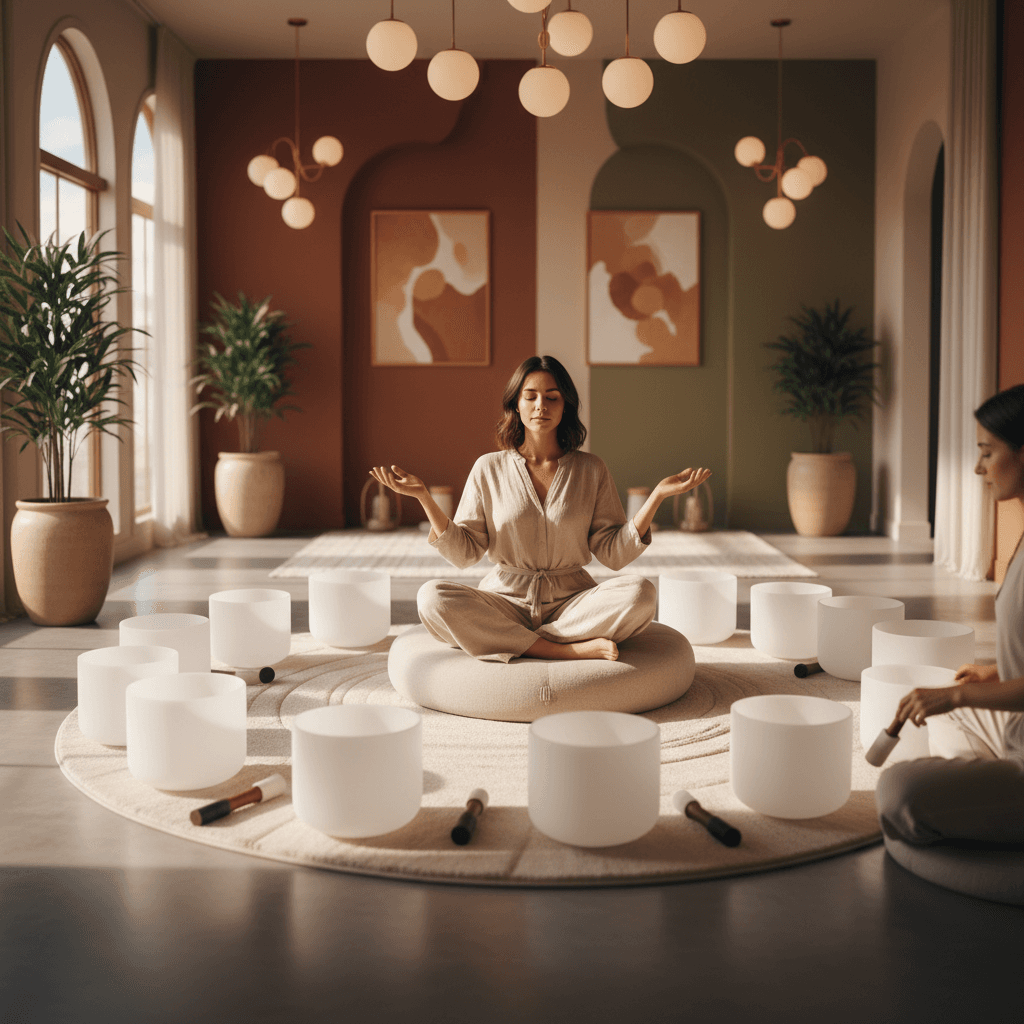
Managing Chronic Conditions with Sound Wellness
Key Insights
Discover the science of using sound as a daily tool for stress management and nervous system support when living with a chronic condition. A Soul Art guide.
Did you know that the background hum of your city could be subtly influencing your health? Recent studies are drawing increasingly clear lines between chronic noise exposure and physiological stress, impacting everything from cardiovascular health to mental wellbeing. For those navigating the complexities of a chronic condition, this constant environmental stress adds another layer of challenge to daily life.
This article explores a transformative idea: if unwanted, chaotic sound can contribute to stress, can intentional, harmonious sound become a powerful tool for managing it? We will delve into the compelling science behind how sound affects our nervous system, explore the physiological mechanisms at play, and offer practical ways to integrate sound into your daily wellness routine. You will learn not just the why but the how—translating fascinating research into tangible self-care practices that may support a greater sense of balance and ease, even amidst the challenges of a long-term health journey.
The Science Explained
To understand how sound can be a tool for wellness, we must first appreciate its profound impact on our biology. Sound is not merely something we hear; it is a physical force—a mechanical wave of pressure and vibration that travels through the air and is translated into electrochemical signals in our brain. This process can trigger powerful physiological responses, for better or for worse.
The Physiology of Unwanted Noise
Our modern world is saturated with noise. From the drone of traffic to the constant alerts from our devices, our auditory systems are perpetually engaged. This isn't just an annoyance; it's a significant physiological stressor.
Research from institutions like Harvard University has linked long-term noise exposure to an increased risk of cardiovascular events. A 2024 study in Nature further illuminates the mechanism: chronic noise can induce neuroinflammation and elevate stress hormones like cortisol and adrenaline. This sustained activation of the body's sympathetic nervous system—our "fight-or-flight" response—is linked to:
- Increased Oxidative Stress: Studies in animal models show that chronic noise exposure can increase markers of cellular damage (malondialdehyde) and deplete the body's protective antioxidants (superoxide dismutase).
- Elevated Stress Hormones: Sustained high levels of cortisol, adrenaline, and noradrenaline can impair memory, disrupt sleep, and place a heavy burden on the cardiovascular system.
- Maladaptive Coping: Noise exposure has even been associated with maladaptive behaviors like smoking and sedentary lifestyles, which can further complicate the management of chronic conditions.
For an individual living with a chronic condition—be it arthritis, cardiovascular disease, or post-viral fatigue—the body is already in a state of heightened alert. Chronic environmental noise acts as an additional, often invisible, stressor that can exacerbate symptoms and diminish one's capacity for coping and recovery.
The Power of Intentional Sound for Wellness
If chaotic sound can activate our stress response, it follows that coherent, organized sound can help activate our parasympathetic nervous system, the "rest-and-digest" state. This is the foundation of sound wellness. It is not about "curing" a condition, but about creating an internal environment that is more conducive to balance and resilience.
The science behind this involves several key concepts:
- Entrainment: This is a principle of physics where the rhythm of a powerful vibratory force can cause the vibrations of a less powerful object to synchronize with it. In a sound wellness context, the coherent frequencies of instruments like singing bowls or gongs may encourage our brainwaves to shift from the faster beta waves (active, busy mind) to the slower alpha (relaxed awareness) and theta waves (deep meditation, dreamlike states).
- Vibroacoustic Stimulation: Sound is vibration. When instruments like large gongs or Himalayan bowls are used, you don't just hear the sound; you feel it. These vibrations travel through the body's tissues, which are largely composed of water. This gentle internal massage is reported by many to promote deep physical relaxation and release of tension.
- Nervous System Regulation: The primary goal is to guide the nervous system out of a state of hypervigilance (sympathetic) and into a state of safety and restoration (parasympathetic). This shift is associated with a cascade of positive physiological changes: a lower heart rate, deeper breathing, reduced blood pressure, and improved digestion.
While systematic reviews note that clinical research on "audio-based care" is still an emerging field, the focus of that research is often on telehealth. The application of sound as a wellness modality for stress management is a complementary approach, grounded in the established principles of acoustics and neurophysiology. It offers a non-invasive, gentle way to manage the stress component that so often accompanies chronic health challenges.
"The nervous system is the conductor of the body's orchestra. When it is constantly cued by the noise of stress, the result is dissonance. Intentional sound offers a new score—one of harmony and coherence—allowing the entire system to find its natural rhythm again."
How It Works in Practice
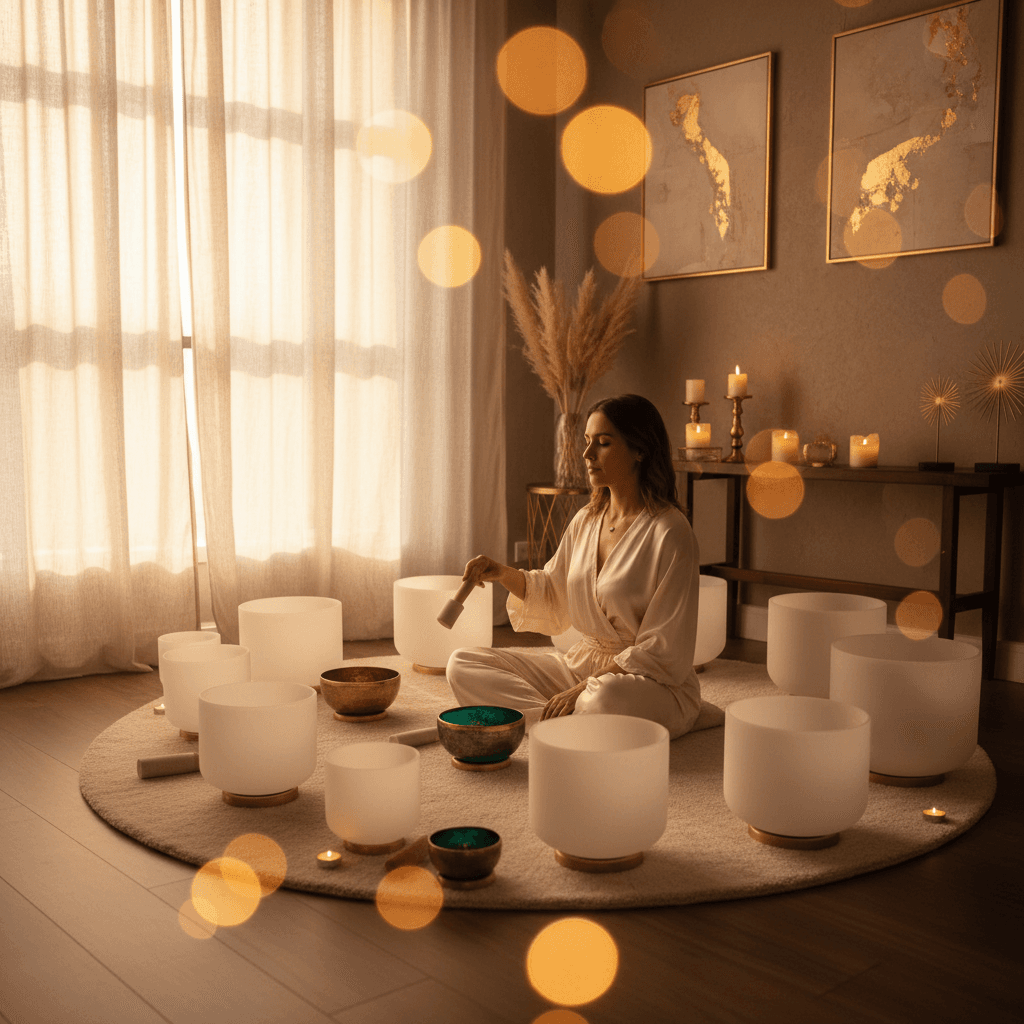
The transition from scientific theory to lived experience is where the profound potential of sound wellness becomes clear. Imagine stepping away from the bustling streets of Dubai and into a space designed for tranquility. This is not simply about listening to relaxing music; it is a full-body, immersive experience designed to calm the mind and soothe the nervous system.
When you arrive for a session, the environment itself begins the process. The lighting is soft, the temperature is comfortable, and you are invited to lie down, fully supported by cushions and blankets. This physical comfort sends an initial signal of safety to your nervous system, allowing you to begin letting go of the day's tensions.
As the session begins, the first sounds are often gentle and subtle—perhaps the delicate chime of a Koshi or the soft ringing of a tingsha bell. These initial tones act as an anchor for your awareness, drawing your focus away from the incessant loop of thoughts and into the present moment. Your mind, which may have been racing with to-do lists or health concerns, is given a simple, beautiful stimulus to rest upon.
Soon, deeper and more resonant frequencies are introduced. You might hear the rich, complex overtones of a large gong or feel the resonant vibrations of a Himalayan singing bowl placed near (or sometimes on) your body. This is where the concept of vibroacoustic stimulation becomes a tangible reality. The sound waves travel through your body, and many people report a feeling of physical tension literally melting away. Muscles you didn't even realize you were clenching begin to release.
As the soundscape unfolds, your breathing naturally deepens and slows down. Your heart rate may decrease. This is the physiological marker of the shift from the sympathetic to the parasympathetic nervous system. It's a state of deep, conscious rest that can be difficult to achieve through willpower alone, especially when dealing with the discomfort or anxiety of a chronic condition. For many, this hour becomes a sanctuary—a precious opportunity to experience their body not as a source of pain or worry, but as a vessel of peaceful sensation.
The Soul Art Approach
At Soul Art, we understand that managing a chronic condition is a holistic endeavor, requiring tools that support both mind and body. Founded by Larissa Steinbach, our studio's methodology is built on a deep respect for the science of sound, combined with an intuitive understanding of the human need for rest and restoration.
Our approach is distinct because it is not a one-size-fits-all protocol. Larissa Steinbach and our practitioners are trained to be exquisitely sensitive to the energy of the room and the needs of each individual. We see ourselves as facilitators, creating a meticulously crafted soundscape that guides, rather than forces, the body and mind into a state of deep relaxation.
What makes the Soul Art method unique includes:
- Curated Instrumentation: We utilize a specific collection of world-class instruments, each chosen for its unique frequency profile and therapeutic potential. This includes planetary-tuned gongs, which resonate with cosmic frequencies, and authentic, hand-hammered Himalayan singing bowls, whose complex overtones are profoundly grounding.
- The Art of Sequencing: A session with Larissa Steinbach is a journey. It begins with grounding and centering, moves into deeper resonant frequencies to facilitate release, and concludes with gentle, integrating sounds that leave you feeling clear, centered, and deeply rested. The sequence is intentional and dynamic.
- A Focus on Stress Resilience: We explicitly focus on sound as a stress management tool. Our goal is to provide an experience of profound relaxation that you can carry with you, and to empower you with the understanding of how to use sound in your daily life to build greater nervous system resilience. Soul Art is more than a studio; it is a resource for learning the art of self-regulation.
Your Next Steps
Integrating the benefits of sound into your life doesn't require a full suite of instruments. You can begin to harness the power of your sonic environment today with a few simple, mindful practices. These small steps can help reduce the daily burden of stress on your system.
- Curate Your Sonic Diet: Just as you are mindful of what you eat, become mindful of what you "consume" audibly. Notice how you feel when listening to stressful news versus calming ambient music. Make conscious choices to reduce your exposure to jarring, chaotic noise and increase your exposure to sounds that feel nourishing and peaceful.
- Practice a 3-Minute Sound Anchor: Several times a day, pause and close your eyes. Instead of focusing on your breath, focus exclusively on the sounds around you. Listen without judgment, simply noticing the texture, pitch, and rhythm of your environment. This practice anchors you in the present and can interrupt a cycle of anxious thoughts.
- Explore Frequency-Specific Music: Search for "Solfeggio frequencies," "binaural beats," or "isochronic tones" online. While not a replacement for a live session, listening to these tracks with headphones can be a wonderful way to support focus, relaxation, or sleep. Experiment with different frequencies to see what resonates with you.
- Embrace Silence: In a world of constant noise, deliberate silence is a powerful tool. Schedule five to ten minutes of quiet time each day. No phone, no TV, no music. Allow your auditory system to rest and reset. This practice can dramatically lower feelings of overwhelm.
These practices are wonderful for daily management. When you are ready to experience the profound, restorative potential of a professionally facilitated sound session, we invite you to explore what we offer at Soul Art.
In Summary
The world we inhabit is filled with sound, a powerful environmental factor that can either contribute to our stress load or become a remarkable tool for our wellbeing. For individuals navigating the daily realities of a chronic condition, managing stress is not a luxury; it is a fundamental component of self-care. The scientific evidence clearly shows that chaotic noise can tax our nervous system, while emerging principles of acoustics and neurophysiology suggest that intentional sound may offer a pathway to deep relaxation and restoration.
By consciously choosing the sounds we engage with and exploring practices like sound meditation, we can actively support our nervous system's shift from a state of high alert to one of restful healing. It is a gentle yet profound way to reclaim a sense of peace and empower your body's innate capacity for balance. We at Soul Art Dubai are dedicated to creating a sanctuary where you can explore this potential and find deep, restorative rest.
Bookings Coming Soon
Soul Art is still in preparation. Session details and booking will be published here after launch.
Coming Soon
Related Articles
Downsizing: Navigating Life's Big Changes with Sound Wellness
Restless Legs Relief: Sound Wellness for Deeper Nighttime Comfort
Embracing Age with Inner Peace: Sound Wellness for Acceptance