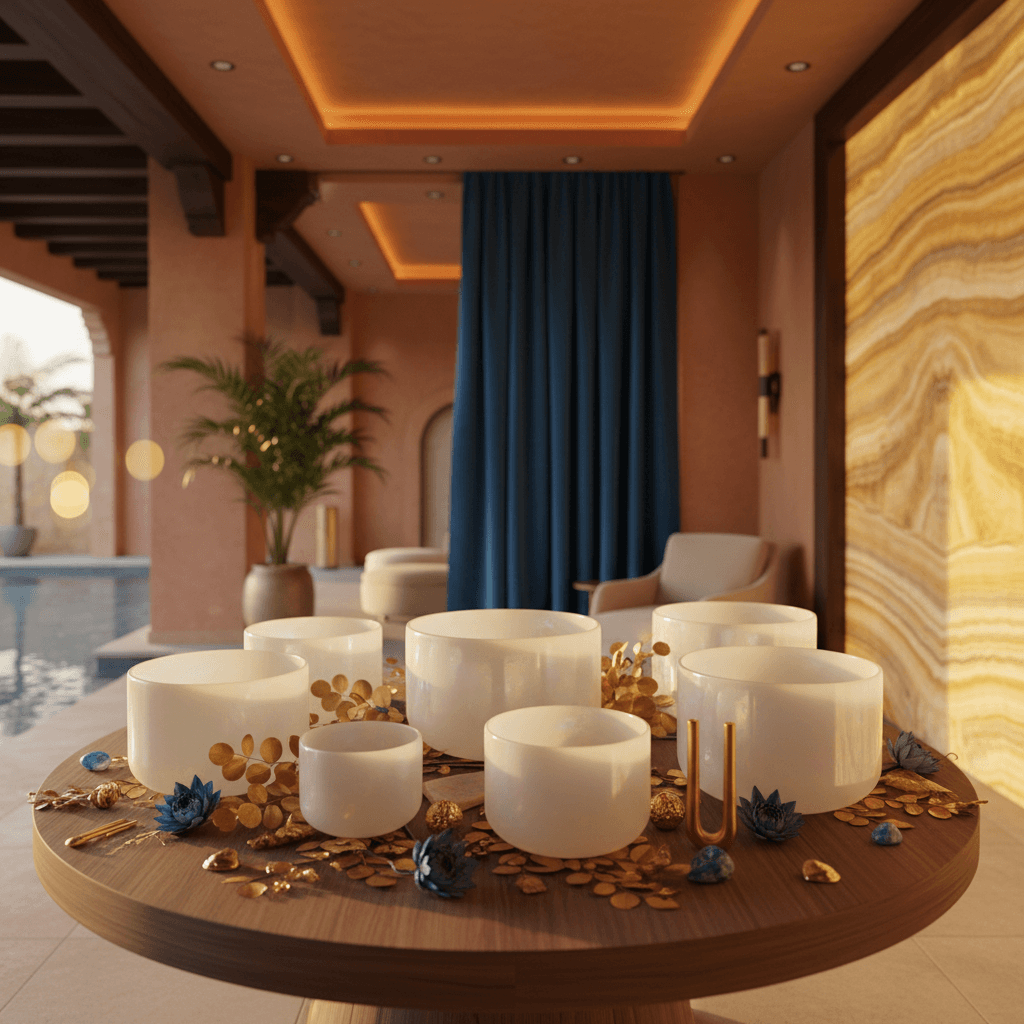
Autism Spectrum: Harnessing Sound for Sensory Harmony and Well-being at Soul Art

Key Insights
Explore how scientifically-backed sound wellness practices at Soul Art Dubai, led by Larissa Steinbach, can support sensory regulation and enhance quality of life for individuals on the autism spectrum.
Unlocking Sensory Harmony: The Potential of Sound for the Autism Spectrum
Imagine a world where everyday sounds can feel like a relentless assault or, conversely, a whisper missed entirely. For many individuals on the autism spectrum, this precisely describes their daily auditory experience. Sensory processing differences are a hallmark of autism spectrum disorder (ASD), profoundly impacting how sounds are perceived and integrated.
These unique processing styles can lead to challenges such as sensory overload, heightened anxiety, and difficulties with communication. However, emerging research suggests that structured sound wellness practices, including specific forms of sound therapy, may offer a powerful complementary approach. These practices aim to support sensory regulation and enhance overall well-being.
At Soul Art Dubai, under the expert guidance of founder Larissa Steinbach, we explore the profound potential of sound to create a more balanced and harmonious sensory landscape. This article delves into the science behind auditory processing in autism, how sound wellness can make a difference, and the unique methods employed at Soul Art to foster calm and connection.
The Science Explained: Auditory Processing in Autism
To truly appreciate the role of sound wellness, it's essential to understand how sound often interacts with the autistic brain. Unlike neurotypical individuals, those with ASD frequently experience distinct patterns of auditory sensory processing, leading to both hyper- (over-responsivity) and hypo- (under-responsivity) sensitivities, as well as sensory-seeking behaviors.
Over the years, numerous studies have illuminated these complex differences. For example, some autistic individuals may exhibit atypical early Event-Related Potential (ERP) components like reduced P1 latencies and amplitude, indicating differences in initial sound perception (Patel et al. 2019). The P2 component, influenced by audiovisual processes, can also be affected, while early Mismatch Negativity (MMN) responses may be enlarged for pure tones (Piatti et al. 2021).
Understanding Hyper- and Hypo-Sensitivities
Auditory sensitivities are among the most prevalent and often disabling sensory features of autism. More than 50% of individuals on the autism spectrum exhibit impaired sound tolerance (Williams et al. 2021). This can manifest as hyperacusis, an increased sensitivity or decreased tolerance to sound, which affects an estimated 18-40% of children with autism (Williams et al. 2021; Rosenhall et al. 1999).
Individuals with hyperacusis might cover their ears even in the absence of overtly loud noise, finding certain frequencies or volumes unbearable. Conversely, some may be under-responsive to auditory stimuli that are salient to others, seemingly unaware of sounds around them. There are also cases where autistic individuals actively seek intense sound stimulation, engaging in repetitive humming, tapping objects, or continuous noises.
These varied responses highlight the diverse ways the autistic nervous system processes and integrates auditory input. Traditional environmental sounds, which are often unpredictable in volume and frequency, can be deeply unsettling or even disorganizing for these individuals. This is where structured, controlled sound environments, as offered in sound wellness practices, may offer a vital avenue for support.
How Sound Interacts with the Autistic Nervous System
The power of sound in wellness for autism lies in its ability to directly influence the nervous system. Specific sound frequencies, rhythms, and tones can help to regulate physiological responses, moving the individual from a state of heightened arousal (fight-or-flight) towards a state of calm (rest-and-digest).
Music therapy, for instance, is the most scientifically validated form of sound therapy for autism. It leverages structured musical interaction to engage the brain in a non-threatening way, supporting emotional balance and sensory integration. Research shows that music can act as a consistent temporal framework, helping individuals on the autism spectrum improve synchronization and motor control (Yoo and Kim, 2018).
Controlled auditory input, such as consistent rhythms, predictable melodic patterns, or specific frequency ranges, can provide a sense of order to an otherwise chaotic sensory world. This predictability can help to quiet an overstimulated nervous system, potentially reducing anxiety and allowing for greater engagement with the environment.
How It Works in Practice: The Transformative Potential of Sound
Connecting the scientific understanding of auditory processing to practical application reveals the profound impact sound wellness practices can have. These are not merely passive listening sessions but carefully curated experiences designed to engage the auditory system in a gentle, supportive manner.
Clients experiencing sound wellness for sensory regulation may notice a gradual shift in their relationship with sound. The goal is to cultivate a greater tolerance for a wider range of auditory stimuli and to build internal resources for emotional and physiological self-regulation. This process is highly individualized, recognizing the unique sensory profile of each person.
During a session, individuals might be exposed to specific types of sound – from gentle harmonic tones of singing bowls and gongs to structured rhythmic patterns or even specialized auditory programs. The environment is carefully controlled, often dim and quiet, to minimize external distractions and maximize the focused auditory experience.
Practical Benefits Reported
Many individuals report significant improvements across several key areas after engaging in sound wellness practices:
- Reduces Sound Sensitivity & Sensory Overload: A primary benefit is the improved tolerance to everyday sounds. Sound wellness may help to desensitize the auditory system to previously overwhelming noises, gradually expanding an individual's comfort zone. This can reduce instances of sensory overload, making daily life more manageable.
- Improves Emotional Regulation: Different types of sound experiences can help to calm the nervous system. By gently guiding the brain into more relaxed states, sound may support better control over emotional reactions, reducing instances of meltdowns or heightened anxiety. It helps foster an internal sense of calm.
- Better Sleep Quality: Sleep disturbances are very common in autism. Sound wellness practices, particularly those incorporating soothing frequencies, white noise, or nature sounds, can significantly improve sleep quality. They may help quiet an active mind and body, facilitating easier onset of sleep and more restful nights.
- Better Attention Span, Focus, and Learning Readiness: Many forms of sound wellness can improve the brain’s ability to filter background noise, a common challenge in ASD. By enhancing auditory discrimination and processing, these practices may lead to improved attention span, enhanced focus, and greater readiness for learning and engaging in other therapeutic activities. Music therapy, for instance, has been shown to improve attention and communication when provided before occupational and speech therapies (Bringas et al., 2015).
A randomized controlled trial demonstrated that music therapy significantly decreased scores in the social communication subscale and total scores of the SRS-2, and in the speech/language/communication, sociability, and total scores of the ATEC in children with ASD after 12 weeks (Li et al., 2025). This provides compelling evidence for its potential impact.
"The symphony of inner calm begins when we learn to attune our nervous system, not just to the absence of noise, but to the presence of harmonized sound."
The Soul Art Approach: Larissa Steinbach's Vision for Sound Wellness
At Soul Art Dubai, Larissa Steinbach, with her profound understanding of sound and its therapeutic applications, has crafted a unique approach to sound wellness. Recognizing that each individual on the autism spectrum has a distinct sensory profile, Larissa emphasizes personalized care within a nurturing and controlled environment.
Larissa's method at Soul Art integrates principles from established sound practices with an intuitive understanding of energetic resonance. She draws upon the scientifically observed benefits of structured auditory input while also recognizing the holistic impact of sound on mind, body, and spirit. This creates a space where individuals can explore sound safely and without judgment.
The Soul Art experience is not clinical but deeply restorative, focusing on relaxation, stress management, and enhancing overall quality of life. Larissa guides participants through carefully curated soundscapes designed to support sensory integration and emotional balance. Her sessions are tailored to the individual's comfort level, gradually introducing new sonic elements as appropriate.
Specific Instruments and Techniques
Soul Art utilizes a variety of resonant instruments known for their ability to produce rich, harmonic frequencies that interact profoundly with the human body. These may include:
- Crystal Singing Bowls: Their pure, sustained tones are thought to entrain brainwaves to slower, more relaxed states.
- Himalayan Singing Bowls: Offering deeper, earthy vibrations that can be deeply grounding and calming for the nervous system.
- Gongs: Generating complex, immersive soundscapes that can facilitate deep relaxation and release.
- Chimes and Other Percussion: Used to introduce gentle, rhythmic patterns that can aid in auditory processing and focus.
Larissa Steinbach ensures that the environment itself is a sanctuary – thoughtfully designed with soft lighting, comfortable seating, and an atmosphere of tranquility. This meticulous attention to detail supports the overall efficacy of the sound wellness experience, making it a truly immersive and beneficial practice for individuals navigating the complexities of sensory processing on the autism spectrum. Larissa's expertise ensures that each session is conducted with empathy and a deep commitment to the individual's well-being journey.
Your Next Steps: Embracing Sound for Enhanced Well-being
Understanding the potential of sound wellness is the first step towards embracing a more harmonious sensory experience. If you or a loved one on the autism spectrum are seeking complementary ways to support sensory regulation and overall well-being, exploring structured sound practices may be a valuable consideration.
It is always important to consult with your primary healthcare provider or specialists before incorporating any new wellness practice, ensuring it complements existing therapies and medical guidance. Sound wellness is a supportive practice, not a replacement for evidence-based interventions such as ABA, speech therapy, or occupational therapy.
Consider these actionable steps to explore the benefits of sound:
- Consult Professionals: Discuss sound wellness with your current care team to understand how it might integrate with an existing therapeutic plan.
- Start with Gentle Exploration: Begin with short exposures to calming sounds like nature soundscapes or gentle instrumental music to observe responses.
- Create a Sensory-Friendly Space: Design a quiet corner at home with minimal distractions, where sound can be introduced in a controlled manner.
- Prioritize Consistency: Like any wellness practice, consistent engagement with sound, even for short durations, may yield more noticeable benefits over time.
- Explore Guided Sessions: Consider engaging with experienced practitioners like Larissa Steinbach at Soul Art Dubai, who can provide expertly guided and individualized sound wellness experiences.
In Summary: A Path to Sensory Balance
The journey through the autism spectrum often involves navigating a complex sensory world, where auditory experiences can present unique challenges. Scientifically-informed sound wellness practices offer a promising complementary pathway to supporting sensory regulation, emotional balance, improved sleep, and enhanced focus. From the validated role of music therapy to the specific vibrational frequencies of instruments, sound provides a gentle yet powerful tool for the nervous system.
At Soul Art Dubai, Larissa Steinbach expertly curates these experiences, offering a sophisticated and empathetic approach to harnessing sound for well-being. Soul Art invites you to explore how intentional sound can foster greater internal calm and a more harmonious relationship with your sensory environment, supporting a richer, more regulated daily life.
Bookings Coming Soon
Soul Art is still in preparation. Session details and booking will be published here after launch.
Coming Soon
Wellness Disclaimer: This article is for educational and informational purposes only. It does not constitute medical advice, diagnosis, or treatment. Soul Art Dubai provides non-medical wellness experiences focused on relaxation, stress management, and general wellbeing. Sound wellness is a complementary practice and should not replace professional medical care.
Related Articles
Cluster Headaches: Unveiling Pain and the Promise of Frequencies in Wellness
Epilepsy & Sound: Safety, Serenity, and Emerging Wellness Paths
Mastering Focus: Analytical Listening & Brain Engagement at Soul Art