Sound Waves to Cognitive Gains: Preventing Age-Related Decline

Key Insights
Explore how targeted sound practices may support brain health and mitigate age-related cognitive decline at Soul Art, led by Larissa Steinbach.
The Symphony of Cognition: How Sound Can Harmonize Your Aging Brain
Imagine a world where the sharpness of your mind, your ability to focus amidst distractions, and the clarity of your memory remain vibrant through the years. For many, the prospect of age-related cognitive decline is a genuine concern, often feeling like an inevitable part of life's journey. Yet, what if a simple, immersive experience – something as accessible as sound – held profound potential to support brain health?
Recent scientific explorations are revealing an intriguing connection between auditory experiences and our cognitive resilience. These findings suggest that engaging with sound in specific ways may offer a complementary approach to nurturing our brain's vitality as we age. This article delves into the fascinating research, bridging the gap between neuroscience and the gentle, yet powerful, practice of sound wellness.
At Soul Art, Dubai's premier sound wellness studio, we believe in empowering individuals with holistic tools for wellbeing. Under the guidance of our founder, Larissa Steinbach, we explore how intentional sound engagement can become a cornerstone of your proactive approach to maintaining a keen mind, offering a unique path to cognitive nourishment and overall flourishing.
The Science Explained: Unlocking the Brain's Potential Through Auditory Engagement
Our cognitive abilities, encompassing memory, attention, problem-solving, and perception, are intricately linked to the health and efficiency of our brain. As we age, it is natural for some cognitive functions to experience gradual changes. While crystallized abilities, which are accumulated knowledge and skills, often remain robust, fluid abilities – those requiring immediate processing and transformation of information – may begin to show subtle shifts.
These age-related cognitive shifts are associated with physiological changes within the brain. Researchers have documented alterations in neuronal structure, although not necessarily neuronal death, along with a loss of synapses and dysfunction in neuronal networks. Understanding these underlying processes is crucial for exploring interventions that may support brain health.
Auditory Training and Brain Plasticity
One of the most compelling areas of research demonstrates the profound impact of targeted auditory training on the aging brain. A landmark study from the University of California, San Francisco (UCSF) published in the “Proceedings of the National Academy of Sciences,” revealed remarkable findings in aging rats. Intense auditory training significantly improved their sound perception and processing abilities, reversing age-related sensory-processing degradation.
This "simple training strategy" led to surprising physical changes in the rats' brains. Post-mortem analysis of their auditory cortices showed improved myelin density and neuron health in the primary auditory brain regions. These improvements brought the rats' brains to nearly the level seen in younger animals, highlighting the brain's remarkable capacity for plasticity even in later life.
"One of the most striking findings of this study is that every aspect of sound processing we examined in the aging primary auditory cortex was degraded and then substantially reversed with a simple training strategy." - UCSF Researchers
Beyond structural changes, the trained aging rats also demonstrated enhanced cognitive skills. They showed an improved ability to process successive signals, suppress false-positive responses, and effectively filter out background noise while deciphering new stimuli. This is a skill highly relevant to human experience, such as maintaining a clear conversation in a bustling, noisy environment – a common challenge for many older adults. The UCSF study provides strong preliminary evidence that engaging the auditory system in a focused manner may directly support the neurological underpinnings of cognitive health.
The Role of Neurotransmitters and Cognitive Training
Further research in humans provides another piece of the puzzle, linking cognitive training to specific biochemical changes in the brain. A study reported by NPR highlighted that rigorous mental exercises, undertaken for 30 minutes a day over 10 weeks by individuals aged 65 or older, led to a significant increase in acetylcholine levels. Acetylcholine is a crucial chemical messenger in the brain, responsible for vital functions such as decision-making, attention, and memory.
Levels of acetylcholine typically decline with age, contributing to some aspects of cognitive decline. The study found that intensive brain training increased acetylcholine levels by 2.3% in a brain area involved in attention and memory. Even small increases in this neurotransmitter can have a "profound and notable effect" on memory and thinking in older people. This suggests that engaging the brain, including through auditory pathways, can stimulate the production of essential neurochemicals that support cognitive function. Early medications for Alzheimer's symptoms, for instance, worked by increasing acetylcholine, underscoring its importance.
Stress Reduction, Mindfulness, and Brain Health
The connection between stress and cognitive decline is well-documented. Chronic stress can negatively impact brain health and accelerate cognitive decline. Therefore, interventions aimed at managing stress levels are considered beneficial for supporting dementia prevention. This is where practices like mindfulness and meditation, often facilitated through sound, become particularly relevant.
A systematic review examining interventions to prevent age-related cognitive decline found that while many interventions showed no evidence of delaying or preventing dementia, some evidence suggested cognitive training could improve cognitive function in the short term for older adults. This review, alongside findings from Alzheimers.gov, highlights the "encouraging but inconclusive" evidence for cognitive training, physical activity, and blood pressure control as promising avenues for further research.
Crucially, research indicates that regular meditation may improve cognitive function in healthy individuals. Preliminary evidence also suggests that long-term meditation may delay age-related decline of several cognitive functions and improve certain neuropsychological outcomes in subjects with mild cognitive impairment (MCI). A randomized trial employing Mindfulness-Based Stress Reduction (MBSR) found that MBSR-treated patients with MCI showed improved cognitive performance and increased functional connectivity in key brain regions compared to control groups. These findings strongly support the idea that practices involving mindful sound engagement can act as a form of cognitive training and stress management, offering dual benefits for the aging brain.
How It Works in Practice: The Transformative Power of Immersive Sound
Bringing these scientific insights into a practical setting involves harnessing the unique properties of sound to engage the brain and nervous system. Immersive sound experiences are not merely passive listening; they are carefully curated journeys designed to stimulate, relax, and harmonize the body and mind. The goal is to create an environment where the brain can undergo beneficial shifts, mirroring the positive changes observed in scientific studies.
When clients engage in a sound wellness session, they step into a meticulously crafted sonic landscape. This environment is designed to deliver specific auditory stimuli that may encourage neuroplasticity – the brain's ability to reorganize itself by forming new neural connections throughout life. The vibrations and frequencies produced by various instruments interact directly with the body, creating a full-sensory experience.
Sensory details are paramount in this process. The rich, resonant tones of gongs and singing bowls create a palpable vibration that can be felt throughout the body, not just heard. These deep vibrations may help to relax muscle tension, calm the nervous system, and facilitate a state of deep meditative focus. The intricate layers of sound encourage the brain to actively process diverse auditory information, much like the "intense auditory training" described in the UCSF rat study. This active processing, devoid of verbal instruction or problem-solving, may nonetheless engage and strengthen auditory processing pathways.
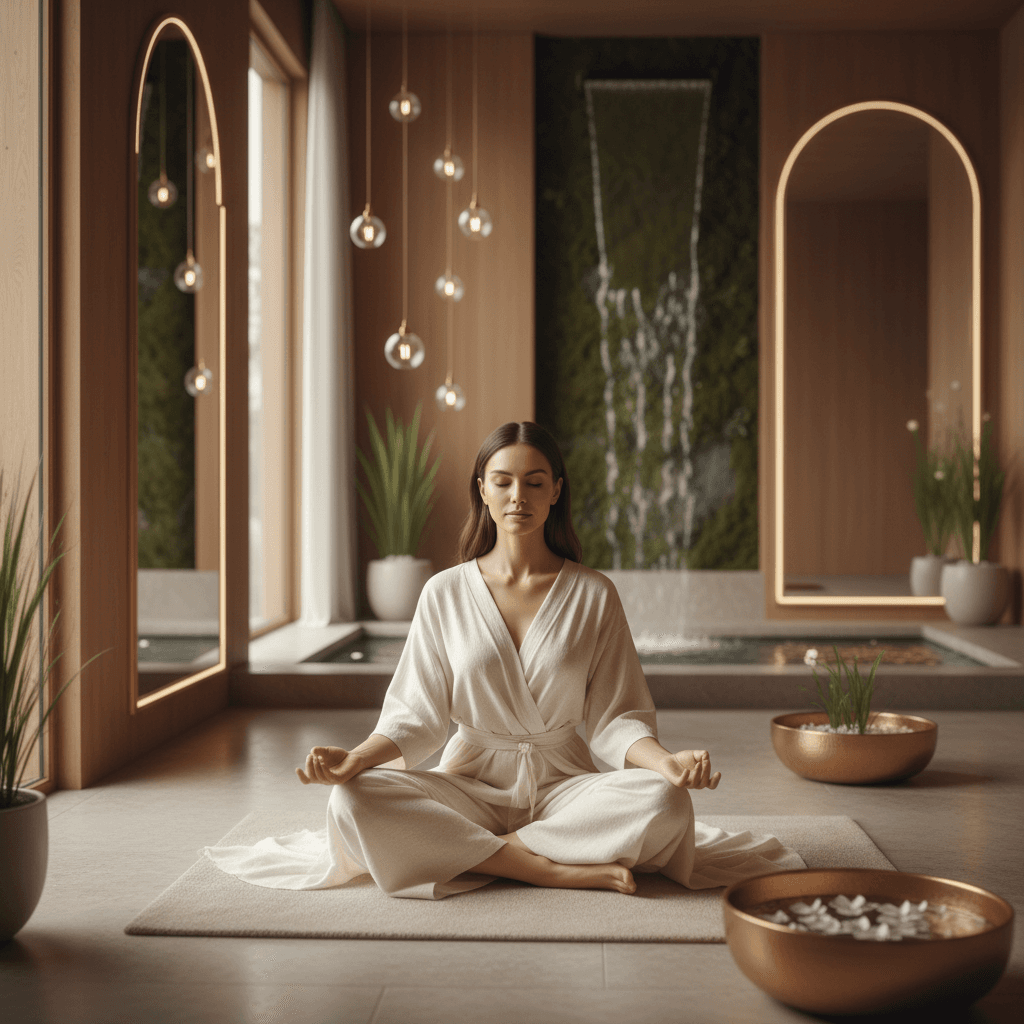
Moreover, the profound relaxation induced by sound wellness sessions plays a critical role in cognitive support. By guiding individuals into a state of deep calm, these practices help to reduce stress hormones and activate the parasympathetic nervous system. This "rest and digest" state is conducive to brain repair, optimal learning, and memory consolidation. The meditative aspect of sound sessions provides a form of cognitive training by requiring sustained attention and an ability to filter out internal and external distractions, thereby exercising fluid cognitive abilities crucial for maintaining a sharp mind.
The immersive nature of the experience also promotes a sense of presence and mindfulness. This sustained, non-judgmental attention to the present moment, guided by the evolving soundscape, acts as a potent mental exercise. It gently trains the brain to improve focus and attention, potentially leading to increased functional connectivity in critical brain regions, as suggested by research on mindfulness-based interventions for cognitive enhancement. These experiences are a holistic form of engagement that may support the brain's natural capacity for self-regulation and resilience against age-related changes.
The Soul Art Approach: Larissa Steinbach's Vision for Cognitive Wellness
At Soul Art, Larissa Steinbach, our founder and lead practitioner, brings a deeply intentional and scientifically informed approach to sound wellness. Recognizing the profound potential of sound as a tool for holistic wellbeing, Larissa has meticulously crafted experiences that extend beyond simple relaxation, aiming to support cognitive vitality. Her methodology integrates ancient wisdom with contemporary scientific understanding, creating a unique pathway for individuals seeking to enhance their brain health.
Larissa's approach at Soul Art is distinguished by its bespoke nature and careful selection of instruments. Sessions often feature a diverse array of resonant tools, including Nepalese and crystal singing bowls, symphonic gongs, chimes, and other therapeutic instruments. Each instrument is chosen for its specific frequency range and vibrational qualities, which are believed to interact with the body and mind in distinct ways. The subtle yet powerful shifts in brainwave activity, from beta (alert) to alpha (relaxed) and even theta (meditative), are often facilitated by these carefully orchestrated soundscapes.
The Soul Art method focuses on creating a deeply immersive and restorative environment. Larissa Steinbach understands that consistent, focused auditory stimulation, coupled with profound relaxation, is key to potentially stimulating neuroplasticity and supporting cognitive function. The practice encourages the brain to process complex auditory information, subtly challenging its perception and discrimination abilities in a soothing context. This gentle "brain training" may contribute to the improved sound processing, noise suppression, and signal deciphering observed in research, translating into real-world benefits like clearer communication in noisy environments.
Furthermore, Larissa emphasizes the importance of stress reduction as a cornerstone of cognitive wellness. Each Soul Art session is designed to guide participants into states of deep rest, helping to mitigate the detrimental effects of chronic stress on brain health. By fostering a calm nervous system, the sessions create an optimal internal environment for the brain to function at its best, potentially enhancing memory, attention, and overall cognitive resilience. It's a holistic ecosystem of sound, intention, and relaxation, uniquely designed by Larissa Steinbach to nurture the mind and spirit.
Your Next Steps: Integrating Sound into Your Brain Health Journey
Embracing sound wellness as a component of your proactive health strategy is a gentle yet powerful step towards supporting your cognitive vitality. The evidence, though still emerging, suggests that engaging with sound can be a meaningful practice for those looking to maintain a sharp mind as they age. Here are some actionable steps you can take today:
- Explore Immersive Sound Experiences: Seek out sound baths or sound meditation sessions in your local community. These guided experiences, like those offered by Larissa Steinbach at Soul Art, provide an optimal environment for focused auditory engagement and deep relaxation.
- Incorporate Mindful Listening: Dedicate time each day to simply listen to ambient sounds or calming music without distraction. Pay attention to the textures, layers, and nuances of the soundscape around you. This simple practice can enhance auditory processing and mindfulness.
- Manage Stress Effectively: Recognize the profound link between stress and cognitive health. Integrate regular stress-reducing activities, such as sound wellness, meditation, gentle movement, or spending time in nature, into your daily routine.
- Prioritize a Holistic Lifestyle: Remember that sound wellness is a complementary practice. Combine it with other healthy lifestyle choices, including a balanced diet, regular physical activity, sufficient sleep, and social engagement, all of which are recognized to support overall cognitive health.
- Learn More and Engage: Dive deeper into the science of sound and its impact on the brain. Consider attending workshops or informational sessions offered by wellness studios like Soul Art to deepen your understanding and personal practice.
Ready to experience the potential benefits of sound wellness for yourself? We invite you to explore the offerings at Soul Art. Discover a sanctuary where sound becomes a profound pathway to relaxation, clarity, and cognitive support.
In Summary: Harmonizing Mind and Body with Sound
Age-related cognitive changes are a natural part of life, but emerging research indicates that proactive measures, including specific forms of cognitive and auditory engagement, may play a significant role in supporting brain health. Studies show that intense auditory training can lead to remarkable improvements in brain structure and function, enhancing sound processing, reducing noise interference, and even increasing crucial neurotransmitter levels like acetylcholine. Mindfulness-based practices, often facilitated by sound, are also recognized for their potential to alleviate stress and improve cognitive outcomes.
At Soul Art, Larissa Steinbach artfully combines these scientific insights with the immersive power of sound. Through carefully curated sessions using resonant instruments, we offer a unique complementary approach to fostering neuroplasticity, deep relaxation, and enhanced cognitive resilience. This holistic practice is designed to gently challenge and soothe the mind, creating an optimal environment for sustained brain vitality. By integrating sound wellness into your life, you may embark on a journey towards a sharper, more harmonious mind, supported by the tranquil embrace of therapeutic frequencies.
Bookings Coming Soon
Soul Art is still in preparation. Session details and booking will be published here after launch.
Coming Soon
Wellness Disclaimer: This article is for educational and informational purposes only. It does not constitute medical advice, diagnosis, or treatment. Soul Art Dubai provides non-medical wellness experiences focused on relaxation, stress management, and general wellbeing. Sound wellness is a complementary practice and should not replace professional medical care.
Related Articles

Cluster Headaches: Unveiling Pain and the Promise of Frequencies in Wellness

Epilepsy & Sound: Safety, Serenity, and Emerging Wellness Paths
Mastering Focus: Analytical Listening & Brain Engagement at Soul Art