Harmonizing Focus: Sound Wellness for Children with ADHD at Soul Art
Key Insights
Explore how sound therapy, a complementary wellness practice offered at Soul Art by Larissa Steinbach, may support children with ADHD in enhancing focus and emotional regulation.
Have you ever considered that the very sounds that can sometimes overwhelm a child with Attention-Deficit/Hyperactivity Disorder (ADHD) could also be a pathway to calm and enhanced focus? For many parents, navigating the complexities of ADHD in their children can be a challenging journey, often characterized by a search for effective, holistic support. Globally, ADHD affects a significant number of children, with symptoms often most pronounced between the ages of five and ten years, impacting attention, behavior, and emotional regulation (Faraone 2003; Kessler 2006; Polanczyk 2007).
At Soul Art, Dubai's premier sound wellness studio, we explore the profound potential of sound as a complementary wellness practice. Under the expert guidance of our founder, Larissa Steinbach, we delve into how carefully curated sound experiences may offer unique benefits for children with ADHD. This article will unpack the science behind sound's impact on the ADHD brain, illustrate its practical application, and introduce the distinctive Soul Art approach. We aim to provide insights and actionable steps for parents seeking gentle yet powerful ways to support their child's well-being.
The Science Explained: How Sound Resonates with the ADHD Brain
The intricate connection between sound and the brain is a fascinating area of research, particularly concerning neurodevelopmental conditions like ADHD. For children with ADHD, the brain often processes sensory information, including auditory input, differently. This can sometimes lead to challenges with attention, emotional regulation, and even motor coordination. However, a growing body of scientific evidence suggests that specific sound interventions, such as music therapy and sound wellness practices, may offer a supportive pathway.
Unpacking the Neurophysiological Landscape
Sound, especially music, is not merely entertainment; it is a powerful stimulus that can influence our brain chemistry and physiological responses. Research indicates that engaging with music can lead to significant neurophysiological changes that may be particularly beneficial for individuals with ADHD. A study by Park et al. (2023) demonstrated that music therapy could increase serotonin levels, a neurotransmitter crucial for mood regulation. This suggests a potential for improved emotional stability.
The same study also observed decreased cortisol levels, blood pressure, and heart rate in participants receiving music therapy, all indicators of reduced stress and physiological arousal (Park et al., 2023). These findings highlight how sound can help regulate the body's stress response, promoting a state of calm. Further neurophysiological evidence presented by Lee et al. (2024) and Thaut et al. (2015) shows that music therapy can enhance activity in both cortical and subcortical brain regions, which may explain improvements in cognitive functions, attention, and emotional stability.
The Theory of Optimal Stimulation and Arousal
A key concept in understanding ADHD is the "optimal stimulation theory" (Zentall SS, Zentall TR, 1983). This theory suggests that individuals with ADHD often require a higher level of external stimulation to achieve an optimal state of brain arousal, which is necessary for sustained attention and performance. For monotonous tasks, external stimulation with music can help adjust arousal to an optimal level, potentially reducing disruptive behavior (J Med Internet Res 2023, PMC10221503).
The precise type of sound and task complexity are crucial considerations. While music can be beneficial for simpler, monotonous tasks, highly complex tasks might be worsened by external stimulation for some individuals (J Med Internet Res 2023, PMC10221503). This nuanced understanding allows for tailored sound experiences that aim to meet each child's unique needs, helping them find their individual zone of optimal focus.
Enhancing Cognitive and Motor Functions
Beyond emotional and physiological regulation, sound interventions have shown promise in supporting cognitive and motor development in children with ADHD. Rhythm-based training, for example, is a focused intervention designed to improve timing skills, which are often implicated in ADHD symptoms (Blume et al., 2019). The systematic review by Martin-Moratinos et al. (2023) specifically focused on music treatment, music therapy, or rhythm-based training as interventions, examining their effects on cognitive, motor, emotional, and social functions.
A fascinating study by Aydinli et al. (2018) explored the effects of auditory stimulation on upright balance performance in children with ADHD. They found that both soothing music and white noise enhanced upright balance, suggesting that auditory input can indeed support motor tasks and physical coordination. This points to the holistic nature of sound's influence, extending beyond just mental states to physical stability and control (Aydinli et al., 2018).
"The subtle frequencies of sound have the power to gently guide the scattered mind towards a quiet center, revealing an innate capacity for focus and inner harmony."
The unique impact of music on ADHD-specific neurocognitive profiles is further highlighted by Zhu (2022), who found that children without ADHD did not experience similar improvements. This suggests that sound wellness is not a one-size-fits-all solution but holds particular relevance for the unique way the ADHD brain processes information and responds to its environment.
The Role of Specific Sounds: Music, White Noise, and Silence
Different types of auditory stimuli elicit varied responses. Soothing music, classical compositions, and even certain types of rock music have been studied for their effects on reducing motor activity and influencing heart rate variability (HRV) in children with ADHD (J Med Internet Res 2023, PMC10221503). Calming music, in particular, has been associated with significantly lower HRV in children with ADHD, a potential indicator of parasympathetic nervous system activation, promoting relaxation.
White noise is another area of active research. Some studies indicate that white noise may be effective for specific cognitive tasks like speech recognition, reading, writing speed, and working memory in children with ADHD (J Med Internet Res 2023, PMC10221503). This is particularly relevant for children with inattentive profiles who may benefit from external stimulation to achieve sufficient brain arousal (Söderlund et al., PMC11585357). However, it's important to note that responses to white noise can vary, with some children showing no effect or even a negative effect, especially those with more severe neuropsychiatric symptoms (Söderlund et al., PMC11585357).
Conversely, some research has explored the effects of silence and binaural sound. Vorster found that binaural sound reduced attention in people with ADHD, while Zimmermann et al. explored the effect of silence on increased arousal and decreased positive mood (J Med Internet Res 2023, PMC10221503). These findings underscore the importance of a personalized approach to sound wellness, as not all auditory stimuli will yield the same positive outcomes for every individual.
How It Works in Practice: Experiencing Sound Wellness
Translating scientific understanding into practical, beneficial experiences for children with ADHD is at the heart of sound wellness. These sessions are designed to be supportive, non-invasive, and deeply engaging, creating an environment where children can explore sound as a tool for self-regulation and relaxation. It's about providing a sensory anchor in a world that can often feel chaotic.
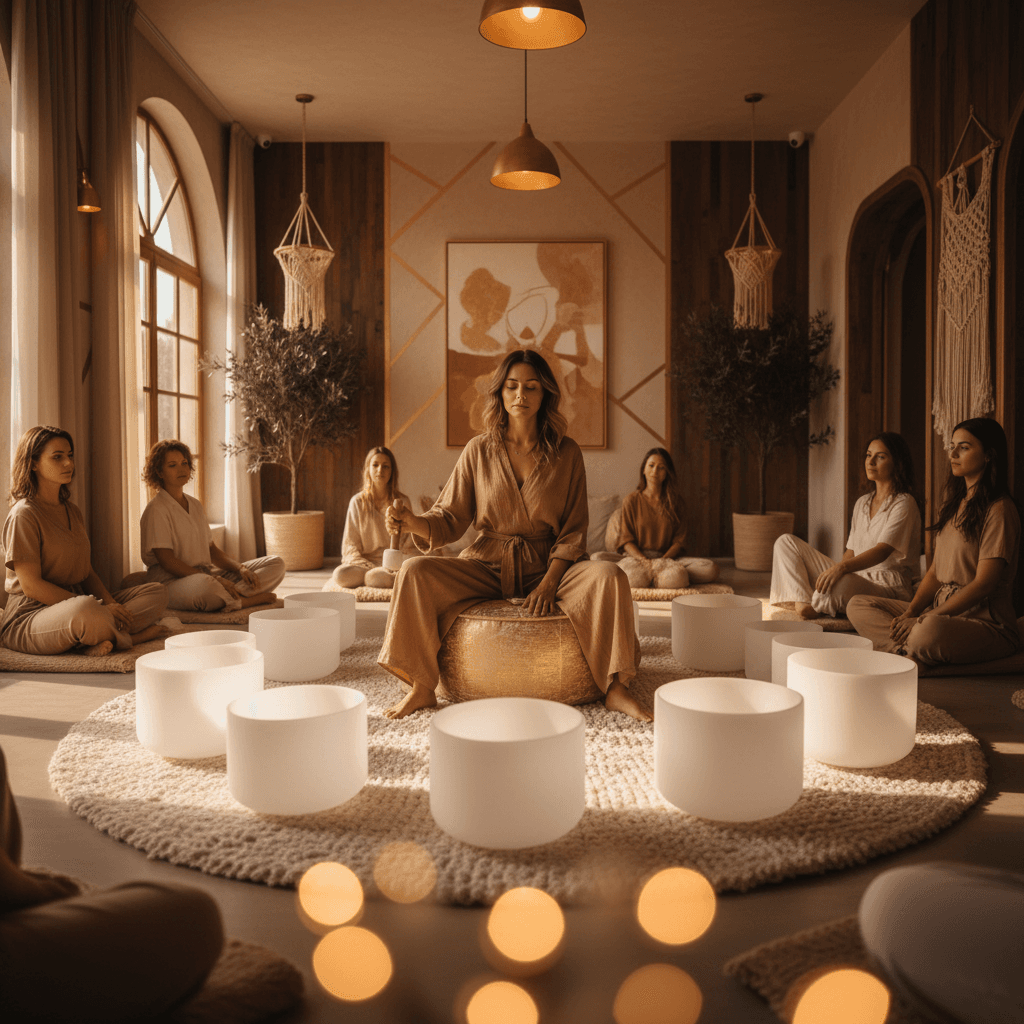
During a sound wellness session, children are typically invited into a calm, aesthetically pleasing space. This environment itself is a crucial element, minimizing external distractions and promoting a sense of safety. The experience often involves a combination of passive listening and, at times, gentle active engagement with sound.
Children might lie down or sit comfortably, enveloped by the rich vibrations of various instruments. Imagine the deep, resonant tones of crystal singing bowls washing over them, or the gentle shimmer of chimes creating a sense of wonder. The sustained, pure frequencies help to quiet the mental chatter that many children with ADHD experience, offering a point of focus without demanding rigid attention. This gentle focus can be a welcome relief, allowing their nervous systems to settle.
The carefully chosen sounds aim to guide the brain into more relaxed states, similar to the benefits observed in music therapy studies where stress hormones are reduced and mood is improved (Park et al., 2023). Children may begin to notice their breath deepening, their bodies relaxing, and their minds becoming clearer. For some, it may feel like a gentle internal massage, while for others, it’s a journey through imaginative soundscapes.
Practical applications might also involve rhythmic elements, drawing on the observed benefits for motor tasks and coordination (Aydinli et al., 2018). While not a traditional music class, the rhythmic pulses created by certain instruments can offer a grounding experience. This connection between auditory rhythm and physical stability is a subtle yet powerful aspect of the practice.
The beauty of sound wellness is its adaptability. It acknowledges that each child is unique. The aim is not to "fix" ADHD, but to provide a complementary pathway for children to develop greater self-awareness, improve their ability to self-regulate their emotions, and find moments of profound peace and sustained attention in a supportive setting. It’s an empowering journey of discovery through the landscape of sound.
The Soul Art Approach: A Sanctuary for Sound and Serenity
At Soul Art, Larissa Steinbach and her dedicated team are pioneers in bringing the transformative power of sound wellness to Dubai. Understanding that each child with ADHD is an individual with unique needs and sensitivities, Larissa has meticulously crafted an approach that is both scientifically informed and deeply compassionate. Our studio is more than just a space; it is a sanctuary designed to nurture the well-being of every participant.
Larissa Steinbach's methodology is rooted in the belief that holistic support can profoundly impact a child's ability to thrive. She emphasizes personalized experiences, carefully considering each child's sensory profile, preferences, and specific areas where they might benefit most from sound. This tailored approach is vital, especially given research indicating that responses to auditory stimuli like white noise can vary significantly among children with ADHD (Söderlund et al., PMC11585357).
What makes the Soul Art method unique is its integration of various sonic tools, coupled with a gentle, guided presence. We work with a diverse array of instruments renowned for their pure frequencies and resonant qualities. These often include:
- Crystal Singing Bowls: Known for their ethereal, sustained tones, which can help to synchronize brainwave states and promote deep relaxation and focus.
- Gongs: Offering powerful, immersive soundscapes that can facilitate emotional release and a profound sense of grounding.
- Chimes and Bells: Providing delicate, harmonious sounds that can uplift the spirit and gently draw attention, enhancing auditory processing without overstimulation.
Larissa's expertise ensures that these instruments are played with intention and sensitivity, creating a rich tapestry of sound that is never overwhelming but always inviting. The sessions at Soul Art are not about performance or instruction, but about creating an environment where a child can simply be, allowing the sounds to work their magic. This approach aligns with the principles of optimal stimulation, providing just enough sensory input to engage the ADHD brain productively, without triggering overstimulation often associated with complex tasks (J Med Internet Res 2023, PMC10221503).
The goal is to foster a sense of inner calm, improve emotional regulation, and gently enhance attention, mirroring the positive neurophysiological shifts observed in scientific studies (Park et al., 2023; Lee et al., 2024). Larissa Steinbach and Soul Art are dedicated to providing a safe, supportive, and enriching space for children with ADHD to explore the profound benefits of sound wellness, helping them unlock their full potential and experience greater harmony in their daily lives.
Your Next Steps: Integrating Sound into Your Child's Well-being
Discovering the potential of sound wellness for your child with ADHD is the first step toward a more harmonious daily life. While sound wellness is a complementary practice and not a replacement for medical guidance, there are many practical ways to begin integrating supportive sound experiences into your family's routine. These simple, actionable steps can help foster a calmer home environment and potentially support your child's focus and emotional balance.
Here are some practical suggestions you can explore:
- Observe and Tune In: Start by mindfully observing how different sounds affect your child. Does soothing music calm them during transitions? Does a gentle hum help them concentrate on a quiet activity? This personalized insight is invaluable, aligning with the understanding that individual responses to sound can vary (Söderlund et al., PMC11585357).
- Create a Sound Sanctuary at Home: Designate a quiet corner where soft, ambient sounds can be introduced. This might involve playing gentle instrumental music, nature sounds, or specially designed soundscapes during homework time or before bed. Remember the principle of optimal stimulation; for monotonous tasks, some external sound may be beneficial (J Med Internet Res 2023, PMC10221503).
- Introduce Mindful Listening Practices: Encourage your child to simply listen to a single sound for a few moments, like a bell ringing or the distant chirping of birds. This can be a simple exercise to gently practice focusing attention without pressure.
- Explore Rhythmic Engagement: Simple rhythmic activities, such as drumming on a cushion or tapping out a beat, can offer a fun way to engage with sound and may support motor coordination and timing skills, as suggested by research into rhythm-based training (Martin-Moratinos et al., 2023; Aydinli et al., 2018).
- Seek Professional Guidance: For a deeper, more tailored experience, consider exploring guided sound wellness sessions. Professionals like Larissa Steinbach at Soul Art can offer personalized interventions, utilizing specialized instruments and techniques to address your child's specific needs in a supportive environment.
By thoughtfully incorporating sound into your child's daily routine, you are providing them with powerful tools for self-regulation and well-being. This journey can empower them to discover new ways to manage stress, enhance focus, and find a greater sense of calm in their lives.
In Summary: A New Harmony for Children with ADHD
The journey of nurturing a child with ADHD can be greatly enriched by exploring holistic and complementary wellness practices. As we've seen, scientific research increasingly points to the profound potential of sound to influence the brain and body, offering a gentle yet powerful pathway to support children with ADHD. From modulating stress hormones and enhancing brain activity to improving focus and motor coordination, sound wellness may offer a vital tool for promoting overall well-being.
By understanding concepts like optimal stimulation and the nuanced effects of different auditory stimuli, parents can make informed choices to create supportive sound environments. At Soul Art, Larissa Steinbach and our team are dedicated to providing meticulously crafted sound experiences that honor each child's unique journey. Our specialized approach, utilizing instruments like crystal singing bowls and gongs, aims to foster emotional regulation, improve attention, and cultivate a sense of inner peace.
We invite you to explore the transformative possibilities of sound wellness. Allow us to guide your child towards a state of harmonious balance and enhanced potential through the ancient wisdom and modern understanding of therapeutic sound.
Bookings Coming Soon
Soul Art is still in preparation. Session details and booking will be published here after launch.
Coming Soon
Wellness Disclaimer: This article is for educational and informational purposes only. It does not constitute medical advice, diagnosis, or treatment. Soul Art Dubai provides non-medical wellness experiences focused on relaxation, stress management, and general wellbeing. Sound wellness is a complementary practice and should not replace professional medical care.
Related Articles
Moving Home: How Sound Wellness Supports Child Adaptation
Sound Wellness for Sibling Adjustment: Nurturing Family Harmony

Teen Identity & Sound: Self-Discovery for Adolescents at Soul Art Dubai