Active Listening: Unlock Deeper Connections with Sound Wellness

Key Insights
Explore the neuroscience of active listening and how sound wellness, pioneered by Larissa Steinbach at Soul Art Dubai, enhances communication, empathy, and overall wellbeing.
Have you ever been in a conversation, nodding along, yet realized your mind was miles away, rehearsing your next response or planning dinner? The difference between merely hearing and truly listening is profound, impacting everything from our relationships to our cognitive function. It's a skill that, when honed, can unlock deeper connections and richer experiences in every facet of life.
At Soul Art, Dubai's premier sound wellness studio, we believe that the practice of mindful sound can be a powerful catalyst for cultivating this essential skill: active listening. This isn't just about improved communication; it's about rewiring your brain for enhanced understanding, empathy, and presence. Join us as we explore the scientific underpinnings of active listening and discover how sound wellness practices, championed by our founder Larissa Steinbach, can elevate your capacity for deeper hearing.
The Science Explained: Your Brain on Active Listening
When you engage in active listening, your brain doesn't just passively receive information; it ignites into a bustling network of activity. Multiple neural regions collaborate in a intricate dance, from the temporal lobe meticulously processing speech to the prefrontal cortex maintaining unwavering focus. It's a sophisticated cognitive process, far beyond the automatic reception of sound waves.
Research underscores that focused attention during conversations activates specific neural pathways, profoundly enhancing comprehension and memory formation. Think of active listening as providing your brain's communication superhighway with a significant boost, ensuring all lanes are open, information flows smoothly, and signals are perfectly synchronized. These cognitive improvements may become noticeable within just a few weeks of consistent practice, suggesting the brain's remarkable capacity for adaptation.
The Neural Symphony of Comprehension
The sophisticated process of active listening extends beyond simply identifying words. It involves what some researchers term "active inference," where the brain functions as a predictive engine. It constantly generates and tests internal models of the world, using incoming acoustic signals to confirm or update its beliefs about what is being heard. This dynamic process includes covertly segmenting spoken sentences, actively placing word boundaries to maximize the evidence for our internal models of individual words.
This active engagement contrasts sharply with passive hearing, which is largely an automatic sensory input. When listening actively, your brain isn't just hearing sounds; it's inferring meaning and intention. This complex interaction allows for a deeper, more nuanced understanding of the spoken word and the speaker's underlying message.
Tangible Benefits: Beyond Better Conversations
The neurological benefits of active listening extend far into our personal and professional lives. Studies reveal that people who excel at active listening often experience a substantial 40% boost in relationship satisfaction, highlighting its role in fostering meaningful connections. This skill also offers a significant cognitive advantage, with effective listeners retaining up to 75% more information from conversations.
Moreover, brain scans have demonstrated that skilled listeners show enhanced activity in regions associated with emotional intelligence and empathy. This translates into stronger professional networks, more meaningful personal bonds, and potentially better decision-making abilities, as a comprehensive understanding of situations and people leads to more informed choices. The ability to truly understand another person's perspective fosters trust and psychological safety, making others more likely to share their ideas and concerns openly.
"Active listening is not merely a communication technique; it's a profound neurocognitive workout that reshapes our brains for deeper empathy and understanding, enriching every interaction."
The positive impact of active listening even extends to emotional regulation. Research suggests that emotional support, often facilitated by active and empathic listening, can impact the left dorsolateral prefrontal cortex, potentially resulting in decreased feelings of distress for socially anxious individuals. This underscores the holistic benefits of this powerful skill, affecting not only how we process information but also how we support emotional wellbeing.
How It Works in Practice: Cultivating Deeper Hearing
Connecting the scientific understanding of active listening to real-world application reveals how deliberate practice can transform our communication. Active listening is not an innate talent but a conscious choice and a set of teachable skills that signal respect and open doors to deeper insight. It requires setting aside distractions, silencing our internal monologue about what to say next, and genuinely focusing on the other person’s perspective.
Clients at Soul Art often report that the immersive nature of sound wellness sessions helps them tap into this deeper mode of listening. The sustained, resonant tones of crystal bowls and gongs invite an unparalleled level of focus, quieting the mind's incessant chatter. This experience mirrors the mental discipline required for active listening in daily interactions, retraining the brain to be present and receptive.
The Five Pillars of Active Listening
Cultivating active listening can be broken down into several practical elements:
- Pay Attention: This is the cornerstone. Give the speaker your undivided attention, looking directly at them, and acknowledging their message. Put aside distracting thoughts, refrain from mentally preparing your rebuttal, and "listen" to their body language. Non-verbal cues often speak volumes.
- Show That You Are Listening: Use your own body language and gestures to convey your attention. Nod occasionally, use appropriate facial expressions, and maintain an open and inviting posture. Small verbal affirmations like “Yes” or “Aha” can encourage the speaker to continue.
- Provide Feedback: Our personal filters, assumptions, and judgments can distort what we hear. To ensure understanding, reflect what has been said by paraphrasing: "What I'm hearing is..." or "Sounds like you are saying..." Ask clarifying questions such as "What do you mean when you say...?" or "Is this what you mean?" Periodically summarizing the speaker's comments can also be highly effective.
- Defer Judgment: Interrupting is counterproductive; it frustrates the speaker and limits your full understanding of their message. Allow the speaker to finish their thoughts completely without interjecting with counterarguments. The goal is to gather information and perspective before forming your own response.
- Respond Appropriately: Active listening is a model for respect and understanding. Your response should be candid, open, and honest, asserted respectfully. Treat the other person with the same consideration you would wish to receive, adding nothing by attacking or putting them down. This completes the communication loop, confirming that you have heard and understood.
The sensory details of sound wellness—the feeling of vibrations resonating through the body, the intricate layers of sustained tones—demand a level of presence that implicitly trains these very skills. By practicing deep listening to sound, individuals may develop a heightened awareness applicable to all forms of communication.
The Soul Art Approach: Larissa Steinbach's Vision for Mindful Hearing
At Soul Art, Larissa Steinbach, our visionary founder, has meticulously crafted experiences designed to nurture profound states of being, including the often-overlooked skill of active listening. Our approach blends ancient sound traditions with a modern understanding of neuroscience, creating a sanctuary where the mind can quiet, and true listening can flourish. We recognize that improving one’s ability to listen to others often begins with learning to listen to oneself and the subtle nuances of the surrounding world.
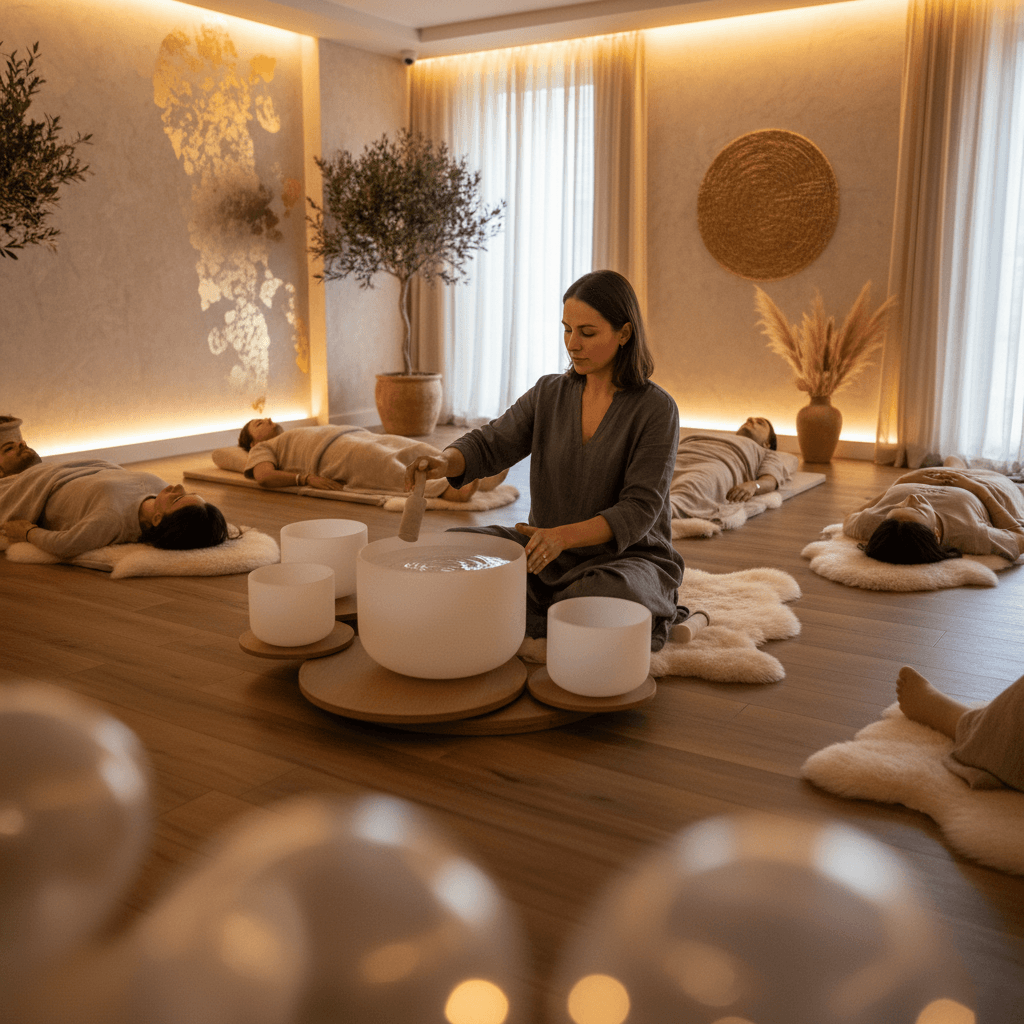
Larissa Steinbach’s method emphasizes the power of intentional sound exposure to cultivate focused attention. During a sound bath or meditation session, participants are enveloped in a rich tapestry of resonant frequencies from instruments like Himalayan singing bowls, crystal bowls, gongs, and chimes. These sustained, intricate soundscapes demand a different kind of auditory engagement than everyday noise. Instead of deciphering words, the listener focuses on the texture, depth, and evolving nature of the sound itself.
This unique process serves as a powerful training ground for the brain. The deep immersion helps to quiet the internal dialogue and external distractions, which are common barriers to active listening in conversations. By encouraging sustained attention on the sound, Soul Art sessions may support the strengthening of neural pathways responsible for focus and presence. Many people report that this practice enhances their ability to be fully present and receptive, not just during sound sessions but also in their daily interactions.
Larissa Steinbach curates each session to guide participants into a state where their "listening" faculties are heightened. The studio's calming ambiance and the expert facilitation encourage individuals to move beyond passive hearing to an active, engaged reception of sensory input. This holistic wellness practice is designed to be a complementary approach to enhancing communication, emotional intelligence, and overall wellbeing, fostering a deeper sense of connection within oneself and with others.
Your Next Steps: Integrating Deeper Listening into Your Life
Cultivating active listening is a journey, not a destination, but the benefits are deeply rewarding. You don't need to transform your entire routine overnight to begin. Start with small, consistent practices that build your capacity for deeper hearing and connection.
Here are a few actionable steps you can implement today:
- Practice Mindful Hearing: Dedicate a few minutes each day to simply listening to your environment without judgment. Notice subtle sounds, the rhythm of nature, or the background hum of your home. This trains your brain to pay closer attention to auditory details.
- Be Fully Present in Conversations: When someone speaks, make a conscious effort to silence your internal monologue. Resist the urge to formulate your response until they have finished. Use non-verbal cues to show you are engaged, such as maintaining eye contact and nodding.
- Ask Clarifying Questions: Don't assume you've understood. Practice asking open-ended questions like, "Could you tell me more about that?" or paraphrasing, "So, if I understand correctly, you're saying...?" This ensures comprehension and makes the speaker feel truly heard.
- Limit Digital Distractions: During important conversations, put away your phone and turn off notifications. Giving someone your undivided attention is a powerful form of respect and significantly improves your ability to actively listen.
- Explore Sound Wellness: Consider incorporating sound baths or guided meditations into your self-care routine. The intentional focus required during these sessions can significantly enhance your ability to maintain presence and develop a more nuanced auditory perception, skills directly transferable to active listening in daily life.
Ready to deepen your listening skills and experience profound relaxation? Soul Art Dubai offers a unique sanctuary where you can cultivate presence and unlock a richer auditory experience.
Bookings Coming Soon
Soul Art is still in preparation. Session details and booking will be published here after launch.
Coming Soon
In Summary: The Art of Deeper Hearing
Active listening is a critical yet often underdeveloped skill, rooted in intricate neural processes that light up our brains. It's not just about hearing words; it's about a conscious engagement that fosters deeper understanding, significantly boosts relationship satisfaction, and enhances emotional intelligence. The brain’s capacity for neuroplasticity means this skill can be cultivated, leading to remarkable improvements in communication and cognitive function over time.
Soul Art, under the guidance of Larissa Steinbach, offers a unique pathway to enhance this ability through immersive sound wellness practices. By training the mind to focus and be present with sound, we can improve our capacity for active listening in all aspects of life, fostering richer connections and greater personal wellbeing. Embrace the journey of deeper hearing, and unlock a more resonant, connected existence.
Wellness Disclaimer: This article is for educational and informational purposes only. It does not constitute medical advice, diagnosis, or treatment. Soul Art Dubai provides non-medical wellness experiences focused on relaxation, stress management, and general wellbeing. Sound wellness is a complementary practice and should not replace professional medical care.
Related Articles
Anniversary Sound: Deepening Love Through Vibrational Wellness

Sound for Recommitment: Deepening Vows with Soul Art
Attachment Styles: Sound for Security – Building Inner Resilience