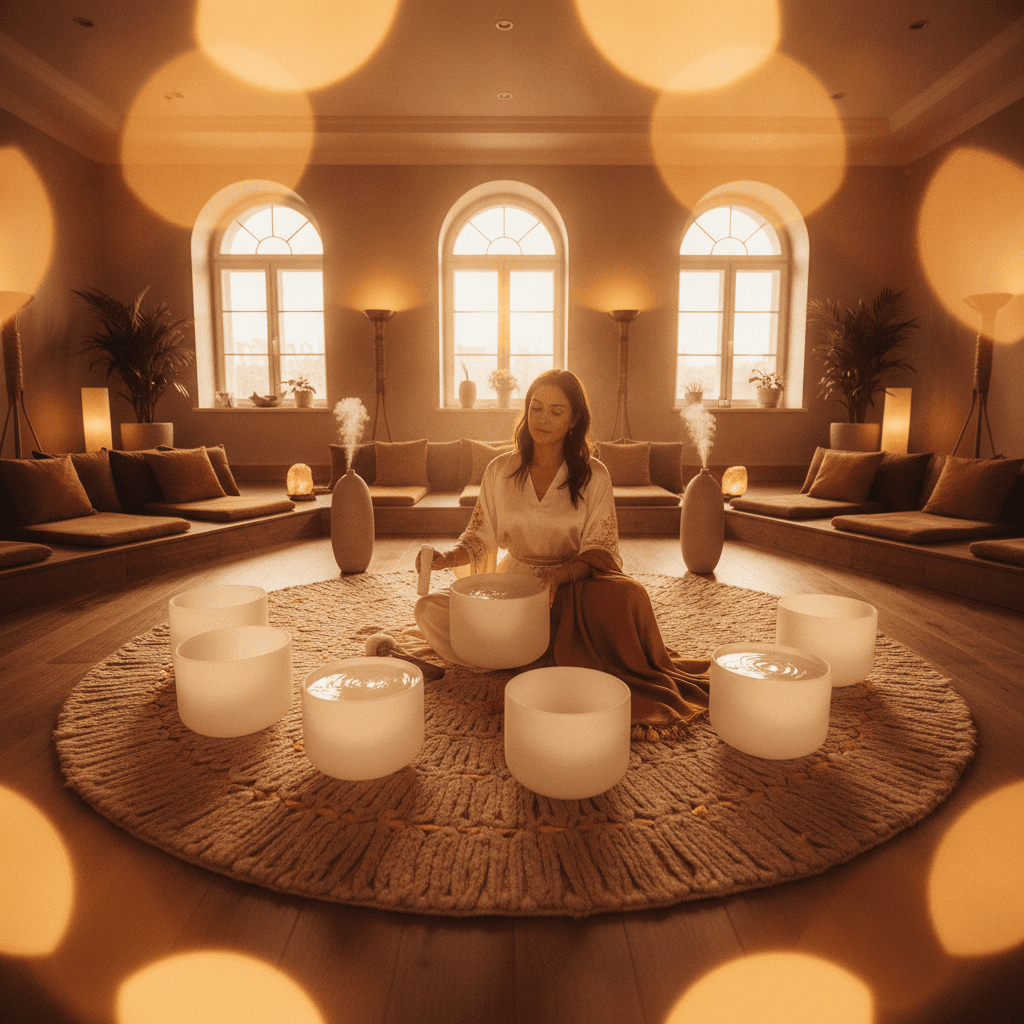
Unlock Your Inner Healer: Why Your Own Voice Can Feel Healing

Key Insights
Discover the profound, scientifically-backed ways your own voice can be a powerful tool for healing, stress reduction, and self-discovery. Explore sound wellness with Soul Art Dubai and Larissa Steinbach.
Have you ever found yourself humming a gentle tune, or perhaps even speaking aloud to yourself, during a moment of stress or deep thought? What if we told you that this seemingly simple act holds a profound, scientifically-backed power to soothe, rebalance, and even heal your being? In a world constantly buzzing with external noise, the most accessible and potent sound wellness tool often remains untapped: your very own voice.
At Soul Art, Dubai's premier sound wellness studio founded by Larissa Steinbach, we understand that the human voice is far more than a means of communication. It is an intricate instrument of self-regulation, a vibrational massage for your internal landscape, and a direct conduit to your deepest sense of self. This article delves into the fascinating science behind why your own voice can feel incredibly healing, offering practical insights and highlighting how you can harness this inherent power for enhanced wellbeing.
The Science Explained: The Biology of Vocal Vibrations
The concept of your voice as a healing agent is not simply spiritual; it is deeply rooted in human physiology and neuroscience. From the cellular level to the intricate workings of the brain, our bodies are uniquely wired to respond to sound, especially the sounds we produce ourselves. Understanding this connection unlocks a powerful pathway to profound relaxation and self-healing.
The Human Body as a Resonant Chamber
Imagine your body as a magnificent, living instrument, expertly tuned to absorb and respond to sound. A compelling fact is that sound travels faster and creates more intricate patterns in water because its particles are more densely packed. Considering the human body is comprised of approximately 60% water, it naturally becomes a highly responsive medium for sound frequencies. When you create sound through your voice, you are literally sending vibrations throughout your internal landscape, prompting a subtle reorganization at a cellular level.
This internal resonance is particularly evident when we hum. Humming, a simple vocalization, acts as a gentle, yet powerful, vibrational massage for your organs, tissues, and cells. Just as a physical massage can alleviate pain and tension, the internal vibrations generated by your voice may help to release deeply held stress and promote a sense of calm. Preliminary studies indicate that prolonged humming, for periods of five minutes or more, may contribute to a cascade of beneficial physiological responses, including a reduction in stress hormones and an increase in parasympathetic nervous system activity.
The profound impact of sound on consciousness has long been acknowledged. As composer, sound therapist, and researcher Steven Halpern once stated, "sound is the carrier wave of consciousness." This suggests that the intentional sounds we create can carry our focused thoughts and desires, potentially influencing our internal state and even our environment. When we imbue our vocalizations with intentions of peace or love, we may be projecting these frequencies outward, creating a palpable shift in energy around us.
The Brain's Response to Your Own Voice
Our relationship with our own voice is a complex psychological dance. When we hear our voice externally, particularly through a recording, it often sounds unfamiliar, even unnatural. This phenomenon, explored in studies published in the Journal of Voice, is attributed to the brain's internal perception of our voice versus its external acoustic reality. The brain typically adapts to this external perception over time, leading to greater comfort with one's recorded voice.
This initial discomfort often stems from what psychologists call cognitive dissonance – a mental discomfort arising from conflicting perceptions. Your voice is a fundamental component of your self-identity. When a recorded version doesn't align with your internal expectation, your brain experiences this mismatch, leading to the common sentiment, "That doesn't sound like me!" This can, for some, trigger increased self-criticism, as the unfamiliarity makes the brain hyper-aware of perceived flaws like tone, pacing, or filler words that others might not even notice.
However, harnessing your voice can also be a powerful tool for psychological support. Research indicates that listening to one's own recorded voice can surprisingly help to reduce stress, alleviate insecurity, and even enhance communication skills. An fMRI brain scan study published in the Journal of Neuroscience revealed that listening to one’s own recorded voice specifically activates the medial prefrontal cortex, a brain region crucial for self-recognition and identity processing. This distinct neural response underscores the unique and personal connection our brain has to our own vocal expressions.
Beyond mere listening, the act of vocalizing itself, particularly in the form of self-talk, has been a subject of interest in psychological research. Positive and motivational self-talk, whether internal or external, may offer several potential benefits:
- Emotional Regulation: Expressing emotions through self-talk can facilitate better awareness and understanding of feelings, assisting in managing and regulating emotional states effectively. Studies suggest that talking to oneself in the third person can be particularly effective in calming oneself down.
- Improved Focus and Attention: Verbalizing thoughts can enhance concentration, helping individuals to remain task-oriented and filter out distractions.
- Better Problem-Solving: By verbalizing thoughts and ideas, individuals can organize their thinking, clarify understanding, and generate new insights. This can be especially helpful in tasks requiring planning, decision-making, and goal-setting.
Vocal Expression and Psychological Wellbeing
The very act of expressing ourselves through voice holds significant implications for our overall wellbeing. Our perception of our speaking and singing voice has a profound influence on our behavior, ranging from how we express ourselves personally to how we interact socially, as explored in research cited in ScienceDirect. This indicates that our attitude toward our own voice substantially impacts our personal, interpersonal, and social presentation. While perceptions can vary, with an even distribution of negative, neutral, and positive self-perceptions, the critical insight lies in the influence of these perceptions.
Singing, whether solo or in a group, offers a particularly rich tapestry of benefits. Researchers like Alex Street from the Cambridge Institute for Music Therapy Research highlight singing as a multifaceted act: "Singing is a cognitive, physical, emotional and social act." He notes that studies are increasingly showing the therapeutic effects of singing, even for individuals recovering from significant brain injuries, emphasizing its historical role in connecting communities.
Beyond the mental and emotional, there are clear physiological advantages:
- Respiratory Health: Singing engages the lungs and respiratory system, promoting deeper breathing and improving lung capacity. This benefit is being explored in interventions for individuals with lung diseases.
- Social Cohesion: Group singing, in particular, has been observed to foster a powerful sense of unity and connection, allowing strangers to forge close bonds surprisingly quickly.
- Stress Reduction: The sustained vocalizations, especially humming and gentle toning, activate the vagus nerve, which plays a central role in the body's relaxation response. This stimulation can help transition the nervous system from a state of 'fight or flight' to one of 'rest and digest.'
These myriad benefits underscore the voice's profound capacity to support holistic wellbeing, offering an accessible pathway to self-care and mental resilience.
How It Works in Practice: Embodied Vocalization
Connecting the scientific understanding of the voice to its practical application reveals a deeply personal and transformative experience. When you intentionally use your voice for healing, you aren't just making sounds; you are engaging in a full-body, mind-heart practice that resonates through your very core. The experience is often subtle at first, yet profoundly impactful over time.
Many clients at Soul Art report a distinct shift in their physical and emotional state as they begin to explore vocalization. The act of humming, for instance, creates an immediate sensation of vibration, particularly in the chest, throat, and cranial cavities. This internal vibration can feel like a gentle internal massage, working to release tension in areas where stress often accumulates. It's a non-invasive way to bring mindful awareness to your body, allowing you to detect and address subtle discomforts.
As these vibrations spread, they may help to loosen constricted muscles, calm an agitated nervous system, and even alleviate feelings of anxiety. The steady, rhythmic nature of humming or vocal toning can anchor your attention, drawing you away from stressful thoughts and into the present moment. This process helps to regulate the breath, which is intrinsically linked to emotional states, promoting a slower, deeper respiratory pattern that signals safety to the brain.
Beyond the physical sensations, there is a powerful emotional release that often accompanies vocalization. Heightened emotions such as stress, fear, or worry, which can feel overwhelming when trapped internally, may be transformed into soundwaves. This outward expression provides a constructive outlet, preventing emotional stagnation and facilitating a sense of lightness and release. It’s an act of acknowledging and then gently moving through emotional experiences, rather than suppressing them.
"The voice is a deeply personal and powerful tool. It is always there for you. Next time you find yourself in a stressful moment, perhaps tune into the sounds you can detect, take a breath, and begin to hum for a few minutes. Notice how quickly your energy shifts."
This quote beautifully encapsulates the immediate and accessible nature of your vocal healing tool. Practicing conscious vocalization, even for a few minutes daily, allows you to cultivate a deeper connection with yourself, fostering a sense of self-affirmation and resilience. It's a direct invitation to engage with your inner landscape, using the power of your own unique frequency to recalibrate and restore.
The Soul Art Approach: Harmonizing Inner and Outer Voice
At Soul Art, Larissa Steinbach and her team are dedicated to guiding individuals in Dubai on a journey of self-discovery and profound wellbeing through the art and science of sound. Our approach to vocal healing is meticulously crafted, combining scientific understanding with ancient wisdom to create a nurturing and transformative experience. We believe that everyone possesses an inherent capacity for vocal healing, and our mission is to help you unlock it.
Larissa Steinbach integrates these principles by fostering a safe and empowering environment where clients can explore their unique vocal expression without judgment. The Soul Art method emphasizes conscious vocalization, not as a performance, but as a deeply personal wellness practice. It’s about tuning into your internal resonance and discovering the subtle yet powerful shifts that occur when you intentionally use your voice.
What makes the Soul Art method unique is its holistic integration of various sound modalities, with a special focus on the inherent power of the human voice. We guide clients through:
- Guided Humming and Toning: Facilitating sustained vocalizations that activate the vagus nerve, promoting deep relaxation and nervous system regulation. This helps to create that "vibrational massage" within the body.
- Intentional Chanting: Using simple, repetitive sounds or mantras to focus the mind, calm the emotional body, and connect with a sense of inner peace. This practice draws on the principle that sound is a carrier wave of consciousness.
- Breathwork Integration: Conscious breathing techniques are interwoven with vocal exercises to enhance lung capacity, deepen relaxation, and facilitate a stronger mind-body connection. The breath acts as the foundation for powerful vocalization.
- Exploration of Personal Resonance: Encouraging individuals to experiment with different vocal qualities and frequencies to find what resonates most deeply with their own body and emotional state. This helps in understanding one's unique vocal signature and its healing potential.
At Soul Art, our sound journeys are designed to be bespoke, acknowledging that each individual’s path to wellness is unique. We provide a space where you can gently overcome any self-consciousness about your voice, transforming it into a cherished instrument for stress management, emotional regulation, and overall holistic wellness. Larissa Steinbach’s expertise ensures that every session is not just a sound experience, but a profound journey back to your authentic self.
Empower Your Voice: Practical Steps for Daily Wellness
The journey to harnessing the healing power of your own voice doesn't require complex training or expensive equipment. It begins with simple, intentional practices that you can weave into your daily life. Embracing your voice as a tool for wellness is about cultivating self-awareness and self-compassion, using the most accessible instrument you possess.
Here are some actionable steps you can implement today to start experiencing the healing benefits of your own voice:
- Daily Humming Practice: Dedicate 2-5 minutes each day to simply humming. Find a comfortable pitch and allow the vibration to permeate your body. Notice where you feel the resonance – perhaps in your chest, throat, or head. This gentle practice may support stress reduction and promote a sense of calm.
- Mindful Self-Talk: Engage in positive, constructive self-talk. When facing a challenge, try verbalizing your thoughts or even speaking to yourself in the third person to gain perspective and emotional regulation. This can enhance problem-solving and boost confidence.
- Sing with Joy (Solo or Group): Don't worry about sounding "good." Sing your favorite songs in the shower, in your car, or find a local group to join. The act of singing, regardless of perceived talent, has been associated with improved mood, respiratory health, and social connection.
- Record and Listen to Your Voice: While initially uncomfortable, recording small voice notes and listening back can help your brain adapt to the external perception of your voice, potentially reducing self-criticism and fostering a stronger sense of self-acceptance over time.
- Explore Guided Vocalization: Seek out guided vocal toning or chanting exercises online, or better yet, consider experiencing a professional session. Structured guidance can help you explore your vocal range safely and effectively, deepening your connection to its healing potential.
By integrating these simple yet powerful practices, you begin to reclaim your voice not just as a means of communication, but as a profound ally in your ongoing journey of holistic wellness. Discover the restorative power within, and let your voice guide you toward greater peace and balance.
In Summary: Reclaiming Your Vocal Power
Your voice is an extraordinary, always-available tool for wellness, offering a direct path to physical, emotional, and mental equilibrium. From the subtle cellular vibrations of humming to the profound psychological shifts of self-talk and singing, scientific research consistently highlights its capacity to support stress reduction, enhance emotional regulation, and foster deeper self-awareness. It's a deeply personal instrument, capable of reorganizing internal states and projecting positive intentions.
At Soul Art, Larissa Steinbach champions the exploration of this innate healing power, offering expertly guided sessions that enable you to connect with your authentic voice in a supportive environment. Embrace this accessible, profound aspect of your being. Unlock your inner healer and rediscover the profound peace that resonates from within. We invite you to experience the transformative power of your own voice at Soul Art.
Bookings Coming Soon
Soul Art is still in preparation. Session details and booking will be published here after launch.
Coming Soon
Wellness Disclaimer: This article is for educational and informational purposes only. It does not constitute medical advice, diagnosis, or treatment. Soul Art Dubai provides non-medical wellness experiences focused on relaxation, stress management, and general wellbeing. Sound wellness is a complementary practice and should not replace professional medical care.
Related Articles

The Science of Connection: Call and Response Chanting for Wellness
Deepen Your Bond: Couples Breath & Tone Practice at Soul Art
Harmonize Your Voice: Humming for Public Speaking Nerves