Oud & Resonance: Unlocking Deep Wellness in Reflective Sound Spaces
Key Insights
Explore the ancient science of oud resonance and curated sound spaces at Soul Art Dubai. Discover how Larissa Steinbach's approach may support relaxation and deep well-being.
Oud & Resonance: Unlocking Deep Wellness in Reflective Sound Spaces
Have you ever experienced a sound that doesn't just end, but seems to dissolve, curling into silence and touching a part of you that words rarely reach? This profound phenomenon lies at the heart of the oud, an instrument with a lineage stretching back over 5,000 years, and its captivating interaction with carefully designed acoustic environments. Its unique sonic qualities, deeply rooted in ancient wisdom and supported by modern science, offer a powerful pathway to profound relaxation and inner harmony.
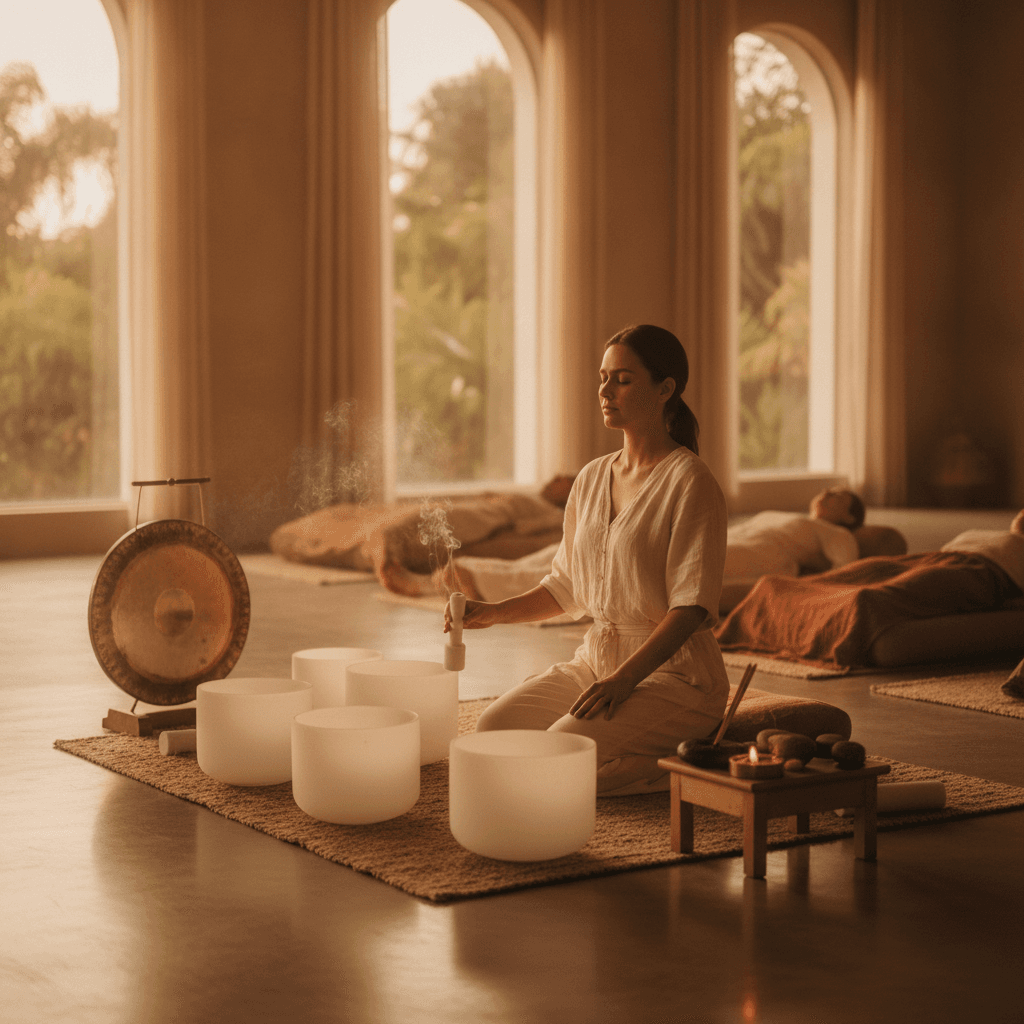
At Soul Art, Dubai's premier sound wellness studio, we delve into the intricate relationship between traditional instruments like the oud, the science of resonance, and the creation of intentional sound spaces. This article explores the rich history and cutting-edge acoustics of the oud, revealing how its distinctive sound character, when thoughtfully integrated into reflective environments, can contribute to your overall well-being. Prepare to discover how Larissa Steinbach’s vision for Soul Art harnesses these principles to craft transformative sound experiences.
The Science Explained
The oud, often revered as the "king of instruments" in the Middle East, is far more than just a musical tool; it is a sophisticated acoustic marvel. Its design incorporates specific structural engineering principles that produce a sound spectrum uniquely suited for intricate melodic expression and deep emotional resonance. Understanding these scientific underpinnings helps us appreciate its profound impact on our sensory experience and well-being.
Vibroacoustics of the Oud
At the core of the oud's enchanting sound is its vibroacoustic behavior, a complex interplay of its structural components. Research on Turkish ouds, for instance, highlights the crucial role of the soundboard—typically made from spruce or cedar—in determining the instrument's sound quality. This flat top surface vibrates in response to the plucked strings, creating the initial sound waves.
The body air cavity, the enclosed space within the oud’s characteristic pear-shaped form, also possesses its own set of resonance frequencies. When these air cavity resonances couple with the vibrations of the soundboard, they produce a rich, full-bodied sound that is instantly recognizable. Oud makers meticulously adjust the thickness of the soundboard and the dimensions of internal fan bracing to inherently tune the instrument, aiming for specific resonance frequencies that enhance its tonal character. Experimental modal analysis and finite element methods are increasingly used to reveal these intricate vibroacoustic behaviors, confirming the instrument's sophisticated acoustic design.
The Physics of Microtonality and the Fretless "Bloom"
One of the oud's most defining features is its fretless fingerboard, which is not merely an aesthetic choice but a fundamental aspect of its acoustic "superpower." This absence of frets allows players to produce microtonal intervals, or "commas," that are not present in Western musical scales. These subtle pitch inflections are essential for maqam music, the modal system that forms the foundation of much Middle Eastern and Arabic musical traditions.
Beyond microtonality, the fretless nature contributes to a phenomenon known as the oud "bloom." Research from Gazi University in Ankara confirms that the oud's deeply vaulted back creates a unique standing-wave pattern, fundamentally different from instruments with flat backs. Without frets, the player's fingertip becomes an integral part of the acoustic system. As finger pressure changes, notes expand and subtly bend, creating a characteristic sound that seems to swell and dissolve rather than abruptly end. This nuanced expressiveness, allowing for fluid sound and emotional depth, is a key reason why the oud can touch listeners so profoundly.
The Architectural Significance of Reflective Sound Spaces
Just as the oud's construction defines its sound, the environment in which it is played profoundly shapes our perception of that sound. The acoustic properties of a space — how it transmits, absorbs, or reflects sound — are critical for creating an optimal listening experience. In sound wellness, the deliberate manipulation of these reflections is paramount.
When sound strikes a surface, it can be transmitted through it, absorbed by it, or reflected off it. The amount of energy dedicated to each depends on the surface's acoustic properties. Large, flat surfaces tend to reflect sound speculary, like a mirror, redirecting it in a predictable angle. In contrast, diffusing surfaces, often geometrically complex, scatter and redirect sound waves in multiple directions. A good music listening environment, particularly for nuanced instruments like the oud, benefits immensely from ample diffusion. This ensures that the sound is evenly distributed and clearly heard throughout the room, allowing the subtle harmonics and microtonal inflections to be perceived with accuracy and depth.
How It Works in Practice
Bringing the scientific principles of oud acoustics and sound space design into practice transforms a simple listening experience into a profound wellness journey. When these elements converge, clients often report a unique sensory and emotional engagement, leading to deep relaxation and enhanced self-awareness. It's about creating an immersive environment where the oud's intricate sounds can truly resonate within the listener.
The distinct sound of the oud, with its "bloom" and microtonal subtleties, engages the brain in ways that Western instruments rarely do. Neuroscientists theorize about its unique pathways, while musicians simply describe it as the oud "speaking." This expressive quality, combined with its ancient heritage, lends a feeling of timelessness and authenticity to the sound wellness experience. The complex overtones and the way notes gently dissolve rather than stop abruptly can invite a deeper state of contemplation and release.
In a carefully designed sound space, the oud's direct sound, combined with early reflections (those arriving within less than 80 milliseconds) and late reflections (between 80 and 300 milliseconds), create a sense of spaciousness and envelopment. These precisely timed reflections allow the human ear and mind to process the full spectrum of musical sound without harsh echoes or muddiness. The goal is not excessive reverberation, but rather a balanced decay of sound that feels natural and immersive.
"The oud does not just play notes; it paints emotions with sound, bending and curling them into a silent understanding that transcends language. When experienced in a space designed for sonic reflection, it becomes a conduit for inner peace."
Clients often describe a feeling of being cradled by the sound, as the diffuse reflections create an even, omnipresent acoustic field. The rich timbre of the oud, enhanced by the acoustic properties of the room, can help to quiet the external world, drawing attention inward. This focused listening may support the body's natural relaxation responses, easing tension and promoting a sense of calm. The ancient roots of the instrument, tracing back to Mesopotamia and evolving across diverse cultures, also connect listeners to a profound cultural and historical narrative, adding another layer of depth to the experience.
The Soul Art Approach
At Soul Art, Larissa Steinbach intuitively understands the profound connection between sound, space, and the human spirit. Her approach transcends mere musical performance, transforming it into a carefully curated wellness practice designed to foster deep relaxation and nervous system regulation. The integration of the oud, with its historical significance and unique acoustic properties, is central to this philosophy.
Larissa Steinbach's methodology is deeply rooted in the understanding that sound is a powerful vibratory tool. She meticulously selects instruments, including the oud, for their inherent frequencies and emotional resonance. The oud's ability to produce microtonal intervals and its characteristic "bloom" are not just musical features but integral components of Soul Art's therapeutic soundscapes. These nuanced sounds are believed to resonate with the body's subtle energy systems, promoting balance and harmony.
What makes the Soul Art method truly unique is the deliberate attention to the acoustic environment. Larissa Steinbach designs sound sessions not just with instruments, but within spaces engineered to optimize their sonic delivery. This involves careful consideration of reflection, diffusion, and absorption to create an immersive, yet clear, auditory experience. The goal is to maximize the oud's evocative qualities, allowing its complex sound to unfold beautifully and envelop the listener without distortion or harshness.
Larissa often integrates live oud music into her sessions, valuing the direct, unmediated connection it offers. The "sultan instrument," as it is sometimes called, is used to guide clients into meditative states, its lyrical melodies and rich harmonies serving as a focal point for mindfulness. The fluidity of the oud’s sound, unconstrained by frets, allows for expressive improvisation that can adapt to the energy of the room and the needs of the individuals present, creating truly personalized wellness journeys. By embracing the ancient wisdom embedded in the oud and applying modern acoustic principles, Soul Art provides a sanctuary where sound becomes a pathway to self-discovery and restorative peace.
Your Next Steps
Embracing the power of oud resonance and thoughtfully designed sound spaces can be a profound step towards enhancing your daily wellness. Incorporating these principles into your life doesn't require complex acoustic engineering, but rather an intentional approach to how you experience sound. Here are a few actionable steps you can take today to integrate these concepts into your self-care practice:
- Mindful Listening: Seek out oud music specifically designed for relaxation or meditation. Pay attention to the subtle nuances, the way notes bend and dissolve. Allow the music to guide your breath and calm your thoughts. There are many online resources and albums dedicated to the meditative qualities of the oud.
- Create Your Own Resonance Space: While you may not have a purpose-built sound studio, you can enhance your personal listening environment. Minimize harsh reflections by adding soft furnishings, curtains, or even tapestries. Consider incorporating diffusing elements like bookshelves or varied wall textures to subtly scatter sound and create a more enveloping acoustic field.
- Explore Live Sound Experiences: If available in your area, attend live performances featuring the oud. There's a unique energy and immediacy to live sound that can be deeply moving. Pay attention not just to the music, but also to how the sound interacts with the performance space.
- Practice Intentional Breathing with Sound: During your listening sessions, synchronize your breath with the flow of the music. Inhale as a note blossoms, and exhale as it gently fades. This simple practice can deepen your relaxation and connect you more fully to the sound's therapeutic potential.
- Discover Soul Art: For a truly immersive and professionally curated experience, consider booking a session at Soul Art. Our expertly designed sound spaces and Larissa Steinbach's guided practices are tailored to harness the full potential of instruments like the oud for your ultimate well-being.
In Summary
The oud, with its profound history and scientifically intricate design, offers a unique gateway to deep relaxation and enhanced well-being. Its fretless form, vaulted back, and specific vibroacoustic properties create a "bloom" of microtonal sound that resonates uniquely within us. When experienced in a reflective sound space, intentionally designed to manage reflections and foster diffusion, the oud's captivating melodies can deeply soothe the nervous system and promote inner calm.
Soul Art, under the guidance of Larissa Steinbach, expertly combines these ancient and scientific principles to craft transformative sound wellness experiences. Through a mindful approach to instruments and acoustic environments, we offer a complementary pathway to stress reduction and holistic self-care. Discover the quiet luxury of oud resonance and allow its timeless frequencies to restore your inner balance.
Bookings Coming Soon
Soul Art is still in preparation. Session details and booking will be published here after launch.
Coming Soon
Wellness Disclaimer: This article is for educational and informational purposes only. It does not constitute medical advice, diagnosis, or treatment. Soul Art Dubai provides non-medical wellness experiences focused on relaxation, stress management, and general wellbeing. Sound wellness is a complementary practice and should not replace professional medical care.
Related Articles
The Science of Connection: Call and Response Chanting for Wellness
Deepen Your Bond: Couples Breath & Tone Practice at Soul Art
Harmonize Your Voice: Humming for Public Speaking Nerves