Quiet Recovery: The Corporate Imperative Beyond Content Overload

Key Insights
Discover why quiet recovery, not more content, is crucial for corporate teams. Larissa Steinbach's Soul Art offers science-backed wellness for peak performance and innovation.
Imagine a workplace where employees are constantly 'on,' fueled by an endless stream of digital content, meetings, and demands. While the intent might be to foster productivity, a paradoxical truth emerges: true engagement and peak performance don't come from more input, but from strategic periods of quiet recovery. New research compellingly demonstrates that the ability to psychologically detach from work is not a luxury, but an essential component of professional well-being and organizational success.
This article delves into the critical science behind work recovery, revealing why traditional corporate approaches often fall short and how integrating deliberate rest can revolutionize team dynamics and innovation. We will explore the tangible costs of neglecting recovery, the profound benefits of quiet restoration, and how Soul Art, founded by Larissa Steinbach, provides a unique path to achieving this vital equilibrium for Dubai's corporate landscape. Understanding this shift from constant content consumption to conscious quiet is not just a trend; it's a strategic imperative for any forward-thinking organization.
The Deep Dive: Unpacking the Science of Quiet Recovery
The modern corporate environment, with its relentless pace and digital interconnectedness, often pushes employees to the brink of their mental and physical reserves. What might appear as dedication can quickly morph into a state of chronic strain, leading to a cascade of detrimental effects on individual health and organizational vitality. The science of work recovery offers profound insights into reversing this trend, emphasizing the critical role of true detachment.
The Cost of Unmanaged Stress: From Burnout to "Quiet Cracking"
Ignoring the need for recovery exacts a heavy toll. Persistent job strain and unmanaged demands can deplete mental resources, leading to a significant drop in energetic and self-regulation capacities, as researchers have found. If these resources aren't replenished daily, performance suffers, manifesting as fatigue, cynicism, presenteeism, and even absenteeism. Without adequate recovery, individuals may experience a range of medical issues, from cardiovascular disease to irritable bowel, and ultimately, burnout.
A more insidious phenomenon, "quiet cracking," is now emerging as a significant concern, affecting over 54% of survey participants according to TalentLMS. Unlike quiet quitting, which involves deliberate boundary-setting, quiet cracking is an involuntary erosion of an employee's psychological foundation at work. It occurs when organizations demand more with less, leading employees to become emotionally checked out and overwhelmed, losing connection and purpose, even while seemingly meeting expectations. This slow fracture is accelerated when AI and new technologies are added without redesigning roles or reducing existing responsibilities, as a Perceptyx study found that 80% of employees building new skills due to GenAI often lack adequate support.
The Brain's Need for a Reset: Why Breaks Aren't Optional
Our brains are not designed for continuous, high-intensity output. Research from Microsoft's Worklab, using EEG monitoring, vividly illustrates the physiological impact of back-to-back virtual meetings. Without breaks, beta wave activity, correlated with heightened stress, can rise sharply at the beginning and end of meetings. This suggests a cumulative buildup of stress that impairs cognitive function.
Conversely, taking even short breaks allows the brain to "reset," reducing these stress spikes and even causing a dip in beta activity. For the study, participants were assigned meditation as a downtime activity, highlighting the power of conscious recovery in mitigating stress. This scientific visualization confirms what many intuitively feel: continuous engagement without pause leads to mental exhaustion and decreased efficiency. It underscores the importance of intentional breaks, not just as a luxury, but as a critical component of sustaining cognitive health and performance.
Managerial Support: The Catalyst for True Recovery
The responsibility for fostering recovery isn't solely on the individual; leadership plays a pivotal role. Research by Bennett, Gabriel, Calderwood, Dahling, and Trougakos highlights that when employees are actively encouraged by managers to unwind after work, they are significantly more likely to do so. This creates a healthier staff and workplace culture where recovery is valued, not seen as a sign of weakness.
Supervisors who support exercise, recreation, and pastimes have a considerable influence on an employee's ability to psychologically detach. This detachment, whether through relaxation, social interaction, or engaging in hobbies, is essential for restoring well-being at home and for renewed attention and engagement at work. The science demonstrates that recovery is a two-way street, where supportive managerial norms empower employees to "leave work at work," countering the daily toll of job strain.
Beyond Absence: The Erosion of Innovation and Cohesion
The impact of neglecting recovery extends beyond individual well-being to the very fabric of organizational effectiveness. Quiet quitting, often a symptom of unaddressed strain and lack of recovery, directly correlates with diminished innovation and team cohesion. A study by Feldman and Hirsch (2023) across R&D departments found that teams with high quiet quitting rates generated 53% fewer novel ideas and exhibited 47% lower patent application rates. This "innovation deficit" signals a profound loss for organizations reliant on creativity and adaptability.
Furthermore, quiet quitting significantly impacts team dynamics and social capital. Watson and Lee (2023) reported that teams with multiple quiet quitters had 43% lower reported team cohesion scores and 38% less interaction outside formal work structures. This erosion breaks down the informal problem-solving systems and collaborative spirit that sustain institutions. When employees are emotionally disengaged, the collective capacity for strategic thinking, robust collaboration, and sustained growth is severely compromised, underlining the critical need for proactive recovery strategies.
"The paradox of modern work is that in our relentless pursuit of productivity, we often overlook its most fundamental ingredient: the restorative power of pause."
From Theory to Transformation: Experiencing Quiet Recovery
Connecting the scientific understanding of recovery to its real-world application reveals a profound pathway to revitalized performance and well-being. Quiet recovery isn't merely the absence of work; it's an active process of psychological and physiological restoration that profoundly impacts how we engage with our professional and personal lives. It's about consciously shifting gears, allowing the nervous system to recalibrate, and reclaiming mental space.
When clients step into a space dedicated to quiet recovery, they often describe an immediate sense of relief, a loosening of the tight grip of daily stressors. The subtle hum of constant thought begins to dissipate, replaced by a gentle awareness of the present moment. This deliberate slowing down enables the brain to move from a state of heightened beta wave activity, associated with alertness and stress, towards more relaxed alpha or even theta states. This shift supports cognitive processing, allowing for deeper insights and creative problem-solving that are often elusive amidst constant stimulation.
The experience is deeply sensory: the gentle vibrations of sound, the calming diffusion of subtle aromas, the soft textures, and the supportive atmosphere all contribute to a holistic sense of unwinding. It’s an immersion that encourages psychological detachment from work demands, helping to turn off the "stress replay machine" that often runs in the background. This intentional pause is far more potent than passive rest, as it actively engages the body's natural relaxation responses.
For corporate teams, these collective experiences foster a unique form of bonding, moving beyond transactional interactions to shared moments of calm. This shared vulnerability in seeking restoration can quietly rebuild team cohesion and trust, which are often eroded by stress and disengagement. By prioritizing these moments of quiet, teams not only recover individually but also strengthen their collective resilience and capacity for innovation, creating a ripple effect that elevates the entire organizational culture.
The Soul Art Difference: Larissa Steinbach's Path to Restoration
At Soul Art, Dubai's premier sound wellness studio, Larissa Steinbach has meticulously crafted an approach that transcends conventional stress management, offering a scientifically-informed sanctuary for quiet recovery. Her methodology is deeply rooted in the understanding that true restoration requires more than just time off; it demands a conscious, guided journey into stillness and self-regulation. Larissa Steinbach's unique vision transforms the concept of corporate wellness by making profound, quiet recovery accessible and impactful.
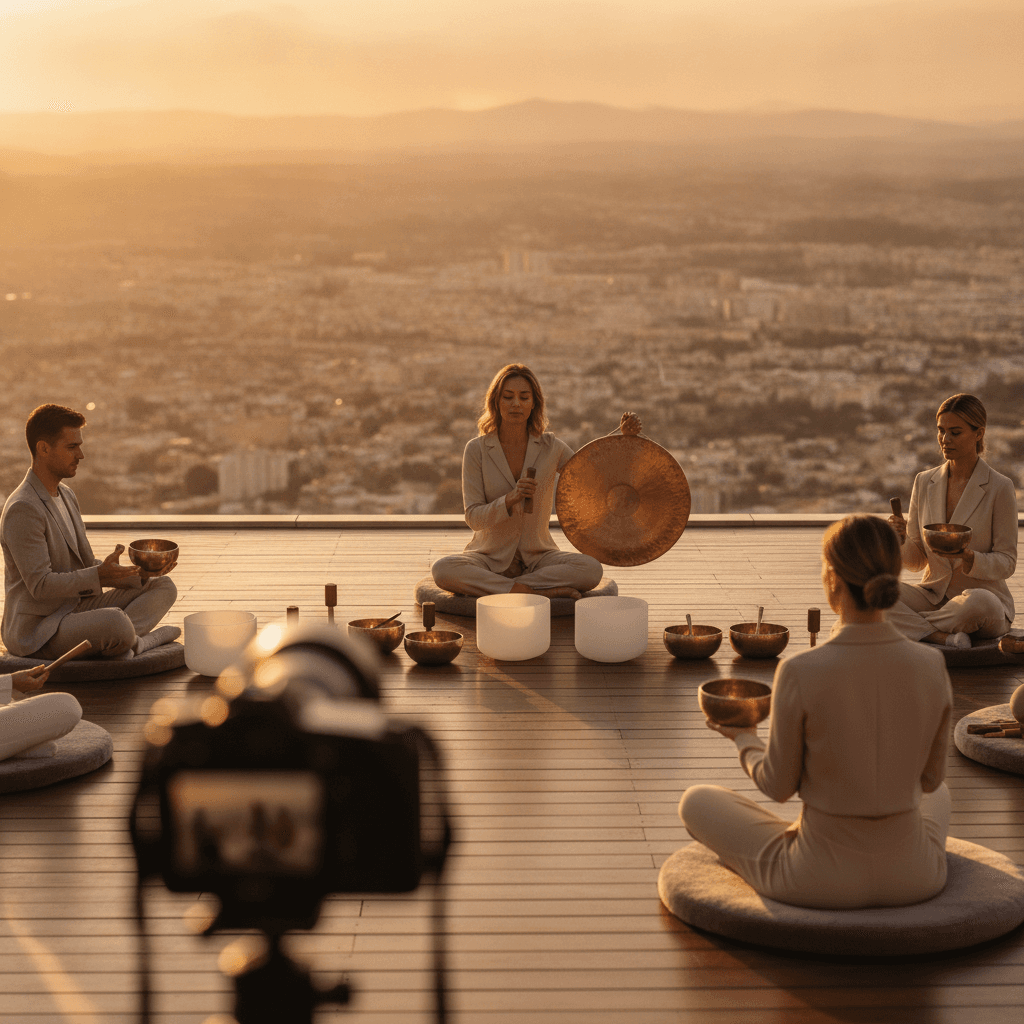
The Soul Art method leverages the ancient yet scientifically validated power of sound wellness. Through the masterful playing of instruments such as Himalayan singing bowls, crystal bowls, gongs, and chimes, a rich tapestry of resonant frequencies is created. These carefully selected sounds are designed to entrain brainwaves, gently guiding participants from states of mental agitation towards deeper states of relaxation and meditative calm. This intentional sound immersion facilitates psychological detachment, allowing the nervous system to settle and recharge.
What makes Soul Art truly distinctive is Larissa Steinbach’s empathetic guidance and her creation of an environment that acts as a sensory balm for the modern professional. Every element, from the studio's serene aesthetics to the curated auditory landscapes, is designed to encourage presence and release. It's a holistic experience that acknowledges the complex interplay between mental stress, emotional well-being, and physical tension.
Soul Art's corporate programs are not about adding more content to already overwhelmed schedules but about providing structured opportunities for profound, quiet breaks. These sessions enable teams to experience genuine mental reset, reduce cumulative stress, and replenish the energetic and self-regulation resources crucial for high performance. Larissa Steinbach believes that by providing this space for deep recovery, Soul Art empowers individuals and teams to return to their work with renewed clarity, creativity, and a stronger sense of purpose.
Cultivating Calm: Actionable Steps for Your Team's Well-being
Integrating quiet recovery into the corporate fabric is not just a suggestion; it's a strategic investment in human capital. As a leader or team member, you have the power to initiate changes that foster a culture of well-being and sustained productivity. Prioritizing pause, rather than pushing for more, is the cornerstone of building resilient, innovative teams.
Here are actionable steps you can implement today to champion quiet recovery:
- Implement "Pause Periods" Between Meetings: Encourage a mandatory 10-15 minute gap between virtual meetings to allow for brain resets and task switching. This simple change, supported by research, significantly reduces cumulative stress and enhances focus for subsequent tasks. Challenge the necessity of every meeting; sometimes, an email or chat update is more efficient and creates valuable time for individual recovery.
- Lead by Example: Managers must actively role-model psychological detachment by taking their full PTO, encouraging team members to do the same, and openly discussing the importance of personal recovery activities. When leaders demonstrate that "leaving work at work" is acceptable and beneficial, employees feel empowered to follow suit.
- Integrate Micro-Recovery Practices: Introduce short, guided meditations, breathing exercises, or sound baths during team breaks or as a dedicated start/end to the workday. These micro-interventions can help dissipate stress in real-time and cultivate a calmer, more present mindset throughout the day.
- Prioritize Wellness Check-ins: Move beyond annual reviews to implement frequent, confidential pulse surveys focused on well-being and engagement. Use this data to create science-backed action plans addressing local team issues immediately, as Willburn advises for guarding against "quiet cracking."
- Invest in Dedicated Recovery Experiences: Explore professional sound wellness sessions or guided meditation workshops as team-building activities. Rather than another high-energy event, offer a shared experience of profound relaxation that addresses underlying stress and fosters a calmer, more cohesive team environment.
By proactively integrating these quiet recovery strategies, your team can move from a cycle of exhaustion and disengagement towards sustained peak performance, innovation, and well-being. Discover how Soul Art can tailor bespoke experiences to meet your organization's unique needs, providing a truly transformative path to corporate wellness.
In Summary: Prioritizing Pause for Peak Performance
The relentless demands of the modern corporate world often overshadow a critical truth: sustained high performance and genuine employee engagement are inextricably linked to effective work recovery. Scientific research unequivocally demonstrates that psychological detachment, intentional breaks, and supportive leadership are not mere amenities but essential ingredients for preventing burnout, fostering innovation, and strengthening team cohesion. Neglecting these aspects leads to "quiet cracking," diminished creativity, and a significant drain on organizational resources.
Soul Art, under the guidance of Larissa Steinbach, stands as a beacon for organizations seeking to integrate profound quiet recovery into their wellness strategy. By offering unique sound wellness experiences, Soul Art provides a vital sanctuary for teams to reset, restore, and reconnect with their inner calm, ultimately unlocking greater potential. Embracing quiet recovery is not just a kind gesture; it is a strategic imperative for any forward-thinking corporate entity aiming for sustainable success and a thriving workforce in Dubai and beyond.
Bookings Coming Soon
Soul Art is still in preparation. Session details and booking will be published here after launch.
Coming Soon
Wellness Disclaimer: This article is for educational and informational purposes only. It does not constitute medical advice, diagnosis, or treatment. Soul Art Dubai provides non-medical wellness experiences focused on relaxation, stress management, and general wellbeing. Sound wellness is a complementary practice and should not replace professional medical care.
Related Articles

Reclaim Your Focus: The Afternoon Slump Sound Ritual for Office Wellness with Soul Art

Corporate Sound Healing: Elevate Employee Well-being & Productivity

Conflict Decompression: Resetting Your Mind After Difficult Meetings with Sound Wellness