Unlocking Emotional Release: Voice, Grief & Sound Wellness

Key Insights
Explore the profound connection between your voice, the processing of grief, and safe emotional expression. Soul Art offers unique sound wellness experiences.
The Unspoken Language of Loss: Finding Resonance in Grief
Have you ever felt a knot in your throat, a tightness in your chest, or a voice that cracks when overwhelmed by emotion, especially sorrow? Grief, that most profound and individual of human experiences, often manifests not just in our minds, but deeply within our physical bodies, resonating in our very voice. While modern science has yet to pinpoint a consistent, physical "fingerprint" for grief itself, the way we express it vocally—or suppress it—offers profound insights into our healing journey.
At Soul Art Dubai, founded by the visionary Larissa Steinbach, we understand that true wellness encompasses the entirety of your being: mind, body, and spirit. This article delves into the fascinating and often overlooked connection between our voice, the complex landscape of grief, and the pathways to safe, authentic emotional expression. Join us as we explore how sound wellness practices may offer a gentle, yet powerful, complementary approach to navigating loss and fostering inner peace.
The Science Explained: How Grief Resonates Within
Grief is a multi-dimensional experience, impacting us emotionally, cognitively, and physically. It is not a linear process, but rather a chaotic dance of emotions, from profound sadness and yearning to anger and numbness. Understanding its intricate workings is the first step towards finding supportive avenues for expression.
Grief's Physiological and Cognitive Imprint
Emotionally, grief can be incredibly dysregulating. Many individuals report feeling out of touch with their emotions, reacting too intensely or too little, or struggling to shift from one emotional state to another. This emotional dysregulation is a common response to significant loss, and it reflects the profound impact grief has on our entire system.
Cognitively, grief can make focus feel impossible, leading to memory lapses and a persistent scanning for the loved one's presence, expecting their voice or touch. This "attachment response" is a natural, yet often painful, neurological process that fuels disbelief and yearning. Grief is a whole-being experience; it affects not just our minds and emotions, but also our bodies, our routines, and our fundamental sense of safety in the world.
The Voice as a Barometer of Inner State
The human voice is an incredibly potent instrument of emotion. Research consistently supports the theory that singing and vocal expression are deeply connected to our emotional states. Studies suggest that music performers communicate emotions by leveraging an acoustic code derived from innate brain programs for vocal expression. In essence, music can be seen as a heightened form of speech that transforms feelings into audible vibrations.
The physical sensation of a "breaking voice" is frequently associated with grief and intense emotion. This involuntary vocal shift highlights the deep connection between our emotional core and our vocal apparatus. When we suppress emotion, that energy can become trapped, often manifesting as tension in the throat, jaw, and chest, directly impacting our natural vocal resonance.
Sound, Vibration, and Nervous System Regulation
The scientific community recognizes the potential of sound and music to influence our emotional and physiological states. While direct scientific literature on the benefits of listening to the voice of the deceased is still emerging, anecdotal evidence from social networks suggests a complex and varied impact—some find it comforting, others too painful, reflecting the diverse nature of bereavement. However, the broader field of music therapy shows promising benefits for grief-related symptoms like depression, anxiety, and PTSD. Vocal improvisation, songwriting, and singing interventions have been explored in therapeutic settings, particularly with bereaved children, showing potential for increased self-expression and control.
Softness, whether in touch, tone, or sound, signals safety to our nervous system. This concept is crucial when navigating the raw pain of grief. Therapeutic techniques, such as those used in Dialectical Behavior Therapy (DBT) to manage emotional overwhelm, often involve physical regulation. These include:
- Temperature: Using cold stimuli (like holding ice) to trigger a calming response.
- Intense Exercise: Short bursts of movement to release tension.
- Paced Breathing: Slow, controlled breaths (e.g., inhale 2-4 seconds, exhale 4-6 seconds) to reduce arousal.
- Progressive Muscle Relaxation: Tensing and releasing muscle groups to ease stress.
These examples illustrate how physical actions, including vocal engagement, can directly influence our internal state and help regulate our nervous system during times of distress.
How It Works in Practice: The Transformative Power of Vocal Sound
Connecting theory to practice reveals the profound potential of engaging with our own voice during times of grief. This is not about achieving perfect pitch or performance; it is about authentic expression, release, and resonance. The process often feels deeply intuitive, yet it is supported by the physiological pathways we've explored.
When you allow your voice to emerge, whether through humming, gentle vocal toning, or expressive sound, you create vibrations within your own body. These internal vibrations can act as a gentle massage to your internal organs and nervous system. This self-generated sound encourages the release of physical tension often held in the throat, jaw, and chest—areas frequently constricted by suppressed grief.
Many people report a sense of liberation as they engage in vocal expression, finding that sounds emerge that they didn't consciously intend. The act of vocalizing provides a non-verbal outlet for emotions that may be too complex, too raw, or simply too overwhelming for words. It allows for a somatic experience of grief, recognizing that it is felt not just emotionally, but physically. The soft, sustained sounds encourage a state of safety within the nervous system, providing comfort when the pain is too intense for linear thought or conversation.
The experience is deeply sensory. You might feel the hum resonate in your sinuses, the vibration in your sternum, or the expansion of your breath as sound leaves your body. This active engagement creates a present-moment awareness, helping to gently ground you amidst emotional chaos. It allows for a mindful exploration of what is arising within, without judgment, fostering a deeper connection to your inner landscape.
The Soul Art Approach: Larissa Steinbach's Path to Vocal Wellness
Larissa Steinbach, the founder of Soul Art, has meticulously crafted a unique approach to sound wellness that harmonizes scientific understanding with profound empathetic awareness. At Soul Art, we believe in creating a sanctuary where individuals can explore their inner world and express emotions safely through guided vocalization and sound. Our method is designed to be gentle, nurturing, and deeply supportive, recognizing the delicate nature of grief and emotional vulnerability.
The Soul Art method begins with establishing a foundation of safety and trust. Larissa Steinbach guides clients through breathwork techniques that calm the nervous system, preparing the body and mind for vocal exploration. This foundational breathwork, akin to paced breathing techniques, helps regulate arousal and fosters a sense of grounded presence. We encourage clients to connect with their natural breath, understanding it as the wellspring of their voice and emotional expression.
Our sessions incorporate a variety of sound wellness tools and techniques. Clients may be invited to engage in:
- Gentle Vocal Toning: Sustaining a single note or simple vocalizations, allowing the sound to vibrate through the body. This process is not about singing in tune, but about feeling the resonance and release.
- Guided Chanting: Simple, repetitive vocal patterns that foster a meditative state and help to regulate emotional swings. The repetitive nature can be deeply soothing, offering a predictable rhythm amidst internal turbulence.
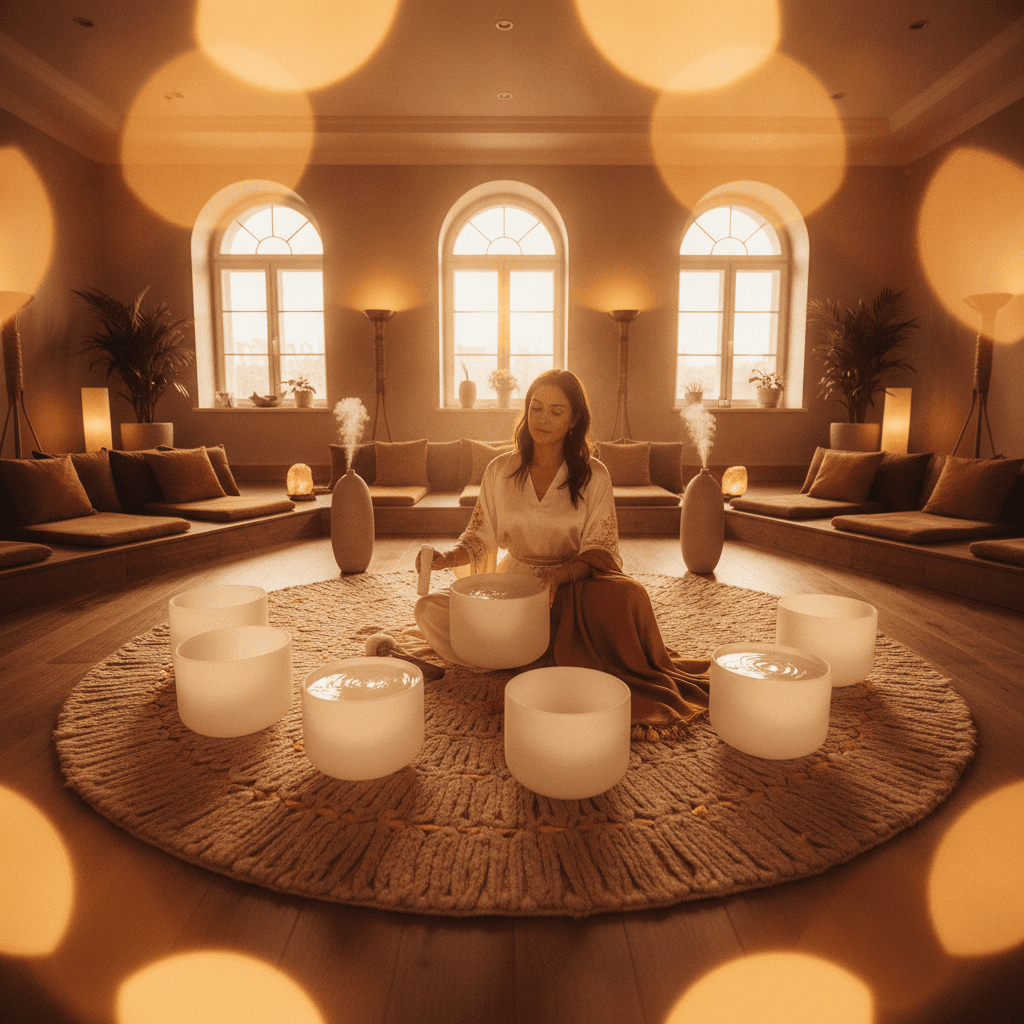
- Sound Baths with Specific Instruments: While direct vocalization is key, Larissa Steinbach also integrates therapeutic instruments such as crystal singing bowls, gongs, and tuning forks. These instruments create immersive soundscapes that complement vocal work, promoting deep relaxation and nervous system balance. The resonant frequencies of these instruments may encourage a state of parasympathetic activation, facilitating a calm state conducive to emotional processing.
What makes the Soul Art method unique is its holistic focus on integrating voice, breath, and sound for emotional regulation and safe expression. Larissa's expertise lies in creating an environment where vulnerability is honored, and the act of vocalizing becomes a powerful tool for self-discovery and gentle release. We empower individuals to find their own resonant frequencies, supporting them in navigating the emotional complexities of grief with grace and self-compassion.
"The voice, when freely expressed, becomes a bridge between our inner emotional landscape and the world, allowing trapped energies to gently unfurl and dissipate into sound."
Your Next Steps: Cultivating Vocal Wellness in Daily Life
Engaging with your voice as a tool for emotional wellness does not require a studio or a professional singer. You can begin to explore this powerful connection in your everyday life, fostering moments of safe expression and self-regulation. These simple practices, rooted in the principles of sound wellness, may support your emotional well-being, particularly during times of grief or stress.
Here are 3-5 actionable steps you can implement today:
- Gentle Humming Practice: Find a quiet moment, close your eyes, and hum softly. Experiment with different pitches and feel the vibration in your head, chest, and throat. This simple act can stimulate the vagus nerve, which is associated with calming the nervous system and promoting relaxation.
- Mindful Breath and Sighing: Pay attention to your breath. When you feel a wave of emotion, allow for a deep, gentle sigh on the exhale. A sigh is a natural physiological process that helps to reset the breathing pattern and can reduce internal tension. Consciously practice deep, paced breathing: inhale slowly for 2-4 seconds, then exhale for 4-6 seconds, allowing for a soft sound on the exhale if it feels natural.
- Vocal Journaling: If speaking or singing feels too exposed, try vocalizing in a private space. This could be making sounds, groans, or cries that come naturally, without judgment. Let these sounds be a non-verbal expression of whatever emotions are present. You don't need an audience; this is purely for your own release.
- Listen to Soothing Sounds: Engage with music or nature sounds that bring you comfort and a sense of calm. While not directly vocalization, listening to gentle soundscapes can create an environment conducive to emotional processing and nervous system regulation, echoing the benefits of sound baths.
- Practice Softness: Remember that "softness signals safety to your nervous system." Whether it's in your voice, your touch, or your internal dialogue, cultivate gentle approaches. When pain is raw, a soft tone or a gentle hum can provide profound comfort.
These practices are not about solving grief, but about offering gentle tools to navigate its challenging terrain. If you find yourself seeking a more structured and supportive environment to explore voice, grief, and emotional expression, Soul Art Dubai provides expertly guided experiences. We invite you to discover the unique benefits of sound wellness under the compassionate guidance of Larissa Steinbach.
In Summary: Your Voice, Your Path to Healing
The journey through grief is deeply personal, often chaotic, and profoundly impactful on every aspect of our being, including our voice. While science continues to uncover the intricate connections between emotion, physiology, and sound, preliminary studies and extensive anecdotal evidence highlight the potential of vocal expression and sound wellness practices to support emotional regulation and provide a safe outlet for sorrow. By engaging with our breath and voice, we may gently release trapped tension, calm our nervous system, and foster authentic self-expression.
Larissa Steinbach and Soul Art Dubai offer a sanctuary where the profound connection between your voice and your emotional landscape can be gently explored. Through guided vocalization, breathwork, and immersive sound experiences, we aim to provide a complementary approach to navigating grief and fostering holistic well-being. Discover the quiet strength within your own resonant being.
Bookings Coming Soon
Soul Art is still in preparation. Session details and booking will be published here after launch.
Coming Soon
Wellness Disclaimer: This article is for educational and informational purposes only. It does not constitute medical advice, diagnosis, or treatment. Soul Art Dubai provides non-medical wellness experiences focused on relaxation, stress management, and general wellbeing. Sound wellness is a complementary practice and should not replace professional medical care.
Related Articles

The Science of Connection: Call and Response Chanting for Wellness

Deepen Your Bond: Couples Breath & Tone Practice at Soul Art

Harmonize Your Voice: Humming for Public Speaking Nerves