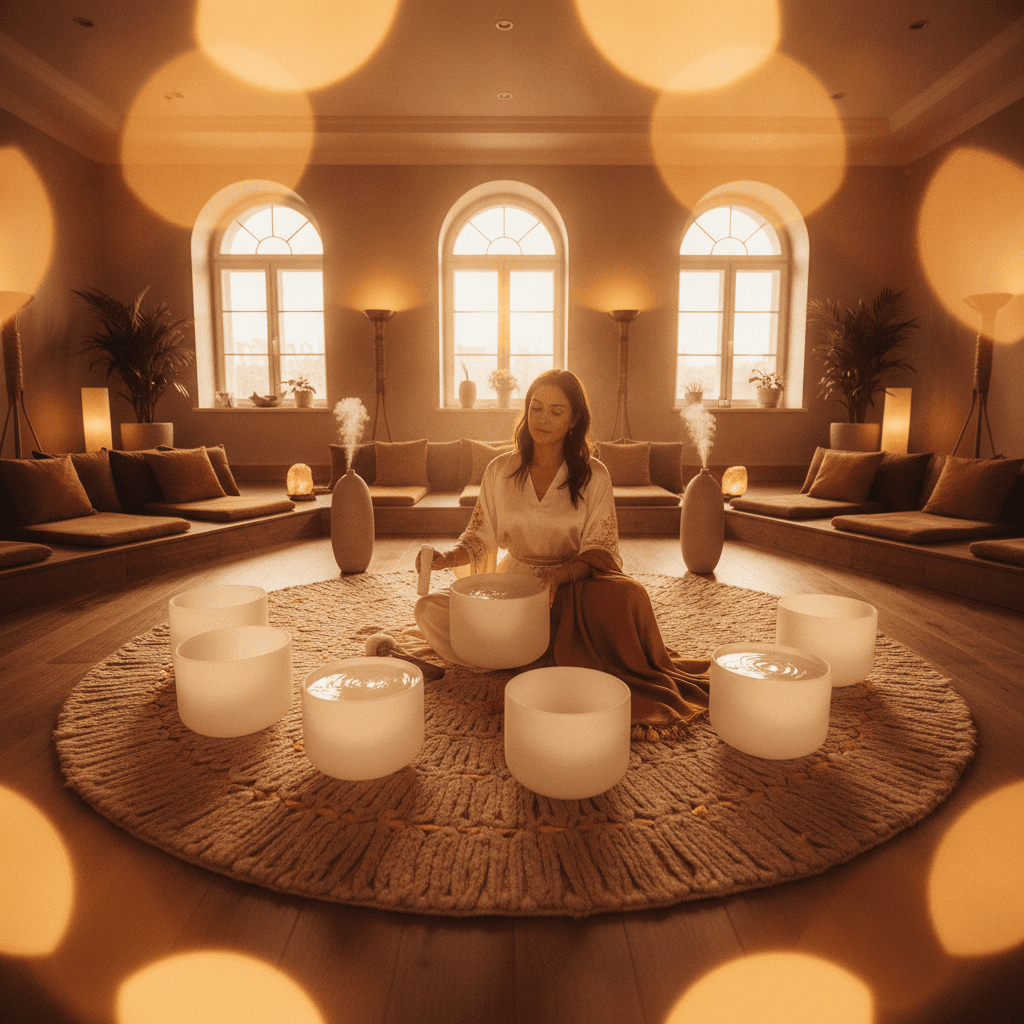
The Unseen Instrument: The Science of Vocal Warmth in Sound Baths
Key Insights
Discover the neuroscience behind a practitioner's voice in sound baths. Learn how vocal warmth, resonance, and timbre can deepen your relaxation and wellbeing.
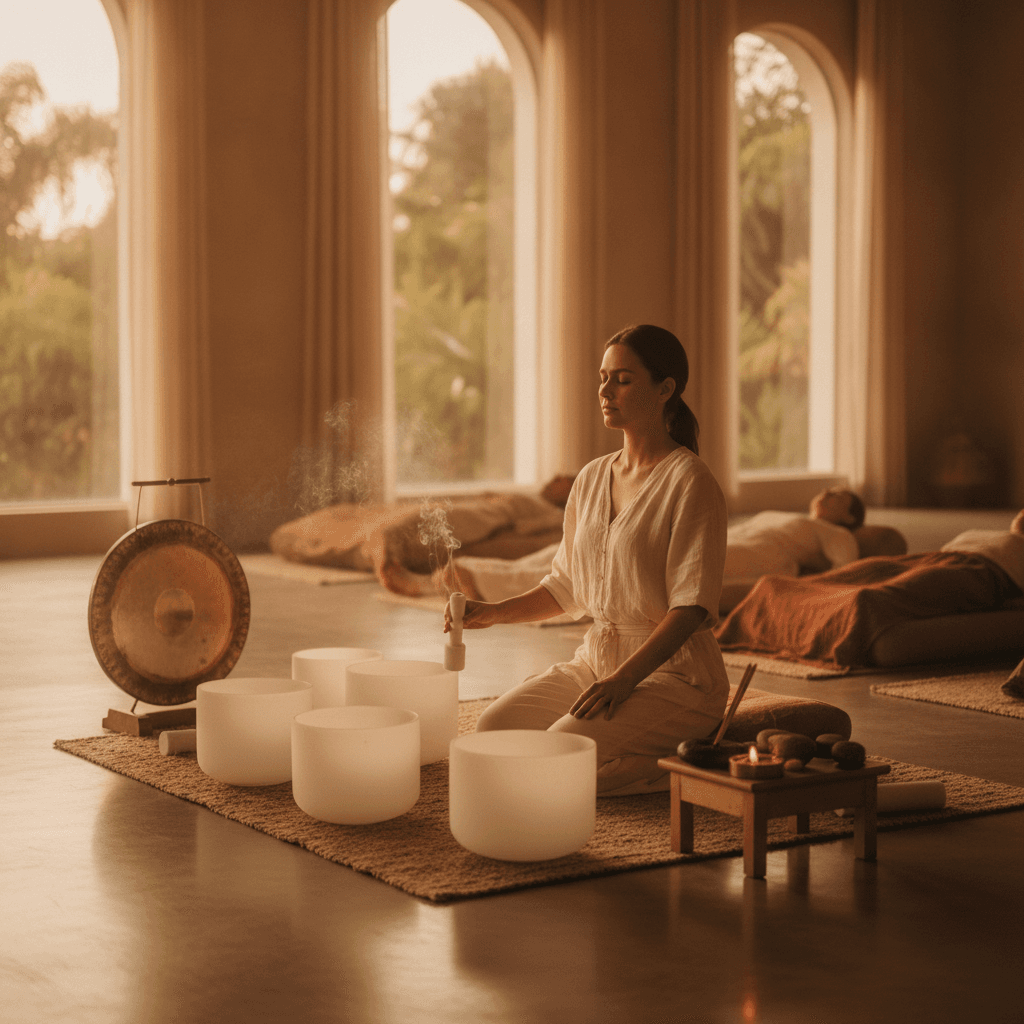
Have you ever noticed how some voices can instantly calm your nervous system, while others put you on edge? In a guided sound bath, where every frequency is curated to promote relaxation, we often focus on the shimmering tones of crystal bowls or the deep resonance of gongs. Yet, the most influential instrument in the room is frequently the one we overlook: the human voice.
The practitioner's voice is the thread that weaves the entire experience together. It guides your awareness, provides a safe anchor in the soundscape, and communicates a sense of presence and care. But what if this was more than just a feeling? What if the "warmth" of a voice had measurable, scientific properties that could profoundly deepen your journey into relaxation? This article explores the fascinating acoustics and neuroscience behind vocal quality and reveals why a well-cared-for voice is a non-negotiable element of an effective sound wellness experience.
The Science Explained: How Vocal Tone Rewires Your Nervous System
While the wellness industry has embraced sound baths, with a reported 285% rise in popularity in recent years, the scientific community is now validating what ancient traditions have long understood. Research from institutions like UCLA and Stanford is demonstrating the measurable physiological and psychological benefits of sound. The practitioner's voice is a critical, yet often unexamined, part of this equation.
Brainwave Entrainment: The Voice as a Rhythmic Guide
Your brain operates through rhythmic electrical patterns known as brainwaves. These patterns are associated with different states of consciousness: Beta waves for alert focus, Alpha for relaxed awareness, Theta for deep meditation or a dreamlike state, and Delta for deep sleep.
One of the key mechanisms in a sound bath is brainwave entrainment, a process where the brain’s rhythms synchronize with an external auditory stimulus. While this is often attributed to the consistent frequencies of singing bowls, the cadence and pitch of a practitioner's voice play a powerful role. A calm, stable, and rhythmic voice can gently guide the brain from an active Beta state to the restorative Alpha and Theta states. This shift is associated with a decrease in the stress hormone cortisol and the activation of the body's relaxation response.
The Acoustic Signature of "Warmth"
A "warm" or "soothing" voice isn't just a subjective perception; it has a distinct acoustic signature that can be measured. A longitudinal case study published in the Journal of Voice highlights several key acoustic parameters that correlate with higher vocal quality and reduced listener fatigue. These include:
- Jitter & Shimmer: Jitter refers to the slight variations in vocal frequency (pitch), while shimmer refers to variations in amplitude (loudness). A voice with lower jitter and shimmer is more stable and smooth, which the human nervous system interprets as safe and calming. A voice with high variability can be subconsciously perceived as erratic or stressful.
- Harmonics-to-Noise Ratio (HNR): This measures the ratio of harmonic sound (the pure tone) to aspiration or breathy noise. A higher HNR indicates a clearer, more resonant, and efficient vocal production. This clarity helps the voice cut through the soundscape without being jarring, creating a more pleasant listening experience.
- Cepstral Peak Prominence (CPPS): This sophisticated measure directly correlates with the perceptual analysis of breathiness and overall voice quality. Higher CPPS values are associated with a healthier, less strained voice. Research suggests that vocal warm-ups, particularly Semi-Occluded Vocal Tract (SOVT) exercises (like humming or straw phonation), can consistently improve these acoustic markers.
Essentially, when a practitioner warms up their voice, they are not just preparing to speak; they are tuning their primary instrument to produce sound waves that are acoustically optimized for relaxation.
Vagus Nerve Stimulation and the Parasympathetic Response
The voice doesn't just enter your ears; it interacts directly with your body's master regulatory system. The vagus nerve, the longest cranial nerve in the body, is a primary component of the parasympathetic nervous system—our "rest and digest" mode.
Certain sound frequencies, particularly those in the lower ranges common in a calm human voice, have been shown to gently stimulate the vagus nerve. This stimulation acts like a switch, down-regulating the sympathetic "fight or flight" response. As the vagus nerve is toned, you may experience:
- A lower heart rate
- Slower, deeper breathing
- Reduced blood pressure
- A profound sense of physical and mental ease
A practitioner with a resonant, stable voice is therefore not just speaking to you; they are communicating a state of calm directly to your nervous system.
How It Works in Practice: From Theory to Transformation
Understanding the science is one thing, but feeling its effects is another. Imagine settling into a sound bath. The lights are dim, and the air is still. The first sound you hear isn't a gong, but the gentle, grounded voice of your guide.
This voice is not merely instructional. It is stable, with no wavering or breathiness. Its resonance seems to occupy the space without demanding attention. Its pacing is deliberate, with pauses that give you time to process and integrate. Because the voice is acoustically smooth, your brain doesn't need to work to decipher it. It can simply receive it.
This is where the magic happens. Your nervous system, constantly scanning the environment for cues of safety or danger, registers the practitioner's voice as a signal of profound safety. This allows you to let go of hyper-vigilance. The steady vocal anchor makes it easier to surrender to the abstract sounds of the bowls and gongs, knowing you are held in a secure space.
The guide's voice is the bridge between the external world of sound and the internal world of your consciousness. When that bridge is stable, resonant, and clear, the journey inward becomes effortless.
Conversely, a voice that is fatigued, strained, or unsteady can create a subtle dissonance. It can pull you out of a meditative state, as your brain flags the inconsistency. This is why a practitioner's commitment to their own vocal health and preparation is a fundamental, though often invisible, aspect of a truly restorative session.
The Soul Art Approach: Vocal Integrity as a Cornerstone
At Soul Art, we recognize that the human voice is a sacred and powerful instrument. Our founder, Larissa Steinbach, integrates the science of vocal acoustics into the very fabric of our sound bath experiences. This commitment to vocal integrity is a key differentiator in our approach to sound wellness.
Before every session, Larissa engages in a dedicated vocal warm-up routine, often utilizing SOVT exercises. These techniques are grounded in voice science and are known to attenuate inflammation, reduce vocal fatigue, and optimize acoustic parameters like HNR and jitter. This ensures that her voice is not only pleasant to listen to but is physiologically primed to support deep relaxation.
This preparation means that the guiding voice you experience at Soul Art is:
- Intentionally Tuned: Prepared with the same care as the crystal bowls and gongs.
- Energetically Coherent: Transmitting a genuine state of calm and presence.
- Acoustically Optimized: Engineered by practice to be smooth, stable, and resonant, providing the safest possible container for your journey.
We believe that this meticulous attention to vocal quality creates a more seamless and profoundly effective sound experience, allowing the vibrations of the instruments and the guidance of the voice to work in perfect harmony.
Your Next Steps: Cultivating Auditory Awareness
You can begin to apply these insights to your own wellness journey today. Becoming more conscious of the role of voice—both others' and your own—is a powerful act of self-care.
Here are a few practical steps you can take:
- Listen with Discernment: When exploring guided meditations or choosing a sound bath practitioner, listen to a sample of their voice. Notice how your body responds. Do you feel an immediate sense of ease, or do you feel a subtle tension? Trust your nervous system's response.
- Explore Your Own Resonance: You don't need to be a singer to benefit from your own voice. Try gentle humming for a few minutes. This simple SOVT exercise can stimulate your vagus nerve and create a calming internal vibration.
- Notice the Quiet: Pay attention to the use of silence. An expert guide uses pauses as effectively as words. These moments of quiet allow the sound to integrate and give your mind space to settle.
- Ask About Preparation: Don't hesitate to ask a potential studio or practitioner about their approach. A professional dedicated to their craft, like Larissa Steinbach at Soul Art, will welcome the conversation about how they prepare for a session, including their vocal care.
In Summary: The Resonant Power of a Guided Voice
The quality of a practitioner's voice in a guided sound bath is far more than an aesthetic detail; it is a central pillar of the experience, backed by robust principles of acoustics, physiology, and neuroscience.
A warm, stable, and resonant voice helps to entrain the brain to slower, meditative brainwave states, directly stimulates the vagus nerve to activate the body's relaxation response, and provides a crucial auditory signal of safety. By improving measurable acoustic markers like jitter, shimmer, and HNR, a well-prepared practitioner crafts a vocal instrument that is optimized for healing and deep rest.
This profound attention to vocal integrity is at the heart of the Soul Art philosophy. We invite you to come and feel the difference for yourself.
Bookings Coming Soon
Soul Art is still in preparation. Session details and booking will be published here after launch.
Coming Soon
Related Articles
The Science of Connection: Call and Response Chanting for Wellness
Deepen Your Bond: Couples Breath & Tone Practice at Soul Art
Harmonize Your Voice: Humming for Public Speaking Nerves