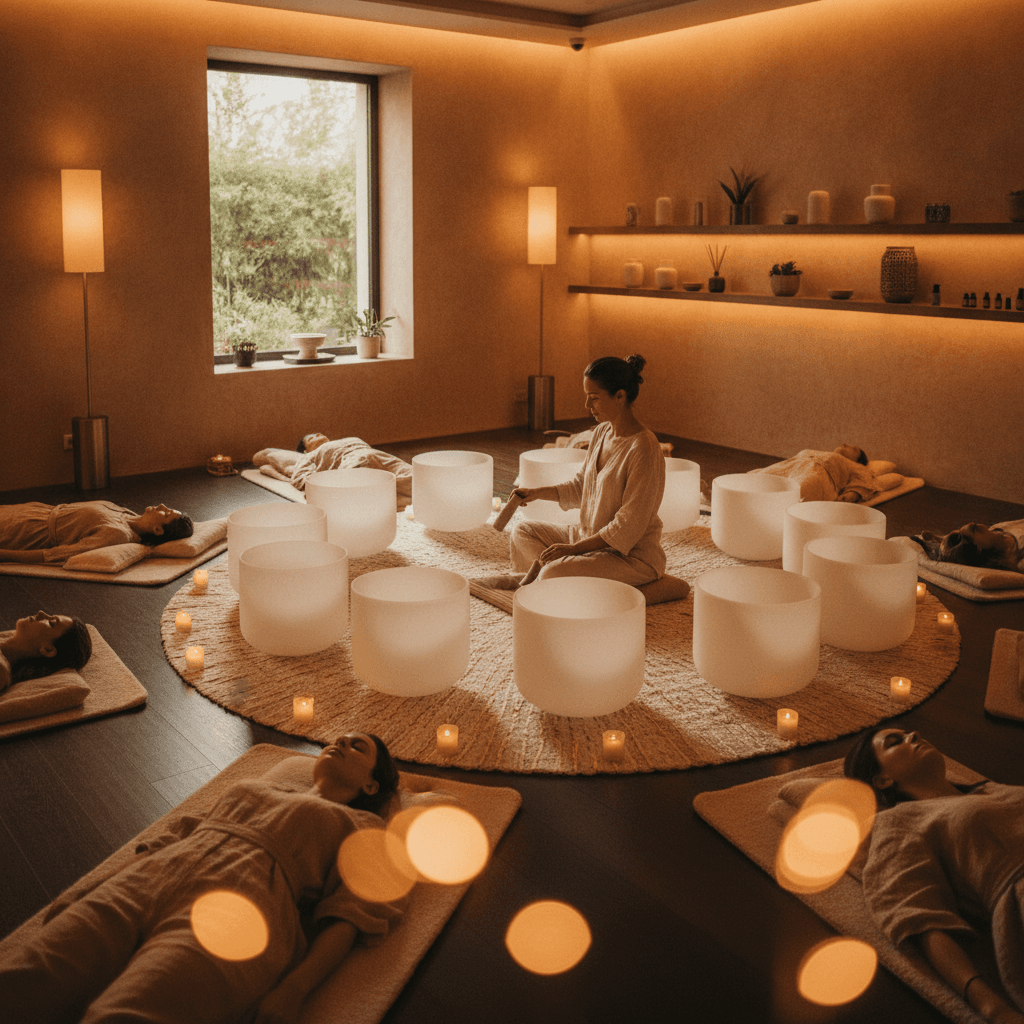
Vibroacoustic Research: Unlocking Well-being's Deep Frequencies

Key Insights
Explore the cutting-edge science behind vibroacoustic therapy. Soul Art Dubai delves into research, promising areas, and open questions for holistic well-being.
The subtle hum of a tuning fork, the deep resonance of a gong, the gentle pulse of a vibroacoustic bed – could these seemingly simple vibrations hold the key to profound well-being? In an increasingly noisy and demanding world, our nervous systems are often in overdrive, yearning for a return to calm. This article explores the compelling, evolving science behind vibroacoustic research, shedding light on its promising applications and the intriguing questions that continue to emerge.
At Soul Art Dubai, we believe in harmonizing ancient wisdom with modern scientific understanding. Our founder, Larissa Steinbach, is dedicated to offering experiences rooted in evidence, helping you rediscover balance and serenity. Join us as we journey into the fascinating realm where sound meets physiology, revealing how precisely tuned vibrations may support your deepest state of relaxation and holistic health.
The Science Explained: How Vibration Resonates with Our Biology
The human body is an intricate orchestra of cells, tissues, and fluids, largely composed of water – an excellent conductor of vibration. When subjected to specific low-frequency sounds, these vibrations travel deep within the body, initiating a cascade of physiological responses. This profound interaction is what makes vibroacoustic therapy (VAT) a powerful tool for wellness.
The Physiology of Resonance and Relaxation
At its core, vibroacoustic therapy works by delivering sine wave vibrations directly to the body. These gentle, yet pervasive, waves stimulate mechanoreceptors, specialized sensory cells in our skin, muscles, and joints. This stimulation sends signals through the nervous system, influencing various bodily functions.
Research suggests that these low-frequency vibrations can help to activate the parasympathetic nervous system, often referred to as the "rest and digest" system. This shift from sympathetic (fight or flight) dominance promotes deep relaxation, helping to downregulate stress hormones like cortisol. The body enters a state conducive to repair, recovery, and balance.
"The symphony of our cells responds to resonant frequencies, inviting a return to inherent harmony and a profound sense of inner calm."
Promising Research Areas: Insights from the Lab
Scientific inquiry into vibroacoustic therapy is rapidly expanding, with numerous peer-reviewed studies exploring its potential benefits. While the evidence is still emerging and protocols vary, preliminary findings consistently point towards positive outcomes in several key areas.
Stress Regulation and Nervous System Harmony
One of the most robust areas of research focuses on VAT's capacity to regulate stress. A 2024 paper highlighted increased parasympathetic activity and clear indicators of greater relaxation following vibroacoustic exposure, measured via ECG and EEG. Similarly, a study published in Frontiers in Psychology in 2022 demonstrated that low-frequency sound vibration combined with music had a positive effect on acute stress response in university students, improving autonomic nervous system regulation.
Further insights from a collaboration between VibroAcoustics and the University of Southern Denmark (SDU) revealed that a 45-minute Vibroacoustic Sound Massage (VSM) treatment positively influenced participants' speech prosody. Post-treatment, individuals spoke more deeply, softly, and slowly, objectively indicating a more relaxed state. These findings are supported by a 2017 pilot study in Evidence-Based Complementary and Alternative Medicine where body monochord vibroacoustic stimulation produced measurable physiological and subjective relaxation effects, showing a quantifiable shift toward parasympathetic dominance.
Pain Management and Musculoskeletal Comfort
The potential of vibroacoustic therapy to support pain relief is another significant area of investigation. A comprehensive narrative review published by Zenthesia maps how low-frequency sound vibration affects the body at the hemodynamic level (improving circulation), neurological level (vibratory analgesia), and musculoskeletal level (muscle stretch reflex). In a 1999 NIH Clinical Center study, 272 hospitalized patients reported over 50% reduction in pain and symptoms after a single 22-minute session.
Specific conditions have also been targeted. Two controlled studies (Naghdi 2015; Fibromyalgia RCT 2019) indicated that 40 Hz VAT significantly reduces pain, improves sleep, and eases fibromyalgia symptoms, with sessions of 23–30 minutes delivered 2–5 times per week over five weeks yielding clinically meaningful results. Research from Konyang University (2021, 2023) further explored improvements in headache and cervical pain, along with reduced tension in suboccipital muscles, through vibroacoustic stimulation.
Neurological Support and Cognitive Well-being
Perhaps some of the most exciting advancements in vibroacoustic research lie in its potential applications for neurological conditions.
- Parkinson's Disease: Several studies, including the King (2009) study, the Mosabbir (2020) double-blind Randomized Controlled Trial (RCT), and a 2018 randomized controlled trial, provide compelling evidence that 40 Hz physioacoustic vibrations can significantly improve motor symptom severity. These studies suggest a reduction in rigidity, tremor, and improved gait in Parkinson's patients, positioning 40 Hz VAT as a promising non-pharmacological adjunct for motor symptom management.
- Alzheimer's Disease and Neuroprotection: The MIT research program (Iaccarino 2016; Martorell 2019; Chan 2022) represents a strong evidence base, demonstrating that 40 Hz stimulation activates microglia, reduces amyloid-beta plaques, and may improve cognition. Phase II clinical trials by Cognito Therapeutics have even shown that 40 Hz light and sound exposure can significantly slow brain atrophy in Alzheimer's patients.
- Sleep Quality: The Zabrecky (2020) fMRI study provides neuroimaging evidence that vibroacoustic stimulation improves functional brain connectivity and increases total sleep time. This is further supported by the Kwon (2024) closed-loop vibration study, which confirms that vibration therapy may reduce nighttime waking and improve subjective sleep quality.
Anti-inflammatory and Other Effects
Beyond these key areas, research is uncovering other fascinating mechanisms. A study on sonic vibration (SV) found that SV at 90 Hz significantly increased interleukin-10 (IL-10) secretion in mice, a key anti-inflammatory cytokine. This provides a potential molecular mechanism for vibration's observed anti-inflammatory effects. Emerging pulmonary research also suggests that vibroacoustic therapy may support respiratory function as a complementary adjunct.
Open Questions and Future Directions
While the evidence is promising, it's crucial to acknowledge that vibroacoustic research is an evolving field. Protocols vary widely between studies, including frequency ranges, devices, duration, and whether music is combined with vibration. There is a clear need for larger, higher-quality, and more standardized clinical trials to further validate findings and establish optimal parameters for different applications. Scientists are actively exploring exactly how vibration affects the nervous system and the optimal protocols for various conditions, turning ancient intuition into an evidence-based practice.
How It Works in Practice: The Embodied Experience of Sound
Stepping into a vibroacoustic session is an invitation to deeply relax and reconnect with your inner self. Imagine lying comfortably on a specially designed mat or bed, fully supported, as gentle, low-frequency sound waves begin to emanate through the surface. This is not just about listening to music; it’s about feeling the sound permeate every cell of your being.
The experience is deeply sensory. You might first notice a subtle, rhythmic pulsing that travels through your body, much like waves rippling across water. These vibrations are often paired with carefully curated music or pure tones, enhancing the immersive effect. The combination creates a cocoon of sound and sensation, inviting your mind to quiet and your body to release accumulated tension.
As the session progresses, many individuals report a profound sense of calm washing over them. The vibrations help to shift brainwave states, moving from the alert beta waves often associated with daily stress to the more relaxed alpha and theta waves linked to meditation and deep rest. This transition can foster mental clarity, emotional release, and a feeling of grounded tranquility. Muscles relax, breathing deepens, and the nervous system is encouraged to recalibrate. It's a journey into stillness, where the body's innate capacity for self-regulation is gently awakened.
The Soul Art Approach: Harmonizing Science and Intuition
At Soul Art, Larissa Steinbach meticulously blends scientific understanding with an intuitive, holistic approach to sound wellness. Our method is deeply rooted in the principles of vibroacoustic research, yet customized to provide an experience that resonates uniquely with each individual. Larissa's vision is to create a sanctuary where the profound benefits of sound and vibration are accessible to all.
What makes the Soul Art method truly unique is its thoughtful integration of high-quality vibroacoustic technology with traditional sound healing instruments. We utilize state-of-the-art vibroacoustic beds that deliver precise low-frequency sine wave vibrations, allowing the body to deeply absorb the resonant frequencies. This advanced technology is complemented by the rich, organic tones of Himalayan and crystal singing bowls, gongs, and tuning forks, all carefully selected for their purity and therapeutic qualities.
Larissa designs each session with intention, often incorporating personalized frequency selections based on client needs and the latest research findings. Whether it's the 40 Hz frequency associated with neurological support or the 90 Hz frequency linked to anti-inflammatory responses, the application is always mindful and client-centered. The goal is to facilitate deep nervous system regulation, stress release, and a palpable sense of internal harmony, empowering individuals to tap into their innate healing capabilities within Soul Art’s serene environment.
Your Next Steps: Embracing a Vibrational Lifestyle
Integrating the principles of vibroacoustic well-being into your daily life can be a powerful step towards enhanced calm and vitality. Understanding how sound and vibration influence your body empowers you to make conscious choices for your self-care. Here are some actionable steps you can implement today:
- Explore Conscious Soundscapes: Pay attention to the sounds in your environment. Seek out natural sounds like ocean waves or calming music. Consider using binaural beats or specific frequency tracks designed for relaxation.
- Practice Intentional Breathing: Deep, diaphragmatic breathing enhances vagal tone, a key component of parasympathetic activity, much like vibroacoustic stimulation. Incorporate short breathing exercises throughout your day.
- Prioritize Quiet Moments: Dedicate time each day to stillness, even if it's just 5-10 minutes. This allows your nervous system to reset and process the constant input of modern life.
- Hydrate Mindfully: As your body is mostly water, staying well-hydrated enhances its ability to conduct vibrations and maintain cellular health, amplifying the benefits of any sound-based practices.
- Experience Professional Sound Wellness: Consider booking a session at a reputable studio like Soul Art. A guided vibroacoustic experience provides an immersive and deeply restorative journey, offering a powerful reset for your mind and body.
Ready to explore the profound potential of sound and vibration for your well-being? We invite you to experience the calming and restorative power of Soul Art Dubai.
In Summary: The Future is Resonant
Vibroacoustic research is a rapidly advancing field, continually uncovering the profound ways in which gentle, low-frequency vibrations may support our well-being. From activating the parasympathetic nervous system and reducing stress to offering promising avenues for pain management and neurological support, the scientific community is building an increasingly compelling case for this complementary modality. While further high-quality research is ongoing, preliminary studies consistently point towards significant benefits for relaxation, emotional balance, and physical comfort.
At Soul Art Dubai, Larissa Steinbach is at the forefront of bringing these evidence-informed practices to you. We are dedicated to providing sophisticated, deeply restorative experiences that harmonize the latest scientific insights with timeless wisdom. Discover the transformative power of sound and vibration, and allow us to guide you towards a deeper state of peace and equilibrium.
Bookings Coming Soon
Soul Art is still in preparation. Session details and booking will be published here after launch.
Coming Soon
Wellness Disclaimer: This article is for educational and informational purposes only. It does not constitute medical advice, diagnosis, or treatment. Soul Art Dubai provides non-medical wellness experiences focused on relaxation, stress management, and general wellbeing. Sound wellness is a complementary practice and should not replace professional medical care.
Related Articles
Navigating Sound Wellness: Evidence-Based Questions for Practitioners
Soul Art: Integrating Science, Ritual, and Safety for Well-being
Sound Baths: Accessible Comfort for Older Adults at Soul Art